
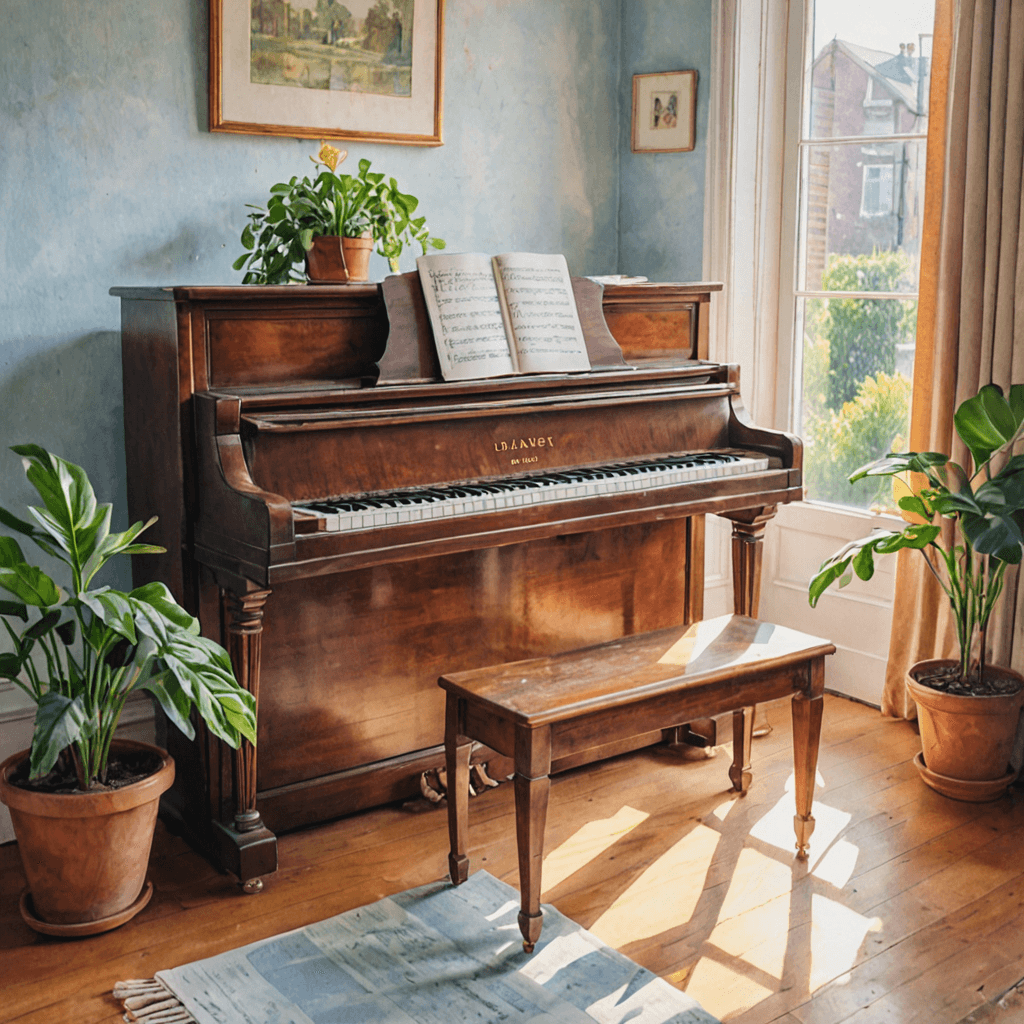
Piano Plateau in Etobicoke: The Two Causes Teachers See Most
Table of Contents
Most parents notice a piano plateau long before they can name it — lessons keep happening, the books keep coming home, but nothing new seems to actually be getting learned. In our experience teaching piano in Etobicoke, a genuine stall almost never comes from a lack of ability or a bad fit with the instrument; it comes from two specific and highly fixable changes in how practice is happening at home, usually at the same time. Here’s what those two causes look like from the bench, why they compound each other, and the four-week reset that most often breaks the pattern.
What a Real Plateau Looks Like — and What It Doesn’t
Piano progress is naturally uneven, and a slow month is not a plateau. A student who spends four weeks wrestling with their first piece in three sharps, or their first real hand-independence challenge, is not stuck — they are doing exactly what learning looks like when the difficulty steps up. That kind of slow patch resolves on its own, usually the week the piece finally clicks.
A real plateau looks different. The markers we watch for:
- Repertoire stops turning over. Eight to twelve weeks with the same two or three pieces, and none of them finished to performance standard.
- Sight-reading stalls or slips backward. New material takes noticeably longer to decode than it did in the spring.
- The same mistakes survive the same corrections. A bar the teacher fixed in April is still wrong in July.
- Lesson energy changes. The student isn’t resistant, exactly — they’re passive. They wait to be told what to do rather than arriving with something to show.
That last one is the most reliable signal, and it’s also the one parents tend to read as a motivation problem. It usually isn’t. Motivation collapses after progress stops, not before. Something mechanical went wrong first.
Cause One: Practice Became Passive Repeat-Throughs
This is the more common of the two, and the harder one for parents to spot — because from the next room, it sounds exactly like practising.
The student sits down, opens to the piece, and plays it from the top. They hit the same rough patch in bar 11, stumble, keep going, and finish. Then they do it again. Then maybe a third time. Twenty minutes at the bench, three complete run-throughs, and the child genuinely feels they practised.
What actually happened is twenty minutes of performing and zero minutes of practising. Worse, the rough patch in bar 11 got rehearsed three more times in its broken form. The error isn’t fading — it’s being reinforced with every pass.
At Muzart, the most common pattern we see behind a stalled piano student is exactly this: practice that has quietly turned into passive repetition, paired with a practice week that has shrunk without anyone noticing. The two together are far more damaging than either alone.
How to tell if this is happening in your house:
- Ask your child to play bars 9 through 16 only, starting cold. If they can’t begin anywhere except the very top of the piece, they’ve been repeating rather than practising.
- Listen for whether the hard section is played more than the easy sections. In real practice, it should be played five or six times as often. In repeat-throughs, everything gets played exactly once per pass.
- Watch for tempo. Repeat-throughs happen at performance speed. Actual practice happens slower than performance speed, often much slower.
The fix is not more time. It’s a different unit of work: instead of “play the piece,” the instruction becomes “play bars 9 to 12, hands separately, four times slowly, then twice hands together.” That’s a task with a finish line. A run-through has no finish line, which is precisely why it expands to fill the session and accomplishes nothing.
Cause Two: Practice Days Quietly Dropped to One or Two
Nobody decides this. That’s what makes it hard to catch.
A family starts the year with practice on most days. Then swimming moves to Tuesdays. Then there’s a school project week. Then a stretch of summer where the routine dissolves entirely. By August, practice is happening the night before the lesson and maybe once on the weekend — and because those two sessions are long and dutiful, the household experience is still “she practises.”
Two sessions per week is not a smaller version of five sessions per week. It’s a categorically different thing. Physical skills consolidate between sessions, not during them, and the gaps between practice days are where the previous day’s work either gets locked in or fades. Stretch the gap to three or four days and a meaningful portion of each session gets spent recovering ground that was already covered — which means the student arrives at the lesson roughly where they were the week before, week after week.
This is the mathematics of a plateau. Not laziness, not talent, not the wrong teacher. Five twelve-minute sessions will move a student further in a week than two forty-minute sessions, every time, and it isn’t close.
Why the Two Causes Compound
Separately, either problem slows a student down. Together, they create a genuine standstill — and they feed each other.
Long, infrequent sessions almost force passive repetition. When a child sits down knowing they have forty minutes to fill and haven’t touched the piano in four days, run-throughs are the path of least resistance; detailed section work requires a fresh memory of what the teacher actually asked for. Meanwhile, passive repetition makes practice feel unrewarding, because nothing improves — which makes it easier to skip the next day. Skipping makes the next session longer and vaguer. The loop closes.
Break either half and the loop weakens. Break both and progress usually resumes within a month.
The Four-Week Reset
This is the sequence we use most often with families who come to us mid-plateau. It works because it changes frequency and structure in a deliberate order rather than all at once.
Week one — shrink the session, name the target. Cut practice to twelve minutes, five days. The goal is not progress this week; the goal is re-establishing that practice happens on ordinary days. Every session gets one named target written at the top of the page: bars 9–12, left hand. Not “practise piano.”
Week two — slow down and isolate. Same twelve minutes, same five days, but now the rule is that the hardest four bars get played more times than the whole piece does. Hands separately first. Metronome well below performance tempo. If the student can play it fast but not slow, they don’t know it yet.
Week three — rebuild duration. Move to twenty minutes, still five days. Add a “start anywhere” drill: the parent picks a bar number at random and the student begins there. This is the single fastest way to convert a repeat-through habit into real command of a piece.
Week four — add a deadline. A plateau often persists because there’s nothing on the calendar. A recital slot, a family performance, or a registered exam date changes the character of practice immediately. For students working through the Royal Conservatory syllabus, booking the next level well in advance is often the intervention that does the most work — structured RCM examination preparation in Etobicoke gives the practice week a shape that self-directed repertoire rarely does.
Where the Teacher Fits — and What to Ask
Plateaus are a normal part of a teaching relationship, not evidence that it’s failing. What matters is whether the teacher has named the plateau and changed something in response. If nothing about the lesson plan has changed in two months, that’s worth raising.
Useful questions to bring to your next lesson:
- “What specifically should she be doing in a practice session this week — not which piece, but which task?”
- “Is the current repertoire level right, or did we move up before the technique was ready?”
- “What would you want to see at home for the next three weeks?”
Good teachers welcome these. The answers also give parents something concrete to supervise, which matters more than most families expect — a parent who can ask “did you do the bar 9 to 12 task?” is far more useful than a parent asking “did you practise?”
Our own piano lessons in Etobicoke are built around this: weekly private instruction with a specific, written practice assignment rather than a page number, because the assignment is what determines whether the week produces progress. Families near Cloverdale Mall can start with a trial lesson at $35, and ongoing monthly tuition runs $155 with all materials included.
FAQ
How long does a slow patch have to last before it counts as a plateau?
Roughly eight weeks with no repertoire turnover and no improvement in sight-reading. Below that, it’s usually just a hard piece. Above that, something structural has changed — most often practice frequency, practice quality, or both.
My child says they’re bored. Is that the real problem?
Boredom is almost always a symptom rather than a cause. Students get bored when nothing is improving, because improvement is what makes practice feel worth doing. Fix the practice structure and the boredom usually resolves without anyone addressing it directly. If it persists after four weeks of genuine section work, then it’s worth looking at repertoire choice.
Is switching teachers the answer to a plateau?
Rarely, and it’s usually the wrong first move. Switching resets the relationship, the repertoire, and the diagnostic history, which costs a student several months. Try changing the practice structure first, and raise the plateau explicitly with the current teacher. If nothing changes after a month of clear conversation, that’s a different situation.
How much daily practice actually breaks a plateau?
Less than most parents assume. Twelve to fifteen focused minutes, five days a week, outperforms forty minutes twice a week by a wide margin for students under about twelve. The frequency is doing the work, not the total.
Would a better instrument help?
Sometimes — an unweighted keyboard genuinely does hold back technique past the early grades, and a piano that won’t hold tune makes careful listening impossible. But instrument upgrades don’t fix a two-day practice week, and families who upgrade during a plateau often find the plateau simply continues on nicer equipment. Address the routine first.
Can group lessons help a plateaued student?
We teach music privately only, and for a stalled student that’s the right structure regardless — the entire problem is that the practice assignment isn’t specific enough to that individual, and individual attention is what corrects it.
Getting a Stalled Student Moving Again
A plateau is diagnostic information, not a verdict. In nearly every case we see, it points at two ordinary things that drifted — the practice week got shorter, and the practice itself got passive — and both respond quickly once they’re named.
If your child has been stuck for a season and you’d like a teacher’s read on which of the two is doing the damage, book a trial lesson and we’ll assess it directly at the piano. If you’d rather talk it through first, you can request more informationand we’ll get back to you with a straight answer about whether a change of approach is likely to help.