
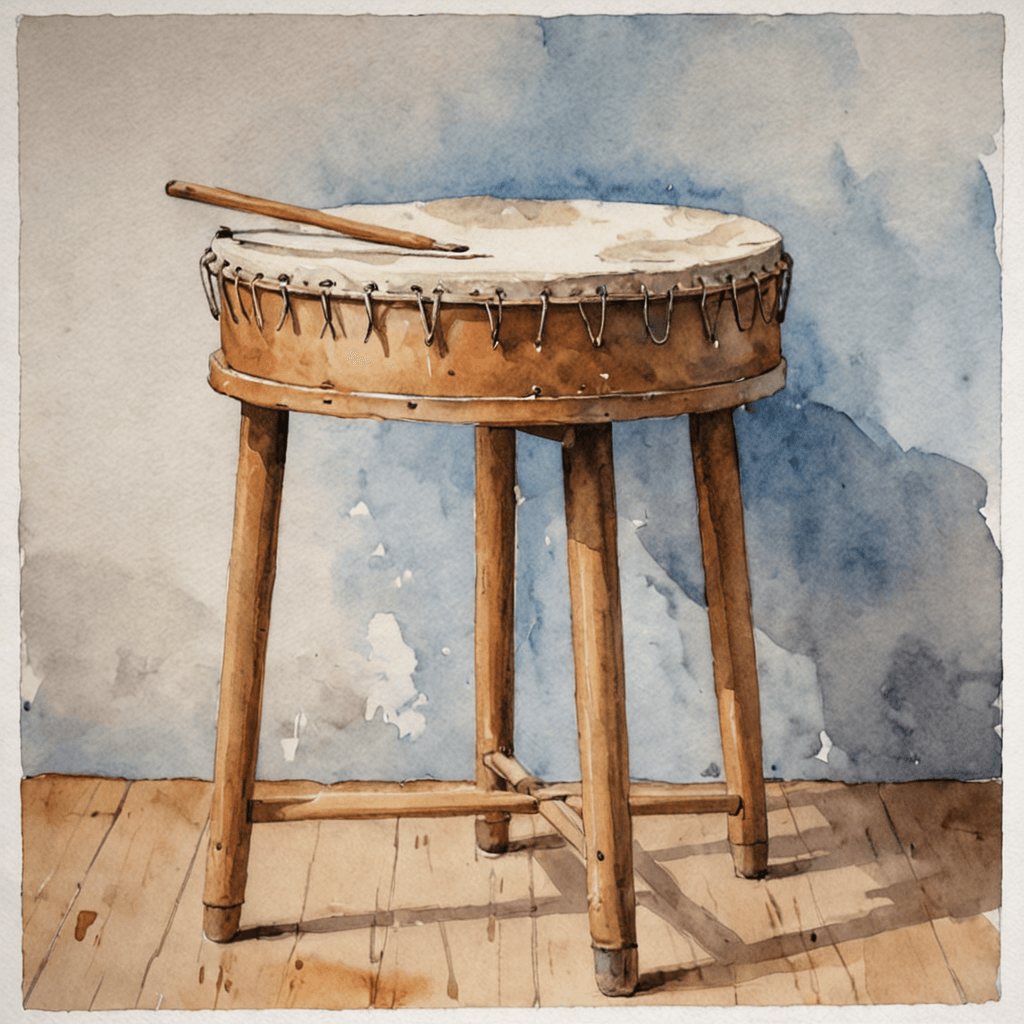
Drum Practice Pads vs Kits: What Etobicoke Students Buy First
Table of Contents
Nearly every family beginning drum lessons asks the same question in the first week — do we need to buy a kit, or is a practice pad enough to start? The honest answer is that a pad is the correct first purchase for almost every beginner, and that the reasons have far more to do with what develops technique than with saving money or managing noise. Here’s what a pad genuinely trains, what it can’t, and the buying sequence that avoids spending twice.
The Short Version
For a student starting drums in their first year: buy a practice pad, a pair of sticks, and a stand. Do not buy a kit yet.
That recommendation holds for roughly the first three to six months, and it is not a compromise position. It reflects how drumming is actually taught. The first stretch of drum instruction is almost entirely about hand technique — grip, rebound, stroke height, evenness between hands, and the rudiments that everything later is built from. All of that happens on a single surface. A five-piece kit sitting in the basement during that period contributes nothing to it, and frequently contributes something worse: a student who spends practice time playing along to songs instead of building the hands.
There’s a caveat, and it’s a real one — pads don’t develop limb coordination, and eventually that becomes the bottleneck. The question isn’t whether to buy a kit but when, and the answer is usually “when the teacher says the hands are ready,” not “when the student starts lessons.”
What a Practice Pad Actually Trains
More than most parents expect, and more than most students want to believe.
Stroke mechanics and rebound control. A good gum rubber pad has a rebound response close enough to a snare drum that the motion transfers directly. Students learn to let the stick do the work rather than driving it into the head — the single most important habit in the first year, and the hardest one to fix later.
Evenness between hands. Almost every beginner has a dominant and a weak hand, and the gap is glaring on a pad because there’s nothing else in the texture to hide it. On a full kit, a weak left hand disappears into the general noise. On a pad, it’s the only thing you can hear, which is exactly why it improves.
Rudiments. Singles, doubles, paradiddles, flams, and the roll family are the vocabulary of every style a drummer will ever play. They are learned on a flat surface, at slow tempos, with a metronome, and they are the difference between a student who can keep a beat and one who can actually play.
Timekeeping. Metronome work is more honest on a pad. There’s no cymbal wash to blur a slightly early note.
Reading. Notation study happens on a pad long before it happens on a kit.
A student who spends four months doing this properly will sit down at a kit and progress remarkably quickly. A student who skipped it will spend a year playing beats with uneven hands and then need to go back and do it anyway.
What a Pad Can’t Do
Being straight about the limits matters, because a pad kept too long produces its own problem.
A pad trains two limbs. Drumming requires four, moving independently, and that coordination is a genuinely separate skill that cannot be developed on a flat surface. Foot technique — heel-up and heel-down, bass drum control, hi-hat pedal work — needs actual pedals. Moving around the kit requires distance, arm travel, and the spatial memory of where the toms are without looking. Dynamics across different surfaces, cymbal control, and the physical stamina of playing a full kit are all kit-only skills.
There’s also a motivational dimension worth naming. A pad is not fun for very long. For most students aged eight to twelve, somewhere around month four the pad stops feeling like drumming, and that’s usually the right moment to introduce the kit — not because the technique is finished, but because the technique now has somewhere to go.
The Housing Question
This is the part specific to a lot of Etobicoke families, and it deserves a practical answer rather than an optimistic one.
Condos and apartments. An acoustic kit is not realistic. Even with mesh heads and low-volume cymbals, the bass drum pedal transmits impact through the floor structure, and that is the complaint that arrives regardless of how quiet the drum sounds in the room. Families in buildings should plan on a pad plus an electronic kit on a riser, with headphones — and even then, a rubber isolation platform under the kick is worth the cost.
Semi-detached and townhouses. An acoustic kit is possible with genuine preparation: mesh or low-volume heads, low-volume cymbals, a rug, and an agreement with neighbours about hours. Many families find an electronic kit simpler.
Detached homes with a basement. An acoustic kit works, and this is where most students should end up eventually. Basements are usually the right room — concrete absorbs impact and the sound travels less through the house.
Worth noting for families weighing instruments across siblings: households that already accommodate piano lessons in Etobicoke sometimes assume drums will be comparable. They aren’t. A piano at conversational volume is a different category of neighbour consideration than a kick drum, and it’s better to plan for that at the start than to discover it in month five.
A Buying Sequence That Avoids Spending Twice
Stage one — the first lesson. A practice pad, roughly eight to twelve inches, with a gum rubber playing surface rather than the hard plastic type. A stand so it sits at the correct height, because a pad on a table teaches poor posture. One pair of 5A wood-tip sticks. A metronome, or a free metronome app.
Total outlay here is modest — comfortably the smallest instrument investment of any of the instruments we teach.
Stage two — around months three to six. A snare drum on a stand, plus a hi-hat and pedal. This is the underrated step most families skip. It introduces the foot, the hi-hat, and the coordination between them, at a fraction of the cost and space of a kit, and it covers an enormous amount of foundational groove work.
Stage three — once coordination is established. A full kit, acoustic or electronic depending on housing. Buy used for a first acoustic kit; beginner drum kits hold up well and depreciate sharply, so the second-hand market is genuinely good value. For electronic, mesh heads are worth prioritising over the number of pads — rubber-pad electronic kits teach a rebound feel that doesn’t transfer to acoustic drums.
Stage four — the upgrade that matters most. Cymbals, not drums. Beginner kits almost always ship with poor cymbals, and cymbals are the sound of a kit. When a student is committed, upgrade cymbals before upgrading shells.
Instruction here doesn’t depend on the student owning a kit — our drum lessons in Etobicoke run on a full kit at the studio, so home equipment only needs to support the practice assignment rather than replicate the lesson. Trial lessons run $35, and ongoing private instruction is $155 monthly with all materials included.
What Home Practice Should Look Like at Each Stage
With a pad only, a beginner’s session is short and specific: five minutes of single strokes at a slow tempo, five minutes on the rudiment currently assigned, five minutes of reading. Fifteen minutes, five days a week, beats an hour on Sunday by a considerable margin — the hands develop through repetition spread across days, not through volume in one sitting.
With a snare and hi-hat, sessions add coordination work: hi-hat on quarters against varied snare patterns, slowly, with a metronome.
With a full kit, the risk changes. Kit practice tends to become playing along to songs, which is enjoyable and builds very little. The rule that works: pad and rudiment work first, kit second. Most students will do the second regardless; only structure guarantees the first.
FAQ
How long should a student stay on a pad before getting a kit?
Typically three to six months, but the trigger is technical rather than calendar-based. When single and double strokes are even between hands at a moderate tempo and the student can hold a steady pulse against a metronome, the hands are ready for the kit to be useful.
Are electronic kits acceptable for serious study?
Yes, with two caveats. Mesh heads rather than rubber pads, because rubber teaches a rebound response that doesn’t transfer to acoustic drums. And the student should have regular access to an acoustic kit — a lesson on one each week is generally enough to keep the feel calibrated.
Is a cheap practice pad good enough?
Mostly yes, with one exception: avoid hard plastic surfaces with almost no give. A basic gum rubber pad on a stand does everything a beginner needs, and the expensive pads offer refinements that matter to advanced players rather than to first-year students.
Can a beginner start drums without buying anything at all?
For the first few weeks, yes — sticks and a pillow or a phone book will do for the very first exercises, and some students start that way to confirm the interest before spending. It shouldn’t continue much past a month, because a surface with no rebound builds the opposite of the technique being taught.
What age is right to start drums?
Most students do well starting around six or seven, provided the equipment fits — a pad and a proper-height stand is genuinely age-neutral, which is another argument for beginning there. Kit ergonomics are the limiting factor for younger children, not the drumming itself.
Do you teach drums in group classes?
No — all our music instruction is private, one student to one teacher. For drums in particular that’s the only structure that works, since hand technique needs individual correction from the first lesson onward.
Getting Started
The families who spend the least on drums over five years are usually the ones who bought a pad first and let the teacher tell them when the kit was needed. The ones who spend the most are the ones who bought a full kit in week one and replaced it in year two, after the student’s technique had been built around whatever the beginner cymbals happened to sound like.
If you’re weighing what to buy for a student starting this fall, book a trial lesson at our Etobicoke studio near Cloverdale Mall and we’ll give you a specific recommendation based on the student’s age, housing, and how far along they are. If you’d like to ask about equipment before committing to a lesson, request more information and we’ll answer directly.