
Art Classes for 5-Year-Olds in Etobicoke: What Actually Happens
Table of Contents
Parents enrolling a 5-year-old in their first art class usually have one of two reactions when picking the child up after the first session: relief, because their child clearly had fun, or quiet concern, because the painting that came home doesn’t look like much. Both reactions overestimate how much the early sessions are about producing finished art. The first year of art classes for a 5-year-old is mostly about building skills that don’t yet look like skills — and understanding what those are makes it much easier to evaluate whether the class is actually working. Below is an honest look at what art classes for 5-year-olds in Etobicoke at Muzart Music and Art School actually look like, what’s being built underneath the surface, and how parents can tell whether the program is the right fit.
What a 5-Year-Old’s First Art Class Actually Looks Like
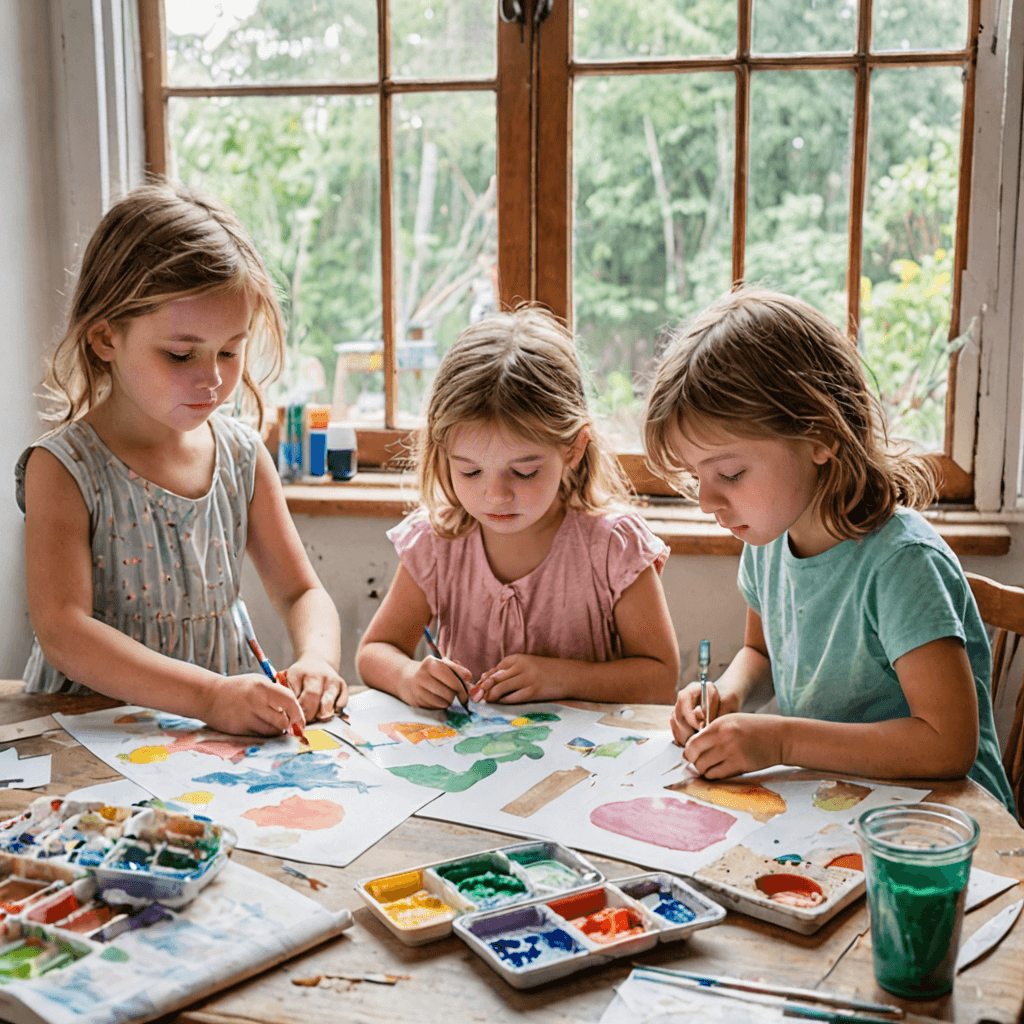
A typical class for 5-year-olds at Muzart’s Etobicoke studio is structured around four moving parts: an opening warm-up activity, the main project, an exploration phase with secondary materials, and a brief group reflection at the end. Sessions usually run between 45 minutes and an hour — short enough to hold attention, long enough to allow real engagement.
The opening warm-up might be as simple as scribble drawings to loosen the hand, or recognising shapes in everyday objects. The main project introduces a specific skill or material — drawing with oil pastels, painting with washable tempera, working with paper and glue, exploring colour mixing. The exploration phase is more open-ended: the child gets to apply what was just taught to something of their own choosing. The closing reflection — what did we make today, what did you like, what was tricky — builds awareness that art has a process and that talking about that process matters.
The energy in the room is calm, purposeful, and a bit messy. Five-year-olds are working through their hands and their attention spans in roughly equal measure, and a good teacher orchestrates the session so that neither runs out before the other.
The Skills Being Built (That Don’t Look Like Skills Yet)
This is the part most parents don’t see, and the part that matters most. The first year of art classes for a 5-year-old is largely about building skills that won’t visibly show up in finished pieces for one to two years. The work is real; the visible output is misleading.
Fine motor control. Holding a pencil, brush, or pastel with intention; drawing a line that goes where the hand meant it to go. This is foundational not just for art but for handwriting, scissor work, and any task requiring precise hand control. Art class is one of the most effective places to develop it.
Observation. Looking at something — a real object, a colour, a shape — and noticing its specific features. Children at this age tend to draw what they think things look like, not what they actually look like. Learning to look closely is the start of all visual art training.
Material literacy. Understanding that pencils, markers, oil pastels, watercolour, tempera, and crayons each behave differently. A 5-year-old who has handled six different media has built a vocabulary of touch that a child who has only used crayons hasn’t.
Comfort with process. Knowing that art isn’t always finished, that pieces can be reworked, that mistakes are part of making — not failures. Children who learn this at five carry a much healthier relationship with creative work into the years where finished output starts to matter.
Following multi-step instructions. A surprisingly underrated benefit of structured art classes. Sequencing — first the background, then the main subject, then the details — is a cognitive skill that art class builds in a low-pressure, enjoyable way.
What Materials Children Encounter in the First Year
A well-structured first year typically introduces children to:
Drawing tools: graphite pencils (regular and softer drawing pencils), coloured pencils, oil pastels, soft pastels, charcoal (toward the end of the year), markers (used carefully and intentionally).
Painting materials: washable tempera, watercolour (introductory exposure), finger paint for younger sessions.
Mixed media: collage with cut paper, simple printmaking with stamps or sponges, basic sculpture with air-dry clay or model magic.
Surfaces: different paper weights and textures, canvas paper, watercolour paper, recycled materials.
The variety matters because it builds the material literacy described above. A child who has worked across this range by age six has a meaningfully different relationship with art than a child whose home art supplies are limited to one box of crayons.
Group Class vs Private Lesson at Age 5: Which Makes More Sense?
For most 5-year-olds, group art classes make more sense than private lessons. The reasons are developmental rather than financial.
Five-year-olds learn well from each other. Watching another child solve a problem — figuring out how to mix purple, deciding how to draw a face — teaches things that direct instruction can’t. Group classes also build the social side of creative work: sharing materials, talking about each other’s pieces, learning that art happens in community as well as alone.
The trade-off is that group classes give less one-on-one attention. For most 5-year-olds, this is fine — the social and observational learning more than compensates. Children who specifically need private attention — those with learning differences, or those who are clearly far ahead or behind their age peers — sometimes do better in private lessons. But these are exceptions, not the default.
Private art lessons at Muzart are available for all ages — including 5-year-olds when the family or teacher feels they’re the right fit — but the group format is the recommended starting point for most young children.
What Parents Can Expect to Bring Home (And What to Make of It)
Most pieces that come home from the first six months of art class will look like, well, the art of a five-year-old. Lopsided suns, blocky houses, ambiguous figures, blobs of colour. This is correct. It is also exactly what should be coming home.
Two things to look for, instead of judging the piece itself:
Does your child want to talk about it? A child who can describe what they made, what they were trying to do, what they liked about it, and what was tricky is a child whose creative thinking is developing. The verbal articulation is at least as important as the visual output.
Is there a recognisable shift over six to eight weeks? Compare pieces from week one to pieces from week eight. The shift might be subtle — slightly steadier lines, slightly more deliberate colour choices, slightly more attempts at detail — but it’s there in children whose engagement is real.
What not to focus on: how “good” the pieces look compared to what an adult would draw, how realistic the subjects are, whether the proportions are right. These judgements aren’t yet meaningful at this age.
Choosing the Right Etobicoke Art Class for Your 5-Year-Old
The right art class in Etobicoke for a 5-year-old is one where:
- The class size is small enough that the teacher can engage with each child individually (typically 4 to 8 children at this age)
- The teacher has explicit experience with young children, not just older students
- The curriculum varies week to week — different materials, different projects, different skills
- The room itself is set up for young children — accessible materials, child-sized seating, surfaces that can handle mess
- The teacher communicates with parents about what’s being built, not just what was made
A trial class is the easiest way to test all of this in a single visit. The first session usually tells parents everything they need to know about whether the program is the right fit.
Muzart’s Etobicoke studio, located near Cloverdale Mall, runs group art programs for young children year-round, with weekly classes structured around the principles above. For families wanting to explore enrolment, requesting more information is the simplest way to get current schedule and pricing details for the 5-year-old age group specifically.
Frequently Asked Questions
Is 5 too young to start art classes?
No. Five is a common and developmentally appropriate starting age for structured group art classes. Children younger than five — typically three- and four-year-olds — can also benefit from age-appropriate programs, though the structure and skill focus is different.
How long should an art class be for a 5-year-old?
Forty-five minutes to an hour is the typical sweet spot. Shorter sessions don’t allow enough engagement; longer sessions exceed most 5-year-olds’ attention span. Programs structured into multiple short activities within that window work better than single long projects.
Should I sign up for group classes or private art lessons at age 5?
Group classes are the right starting point for most 5-year-olds. The peer learning and social development is part of the benefit at this age. Private lessons make more sense for children with specific learning needs, very advanced skill levels, or specific home circumstances. Muzart offers both formats and can advise on fit during a trial visit.
What materials does my 5-year-old need to bring to art class?
At Muzart, all materials are included — children don’t need to bring anything. Some parents like to send a small smock or an older shirt for messier sessions, but it’s not required. Curriculum materials are part of the enrolment.
How can I tell if my child is enjoying art class?
Watch for verbal engagement after class (“I made…”, “we used…”, “next time I want to…”) rather than judging the pieces themselves. Children who talk about what happened are engaged. Children who can’t say what they did, or who consistently say they don’t want to go back, may be in the wrong class — sometimes a teacher fit issue, sometimes a class structure issue.
What’s a realistic year-one progress milestone for a 5-year-old?
By the end of year one, most children can: identify and name several different art materials, follow a multi-step art instruction, describe what they made and what they were trying to do, and produce drawings with intentional (if still developmentally early) details. The goal is engagement and skill foundation — not finished masterpieces.
If you’re considering art classes for your 5-year-old in Etobicoke, request more information about Muzart’s age-grouped programs or book a trial visit at our Cloverdale Mall studio. The first class usually answers most of the questions a brochure can’t.