
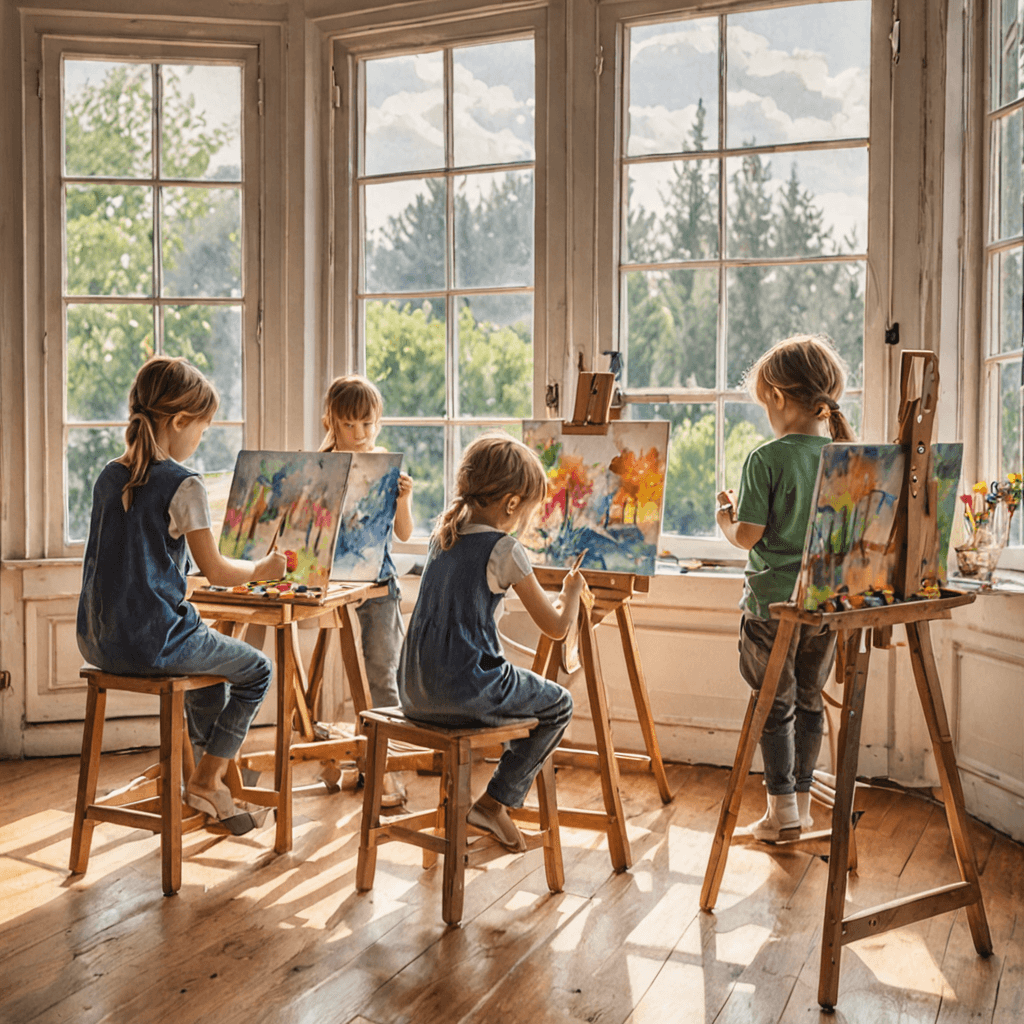
Art Classes for Kids in Mississauga: What a Quality Program Includes
Table of Contents
Parents searching for art classes for kids in Mississauga usually find a long list of options and very little that explains what actually separates a strong children’s art program from a babysitting session with crayons. The honest answer is that quality shows up in specific, observable things: how the class is structured, what materials are used, how skills build week to week, and whether the teacher is guiding technique or simply supervising. Below, we break down exactly what to look for so you can tell a genuine art education apart from a craft hour before you enrol.
At Muzart Music and Art School, we teach children from our single Etobicoke studio near Cloverdale Mall, and we serve families right across Mississauga — from Applewood and Erin Mills to the Square One area. Families comparing programs across the western GTA ask us the same core question again and again: what makes a kids’ art class worth it? Here is how we answer that, honestly.
What “Quality” Actually Means in a Children’s Art Program
A quality children’s art program is built around skill progression, not just output. In a strong class, a five-year-old and a ten-year-old are not doing the same worksheet in different colours. The younger child is developing fine motor control, colour recognition, and the confidence to make marks on a page. The older child is learning shading, proportion, composition, and how to plan a piece before starting it.
The difference matters because children who only ever “make crafts” plateau quickly and lose interest. Children who are taught to see — to notice light, shape, and negative space — keep growing and stay engaged for years. When you tour or ask about a program, the single best question is: “How does what my child learns in month one differ from what they’ll learn in month six?” A quality program has a clear answer.
Group art classes for children are the format most families start with, and for good reason: kids feed off each other’s energy, learn to give and receive feedback, and build social confidence alongside artistic skill. Our group art classes for children are designed around this — structured enough to teach real technique, social enough to keep young artists excited to come back.
Materials and Mediums: Variety Is the Signal
One of the clearest markers of a serious program is the range of materials children actually get their hands on. A quality kids’ art class rotates through drawing (pencil, charcoal, oil pastel), painting (watercolour, tempera, acrylic), and mixed media over the course of a term. Each medium teaches something different: watercolour teaches patience and letting go of control, while acrylic teaches layering and correction.
Programs that stay locked on one medium — usually because it is cheap and easy to clean up — limit what a child can discover about their own preferences. A child who never tries clay or collage may never learn they are a sculptor at heart.
Worth flagging for budgeting: at Muzart, all materials are included in the monthly program fee, so parents are not making surprise supply-store runs mid-term. A children’s art program runs $155 per month with everything provided, and there is a $35 trial class so your child can try before you commit to a term.
How Class Size and Structure Shape Learning
Class size is where a lot of programs quietly cut corners. In a group that is too large, the teacher becomes a traffic controller rather than an instructor, and individual children get almost no personal guidance. A well-run children’s group keeps numbers small enough that the teacher can move around the room, correct grips, demonstrate techniques one-on-one, and actually notice when a specific child is struggling or ready for a bigger challenge.
Structure matters just as much as size. A quality class has a rhythm: a short demonstration or concept introduction, guided practice, independent creation, and a moment of reflection or sharing at the end. That last piece — where children talk about what they made and hear encouragement — builds the vocabulary and confidence that carry into every future class.
If you want the most individualized attention possible, or your child has a specific goal, private art lessons offer one-on-one pacing. Many families start their child in a group and move to private lessons later, once a genuine interest takes hold.
Signs of a Program That Will Keep Your Child Growing
Beyond the basics, a few signals tell you a program is built for the long haul. Look for a teacher who talks about your specific child — their strengths, what they are working on, what clicked last week. Look for finished work that looks meaningfully different from where your child started a few months ago. And look for a child who wants to keep going even when the novelty wears off, which usually happens around week four or five.
That week-four dip is real and normal. The initial excitement fades, and whether a child pushes through it depends almost entirely on whether the class is teaching them something they can feel themselves getting better at. Programs built on genuine skill-building survive that dip. Programs built on novelty do not.
For Mississauga families weighing local options, it is also worth understanding how art instruction connects to longer-term paths — school arts programs, high school portfolios, and beyond. A program that can grow with your child from a first drawing class all the way to art portfolio preparation for high school or university applications offers a continuity that stand-alone craft classes cannot.
Frequently Asked Questions
What age should my child start art classes in Mississauga?
Children as young as five do wonderfully in a structured group art class, provided the program is genuinely age-appropriate and focused on foundational skills like fine motor control and colour. Younger children need shorter sessions and more hands-on guidance, while children eight and up can handle longer classes and more technical instruction. The key is matching the class to the developmental stage — a good program does not put a five-year-old and an eleven-year-old through identical material.
How much do art classes for kids cost in the Mississauga area?
At Muzart, a monthly children’s art program is $155 with all materials included, and we offer a $35 trial class so your child can experience the program before committing. When comparing costs across programs, always confirm whether materials are included — a lower monthly fee that requires you to buy supplies separately often costs more in the end. You can request more information to talk through what fits your child.
Are group or private art lessons better for young children?
For most young children, group classes are the better starting point. The social energy keeps kids motivated, they learn to give and receive feedback, and the format builds confidence. Private lessons become valuable when a child has a specific goal, wants faster progression, or benefits from more individual attention. Many families begin in a group and add private lessons once a real interest emerges.
Do you serve families who live in Mississauga?
Yes. Our studio is located in Etobicoke near Cloverdale Mall, which is a short drive for families across Mississauga, including the Applewood, Erin Mills, and Square One areas. Many of our art students come from Mississauga neighbourhoods, and we are happy to help you plan a schedule that works with your commute.
Ready to See a Quality Program in Action?
The best way to judge a children’s art program is to watch your child inside one. Book a $35 trial class and see how a structured, skill-building session compares to what you have found elsewhere. Book a trial class now, or request more information if you would like to talk through the right fit for your child’s age and interests first.