
Art Portfolio for High School Applications: First Steps
Table of Contents
Families aiming for a specialized arts high school often discover the portfolio requirement late — sometimes only months before applications are due — and panic sets in. The truth is that a strong application portfolio is built slowly, over many months, and the students who start early and steadily almost always end up with stronger, more authentic work. Below, we walk through where to actually begin, what a competitive early-stage portfolio looks like, and how to avoid the mistakes that trip up first-time applicant families.
Start with the requirements, not the artwork
The most common mistake is diving straight into making art before understanding what each school actually asks for. Specialized arts programs differ significantly in what they want to see, and the format varies by stream. A visual arts program typically reviews a portfolio of pieces; other arts streams may use an audition, a workshop, or an interview instead. Applying to the wrong requirement wastes precious preparation time.
In the Toronto District School Board, admission to specialized arts programs is now coordinated through a Central Program Admissions Office rather than handled school by school, and the specific requirements, timelines, and submission formats are published through official channels each cycle. Because those details can change from year to year, the first and most important step is to confirm the current, official requirements for the specific programs your child is applying to — not last year’s version, and not a summary from a forum. Build backward from what the school actually asks for.
It’s also worth clarifying the age and grade fit before investing months of work. Not every specialized arts program is a high school. The Karen Kain School of the Arts, for example, admits students at the Grade 6 level as a middle-years program and uses a workshop-based screening rather than a submitted portfolio — so portfolio-building aimed at high school entry isn’t the right preparation for it. Getting the grade-of-entry and assessment format right at the outset saves enormous wasted effort.
What a strong starting point actually looks like
Once you know the target, the earliest work is about breadth and honesty, not polish. A first-stage portfolio should show that a student can observe carefully and draw what they actually see — observational drawing from life is the foundation nearly every art program values, because it reveals genuine skill rather than the ability to copy a photo or a favourite character.
At this stage, encourage a wide range of subjects and materials: pencil studies of everyday objects, a self-portrait from a mirror, a still life, sketches of hands and faces, some work in colour, some in black and white. The goal is a body of work that demonstrates curiosity and range. Reviewers at competitive programs see enormous numbers of similar, safe submissions; what stands out is evidence of a student thinking and experimenting rather than reproducing.
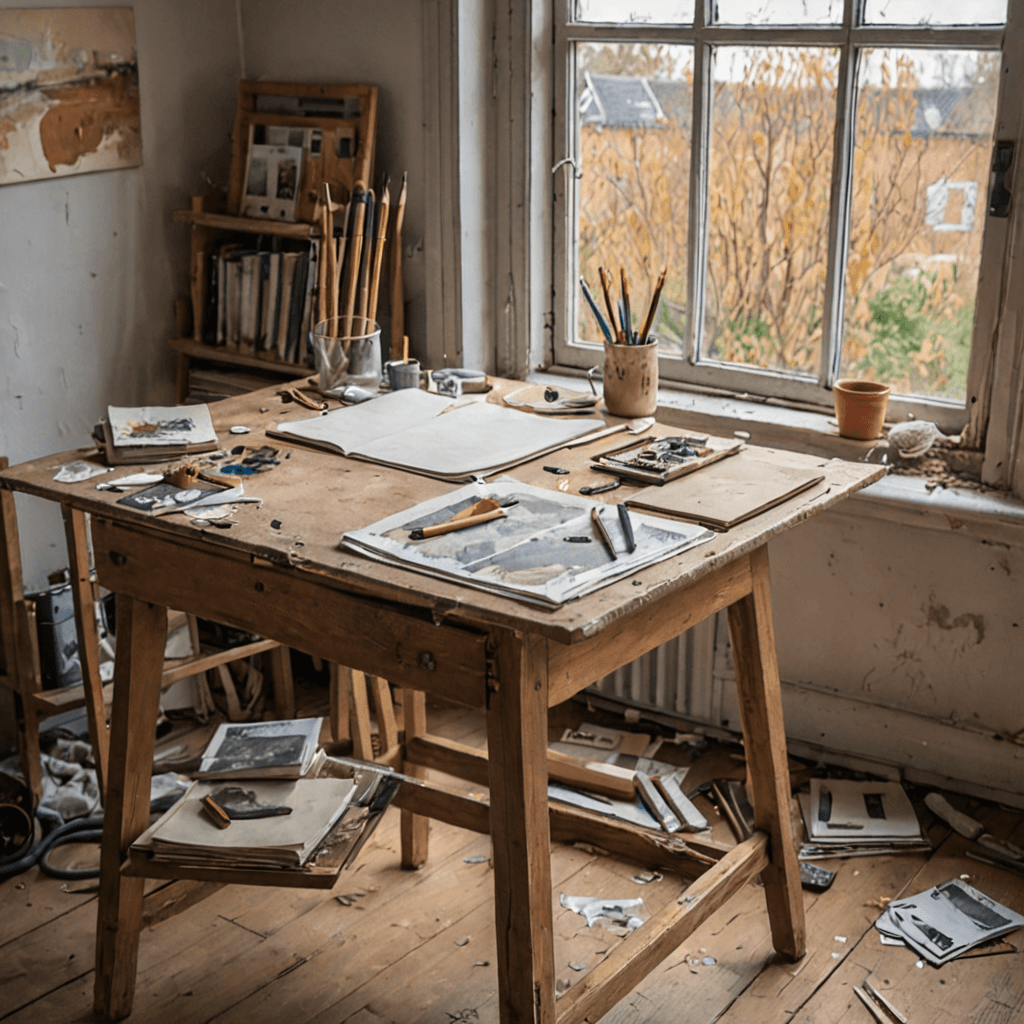
A sketchbook belongs at the centre of all of this. Many programs value the sketchbook as much as finished pieces, because it shows process — how a student develops an idea, tries things, and works through problems. Getting a student into the habit of drawing regularly in a sketchbook, early, is one of the highest-value things a family can do. It builds both skill and raw material for the eventual portfolio.
This is also where structured guidance earns its keep. A student working alone often repeats the same comfortable subjects and never builds range. Focused portfolio preparation gives a young artist a plan — what to make, in what order, and why — so that a year of effort adds up to a coherent portfolio rather than a pile of unrelated drawings. Our portfolio preparation in Etobicoke runs as private, one-on-one instruction precisely because portfolio work is so individual; the trial is $70, and the monthly program is $310 for one-hour lessons with all materials included.
Give yourself a realistic timeline
The families who struggle are almost always the ones who start too late. A rushed portfolio looks rushed — reviewers can tell the difference between work made thoughtfully over months and work assembled in a frantic few weeks. Ideally, a student begins meaningful, guided preparation roughly a year ahead of the application, which leaves room to build foundational skills first, then develop stronger pieces, then refine and select.
A realistic arc looks something like this: the early months focus on fundamentals — observational drawing, basic colour, sketchbook habits. The middle stretch is where more ambitious, personal pieces get developed. The final stretch is selection and refinement, where a student, ideally with a knowledgeable second eye, chooses the strongest work and polishes presentation. Trying to compress all three phases into a single term is the surest route to a weak submission and a stressed child.
Starting early has an emotional benefit too. A student who has been building steadily arrives at the application feeling ready and confident, rather than scrambling and anxious. That composure often shows through in any interview or workshop component of the process. If your child is also auditioning for a music or vocal stream — many arts programs run parallel auditions, and strong vocal applicants benefit from real preparation — our singing lessons in Etobicoke can support that side of an application.
Common early mistakes to avoid
A few missteps show up again and again. The first is over-relying on copied work — anime characters, celebrity photos, other artists’ pieces. Reviewers want to see original thinking and observation, not reproduction skill, and a portfolio heavy on copies signals the wrong thing. The second is neglecting the sketchbook in favour of only finished pieces, which hides the very process many programs want to evaluate. The third is leaving everything until the deadline looms, which shows in the work.
The fourth, and most preventable, is applying against the wrong requirements — preparing a portfolio for a program that actually uses an audition or workshop, or aiming portfolio prep at the wrong grade of entry. This is why confirming current official requirements comes first, before any art gets made. General art instruction helps too: a student who takes part in ongoing art lessons in Etobicoke builds fundamentals that make later portfolio work far stronger, whether or not they’ve committed to a specific application yet.
Frequently asked questions
When should we start building a high school arts portfolio?
Ideally about a year before the application is due. That runway allows time to build fundamentals first, then develop stronger personal pieces, then refine and select the best work. Students who start this early consistently produce more authentic, more competitive portfolios than those who begin in the final few weeks.
What kinds of pieces should a beginning portfolio include?
Focus first on observational drawing from life — everyday objects, a still life, a self-portrait from a mirror, studies of hands and faces — across a range of materials. Breadth and genuine observation matter more than polish at this stage. A well-kept sketchbook showing process is also essential, since many programs weigh it heavily.
How do we find out exactly what each school requires?
Confirm the current official requirements directly through the program’s admissions channels — in the TDSB, specialized arts admissions are now coordinated through a Central Program Admissions Office. Requirements and formats can change year to year and differ by stream, so always work from the current official source rather than older summaries.
Is portfolio prep the same for every arts program?
No. Some programs review a visual portfolio; others use auditions, workshops, or interviews, and grades of entry differ too. The Karen Kain School of the Arts, for instance, is a Grade 6 middle-years program with a workshop-based screening rather than a submitted portfolio. Confirm the format before you start preparing.
Can my child prepare a portfolio and audition for a music stream at the same time?
Yes, and many applicants do exactly that. Visual and performing streams often run parallel processes. If a vocal or instrumental audition is part of the plan, it deserves its own dedicated preparation alongside the portfolio work rather than being left to chance.
Start the portfolio the right way
A strong application portfolio is built with a plan, over time, from the right foundations. Book a trial lesson at Muzart Music and Art School in Etobicoke, near Cloverdale Mall, and a teacher can assess where your child is and map out a realistic path toward the specific programs you’re targeting. If you’d like to talk through the timeline and requirements first, request more information and we’ll help you start on the right footing.