
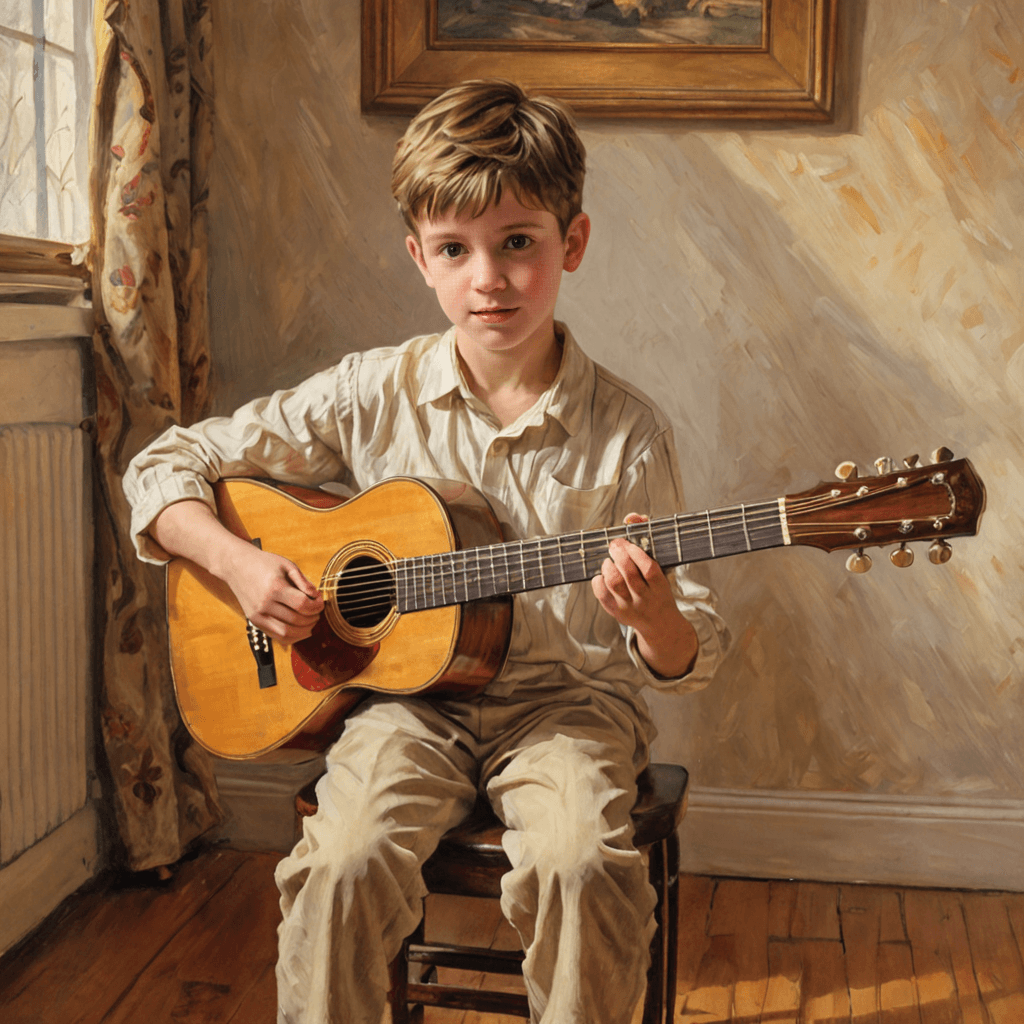
Guitar Lessons for Kids in Etobicoke: What Age Should They Start?
Table of Contents
It is one of the most common questions parents ask when their child starts showing interest in guitar: is my child old enough to start lessons? The answer is more nuanced than a simple number, because readiness for guitar lessons depends on a combination of physical development, attention span, and genuine interest — and these develop at different rates in every child.
At Muzart Music and Art School in Etobicoke near Cloverdale Mall, our guitar lessons in Etobicoke work with children across a wide age range, and we have learned that the right starting age varies from child to child. What matters more than the calendar is knowing what to look for and how to set your child up for a positive first experience.
The Physical Considerations: When Are Hands Ready for Guitar?
Guitar is a more physically demanding instrument for young children than many parents realize. Unlike piano, where a child simply presses keys, guitar requires pressing strings against a fretboard with enough force to produce clean notes. This demands a baseline level of finger strength and hand size that not all young children have developed.
Most guitar teachers find that children around age six or seven have the hand size and finger strength to begin productive guitar lessons. Some children with larger hands or advanced fine motor development may be ready at five, while others may benefit from waiting until seven or eight.
The specific type of guitar also matters. A full-size acoustic guitar is physically impossible for most children under ten to play comfortably. Properly sized student guitars — half-size for the youngest beginners, three-quarter size for children aged seven to ten — make the instrument accessible and prevent the frustration and physical strain that come from playing an instrument that is too large.
Nylon-string classical guitars are generally recommended for young beginners because the strings are softer and easier on developing fingertips. Steel-string acoustic guitars require significantly more finger pressure and can cause discomfort that discourages young learners before they have had a chance to develop calluses and strength.
Parents do not need to invest in an expensive instrument for a child’s first guitar. A well-constructed student guitar in the appropriate size is all a beginner needs, and your child’s teacher can recommend specific options based on your child’s size and the type of music they want to learn.
Beyond Physical Readiness: The Attention Span Factor
Physical capability is only one piece of the readiness puzzle. Guitar lessons also require a child to focus on instruction, follow multi-step directions, and practise at home with some degree of independence. These cognitive and behavioural skills develop at their own pace.
For children aged five and six, lesson durations of 15 to 20 minutes are typically appropriate. At this age, instruction should be heavily play-based, incorporating songs the child knows, simple rhythmic activities, and lots of positive reinforcement. The goal is not rapid technical progress but building a positive association with the instrument and with the learning process.
By age seven and eight, most children can handle 30-minute lessons and begin working on more structured skill development — reading basic tablature or notation, learning simple chord shapes, and developing picking or strumming patterns. Practice sessions at home of 10 to 15 minutes are realistic at this age, though parental involvement in establishing the practice routine is still important.
Children aged nine and older typically have the focus and motivation to engage in standard 30-minute lessons with clear technical goals. They can practise more independently, follow along with written instruction, and begin to develop their own musical preferences and goals.
The key insight for parents is that starting too early — before a child has the focus or physical development to succeed — can backfire. A child who struggles with an instrument that is too big or lessons that exceed their attention span may develop a negative association with music that is harder to reverse than simply waiting a year.
Signs Your Child Is Ready for Guitar Lessons
Rather than relying solely on age, look for these indicators that your child is ready to begin guitar:
Sustained interest is the most important sign. A child who repeatedly asks for a guitar, mimics guitar playing with other objects, is drawn to guitar music, or consistently expresses a desire to learn is showing the kind of intrinsic motivation that predicts success. Brief passing interest, such as wanting a guitar after seeing one in a movie, may warrant a few weeks of observation before committing to lessons.
Physical readiness shows up in fine motor skills. If your child can comfortably hold a pencil, button their own clothing, and manipulate small objects with reasonable dexterity, their fine motor development is likely sufficient for beginning guitar.
Ability to follow instructions matters for the lesson environment. Your child does not need to sit perfectly still for 30 minutes, but they should be able to listen to a short explanation, attempt a task, and accept gentle correction. Children who are not yet at this stage may benefit from starting with a different instrument that has a lower barrier to entry, such as piano or percussion.
Willingness to practise at home is the final piece. Guitar progress requires regular practice between lessons, even if that practice is brief. If your child is willing to pick up the guitar for 10 to 15 minutes on most days, they are ready to benefit from lessons.
What Guitar Lessons Look Like for Young Children in Etobicoke
Parents who are uncertain about lessons often find it helpful to know what the experience actually involves. At Muzart, guitar lessons for children are structured to be engaging, appropriately paced, and focused on building both skills and enthusiasm.
A typical first lesson for a young beginner includes getting comfortable holding the guitar properly, learning the names of the strings, and playing a simple melody or rhythm — often a song the child already knows. The teacher assesses the child’s hand position, attention span, and comfort level, and uses that information to design a personalized learning path.
In the weeks that follow, young students learn basic open chords, simple strumming patterns, and how to read tablature or basic notation appropriate to their age. Every lesson includes playing actual music, not just exercises, because children need to hear results to stay motivated.
Our teachers are experienced with young learners and understand how to balance instruction with encouragement. The private lesson format means every minute is tailored to your child’s pace and learning style, which is especially important for beginners who may need more time on certain skills.
The “Too Early” Dilemma: Alternatives If Your Child Is Not Quite Ready
If your child is showing interest in music but is not yet physically or developmentally ready for guitar, there are productive alternatives that build musical foundations.
Piano is often an excellent starting instrument for younger children because it has a lower physical barrier — pressing a key requires less strength than fretting a guitar string — and the visual layout of the keyboard helps children understand musical concepts like high and low, patterns, and intervals. Many children who start on piano transition to guitar later with a strong musical foundation that accelerates their guitar learning.
Percussion, including drum lessons, is another option for children with strong rhythmic instincts who may not yet be ready for the fine motor demands of guitar. Rhythm is a fundamental musical skill, and children who develop strong rhythmic abilities early carry that advantage to any instrument they study later.
If your child’s heart is set specifically on guitar but they are not quite ready for private lessons, you can nurture their interest at home by listening to guitar music together, letting them strum an appropriately sized guitar casually, and singing songs that build musical awareness. This keeps the spark alive until they are ready for structured instruction.
When the time is right, a trial lesson is the best way to assess readiness with certainty. At Muzart, guitar trial lessons are $35 and give both your child and the teacher an opportunity to evaluate whether the fit is right. Monthly guitar lessons are $155, covering weekly private instruction with all materials included. Book a trial lesson to find out if your child is ready, or request more information to discuss your child’s situation before visiting.
Frequently Asked Questions
Can a five-year-old start guitar lessons?
Some five-year-olds can begin guitar successfully, particularly those with advanced fine motor skills, strong focus, and high motivation. However, most children benefit from waiting until age six or seven. If your five-year-old is eager to play guitar, a trial lesson at Muzart can help determine whether they are ready or whether a short waiting period would set them up for a better experience. Starting piano or percussion first is a common and effective alternative for very young children drawn to music.
What size guitar does my child need?
Guitar size should match your child’s body size, not their age. Generally, children aged four to six use a quarter-size guitar, ages six to nine use a half-size, and ages nine to twelve use a three-quarter size. Most children transition to a full-size guitar around age twelve or thirteen, depending on their height and arm length. Your child’s teacher can recommend the right size during a first lesson, and music stores in the Etobicoke area carry student guitars in all sizes.
How long does it take for a child to learn their first song on guitar?
Most children can play a recognizable simple song within four to eight weeks of beginning guitar lessons in Etobicoke, assuming regular weekly lessons and consistent daily practice of 10 to 15 minutes. Simple melodies using single notes come first, followed by basic chord songs. The timeline depends on the child’s age, practice consistency, and the complexity of the song they are working toward.
Should my child start with acoustic or electric guitar?
For most young beginners, a nylon-string acoustic guitar is the best starting choice. The strings are gentler on developing fingertips, the instrument does not require an amplifier, and the technique students learn on acoustic transfers well to electric guitar later. Children who are strongly motivated by rock or pop music may be more excited about an electric guitar, which can actually be easier to play physically due to lighter string tension and a thinner neck. Your teacher can help you decide based on your child’s interests and hand size.
My child wants to play guitar but gets frustrated easily. Should I wait?
Some frustration is a normal and healthy part of learning any instrument. The question is whether your child can work through brief frustration with encouragement or whether frustration leads to complete shutdown. If your child generally persists through challenges in other areas of life — puzzles, sports, building projects — they will likely manage the learning curve of guitar with a supportive teacher. If frustration is a significant challenge across many activities, it may be worth addressing that pattern first, or starting with an instrument that offers quicker initial results, like piano or drums.