
Guitar Lessons in Mississauga: What Beginners Actually Learn
Table of Contents
Parents searching for guitar lessons often arrive with a fuzzy picture of what their child will actually do in the first few months. They imagine chords, recognizable songs, maybe a recital somewhere down the line — but the path between picking up a guitar for the first time and playing music people recognize is more specific than most websites describe. This guide walks through what genuinely happens in a quality beginner guitar program, what the first six months should look like, and what Mississauga families should consider when choosing between schools.
Here’s what real beginner guitar instruction looks like in 2026.
What “Beginner” Actually Means on Guitar
Guitar is the instrument with the widest gap between casual exposure and structured instruction. A child who has strummed a guitar at a friend’s house is still a beginner the same way a child who’s tapped a few keys on a piano is still a beginner — they have not yet learned the fundamentals that make further progress possible.
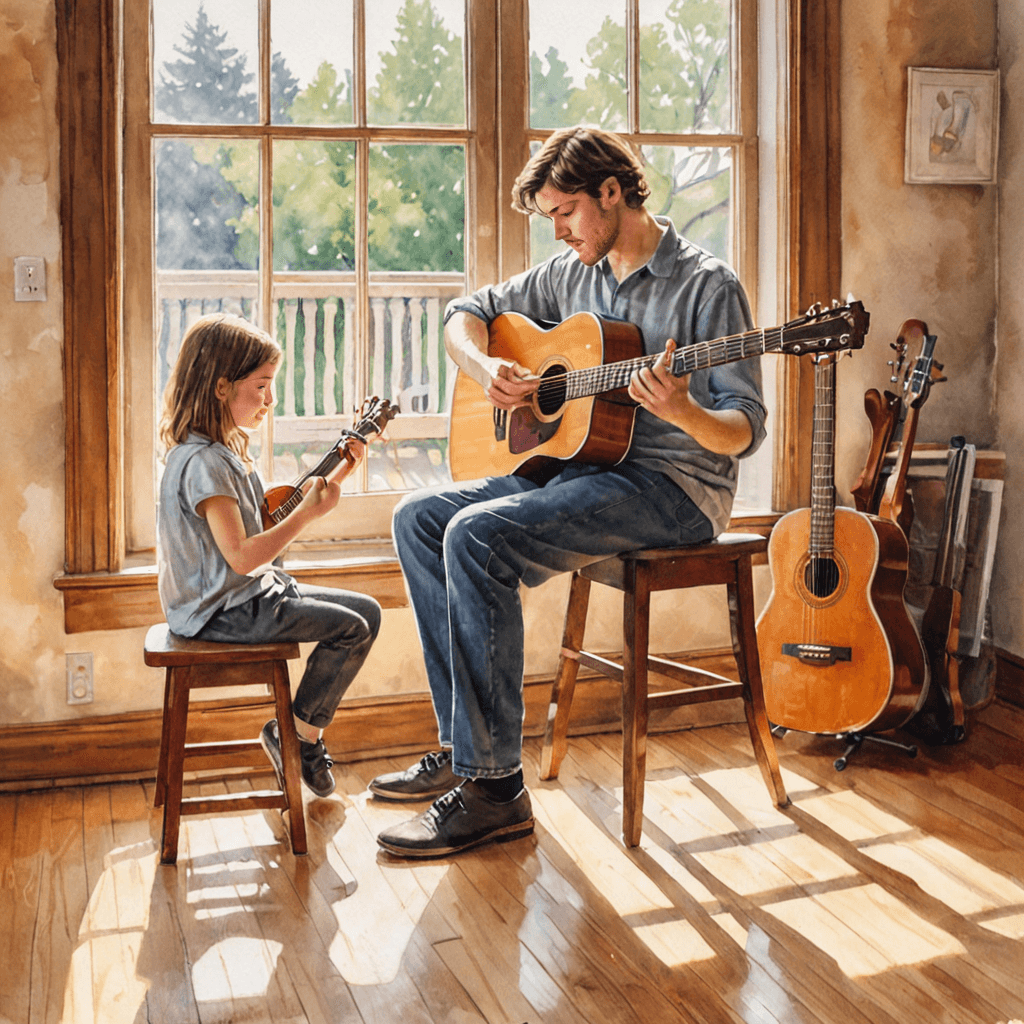
At Muzart Music and Art School, we find that the first month of guitar lessons isn’t really about playing songs at all. It’s about hand position, the geometry of the fretboard, the difference between picking and strumming, and building tactile familiarity with a string under the finger that doesn’t buzz, mute, or hurt. Skip these foundations and a student plateaus around month three, frustrated that the chords they’re attempting just don’t sound right.
A good guitar teacher will not rush a young beginner into chords for the sake of motivation. The right teacher knows the long-term cost of skipping early-stage technique and balances “fun” against “foundation” in deliberate proportion.
Acoustic vs Electric: The First Real Decision
The most common question parents ask before booking a first guitar lesson is whether their child should start on acoustic or electric. The honest answer is: it depends on the student’s age, hand size, and what music they actually want to play.
Acoustic guitar is more forgiving to a beginner in some ways and harder in others. The strings are heavier and require more finger pressure, which can be discouraging for very young children with small hands. But acoustic teaches strumming, dynamics, and tone control in a way that translates cleanly to any other guitar later. It’s the standard recommendation for younger children and for students whose long-term goal is folk, country, classical, or singer-songwriter playing.
Electric guitar has lighter strings and is physically easier to fret, which can accelerate early progress. But it requires an amplifier, more gear, and an awareness that the instrument sounds very different unplugged. It tends to be the better fit for older children, teens, and students drawn to rock, blues, metal, or contemporary pop.
In our experience, the bigger predictor of long-term success isn’t acoustic vs electric — it’s whether the student is playing the kind of music they actually want to hear. A nine-year-old who wants to play rock songs and is forced into classical acoustic for two years tends to quit. The same student given an electric and a teacher who can route them through technique using songs they care about usually stays.
What the First Six Months Actually Look Like
A structured guitar program for a beginner unfolds in roughly this sequence.
In months one and two, the focus is on holding the instrument correctly, basic right-hand picking and strumming patterns, identifying the strings by name and number, the chromatic warm-up exercises that build finger independence, and the first one or two open chords (usually E minor or A minor, which are the simplest physically). The student also begins reading basic chord diagrams and learns to count rhythm out loud.
In months three and four, the open chord vocabulary expands to a working set — G, C, D, A, E, A minor, E minor, D minor — and the student can begin moving between them in sequence. Basic strumming patterns get more complex. The student starts learning simple songs that use these chords, often three- or four-chord pop and folk songs designed exactly for this stage.
In months five and six, transitions between chords become smoother, the student begins basic single-note melody playing alongside chord work, and depending on the student’s interest, the teacher introduces either fingerstyle techniques (for acoustic-leaning students) or simple power chords and palm muting (for electric-leaning students). The student finishes the first half-year able to play recognizable songs through, even if not yet smoothly.
This is what genuine guitar progress looks like. A program that promises “songs in week one” is selling something — usually at the cost of the foundation a student needs to keep going past month six.
Why Mississauga Families Come to Etobicoke for Guitar
Our single studio is in Etobicoke, near Cloverdale Mall, and Mississauga families regularly drive in for weekly lessons. The drive from most Mississauga neighbourhoods runs fifteen to twenty-five minutes — Port Credit and Cooksville on the shorter end, Streetsville and Meadowvale further out.
The families who travel for guitar instruction tell us they’re prioritizing teacher consistency, structured curriculum, and the kind of program where their child works with the same instructor over years rather than rotating through whoever is available that week. For families based in Mississauga, our guitar lessons in Mississauga page covers scheduling, programs, and frequently asked questions specific to families travelling in from the Mississauga area.
More detail about our broader guitar program — teaching approach, curriculum structure, and the full range of styles and levels we cover — is available on our guitar lessons in Etobicoke page.
Investment, Schedule, and Trial Lessons
A trial guitar lesson at Muzart is $35 — a single one-time fee with no commitment beyond that lesson. Ongoing private guitar lessons run $155 per month with all materials included. Lesson times are weekly, same day and same time each week, with after-school, evening, and limited weekend availability.
We strongly recommend the trial before committing to ongoing lessons. Guitar in particular benefits from teacher-student fit — the right teacher can make a hesitant child fall in love with the instrument in thirty minutes, and the wrong teacher can quietly drain motivation over weeks before anyone notices.
If you’re shortlisting schools, the most useful thing you can do is book the trial at each and compare. Our families who travel from Mississauga almost universally tell us this is the step that made the decision clear.
What About Older Beginners? And Adults?
Two patterns we see often.
Older children and teens who have never played before sometimes make faster early progress than younger children, simply because their hand strength, focus, and ability to self-correct are more developed. A thirteen-year-old beginner can reach a level in six months that takes a seven-year-old beginner closer to a year. This isn’t an argument for waiting to start — the seven-year-old will eventually surpass the thirteen-year-old who started at the same time — but it does mean that older first-time students shouldn’t feel behind. They aren’t.
Adult beginners are a meaningful and growing part of our guitar studio. Adults bring focus, patience, and clarity about what music they want to play — three advantages that often offset slower physical adaptation. Adult lessons follow the same private weekly format and pricing as student lessons. Our broader guitar lessons in Etobicoke program serves adults at all levels, including complete beginners returning to an instrument they’d always wanted to try.
How to Book a Trial Guitar Lesson
You can book a trial guitar lesson at Muzart directly through our scheduling system. If you’d prefer to ask questions about teachers, schedule, or our approach before booking, you can request more information and we’ll follow up.
The trial isn’t a sales pitch. It’s a real guitar lesson with a real teacher. Bring the guitar your child is curious about — or use one of ours at the studio — and watch what thirty minutes of skilled instruction looks like.
Frequently Asked Questions
What age should my child start guitar lessons?
Most children are ready for formal guitar lessons between ages six and eight, when their hands are large enough to fret strings comfortably and they can focus for a thirty-minute lesson. Some younger children do well with a properly-sized smaller guitar; the trial lesson is the most reliable way to assess readiness for your specific child.
Should my child start on acoustic or electric guitar?
It depends on age, hand size, and the music your child wants to play. Younger children and students drawn to folk, classical, or singer-songwriter styles usually start on acoustic. Older children, teens, and students drawn to rock or pop styles often do better starting on electric. There’s no universal right answer — a good teacher will help you decide during the trial.
How long does it take to drive from Mississauga to Muzart in Etobicoke?
Most Mississauga neighbourhoods are fifteen to twenty-five minutes from our Etobicoke studio near Cloverdale Mall. Port Credit and Cooksville families are typically on the shorter end of that range; Meadowvale and Streetsville families closer to twenty-five.
How much do guitar lessons cost?
Private guitar lessons at Muzart are $155 per month with all materials included. A one-time trial lesson is $35. There are no registration fees or hidden costs added later.
Do I need to buy a guitar before the trial lesson?
No. Bring whatever guitar you already have if you have one, or use a studio instrument for the trial. We can advise on guitar selection during or after the trial lesson once we know whether your child is leaning acoustic or electric.
Can adults take guitar lessons too?
Yes. Adult guitar instruction is a substantial part of our program, including complete beginners, returning players, and adults working toward specific styles or repertoire goals. Adult lessons follow the same weekly private format and pricing as student lessons.