
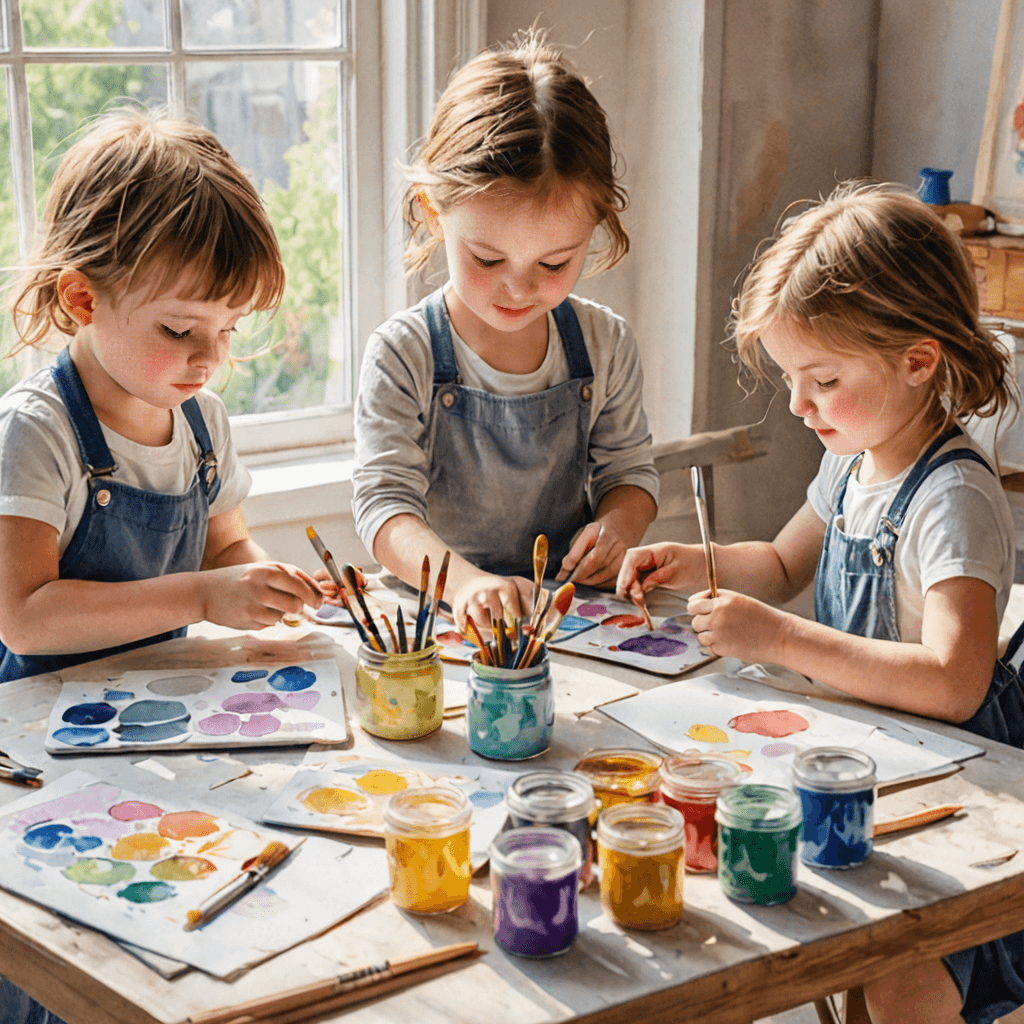
Group Art Classes for Children in Mississauga: What Parents Should Look For
Table of Contents
When parents look for group art classes for children in Mississauga, the options blur together fast — every program promises creativity and fun, and it is hard to tell from a website which classes actually teach and which simply supervise. The difference is real and worth learning to spot, because a well-run children’s group art class does something a craft hour never will: it builds genuine skill, social confidence, and a habit of creative thinking that lasts. Below, we lay out exactly what separates a quality group art program from a filler activity, so you can choose with confidence.
At Muzart Music and Art School, we run group art classes for children from our Etobicoke studio near Cloverdale Mall, serving families across Mississauga — including Applewood, Erin Mills, and the Square One area. Group classes are the one format where children learn alongside peers, and getting the format right matters. Here is what to look for.
Why Group Art Classes Work So Well for Children
Group art classes suit children for reasons that go beyond convenience. Kids feed off each other’s energy and ideas; seeing a classmate try a bold colour or a new approach sparks their own experimentation in a way solo work rarely does. The social setting also teaches something quietly important — how to share materials, give and receive feedback, and take pride in work displayed alongside others. These are confidence-building experiences that carry well outside the art room.
Importantly, group art is one of the few genuinely group formats worth seeking out for young children. At Muzart, music instruction is always private and one-on-one, because instruments need individual technical correction — but children’s art is where the group setting genuinely adds value. The peer energy, the shared discovery, and the social learning are features of the format, not compromises. Our group art classes for children are built specifically around that dynamic.
That said, “group” is only an advantage when the class is structured to teach. A large, loosely run group is just a room full of kids with paint. The signals below are how you tell the difference.
Signal One: Real Skill Progression, Not Repeated Crafts
The clearest marker of a quality program is that children learn progressively rather than repeating the same activity in different colours. In a strong class, a young child develops fine motor control, colour recognition, and confidence making marks, while an older child learns shading, proportion, composition, and how to plan a piece before starting. Ask any program directly: how does what my child learns in month one differ from month six? A quality class has a clear answer; a filler class does not.
Progression matters because children who only ever make crafts plateau and lose interest, usually around the four-to-five-week mark when the novelty fades. Children who are taught to see — to notice light, shape, and negative space — keep growing and stay engaged for years. That week-four dip is a reliable test: programs built on genuine skill-building carry children through it, while programs built on novelty lose them there.
Signal Two: Class Size Small Enough to Actually Teach
Class size is where many group programs quietly cut corners. When a group is too large, the teacher becomes a traffic controller instead of an instructor, and individual children get almost no personal guidance. A well-run children’s group keeps numbers small enough that the teacher can move around the room, correct a grip, demonstrate a technique one-on-one, and notice when a specific child is struggling or ready for more.
When you inquire about a program, ask how many children are in a class and how the teacher manages individual attention within the group. A strong program will have a confident, specific answer. If the response is vague, that is a signal worth heeding. For children who want or need more individual pacing than any group can offer, private art lessonsare an option — and many families move a child from group to private once a real interest takes hold.
Signal Three: Variety of Materials and a Real Teaching Structure
A serious children’s program rotates through drawing, painting, and mixed media over a term rather than staying locked on one cheap, easy-to-clean medium. Each material teaches something distinct: watercolour teaches patience and letting go of control, acrylic teaches layering and correction, drawing builds the observational foundation everything else rests on. A child who gets to try clay, collage, and paint discovers preferences they would never find in a one-medium class.
Structure matters as much as materials. A quality class has a rhythm — a short demonstration, guided practice, independent creation, and a moment at the end where children share and hear encouragement. That closing reflection builds the vocabulary and confidence that carry into every future class. Worth noting for budgeting: at Muzart, all materials are included, so there are no surprise supply runs. A children’s group art program runs $155 per month with everything provided, and a $35 trial class lets your child experience the structure before you commit to a term.
Signal Four: A Program That Can Grow With Your Child
The best children’s art programs are not dead ends. A program that can take a child from a first group drawing class through to more advanced work — and eventually art portfolio preparation for high school or university applications — offers a continuity that stand-alone craft classes cannot. Even if portfolio work is years away, choosing a program with a real path means your child can keep growing in one place with teachers who know them.
For Mississauga families, this continuity is worth weighing against a marginally shorter drive. A program that genuinely teaches, in a well-structured group, with room to grow, is worth a few extra minutes in the car — because the alternative is switching programs the moment your child outgrows a craft hour.
Frequently Asked Questions
What age can children start group art classes in Mississauga?
Children as young as five thrive in a structured group art class, provided the program is genuinely age-appropriate. Younger children need shorter sessions focused on foundational skills like fine motor control and colour, while children eight and up can handle longer classes and more technical instruction. The key marker of quality is that a good program does not put a five-year-old and an eleven-year-old through identical material — it matches the class to the child’s developmental stage.
How large should a children’s group art class be?
Small enough that the teacher can give individual attention within the group — moving around the room, correcting technique one-on-one, and noticing when a child is struggling or ready for more. When you inquire, ask directly about class size and how the teacher manages individual guidance. A vague answer is a warning sign. If your child needs more individual pacing than a group offers, private art lessons are worth considering.
How much do group art classes for children cost near Mississauga?
At Muzart, a monthly children’s group art program is $155 with all materials included, and there is a $35 trial class so your child can try it first. When comparing programs, always confirm whether materials are included — a lower monthly fee that requires you to buy supplies separately often costs more overall. You can request more information to talk through what fits your child’s age and interests.
Do you offer group art classes for children who live in Mississauga?
Yes. Our studio is in Etobicoke near Cloverdale Mall, a short drive for families across Mississauga, including Applewood, Erin Mills, and the Square One area. Many of our children’s art students commute in from Mississauga neighbourhoods, and we are glad to help you plan a schedule that works with your family’s routine.
See a Quality Group Class for Yourself
The surest way to judge a children’s group art program is to watch your child inside one. Book a $35 trial class and see how a structured, skill-building group compares to the craft hours you may have found elsewhere. Book a trial class now, or request more information if you would like to talk through the right fit for your child first.