
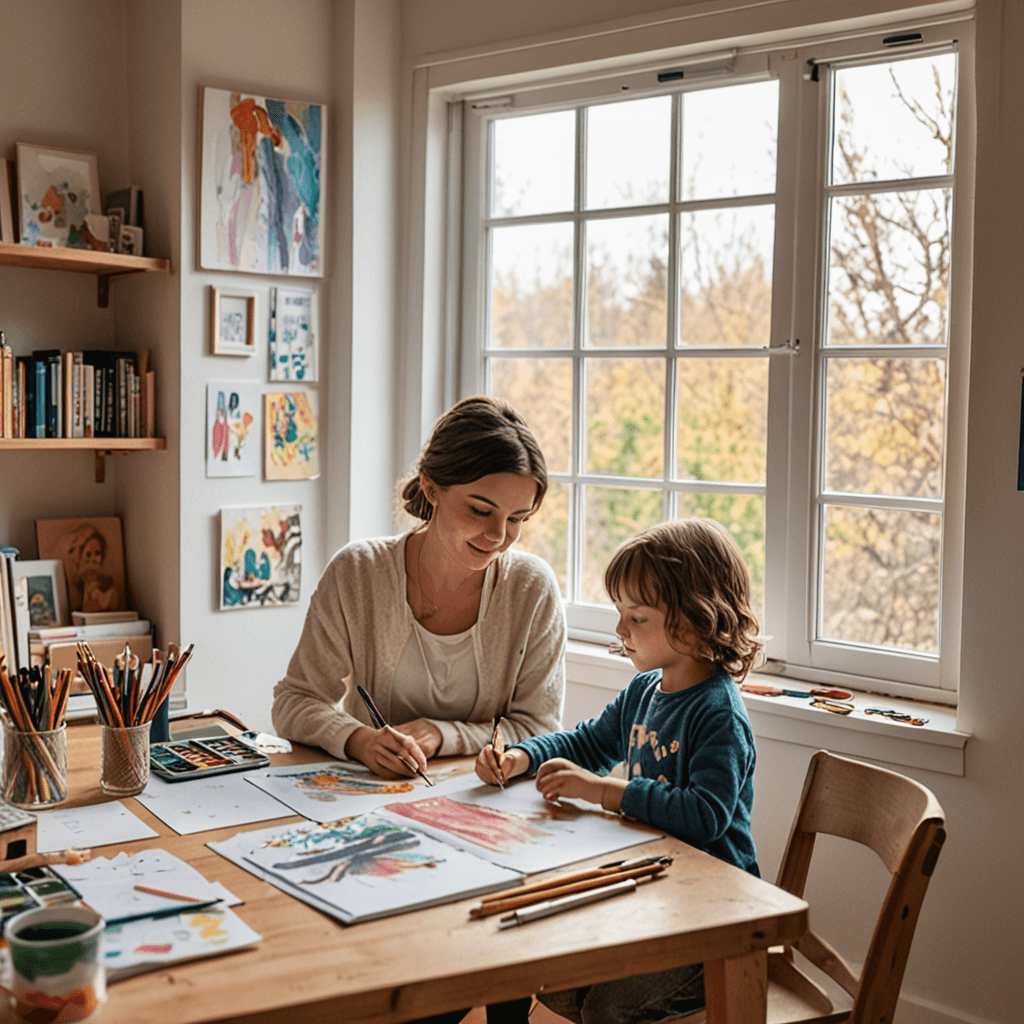
Art Education at Home: Complementing Formal Art Classes
Table of Contents
When parents enroll their children in formal art classes, many wonder how they can support and extend this learning at home. At Muzart Music and Art School in Etobicoke, near Cloverdale Mall, we believe that art education thrives when classroom instruction is complemented by home practice and exploration. The good news is that supporting your child’s artistic development at home doesn’t require special expertise or extensive resources—just enthusiasm, a few basic supplies, and a willingness to foster creative expression.
The relationship between formal art instruction and home art activities is symbiotic. What children learn in group art classes or private art lessons provides a foundation of skills and concepts, while home exploration allows them to experiment, apply techniques in new contexts, and develop their personal artistic voice.
Creating an Inviting Art Space at Home
The physical environment significantly impacts a child’s inclination to create art at home. While a dedicated art studio would be ideal, most families work within space constraints. The key is creating a designated area where art-making is welcome, mess is manageable, and supplies are accessible.
A dedicated art space doesn’t need to be large. A corner of the kitchen table, a small desk, or a portable caddy of supplies all work well. What matters is that the space signals “art happens here” and your child knows they’re welcome to create whenever inspiration strikes.
Surface protection is essential. A wipeable tablecloth, old shower curtain, or large pieces of cardboard protect furniture, giving both you and your child peace of mind about mess.
Storage and organization matter significantly. Children create more regularly when they can access supplies independently. Clear containers let them see what’s available, labeled bins help them return items, and low shelves put supplies within reach. When materials are visible and accessible, children create spontaneously.
Good lighting makes detail work easier and colors appear more accurate. Natural light is ideal, but a well-positioned lamp works perfectly.
Display space validates creative efforts. A bulletin board, magnetic strip, or simply taping work to a wall creates a rotating gallery that celebrates their creativity.
Essential Art Supplies for Home Use
Stocking a home art space can feel overwhelming, but children need surprisingly little to create meaningful art. Starting with basics and gradually expanding makes more sense than purchasing comprehensive supply sets upfront.
Drawing Supplies: Drawing pencils in varying hardnesses, colored pencils, markers, and crayons cover most needs. Quality matters—cheap colored pencils that barely make marks frustrate children. Mid-range brands offer good quality without excessive cost.
Paper: Various paper types expand creative possibilities. Drawing paper for pencil work, heavier paper for markers and paint, and newsprint for experimental work provide options. Buying paper pads rather than loose sheets keeps supplies organized.
Painting Materials: Basic tempera or acrylic paints in primary colors plus white and black allow for comprehensive color mixing. Different brush sizes, a palette, and water containers complete the setup.
Other Useful Supplies: An eraser, ruler, scissors, glue stick, and masking tape handle most project needs. Add specialty items as your child’s interests develop.
A sketchbook for regular drawing practice is often overlooked. Unlike loose paper, sketchbooks create a visual record of progress that’s incredibly motivating.
Many supplies used in art classes at Muzart come included in the program, providing a good reference for quality levels.
Reinforcing Concepts from Formal Lessons
One of the most valuable ways to support your child’s art education at home is by reinforcing concepts and techniques introduced in formal classes. This doesn’t mean replicating lessons—rather, creating opportunities to apply what they’ve learned in new contexts.
After each art class, ask your child what they learned or worked on. This helps them process information, gives you insight into their curriculum, and identifies concepts worth exploring at home. If they learned about warm and cool colors, set up a painting project exploring this. If they practiced drawing ellipses, encourage them to sketch household objects using this skill.
The key is application rather than repetition. If formal lessons focus on technique-building, home art can emphasize experimentation and personal expression using those techniques. This balance prevents art from feeling like homework.
Many formal art curricula introduce concepts progressively. Understanding this helps you support learning appropriately. Children typically learn basic shapes before perspective, color identification before complex color theory, and observational drawing before imaginative composition.
When your child brings home artwork from class, discuss it together. Ask about their process, what was challenging, what they enjoyed, and what they might do differently next time. These conversations develop critical thinking about art.
Balancing Structure and Freedom
Finding the right balance between structured activities and free exploration challenges many parents. Too much structure can make art feel like school work, while too little sometimes leaves children unsure how to begin.
Structured activities work well when introducing new materials, teaching specific techniques, or working on skills benefiting from repetition. Following age-appropriate drawing tutorials, completing color theory workbook pages, or practicing specific techniques all qualify as valuable structured activities.
However, children also need unstructured time where they direct their own exploration without prescribed outcomes. This free creation time develops problem-solving skills, artistic confidence, and personal style in ways structured activities cannot.
A good approach is alternating between structured and unstructured sessions. Perhaps after a structured tutorial on drawing animals, follow with free time to draw imaginary creatures. After practicing color mixing formulas, allow experimentation with color combinations of their choice.
Pay attention to your child’s preferences. Some love following instructions and feel most comfortable with structured projects. Others find rules constraining and flourish with open-ended materials. Honor these preferences while gently encouraging some experience with both approaches.
Managing Expectations and Embracing Process
Parents sometimes inadvertently create pressure around art-making by focusing too heavily on product quality. Understanding the developmental nature of art skills and truly valuing process over product creates a healthier home art environment.
Children’s art progresses through predictable stages, and what looks “messy” to adult eyes often represents appropriate development for that child’s age. A seven-year-old’s paintings should look like a seven-year-old made them. Praising the artistic process, effort, and creative thinking rather than fixating on realistic accuracy helps children develop intrinsic motivation.
Comments like “Tell me about your artwork” work better than “That’s a beautiful house” (when the child drew a spaceship). The first approach allows children to share their intent and process. Open-ended questions encourage reflection: “What was the hardest part?” “What are you most proud of?”
Mistakes and unsuccessful projects are valuable learning opportunities rather than failures. When a painting turns to mud or a drawing doesn’t look as intended, resist the urge to fix it. Instead, discuss what happened and what could be tried differently. This normalizes struggle as part of learning.
Children enrolled in formal art classes receive expert instruction. Home art should feel lighter and more playful—a space for experimentation without pressure of producing impressive results.
Age-Appropriate Support and Independence
The appropriate level of parental involvement changes significantly as children develop. Finding the right balance between helpful support and independence-building promotes both skill development and confidence.
Younger children (ages 5-7) typically need more hands-on support. They benefit from adults setting up materials, demonstrating techniques, working alongside them, and helping with cleanup. Even young children need opportunities to make independent creative choices rather than simply following adult demonstrations.
As children move into middle elementary years (ages 8-10), they generally want more independence but still benefit from occasional guidance. They can set up and clean up their own workspace, choose projects, and work for extended periods without supervision. Parents can shift to a consultant role—available when needed but not hovering.
Preteens and early teens (ages 11-14) typically want significant independence in their creative work. They often prefer creating privately and sharing finished work. Supporting this age group means ensuring supplies are available, respecting their need for creative privacy, and showing genuine interest when they choose to share.
Regardless of age, children benefit from seeing adults engage in creative activities. When parents draw or paint—even as amateurs—it normalizes creative practice and shows that art isn’t just for children or “talented” people.
Connecting Art to Daily Life
One of the most powerful ways to support art education at home is helping children recognize art in everyday life. This expanded awareness enriches their understanding of art’s role and relevance.
Point out design elements in daily environments. Discuss colors in a sunset, patterns in architecture, composition in photographs, or typography on signs. These conversations develop observational skills and help children understand that artistic principles apply broadly.
Visit museums and galleries when possible, but don’t overlook “everyday art” opportunities. Local libraries often host art exhibitions. Public art appears in parks and buildings. Even grocery store packaging involves artistic design choices.
Photography offers an accessible way to explore compositional principles. If your child has access to a camera or phone, encourage them to photograph interesting subjects, paying attention to framing, lighting, and composition.
Nature provides endless artistic inspiration. Collecting natural objects like leaves, flowers, or interesting rocks can inspire observational drawing or color studies. Noticing patterns, textures, and color combinations in nature develops visual awareness that supports all art-making.
Books about art and artists expose children to diverse styles, time periods, and cultural perspectives. Age-appropriate art history books or biographies expand their understanding of art’s possibilities.
Encouraging Regular Practice
Like music practice, regular art-making at home significantly accelerates skill development. However, art practice differs from music practice in important ways. While music practice often involves repetitive technical exercises, art practice can be more playful and exploratory while still building skills.
Establishing a routine helps make art-making a regular habit. This might be 20 minutes of drawing on certain days, weekend art projects, or simply keeping a sketchbook accessible for spontaneous creation. The specific routine matters less than consistency.
That said, art practice should remain enjoyable rather than obligatory. If your child resists structured art time at home, forcing it can damage their relationship with creativity. Some children naturally gravitate toward regular art-making, while others need gentle encouragement or specific project ideas.
The sketchbook habit particularly benefits developing artists. Encouraging your child to carry a small sketchbook and spend a few minutes drawing daily builds both skills and habits. This practice doesn’t need to produce finished artwork.
Sometimes resistance stems from perfectionism or fear of failure. If your child struggles to start projects because they worry about the outcome, emphasize experimental “practice” projects where the goal is exploration rather than finished products.
Parental Role: Facilitator vs. Director
Perhaps the most important aspect of supporting art education at home is understanding your role as a facilitator who provides opportunities and resources rather than a director who controls the creative process.
Facilitation means ensuring supplies are available, creating time and space for art-making, exposing your child to artistic inspiration, and showing interest in their work. It means problem-solving logistical challenges rather than aesthetic challenges.
Direction, in contrast, involves dictating what children should create, correcting their artistic choices, or imposing adult standards on their work. While well-intentioned, directive approaches can undermine confidence and squash creative exploration.
Children receiving quality instruction in group art classes or private lessons get technical guidance from their teachers. Home art serves a different purpose—it’s where they apply, experiment, and discover their own creative voice.
When children ask for help or feedback, offer it supportively. “What effect are you trying to create?” often leads to more helpful dialogue than immediately offering solutions. Sometimes children just need encouragement to keep trying rather than specific technical advice.
Frequently Asked Questions
How much should I spend on home art supplies?
Start modestly with basic, quality supplies rather than purchasing everything at once. A $30-50 initial investment covers essential drawing and painting materials that will last months. As your child’s interests and skills develop, gradually add specialty items. Watch for sales at art supply stores and consider asking for art supplies as gifts for birthdays or holidays. Remember that formal art classes include supplies, so home materials supplement rather than duplicate what’s provided in lessons.
My child gets frustrated when home projects don’t turn out well. How can I help?
Frustration indicates your child cares about their work—a positive sign—but needs support managing expectations. Emphasize that even professional artists create unsuccessful pieces regularly. Frame challenges as learning opportunities: “What would you do differently next time?” Share examples of artists’ sketches and preliminary work showing that finished pieces go through many iterations. Consider whether structured activities might provide better success experiences initially, gradually introducing more open-ended projects as confidence builds.
Should I display all of my child’s artwork, or can I discard some pieces?
It’s perfectly fine to be selective about what you keep and display. Involving your child in this decision teaches curation skills. Periodically review accumulated artwork together, selecting favorites to keep and photographing others before recycling. Keep a portfolio of their best work showing progression over time. Some parents create memory books with photos of artwork, which preserves the visual record without requiring physical storage of every piece
How can I encourage art practice when my child seems more interested in other activities?
Not all children need equal amounts of home art practice to benefit from formal lessons. If your child loves their art class but doesn’t voluntarily create at home, that’s okay. Focus on keeping supplies available for when inspiration does strike rather than forcing regular practice. Some children concentrate their art-making in formal lessons and prefer other activities at home. That said, gently encouraging occasional home projects or keeping a sketchbook accessible plants seeds that may grow into more regular practice over time.
What if I’m not artistic myself? Can I still support my child’s art education?
Absolutely. You don’t need artistic skills to provide supplies, create workspace, show interest in your child’s work, or facilitate art-making opportunities. In fact, parents who struggle with art themselves can model healthy attitudes by trying alongside their children and showing that enjoyment matters more than expertise. Your genuine interest and enthusiasm support your child’s development more than technical knowledge would.
How do home art activities relate to what my child learns in formal lessons?
Home art provides opportunities to apply, practice, and experiment with skills and concepts introduced in formal lessons. Art classes at Muzart provide structured instruction in techniques and concepts, while home art allows free exploration and personal expression using these developing skills. Think of formal lessons as providing the “vocabulary” and “grammar” of art, while home practice lets children compose their own creative “sentences” and “stories.” Both are essential for comprehensive artistic development.
Taking Next Steps
Creating a supportive home environment for art-making doesn’t require expertise or extensive resources—just a commitment to making art supplies accessible, time available, and creative exploration welcome. The home art space you create complements your child’s formal instruction, allowing them to practice skills, explore personal interests, and develop their unique artistic voice.
Art education happens in the relationship between structured instruction and unstructured exploration. What children learn in formal classes provides a foundation, and what they create at home allows them to build upon that foundation in personally meaningful ways.
At Muzart Music and Art School, we’re committed to helping children develop their artistic abilities through quality instruction in both group classes and private lessons.
Ready to provide your child with quality art instruction? Book a trial class at our Etobicoke location near Cloverdale Mall to experience our approach firsthand.
Have questions about how to best support your child’s art education at home? Request more information and our team will be happy to discuss how formal instruction and home practice work together.
Art education is most powerful when learning environments—both formal and informal—work together. By creating a supportive home space for artistic exploration, you give your child the gift of regular creative practice and the confidence to develop their unique artistic voice.