
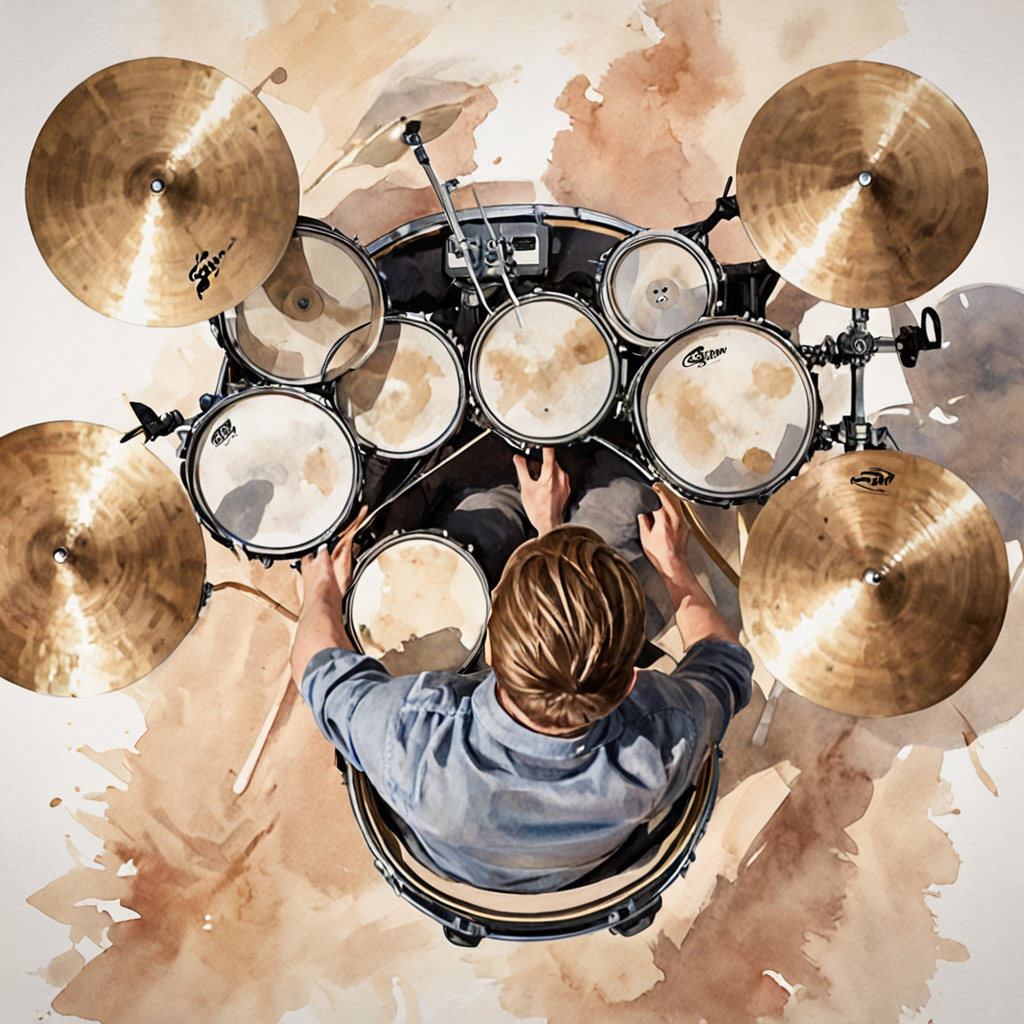
Drum Independence for Young Drummers in Toronto: Coordination Development
Table of Contents
Drummers face unique coordination challenges unlike those encountered by other musicians. While pianists coordinate two hands playing different patterns, drummers must coordinate four limbs independently—two hands and two feet—each performing distinct rhythmic patterns that combine into cohesive grooves. At Muzart Music & Art School, located in Etobicoke near Cloverdale Mall, we understand that developing limb independence represents one of drumming’s most critical and challenging skill areas, requiring patient, systematic instruction that builds coordination progressively without overwhelming young students.
Independence doesn’t mean limbs move without relationship to each other—rather, it means each limb can execute its assigned pattern while other limbs perform different patterns simultaneously. This sophisticated coordination develops gradually through carefully designed exercises, patient practice, and instruction that respects developmental readiness. Rushing independence training creates frustration and poor habits, while appropriately paced instruction builds impressive coordination capabilities that amaze audiences and satisfy young drummers tremendously.
This comprehensive guide explores coordination development for young drummers, from fundamental single-limb control through advanced four-limb independence. Understanding these concepts helps parents appreciate the complexity of drumming coordination and recognize quality instruction that develops independence systematically rather than overwhelming students with premature demands beyond their current capabilities.
Understanding Drumming Coordination Fundamentals
Before exploring independence training specifically, understanding basic coordination concepts provides essential foundation. Drumming coordination differs fundamentally from everyday movement coordination, requiring specialized neural pathways that develop through focused practice.
Motor control hierarchy begins with single-limb patterns executed consistently and accurately. Students must control each limb individually before attempting coordination between limbs. Right hand, left hand, right foot, and left foot each require isolated attention initially, ensuring students can execute basic patterns with each limb independently before combining them. This seems obvious, yet many students attempt complex four-limb patterns before securing individual limb control, leading to frustration and confusion.
Bilateral coordination—using both hands together—represents the first coordination layer beyond single-limb control. Students learn to play hands together in various relationships: unison (both hands playing identical patterns simultaneously), contrary motion (hands playing opposite patterns), and independent patterns (hands playing different rhythms). This two-limb coordination builds neural pathways serving more complex independence later. Even students struggling with bilateral hand coordination can develop it through patient practice with appropriate exercises.
Cross-lateral coordination adds complexity by coordinating limbs on opposite body sides—right hand with left foot, or left hand with right foot. This coordination pattern proves particularly challenging because it crosses the body’s midline, engaging both brain hemispheres simultaneously. Many basic drum beats use cross-lateral coordination, making it essential even for beginning students. However, the challenge level varies significantly—some cross-lateral patterns feel intuitive while others require substantial practice for comfortable execution.
Ipsilateral coordination coordinates limbs on the same body side—right hand with right foot, left hand with left foot. This coordination typically feels more natural than cross-lateral patterns because it doesn’t cross the body’s midline. However, “more natural” doesn’t mean “automatic”—students still need specific practice developing smooth ipsilateral coordination.
Polyrhythmic coordination represents advanced independence where limbs play patterns with different underlying rhythmic subdivisions simultaneously. For example, one hand might play steady quarter notes while the other plays triplets. This sophisticated coordination challenges even advanced drummers, requiring both technical control and conceptual understanding of how different rhythmic layers relate mathematically and sonically.
Tempo and complexity relationships significantly affect coordination difficulty. Students may execute patterns successfully at slow tempos but struggle when speed increases. Similarly, patterns manageable individually become challenging when combined or when additional coordination demands are added. Understanding these relationships helps students practice strategically, working at tempos and complexity levels appropriate for current capabilities while gradually pushing boundaries.
Professional instruction through drum lessons in Etobicoke ensures coordination develops systematically rather than haphazardly. Instructors assess students’ current coordination capabilities accurately, design exercises targeting specific coordination challenges, and sequence learning to build skills progressively. This strategic approach develops impressive coordination far more efficiently than random practice hoping coordination somehow improves magically.
Foundation Exercises for Developing Independence
Specific exercises systematically develop independence, progressing from simple coordinations to complex four-limb patterns. Understanding this progression helps students appreciate why particular exercises matter even when they seem disconnected from actual drumming.
Single-stroke roll variations build bilateral hand coordination through alternating strokes between hands. Beyond basic alternating—right-left-right-left—students explore accent patterns (emphasizing specific strokes), dynamic variations (playing some strokes louder or softer), and rhythmic variations (changing spacing between strokes). These exercises develop smooth hand alternation, dynamic control, and the ability to accent specific strokes within patterns—all foundational for independence.
Paradiddle family patterns combine single strokes and double strokes (two consecutive hits with one hand) in various sequences. The basic paradiddle—right-left-right-right, left-right-left-left—requires coordinating different stroke types between hands while maintaining even timing and dynamics. Paradiddle inversions and variations create numerous exercise possibilities, each developing different aspects of bilateral coordination. These patterns appear constantly in actual drumming, making them both technically valuable and musically practical.
Hand-foot combinations introduce coordination between arms and legs. Starting simply—playing steady quarter notes with one hand while the foot plays on specific counts—students gradually increase complexity by adding variations in either hand or foot patterns. These exercises isolate hand-foot coordination without the complexity of coordinating both hands and both feet simultaneously, allowing focused attention on this specific coordination challenge.
Ostinato exercises maintain repeating patterns in one limb while the other limb plays variations. For example, the right hand might play steady eighth notes on the hi-hat while the left hand plays various snare patterns, or the bass drum might play steady quarter notes while hands execute complex fills. This approach develops the mental independence necessary for maintaining steady patterns in some limbs while others play contrasting material—essential for actual drumming where bass drum often maintains steady pulse while hands play melodic or rhythmic variations.
Four-limb coordination exercises systematically add limbs to coordination patterns. Students might begin with hands playing a pattern, then add bass drum on specific beats, then add hi-hat foot controlling hi-hat opening and closing. This layered approach builds four-limb patterns progressively rather than attempting all four limbs simultaneously from the beginning, which typically overwhelms students and creates confusion rather than learning.
Displacement exercises take familiar patterns and shift them to different starting points within measures, developing mental flexibility and coordination awareness. For example, a pattern starting on beat one might be practiced starting on beat two, three, or four, or on off-beats. This displacement challenges coordination differently than practicing patterns only in familiar positions, strengthening genuine independence rather than simply memorizing specific coordination sequences.
Slow-motion practice represents perhaps the most important practice technique for coordination development. Playing patterns at extremely slow tempos—so slow that maintaining pulse becomes difficult—forces conscious attention to each movement and the relationships between limbs. This conscious practice builds neural pathways more effectively than fast, automatic playing where coordination remains subconscious and errors get reinforced through repetition. Many students resist slow practice because it feels boring, but patient slow practice accelerates coordination development dramatically.
The $35 trial lesson at Muzart introduces students to systematic coordination development approaches, experiencing how professional instruction targets specific coordination skills through carefully designed exercises. The $155 monthly program provides ongoing coordination training through exercises progressively challenging students appropriately for their development level, building impressive four-limb independence systematically over time.
Progressive Coordination Development by Age and Level
Coordination training must respect developmental stages, introducing concepts when students can understand and execute them successfully. Rushing coordination demands frustrates students while appropriately paced instruction builds confidence alongside capabilities.
Beginning students (ages 7-10, first year) focus primarily on single-limb control and simple bilateral hand coordination. Technical work emphasizes playing steady patterns consistently with each hand individually, alternating hands smoothly and evenly, basic dynamic control (playing louder and softer), and perhaps very simple hand-foot combinations like playing hands together while adding bass drum on downbeats. Musical goals at this level prioritize keeping steady time, playing simple beats, and developing basic technique. Coordination between hands and feet remains quite simple—usually bass drum and snare patterns that align clearly rather than conflicting rhythmically.
Early intermediate students (ages 10-12, years 2-3) can begin developing more sophisticated bilateral coordination and introducing three-limb patterns. Hand coordination advances beyond simple alternation to include accents, dynamic variations, and playing different patterns between hands while maintaining steady pulse. Bass drum becomes more independent, playing patterns that don’t simply align with hand strokes but create interesting rhythmic interplay. Hi-hat foot might be introduced in simple patterns, though full four-limb independence remains beyond most students at this level. The emphasis lies on clean execution of moderately complex patterns rather than attempting maximally difficult coordination.
Intermediate students (ages 12-14, years 3-5) develop genuine four-limb independence through systematic training. All limbs can execute independent patterns, though complex polyrhythmic independence remains challenging. Students work on maintaining steady ostinatos in some limbs while varying others, playing drum fills while maintaining consistent bass drum patterns, coordinating complex hi-hat patterns with hands and bass drum, and beginning exploration of more sophisticated jazz and Latin rhythms requiring refined independence. Practice becomes more self-directed as students understand coordination principles and can identify their specific challenges.
Advanced young students (ages 14+, years 5+) refine coordination to professional standards appropriate for their age. Four-limb independence becomes quite sophisticated, with students executing complex polyrhythmic patterns, transitioning smoothly between different coordination patterns, improvising freely while maintaining solid rhythmic foundations, and tackling advanced repertoire from various musical styles. At this level, coordination training becomes increasingly style-specific—jazz independence differs from rock drumming coordination, Latin patterns require different independence than funk grooves. Students develop versatility across multiple drumming styles.
Physical development affects coordination readiness significantly. Younger students, particularly those under 10, are still developing fundamental motor control and cross-lateral coordination. Their coordination capabilities improve naturally through general physical development alongside specific drumming practice. Expecting extremely sophisticated independence from young students whose brains haven’t yet developed necessary neural pathways creates frustration. However, appropriate coordination training at each developmental stage prepares students for more advanced work as they mature physically and neurologically.
Attention span and focus capacity also influence coordination training effectiveness. Younger students benefit from shorter coordination exercises varied frequently to maintain engagement, while older students can sustain longer focused practice on specific coordination challenges. Quality instruction adapts exercise duration and variety to students’ attention capabilities, maximizing productive practice time without creating fatigue or frustration that undermines learning.
Individual variation in coordination development deserves recognition. Some students naturally coordinate multiple activities easily while others find even simple coordination challenging initially. Neither natural ease nor initial difficulty predicts ultimate achievement—with proper practice, initially uncoordinated students often develop exceptional independence while naturally coordinated students sometimes plateau if they don’t practice systematically. The key lies in appropriate instruction meeting students where they are and progressing patiently regardless of starting points.
Professional instructors at Muzart understand these developmental considerations thoroughly, providing age-appropriate coordination training that challenges students optimally without overwhelming them. The systematic approach builds coordination systematically rather than expecting it to develop magically without focused instruction.
Common Coordination Challenges and Solutions
Most drummers encounter specific coordination difficulties during their development. Understanding these common challenges and effective solutions helps students progress through plateaus that might otherwise create discouragement.
Limb coupling occurs when students cannot separate movements of different limbs, with one limb unconsciously following another’s pattern. For example, when the right hand plays a complex rhythm, the bass drum might mirror that rhythm unconsciously rather than maintaining its assigned pattern. This challenge indicates insufficient independence between limbs’ motor control. Solutions include isolating each limb’s pattern separately, practicing incredibly slowly to maintain conscious control, using verbal counting to maintain awareness of each limb’s pattern, and patience as neural pathways strengthening independence develop over time.
Rushing or dragging tempo while coordinating represents another common issue. Students might maintain steady time when playing simple patterns but speed up or slow down when attempting more complex coordination. This typically indicates insufficient technical mastery—when coordination requires excessive mental effort, timing awareness suffers. Solutions include simplifying patterns temporarily to regain timing control, practicing with metronomes or backing tracks providing external timing reference, recording practice to identify specific moments where timing issues occur, and ensuring each limb can execute its pattern individually with solid time before attempting combination.
Tension and physical strain often accompany coordination challenges. Students might tense shoulders, grip sticks too tightly, hold breath, or create unnecessary muscle tension when concentrating intensely on coordination. This tension actually impedes coordination by restricting fluid movement. Solutions include conscious relaxation checks during practice, ensuring appropriate tempo allows comfortable execution, focusing on smooth, relaxed movements rather than just correct patterns, and understanding that coordination should feel increasingly comfortable as it develops, not increasingly tense.
Loss of pattern awareness happens when students execute patterns correctly but can’t explain or describe what they’re playing. This indicates pattern memorization without genuine understanding, limiting students’ ability to apply coordination skills flexibly or troubleshoot errors. Solutions include verbalizing patterns (saying or singing what each limb plays), writing patterns in notation, analyzing how patterns relate musically and mathematically, and practicing pattern variations that require understanding rather than just memorization.
Inconsistent execution across tempos suggests incomplete technical mastery. Students might play patterns cleanly at one tempo but fall apart when slightly faster or slower. True independence allows comfortable execution across various tempos, though any pattern has tempo limits beyond current capabilities. Solutions include systematic tempo progression from extremely slow through optimal tempo ranges, identifying specific tempos where problems begin and targeting practice just below that threshold, avoiding practicing at tempos too fast for clean execution, and patience as expanding tempo ranges require time.
Fear of mistakes sometimes prevents students from even attempting challenging coordination patterns. This psychological barrier, though seemingly unrelated to physical coordination, significantly impacts learning. Students need permission to struggle and make mistakes—coordination development requires extensive trial and error. Solutions include creating supportive learning environments where mistakes are expected parts of learning, celebrating small progress rather than focusing on remaining challenges, recording successful attempts to build confidence, and understanding that every expert drummer struggled with independence initially.
Plateau periods where progress seems stalled frustrate students despite continued practice. These plateaus often precede breakthrough moments but can discourage students who expect linear progress. Solutions include varying practice approaches to engage learning differently, taking brief breaks from specific challenging patterns while working on other material, seeking instructor perspective on progress students themselves might not recognize, and understanding that coordination development includes consolidation periods where neural pathways strengthen without obvious external progress.
Professional guidance through music lessons helps students navigate these challenges effectively. Instructors recognize specific coordination issues accurately, design targeted solutions addressing individual students’ needs, and provide encouragement and perspective during difficult learning phases. This support often makes the difference between pushing through challenges successfully and giving up in frustration.
Applying Independence to Musical Contexts
Coordination exercises develop skills that must transfer to actual music-making. Understanding how independence applies musically ensures coordination training serves musical goals rather than existing as technical ends in themselves.
Basic rock beats represent foundational applications of four-limb independence. These patterns typically coordinate bass drum and snare in repeating rhythmic cycles while hands maintain steady cymbal patterns. Though seemingly simple, clean execution requires genuine independence—the ability to maintain steady hand patterns while feet execute complementary rhythms. Variations in bass drum patterns, snare placement, or cymbal rhythms create vast stylistic range from this basic template. Beginning students working on these beats develop fundamental independence while playing musically satisfying patterns rather than just practicing abstract exercises.
Drum fills interrupt or punctuate regular beat patterns with improvised or composed rhythmic statements. Fills often incorporate all limbs in rapid coordinated passages requiring precise independence. The coordination challenge increases because fills continuously vary rather than repeating predictable patterns. Students must execute coordination spontaneously, maintaining musical flow while navigating technical demands. Fill development exercises independence while developing musical creativity and rhythmic vocabulary.
Jazz independence represents sophisticated coordination application where ride cymbal maintains swing patterns, bass drum and snare play independent rhythmic commentary, and hi-hat punctuates specific beats with foot closures. This four-way independence allows each limb to converse musically rather than simply executing mechanical patterns. Developing jazz independence takes years of patient practice but creates remarkable musical freedom allowing drummers to respond spontaneously to musical moments.
Latin and world music styles employ distinctive coordination patterns reflecting cultural rhythmic traditions. Samba, bossa nova, Afro-Cuban, and other styles use specific independence patterns integral to authentic style realization. Learning these patterns develops both coordination capabilities and cultural musical awareness. Many students find these patterns challenging initially because they differ significantly from rock/pop coordination patterns encountered earlier, requiring mental flexibility and willingness to approach coordination from culturally specific perspectives.
Dynamic independence allows varying volume between limbs for musical expression. Playing soft bass drum under loud snare accents, gradually increasing hi-hat volume while maintaining consistent ride cymbal, or any other dynamic variation between limbs requires sophisticated control beyond just playing correct patterns. This dimension of independence develops more slowly than basic pattern execution but dramatically increases musical expressiveness.
Improvisation freedom emerges from solid independence foundation. When coordination becomes automatic, mental attention shifts from “what am I playing” to “what should I play next,” enabling genuine musical creativity. Improvising drummers draw on coordination vocabulary developed through systematic independence practice, combining familiar patterns creatively while responding to musical contexts spontaneously. This represents drumming’s ultimate goal—technical mastery serving unrestricted musical expression.
Performance pressure tests independence under stress. Students who execute coordination cleanly during practice sometimes struggle performing the same material for audiences. Managing performance anxiety while maintaining coordination requires specific practice performing for friendly audiences, recording performances for self-evaluation, mental rehearsal visualizing successful performance, and experience performing regularly in low-pressure situations before tackling high-stakes performances.
The $155 monthly program at Muzart emphasizes musical application of coordination skills from the beginning. While technical exercises develop capabilities, instructors ensure students understand how those skills translate into actual music-making, maintaining motivation through musical relevance and creating well-rounded musicians rather than just technically proficient robots.
Practice Strategies for Independence Development
Effective practice strategies accelerate coordination development significantly. Understanding how to practice independence efficiently makes limited practice time productive and prevents common practice pitfalls that waste time or reinforce poor habits.
Isolation practice targets specific limbs or limb combinations separately before combining them fully. When working on new four-limb patterns, practice each limb individually first, ensuring comfortable execution before attempting combinations. Then combine two limbs, then three, finally attempting all four together. This layered approach builds confidence and accuracy more effectively than immediately attempting complete patterns beyond current capabilities.
Slow tempo mastery represents perhaps the most important practice principle for coordination. Playing patterns extremely slowly—often painfully, boringly slow—forces conscious attention to each movement and relationship between limbs. This conscious practice builds neural pathways far more effectively than automatic fast playing where errors get reinforced through repetition. The rule: only increase tempo after achieving comfortable, clean execution at current speed. Rushing tempo before mastering slower speeds creates sloppy coordination that plateaus quickly.
Loop practice maintains patterns continuously for extended periods, building stamina and automatic execution. Rather than playing patterns a few times and moving on, maintain them for minutes at a time, developing the physical and mental endurance required for actual performances where patterns repeat extensively. This practice also reveals weaknesses invisible in short attempts—coordination might feel comfortable for 20 seconds but fall apart after a minute, indicating insufficient mastery requiring continued practice.
Metronome discipline develops timing accuracy and reveals coordination problems. Practicing with metronomes forces honest confrontation with timing issues often unnoticed when playing without reference. However, metronome practice shouldn’t be the only practice approach—varying practice between metronomic precision and more flexible musical time develops versatile musicianship. Additionally, metronomes can be used creatively: setting metronome to different subdivisions (quarter notes, eighth notes, etc.) or challenging tempos that push current boundaries systematically.
Recording and analysis provides objective feedback about coordination quality. Recording practice sessions allows critical listening from audience perspective rather than performer perspective distorted by physical sensations and mental effort during playing. Students often discover their playing sounds different than it feels, identifying specific coordination weaknesses requiring targeted practice. Video recording adds visual dimension, revealing unnecessary movements, tension, or technical issues invisible to students during playing.
Mental practice or visualization complements physical practice effectively. Students can review coordination patterns mentally, visualizing each limb’s movements and relationships between them. This cognitive rehearsal strengthens understanding and builds neural pathways supporting physical execution. Mental practice particularly helps during times when physical practice isn’t possible—during school, while traveling, or when recovering from physical strain requiring rest.
Variation practice prevents pattern memorization without genuine understanding. Rather than practicing one pattern repeatedly, students should practice variations: changing dynamics, altering specific pattern elements, playing in different time signatures, or applying patterns to different musical contexts. This variation develops flexible coordination applicable creatively rather than rigid pattern execution limited to exact practiced versions.
Rest and recovery between practice sessions allows consolidation of learning. Muscles and neural pathways require downtime to process and strengthen learning. Students practicing excessively without rest often plateau despite increased effort. Strategic rest—both short breaks during practice sessions and complete days off from playing—actually accelerates progress over time compared to relentless daily grinding.
Professional instructors teach students how to practice effectively, not just what to practice. This practice skill education proves invaluable for long-term development, creating independent learners who can continue developing without constant teacher supervision. Getting started is accessible through the $35 trial lesson, where students experience professional instruction and learn strategic practice approaches. Booking a trial lesson represents investment in both immediate skill development and long-term learning capabilities.
The Mental Dimension of Coordination
While coordination seems purely physical, mental processes profoundly influence development. Understanding these cognitive dimensions helps students maximize learning efficiency and overcome psychological barriers to coordination mastery.
Attention and awareness during practice determines learning quality. Mindless repetition builds limited skill compared to focused attention on specific coordination aspects during practice. Students should practice with clear intentions—”I’m focusing on keeping my right foot absolutely steady while my left hand varies”—rather than vaguely “practicing independence.” This focused attention builds conscious competence that gradually becomes unconscious competence through sufficient repetition.
Conceptual understanding of what coordination patterns are, not just ability to execute them, deepens learning. Students who understand patterns mathematically and musically can remember, analyze, and recreate them more reliably than students who memorize them purely through physical repetition. Taking time to analyze patterns—understanding how beats relate, recognizing pattern structures, identifying repetitions and variations—strengthens both memory and coordination ability.
Self-talk and internal dialogue affect learning significantly. Negative self-talk—”I’m terrible at coordination,” “I’ll never get this”—creates self-fulfilling prophecies and emotional barriers impeding learning. Positive, growth-oriented self-talk—”This is challenging right now, but I’m improving gradually,” “Mistakes are information helping me learn”—supports persistence through difficult learning phases. Students benefit from monitoring their internal dialogue and consciously reframing negative thoughts.
Pattern visualization helps bridge understanding and execution. Before attempting physical playing, students can visualize patterns completely—imagining each limb’s movements, hearing the resulting sound, picturing themselves executing patterns successfully. This mental preparation primes nervous system for physical execution and strengthens confidence. Many elite drummers report extensive use of visualization in practice and preparation.
Chunking strategies break complex patterns into manageable components processed together. Rather than thinking about four independent limb patterns simultaneously (overwhelming working memory), experienced drummers chunk information—perhaps thinking of hand pattern as one unit and foot pattern as another, or grouping by measures. This cognitive strategy allows handling complexity that would otherwise overwhelm conscious processing capacity.
Flow states represent optimal learning and performance conditions where coordination feels effortless and unconscious. Flow occurs when challenge level matches skill level optimally—tasks neither too easy (causing boredom) nor too hard (causing anxiety). Students can cultivate flow by choosing practice material and tempos appropriately challenging, maintaining focus without excessive self-consciousness, and setting clear immediate goals. Regular flow experiences accelerate learning and increase practice enjoyment significantly.
Error processing and feedback integration determine how quickly students improve. When mistakes occur, effective learners analyze what went wrong specifically and how to correct it, then adjust subsequent attempts. Ineffective learners either ignore errors (continuing to reinforce mistakes) or become emotionally overwhelmed by mistakes (preventing constructive analysis). Developing healthy error processing—viewing mistakes as information, not personal failures—accelerates coordination development tremendously.
Patience and long-term perspective sustain effort through inevitable plateaus and frustrations. Coordination development takes months and years, not days or weeks. Students expecting rapid progress become discouraged when facing coordination’s genuine challenges. Those understanding that gradual progress over time produces impressive ultimate capabilities maintain motivation and effort when immediate results seem minimal. This perspective often differentiates students who achieve advanced independence from those who give up prematurely.
Professional instruction provides not just technical guidance but also psychological support and perspective. Instructors help students frame challenges productively, celebrate incremental progress invisible to students themselves, and maintain realistic expectations preventing discouragement. This mental and emotional support often proves as valuable as technical instruction for long-term development success.
Frequently Asked Questions About Drum Independence
At what age can children start developing drum independence?
Children can begin developing coordination fundamentals as early as 7-8 years old, though true four-limb independence typically develops later as neurological maturation progresses. Early coordination work focuses on bilateral hand coordination, very simple hand-foot patterns, and foundational motor skills preparing students for more complex independence later. Around ages 10-12, most students can begin working systematically on three and four-limb independence with patient instruction respecting developmental readiness. However, individual variation exists—some younger children show remarkable coordination aptitude while some teenagers still struggle with advanced independence. The key lies not in rushing development but in providing age-appropriate coordination training building skills progressively. Starting students on drums before adequate coordination readiness doesn’t accelerate development; it creates frustration and potentially develops compensatory habits impeding later progress. Professional instruction through drum lessons in Etobicoke ensures coordination training appropriately matches students’ developmental stages, neither boring them with oversimplified material nor overwhelming them with premature complexity. The $35 trial lesson includes assessment of coordination readiness, helping families understand appropriate starting points for their children’s individual situations.
How long does it take to develop good drum independence?
Developing functional independence allowing comfortable playing of standard drum beats typically requires 2-3 years of consistent study and practice. However, independence development continues throughout drummers’ entire careers—even professional drummers continue refining coordination and expanding independence capabilities. The timeline varies significantly based on several factors: starting age (older students often develop coordination faster cognitively, though young students may develop it more naturally over time), practice consistency and quality (daily focused practice accelerates development compared to sporadic unfocused practice), natural coordination aptitude (some students coordinate multiple activities easily while others find it more challenging initially), instruction quality (systematic teaching develops independence far more efficiently than trial-and-error self-teaching), and definition of “good independence” (basic rock beat independence differs dramatically from sophisticated jazz independence). Generally, students can play simple beats requiring basic independence within months, can handle moderate complexity beats within 1-2 years, and can approach advanced independence after 3-5 years of dedicated study. However, these timelines assume regular practice (30-60 minutes daily) and quality instruction. Students practicing less frequently or without professional guidance will take longer to develop comparable independence. The important perspective is that independence develops gradually and continuously—students should celebrate incremental progress rather than expecting sudden breakthroughs, and should understand that even modest independence allows satisfying musical participation while more sophisticated capabilities develop over time.
My child can play patterns individually but struggles combining them—is this normal?
Absolutely normal—this describes the universal drummer experience when learning new coordination patterns. Successfully executing individual limb patterns indicates strong foundation; the challenge lies in coordinating those patterns simultaneously, which requires different neural pathways than executing them separately. This gap between individual execution and combined coordination will gradually close through patient practice specifically targeting combination. Several strategies accelerate this process: practice incredibly slowly, allowing conscious attention to both patterns simultaneously without overwhelming cognitive capacity; add patterns progressively, mastering two limbs combined before adding third, then fourth; use verbal counting or singing patterns to maintain mental awareness of each limb’s rhythm while combining; and accept that initial combination attempts will feel awkward and sound messy—this is the normal learning process, not evidence of inability. The timeframe for bridging individual execution to combined coordination varies—simple combinations might consolidate in days while complex patterns may require weeks or months of patient practice. The key indicators that progress is occurring include: slightly cleaner execution each practice session (even if still imperfect), ability to maintain patterns slightly longer before breaking down, recovering from mistakes more quickly and smoothly, and patterns beginning to feel more automatic requiring less conscious effort. If progress completely stalls despite consistent practice, the patterns may exceed current developmental readiness, suggesting temporarily simplifying before returning to full complexity later. Professional instruction helps navigate these challenges by accurately assessing readiness, designing appropriate progressive exercises, and providing perspective when progress feels slow.
Should practice focus on independence exercises or actual songs?
Both! Effective drum practice balances abstract coordination exercises developing technical capabilities with musical application through songs demonstrating how those capabilities serve actual music-making. The optimal balance varies by level and goals: beginning students might spend 60-70% of practice time on songs and basic beats with 30-40% on coordination exercises; intermediate students often increase exercise time to 40-50% as they work on more sophisticated independence, with remaining time on songs; advanced students might spend 50%+ of practice time on technical work including independence, fills, reading, and stylistic vocabulary development, applying those skills in songs and improvisations the rest of practice time. However, these percentages aren’t rigid rules—students should adjust based on individual needs, upcoming performances or goals, and maintaining motivation. When motivation lags, increasing song work makes practice more immediately satisfying. When specific coordination weaknesses limit musical playing, temporarily emphasizing exercises targeting those weaknesses accelerates overall progress. The critical principle is that exercises shouldn’t exist in isolation from music—students should always understand how coordination exercises connect to actual drumming, and should regularly apply developing independence to songs demonstrating practical value. This connection maintains motivation and creates well-rounded musicians who both possess technical skills and know how to use them musically. The $155 monthly program at Muzart balances technical development with musical application throughout instruction, ensuring students develop comprehensive drumming capabilities serving their musical interests and goals.
Is drum independence harder to learn than other instrumental coordination?
Drumming coordination presents unique challenges compared to other instruments, though “harder” depends on individual aptitudes and what specific coordinations are compared. Drummers must coordinate four limbs independently, unlike pianists coordinating two hands or singers coordinating breathing and vocalization. However, drummers typically don’t face melodic or harmonic complexity that pianists navigate. The coordination patterns are different, not necessarily harder or easier universally. Some individuals find multi-limb physical coordination intuitive, excelling at drums despite struggling with piano’s cognitive demands. Others find mental tracking of melodic relationships natural but struggle with physical independence across four limbs. Additionally, drums require different types of coordination at different levels: basic rock beats are arguably simpler coordination than basic piano pieces requiring two-handed melody and accompaniment, while advanced jazz independence may be more complex than many advanced piano technical challenges. Rather than comparing difficulty across instruments, focus on whether students enjoy drumming specifically and whether they’re willing to invest the patient practice coordination development requires. Students who love drumming find independence challenges engaging puzzles rather than frustrating obstacles. Those who don’t particularly enjoy drums might find coordination demands unmotivating even if not objectively harder than other instruments’ challenges. If your child shows interest in drums, try a trial lesson to experience the coordination challenges and instructional approach rather than worrying about comparative difficulty before starting.
Can adults learn drum independence, or is it only developable in childhood?
Adults can absolutely develop excellent drum independence, sometimes even faster than children in certain respects. Adults bring several advantages to coordination learning: greater cognitive capacity for understanding patterns conceptually, better self-discipline and practice consistency, more sophisticated analytical abilities for troubleshooting problems, stronger motivation if learning by choice, and ability to handle more abstract instruction. However, adults also face potential challenges including established movement patterns interfering with new coordination, possibly more difficulty with physical aspects after neuroplasticity decreases somewhat with age, potentially more fear of mistakes or looking foolish that impedes learning, and often more limited practice time due to work and family responsibilities. Research shows adults can develop complex motor skills throughout life, though sometimes requiring more practice time than children for comparable development. The critical factors determining adult success aren’t age but rather quality instruction, consistent practice, realistic expectations, and patience with the learning process. Adults often progress faster initially due to cognitive advantages but may plateau earlier than children who started young, though dedicated adults can certainly achieve professional-level independence with sustained effort. If considering drums as an adult, don’t let age concerns prevent trying—you may surprise yourself with how quickly coordination develops with proper instruction and practice. Many adults find drum learning incredibly satisfying, providing both cognitive challenge and physical expression. Our instruction welcomes adult students at all levels, providing age-appropriate teaching that respects adults’ learning needs and goals.
What role does natural athletic coordination play in learning drum independence?
Natural athletic coordination provides some advantage in drum learning but proves far less determinant than most people assume. Students with strong general coordination may grasp basic independence concepts faster initially, but long-term drumming success depends much more on sustained practice, quality instruction, and persistence than initial coordination aptitude. Many exceptional drummers were not particularly athletic children, while some naturally coordinated students plateau without developing beyond basic levels if they don’t practice systematically. Several factors matter more than general athleticism: specific practice on drum coordination (athletic coordination doesn’t automatically transfer to drums without practice), quality instruction teaching efficient coordination (self-taught athletic students may develop bad habits limiting ultimate progress), sustained motivation and effort (natural talent without practice produces modest results compared to moderate talent with dedicated practice), and cognitive understanding of rhythmic patterns (drumming requires both physical coordination and intellectual pattern understanding). Students who struggle with coordination initially should know that patience and systematic practice develops independence very effectively—many initially uncoordinated students eventually exceed naturally coordinated students who relied on talent without developing disciplined practice. Conversely, coordinated students shouldn’t assume drums will be easy or that they don’t need serious instruction. The key message: regardless of natural coordination aptitude, everyone needs quality instruction and consistent practice for serious independence development. Natural coordination might make the first few months slightly easier, but within a year or two of serious study, practice quality and instruction matter far more than starting aptitude. Don’t let concerns about natural coordination prevent trying drums—with proper teaching, anyone with basic motor function can develop impressive independence given sufficient time and effort.
How can parents support their child’s independence development at home?
Parents support independence development most effectively by providing environmental and emotional support rather than attempting technical instruction that might conflict with professional teaching. Effective support includes: ensuring consistent practice time in daily schedule with quiet space for practice, providing patience and encouragement during frustrating learning phases when progress seems slow, celebrating small progress even when drumming still sounds messy or awkward, avoiding comparisons to other students’ progress (development rates vary individually), helping maintain practice logs or tracking systems if students benefit from organization, possibly recording practice sessions for review (with student consent and positive focus), respecting that improvement takes months and years, not days or weeks, and maintaining realistic expectations about sound levels and progress pace. What parents should avoid: critiquing technical aspects or trying to teach coordination patterns (leave technical instruction to qualified teachers), pressuring for faster progress or comparing unfavorably to others, getting frustrated by practice noise (consider practice pad for quiet practice if needed), interrupting practice with corrections or suggestions (save feedback for lesson time), allowing inconsistent practice where students skip days frequently then cram before lessons, and judging practice quality by sound (early independence sounds messy even when practiced correctly). The most valuable support often comes from non-technical encouragement: attending performances, expressing interest in what they’re learning, providing opportunities to play for friends and family, and maintaining positive attitude even when progress seems slow. If you’re uncertain how to support your child’s learning, request more information or discuss with the instructor—teachers can provide specific guidance about home support appropriate for your child’s situation. Remember that your role is providing consistent environment and emotional support, not technical instruction.
Conclusion
Drum independence represents one of music education’s most fascinating challenges, requiring systematic development of sophisticated coordination between all four limbs. For young drummers in Toronto and Etobicoke, professional instruction makes the difference between frustrating random attempts and strategic progressive development building impressive independence systematically. While coordination certainly requires patient effort, the satisfaction of mastering complex patterns and musical freedom independence provides makes that investment tremendously worthwhile.
At Muzart Music & Art School, independence development receives focused attention within comprehensive drumming instruction. Our experienced instructors understand coordination development thoroughly, designing progressive exercises that challenge students optimally without overwhelming them. Located conveniently in Etobicoke near Cloverdale Mall, we serve families throughout Toronto, Etobicoke, and Mississauga with exceptional drum instruction building both technical coordination and genuine musical artistry.
Begin your child’s journey toward impressive drum independence by booking a $35 trial lesson today. During this introductory session, you’ll experience our systematic approach to coordination development and receive assessment of your child’s current coordination capabilities and potential. The $155 monthly program provides ongoing instruction systematically developing independence through carefully sequenced exercises and musical application. Don’t let coordination challenges prevent exploring drumming’s unique satisfaction—with proper instruction, students develop remarkable independence over time, discovering musical expression and personal accomplishment that makes the journey worthwhile.