
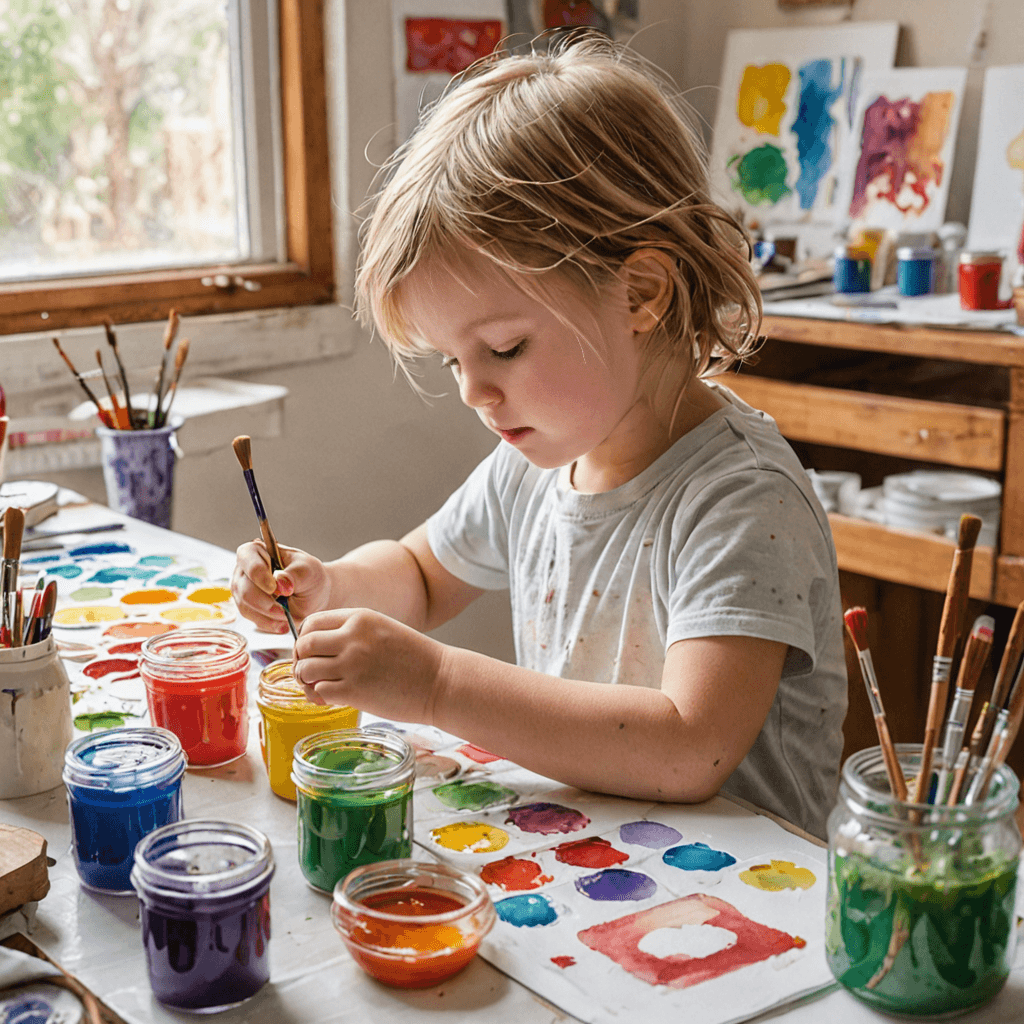
Art Classes for Kids in Etobicoke: What to Look For in a Program
Table of Contents
Finding art classes for your child in Etobicoke should be straightforward — but the reality is that the options range from structured studio programs with qualified instructors to drop-in craft sessions at community centres, and everything in between. They’re all called “art classes,” but the learning experiences they provide are vastly different. Knowing what to look for helps you find a program that actually develops your child’s skills rather than just keeping them busy for an hour.
The right art program does more than hand your child a paintbrush. It teaches them to see differently, think creatively, solve problems visually, and develop the technical skills that turn creative ideas into finished work. Here’s what separates a strong children’s art program from a mediocre one, and what Etobicoke families should be asking before they enrol.
Structured Curriculum vs. “Free Art” Sessions
The most important distinction to understand is between programs with structured curriculum and those that operate as open studio or free art time. Both have their place, but they produce very different results.
A structured curriculum means the instructor has planned a progression of skills and concepts that build on each other over time. Week one teaches observational drawing, week two introduces shading, week three applies those skills to a still-life project. Each session has a clear learning objective, and children can look back after several weeks and see measurable improvement in specific areas.
Free art sessions, by contrast, provide materials and minimal direction, letting children create whatever they want. This approach has value for creative exploration and self-expression, especially for very young children. But it doesn’t develop technical skills systematically, and children who only experience free art often plateau because they keep using the same techniques and approaches without learning new ones.
At Muzart Music and Art School in Etobicoke near Cloverdale Mall, our group art classes follow eight-week structured sessions that build skills progressively from observation and mark-making through colour theory, composition, and finished projects. Children get creative freedom within a framework that ensures genuine skill development.
When evaluating programs, ask: “What will my child learn in the first month that they couldn’t do when they started?” A program with a good answer to that question has a real curriculum. A program that talks only about “exploring creativity” without specific skill outcomes may not provide the structured learning your child needs.
Qualified Instructors vs. Activity Leaders
Not everyone who runs a children’s art session is a trained art instructor. Community centres, recreation programs, and some private studios employ activity leaders who may have general childcare experience but limited formal art education or teaching training. They can supervise craft projects effectively, but they may not be equipped to teach technique, correct developing habits, or differentiate instruction for children at different skill levels.
Look for programs where the instructors have formal art education, professional art practice, or significant experience teaching visual arts to children. A qualified instructor can explain why a child’s proportions are off and show them how to fix it — not just tell them it looks great regardless.
Good instructors also understand child development. They know that a five-year-old’s approach to colour mixing is fundamentally different from a ten-year-old’s, and they adjust their teaching methods accordingly. They can challenge an advanced student without overwhelming a beginner in the same group. They know when to guide and when to step back and let a child work through a problem independently.
Ask about instructor qualifications before enrolling. Programs confident in their teaching quality will share this information readily.
Class Size and Individual Attention
Class size significantly impacts the quality of instruction your child receives. In a group of twenty children with one instructor, individual feedback is minimal — the instructor spends most of their time managing the group rather than teaching individuals. In a small group of six to ten children, each student gets meaningful one-on-one guidance during every session.
This matters because art learning requires personalized feedback. A child struggling with perspective needs different instruction than a child struggling with colour mixing. An instructor who can sit with your child for two minutes, identify the specific issue, and offer targeted correction accelerates learning in ways that general group instruction cannot.
Small class sizes also reduce behavioural management challenges, which means more actual instruction time. When an instructor isn’t constantly redirecting off-task children, the entire group benefits from more focused teaching and a calmer creative environment.
At Muzart, our group classes are deliberately kept small to maintain this balance between group dynamics and individual attention. Every child gets direct instructor feedback during every session.
Quality of Materials and Studio Environment
The materials available to children during art classes influence both the quality of their experience and the techniques they can learn. Programs that rely exclusively on basic crayons, construction paper, and tempera paint limit the range of skills children can develop. Programs that introduce quality acrylics, watercolours, drawing pencils, pastels, and mixed media open doors to techniques that build genuine artistic capability.
The studio environment matters too. A purpose-built art space with proper easels, adequate lighting, appropriate work surfaces, and well-organized materials communicates to children that art is a serious, worthwhile activity. It also provides practical advantages — good lighting means children can see colour accurately, proper work surfaces support technique development, and organized materials reduce transition time between activities.
This doesn’t mean every art class needs to operate in a professional gallery space. But compare the learning environment to what you’d expect from other structured activities your child participates in. A music school provides quality instruments. A dance studio has mirrors and proper flooring. An art program should provide quality materials and an environment designed for visual art instruction.
At Muzart, all materials are included in the program — children don’t need to bring supplies, and the materials provided are appropriate for the techniques being taught at each level.
Progression Opportunities
Children who discover a genuine passion for art need a program that can grow with them. Ask whether the program offers clear progression pathways for children who want to continue beyond an introductory session.
This might include advanced group sessions that build on foundational skills, transition to private art lessons for more focused development, introduction to different media and techniques as skills advance, and portfolio preparation for students interested in art high schools or university art programs.
A program that only offers a single introductory-level class has a ceiling your child may hit quickly. A program with progressive pathways — from beginner group classes through advanced instruction to portfolio-level work — can support your child’s artistic development for years.
Muzart’s art program is designed with this progression in mind. Children can begin in group classes, advance to more challenging material, transition to private lessons when their goals become more defined, and eventually pursue portfolio preparation for competitive art school applications. This continuity means children don’t have to change schools or instructors as they develop — they grow within a program that already knows their strengths, style, and goals.
Location, Scheduling, and Consistency
Practical considerations matter more than most parents want to admit. The best art program in the world won’t help your child if it’s a forty-minute drive away, only offered at inconvenient times, or requires a schedule commitment your family can’t sustain.
Look for programs that are accessible from your home, school, or your regular weekly routes. Etobicoke families benefit from having instruction available locally rather than trekking downtown or to distant suburbs. Muzart’s location near Cloverdale Mall makes it convenient for families across Etobicoke, west Toronto, and eastern Mississauga.
Scheduling consistency is also important for children. Classes that meet at the same time each week build routine and habit, which supports both attendance and the sense that art is a regular, important part of the child’s life — not an occasional activity squeezed in when nothing else is happening.
Consider the session structure as well. Rolling drop-in programs offer flexibility but sacrifice the progressive skill-building that comes from committed multi-week sessions. Fixed-term sessions (like eight-week cycles) provide structure and progression while still allowing families to reassess between sessions.
Red Flags to Watch For
Not every art class is worth your family’s time and money. Here are warning signs that a program may not deliver the learning experience your child deserves.
No clear curriculum or learning objectives. If the program can’t tell you what children will learn, they probably haven’t planned it.
Very large class sizes with single instructors. More than twelve to fifteen children per instructor means limited individual attention.
No qualification information about instructors. Reluctance to discuss instructor backgrounds suggests there may not be relevant qualifications to discuss.
No parent communication about progress. Good programs keep parents informed about what children are learning and how they’re developing. If you never hear from the instructor between sessions, that’s a concern.
One-size-fits-all projects. If every child’s finished work looks identical, the instruction is focused on following steps rather than developing artistic thinking. Cookie-cutter craft projects have their place in recreation settings, but they’re not art instruction.
No progression pathways. If the program offers the same class for all ages and levels, children outgrow it quickly.
Frequently Asked Questions
What Age Should My Child Start Art Classes?
Children as young as five can benefit from structured art instruction, provided the program is designed for that age group. At Muzart, our group classes accommodate children starting around five or six, with age-appropriate activities that develop fine motor skills, colour recognition, and observational abilities. There’s no “too early” — even young children develop foundational skills that make later instruction more productive.
How Do I Know If My Child Is Getting Good Instruction?
Look at your child’s work over time. After two to three months of classes, you should see visible improvement in specific areas — better proportions in drawings, more intentional colour choices in paintings, stronger composition in finished pieces. If the work looks essentially the same after several months, the instruction may lack structure. Also ask your child what they’ve learned recently — a child receiving good instruction can usually tell you something specific.
Are Community Centre Art Programs As Good As Private Studio Programs?
It depends entirely on the specific program. Some community centre programs employ excellent instructors and offer well-structured curricula. Others are activity-based sessions with minimal artistic instruction. The questions outlined in this article — about curriculum, instructor qualifications, class size, and materials — apply equally regardless of the setting. Don’t assume quality based on the type of venue. Evaluate each program on its own merits.
How Much Should Art Classes for Kids Cost?
Pricing varies widely across Etobicoke and the GTA depending on class size, instructor qualifications, materials provided, and session length. More expensive doesn’t always mean better, and bargain pricing sometimes reflects limited materials or unqualified instructors. Focus on value rather than price alone — what does the investment actually provide in terms of instruction quality, individual attention, and skill development? At Muzart, all materials are included in the program cost, which eliminates surprise supply expenses.
What If My Child Wants to Get Serious About Art Later?
Having access to a program with progression pathways is valuable precisely for this reason. Children who start in group classes and later develop serious artistic ambitions can transition to private lessons and eventually portfolio preparationwithout changing schools or starting over. A portfolio prep trial lesson at Muzart is available for $70 for families ready to explore that next level.
Find the Right Fit for Your Child
Choosing an art program is about matching your child’s needs with a program that delivers real instruction, genuine skill development, and an environment where creativity thrives within a supportive structure.
If you’re exploring art classes for your child in Etobicoke, request more information about Muzart’s group art sessions and private lesson options. You can also book directly through our website. Our studio near Cloverdale Mall serves families from across Etobicoke, Toronto, and Mississauga — and we’re happy to answer any questions about which format and level is the best starting point for your child.