
Group Art Classes for Kids in Etobicoke: What Children Learn in 8 Weeks
Table of Contents
When parents consider art classes for their children, the first question is usually about what their child will actually learn. It’s a fair question — and one that deserves more than a vague answer about “creativity” and “self-expression.” While those qualities absolutely develop through art instruction, the real learning that happens in a well-structured group art class is far more specific, measurable, and transferable than most families realize.
At Muzart Music and Art School in Etobicoke near Cloverdale Mall, our group art classes for children are built around eight-week sessions that take students through a deliberate progression of skills, techniques, and artistic concepts. Each week builds on the last. By the end of the session, children haven’t just made a collection of art projects — they’ve developed foundational abilities that serve them whether they continue in art, pursue creative hobbies, or simply carry stronger observation and problem-solving skills into every other area of their lives.
Here’s what that eight-week journey actually looks like.
Weeks 1–2: Observation and Basic Mark-Making
The first two weeks of any group art session focus on teaching children to see differently. This sounds abstract, but it’s deeply practical. Most children draw what they think an object looks like rather than what it actually looks like. A house gets a triangle roof and a square body because that’s the symbol they’ve memorized — not because they’ve studied how light falls across the front door or how the roofline actually angles.
Our instructors begin by teaching children to slow down and observe. They’ll work with simple still-life arrangements — an apple, a cup, a folded cloth — and learn to notice shapes, shadows, and proportions before putting pencil to paper. These exercises in careful looking are the single most important skill in visual art, and they translate directly to improved attention and detail-orientation in school and everyday life.
Alongside observation, children learn foundational mark-making techniques. How to hold a pencil for different effects. How to create light and dark lines. How to use the side of a pencil versus the tip. These aren’t glamorous skills, but they give children control over their tools that makes every subsequent project more successful. Children who skip this foundation often struggle with frustration later when their hands can’t execute what their eyes can see.
Weeks 3–4: Colour Theory and Mixing
By the third week, children move into colour. But not just any approach to colour — structured colour theory that helps them understand why certain colours work together and how to create specific hues, tints, and shades through mixing.
Children learn the colour wheel through hands-on experimentation rather than memorization. They mix primary colours to discover secondaries, then push further into tertiary colours and begin understanding warm versus cool tones. This knowledge transforms their work immediately — instead of grabbing the nearest crayon or squeezing paint straight from the tube, they begin making intentional colour decisions.
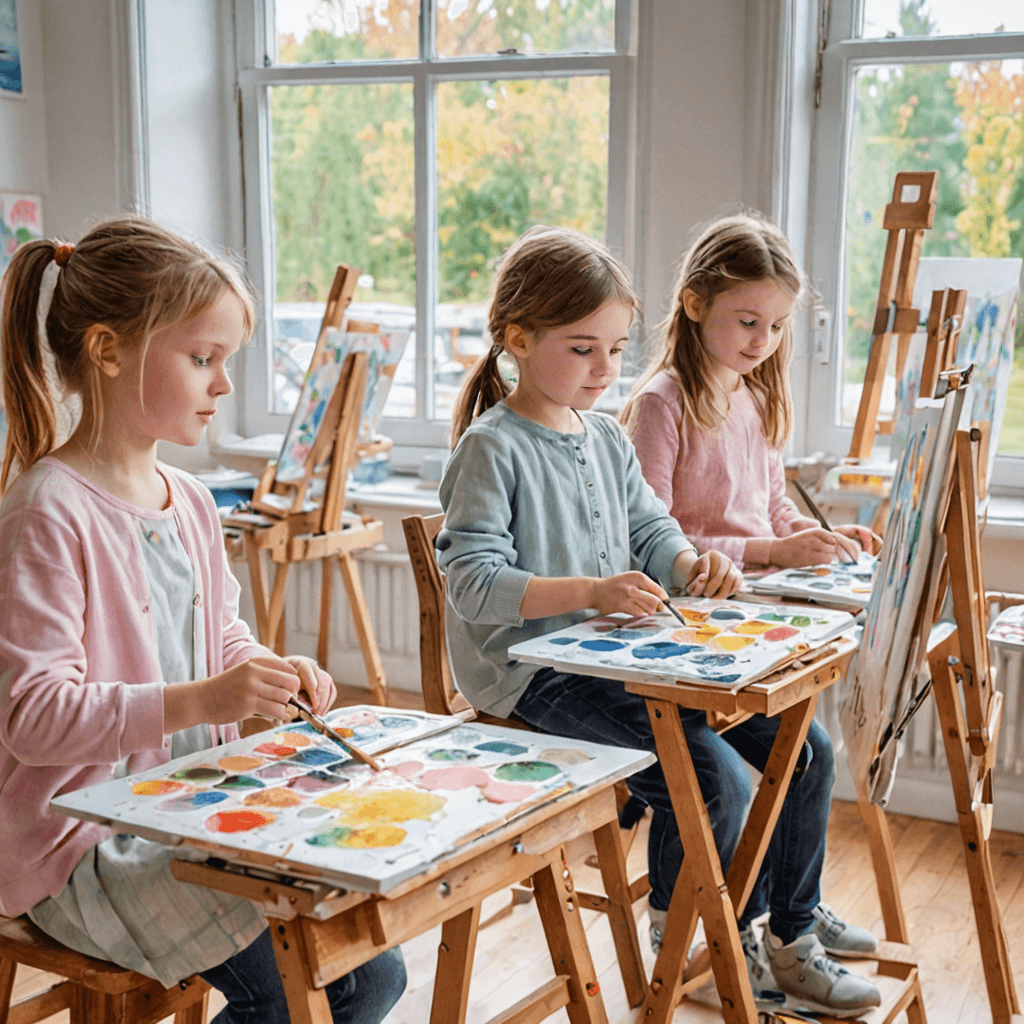
The group setting is particularly valuable during this phase. When eight children are mixing the same two paints and arriving at slightly different results, they learn that art involves experimentation and that variations are features, not mistakes. They see how their neighbour achieved a particular shade of green and try it themselves. This collaborative learning environment teaches artistic communication and peer observation in ways that solitary practice simply cannot replicate.
Our instructors at Muzart choose age-appropriate media for this phase — typically acrylics for older children (ages 8–12) and tempera or watercolours for younger students (ages 5–7). Each medium teaches different lessons about colour behaviour, drying time, and layering techniques.
Weeks 5–6: Composition and Space
The middle of the session shifts toward how elements are arranged on the page or canvas. Composition — the placement and relationship of objects within an artwork — is what separates a snapshot from a photograph, a sketch from a drawing, and a child’s early work from a piece that feels intentional and complete.
Children learn concepts like foreground, middle ground, and background. They practice creating depth on a flat surface through overlapping, size variation, and placement on the page. They explore the rule of thirds and learn why centring every element often produces less engaging work than placing subjects off-centre.
These weeks also introduce the concept of negative space — the area around and between subjects. Most children instinctively fill every corner of the paper. Learning to use empty space deliberately is a breakthrough moment that changes how their work looks and feels. It’s also a transferable thinking skill: understanding that what you leave out can be as important as what you include.
Group activities during this phase often involve collaborative projects where children work together on larger compositions, learning to coordinate visual elements across shared space. This builds teamwork skills alongside artistic ones and gives children experience contributing to something bigger than their individual piece.
Weeks 7–8: Project Integration and Exhibition Preparation
The final two weeks bring everything together. Children apply the observation skills, colour knowledge, and compositional understanding they’ve built over the previous six weeks to create a finished project that demonstrates their growth.
This isn’t a cookie-cutter craft project where every child produces identical work. Our instructors at Muzart’s group art classes provide a theme and structural guidance, but children make their own creative decisions about subject matter, colour palette, composition, and execution. The result is a body of work that looks genuinely different from child to child — because it should.
The final session includes a mini exhibition where children present their work to parents and family members. This isn’t just a feel-good moment (though it absolutely is). Presenting and discussing their creative choices builds verbal communication skills, teaches children to articulate their thought processes, and develops the confidence that comes from sharing something personal and receiving positive feedback.
Children take home all of the work they’ve created during the eight-week session, including their final project. Many families frame these pieces, and some students continue developing the same themes and techniques in subsequent sessions.
Why Group Classes Work for Young Artists
Parents sometimes wonder whether private art lessons would be a better fit for their child. Both formats have genuine advantages, and the right choice depends on your child’s personality, goals, and learning style. But group classes offer specific benefits that are difficult to replicate one-on-one.
Social learning is perhaps the biggest advantage. Children in group settings naturally observe and learn from their peers. When one child discovers a technique for blending colours, the whole group benefits. When another child takes a creative risk that produces an unexpected result, it gives everyone permission to experiment. This peer learning dynamic accelerates growth in ways that surprised many parents.
Constructive comparison helps children develop their own artistic identity. Seeing how classmates interpret the same assignment differently teaches children that there’s no single “right” way to make art — a lesson that extends far beyond the studio.
Presentation skills develop naturally in group settings. Children learn to give and receive feedback respectfully, to explain their creative choices, and to appreciate perspectives different from their own. These skills serve children in school presentations, social interactions, and eventually in professional life.
Structured progression in our group classes ensures that children build skills systematically rather than jumping between disconnected projects. Each eight-week session is designed as a complete learning arc, with clear objectives and measurable outcomes.
Our group art classes at Muzart near Cloverdale Mall are kept intentionally small to ensure every child receives individual attention from the instructor while still benefiting from the group dynamic.
What Parents Notice After 8 Weeks
The changes parents observe in their children after completing a group art session often extend well beyond artistic skill. Common feedback from Muzart families includes noticing improved focus and attention during homework time, greater willingness to try new things and tolerate imperfection, more detailed observation of the world around them, increased confidence in sharing their work and ideas, and better fine motor control reflected in handwriting improvement.
These outcomes aren’t accidental. They’re built into the curriculum through deliberate skill sequencing that challenges children just enough to promote growth without causing frustration. Our instructors understand child development and adjust their approach to meet each student where they are while keeping the group moving forward together.
Beyond the First Session
Many children who complete one eight-week session choose to continue with subsequent sessions that build on the skills they’ve already developed. Each new session introduces more advanced techniques and concepts — perspective drawing, figure work, mixed media experimentation, and eventually portfolio-quality pieces for students who want to pursue art more seriously.
For children showing strong interest and aptitude, Muzart also offers portfolio preparation programs designed to prepare students for art high school and university applications. The skills built in group classes create a strong foundation for this more intensive work. A portfolio preparation trial lesson is available for $70, giving families a chance to explore whether advanced instruction is the right next step.
Group classes remain valuable even for children who also take private lessons. The social learning component, peer feedback, and collaborative projects provide experiences that complement private instruction beautifully.
Frequently Asked Questions
What Age Is Best to Start Group Art Classes?
Children as young as five can benefit from structured group art instruction, and our classes are designed with age-appropriate activities and expectations. Younger children (ages 5–7) focus more heavily on exploration, motor skill development, and colour play, while older children (ages 8–12) dive deeper into technique, composition, and project planning. There’s no “too early” or “too late” — the best age to start is whenever your child shows curiosity about making art.
Do Children Need Any Art Supplies or Experience Before Starting?
No prior experience or supplies are needed. Muzart provides all materials for group art classes, and our programs are designed to welcome complete beginners alongside children who’ve been drawing at home for years. The eight-week structure means everyone starts the skill progression together, and instructors adjust individual guidance based on each child’s starting point.
How Small Are the Group Classes?
Our group classes are kept small to ensure each child receives meaningful individual attention from the instructor. This balance allows children to benefit from peer learning and group dynamics while still getting personalized feedback on their technique and creative development. You can request more information about current class sizes and availability.
What Happens If My Child Misses a Week?
While each week builds on the previous one, missing a single session won’t derail your child’s progress. Instructors will help returning students catch up on any key concepts introduced during the missed class. If your child misses two or more consecutive weeks, it’s helpful to contact us so the instructor can prepare a brief catch-up plan.
Can Group Art Classes Help With Art School Preparation?
Group classes build the foundational observation, technique, and creative thinking skills that are essential for portfolio development. While dedicated portfolio preparation work requires more intensive private instruction, many of our portfolio students started their artistic journey in group classes. The skills transfer directly, and the experience of receiving peer feedback is valuable preparation for the critique-based environment of art school.
Getting Started Is Easy
Our eight-week group art sessions run on a rolling basis throughout the year, with new sessions starting regularly. Enrolling your child is straightforward — book a spot through our website or request more information about upcoming session dates and times.
Muzart Music and Art School is located in Etobicoke near Cloverdale Mall, convenient for families from across Etobicoke, Toronto, and Mississauga. Whether your child has been drawing since they could hold a crayon or has never picked up a paintbrush, our group classes meet them where they are and take them somewhere meaningful in just eight weeks.