
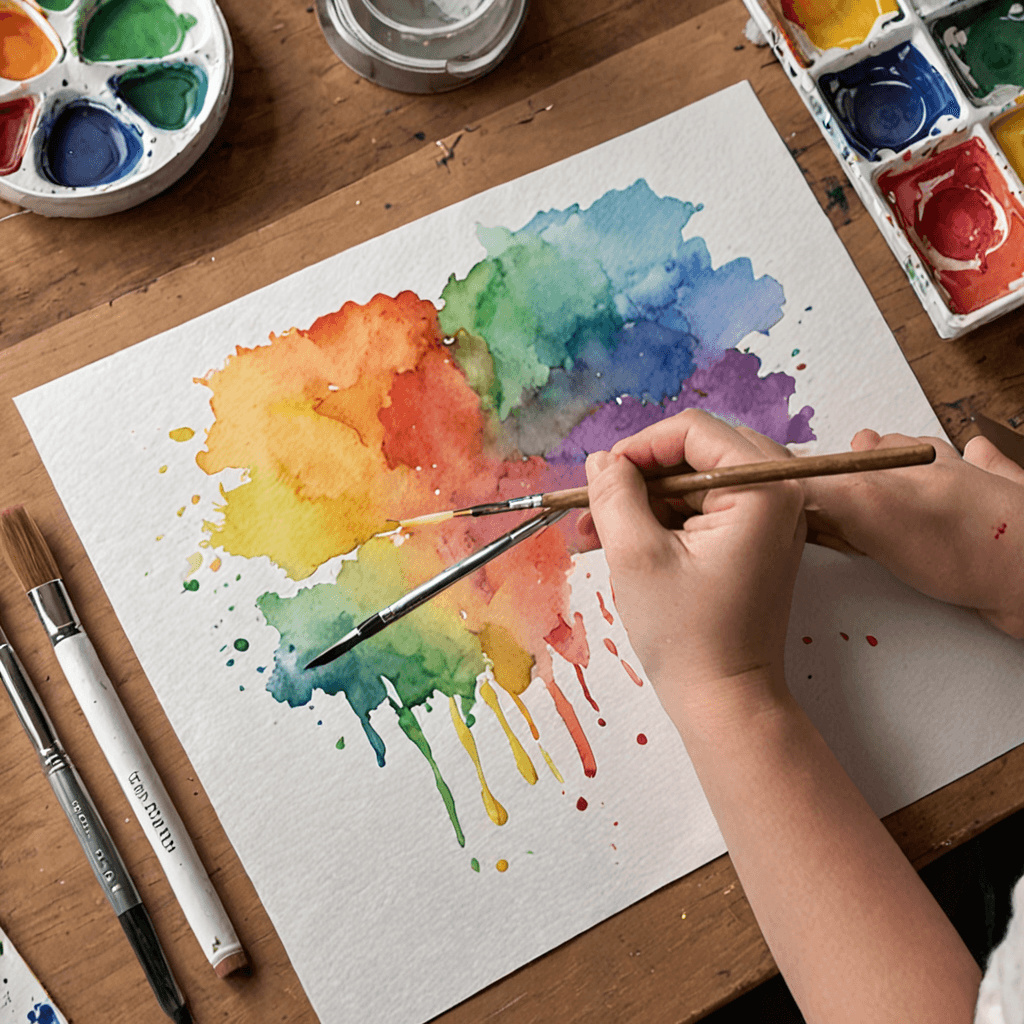
Watercolor Techniques for Children in Toronto: From Basics to Beautiful
Table of Contents
Watercolor painting captivates young artists with its fluid, luminous qualities and forgiving nature that encourages experimentation. Unlike some art media that require extensive preparation or expensive materials, watercolors offer children immediate access to color mixing and painting fundamentals while producing beautiful results even at beginning skill levels. At Muzart Music & Art School in Etobicoke, our art lessons introduce children to watercolor painting through age-appropriate techniques that build skills systematically while keeping the creative process joyful and engaging.
Toronto families often wonder when children should begin watercolor instruction and what techniques are appropriate for different ages. While very young children can explore watercolors through play-based activities, structured technical instruction typically begins around age 7 or 8, when children develop the fine motor control and patience necessary for more deliberate painting approaches. However, watercolor instruction remains flexible and adaptable, allowing instructors to teach foundational concepts to younger students through simplified approaches while challenging advanced students with sophisticated techniques that stretch their abilities.
Understanding Watercolor: Materials and Properties
Successful watercolor painting begins with understanding the medium’s unique properties and working with rather than against its fluid, transparent nature. Unlike opaque media like acrylic or tempera, watercolors build color through transparent layers, with white paper providing luminosity. This transparency requires different thinking about color mixing and layering, making early material education essential for developing proper watercolor habits.
Paint quality affects both process and results, though student-grade watercolors serve beginning artists perfectly well. Children at our Etobicoke studio near Cloverdale Mall work with quality student watercolors that provide good pigment concentration and mixing capabilities without the expense of professional artist-grade materials. As students advance and develop serious interest in watercolor painting, transitioning to higher-quality paints becomes worthwhile, but beginning students achieve excellent results with appropriate student materials that don’t overwhelm family budgets.
Paper selection significantly impacts watercolor success. Regular drawing paper buckles and pills when wetted, creating frustrating results that discourage young painters. Watercolor paper, designed to absorb and release water without deteriorating, transforms the painting experience. Children learn to recognize appropriate paper by weight and texture, understanding how different surfaces affect technique and results. Even beginning students benefit from using actual watercolor paper rather than attempting watercolor techniques on inappropriate surfaces.
Brush selection introduces children to how different brush shapes and sizes serve different painting purposes. Round brushes work well for details and controlled strokes, while flat brushes cover larger areas efficiently. Young students typically begin with medium round brushes that handle most painting tasks competently, gradually expanding their brush collection as they develop more specialized techniques. Learning proper brush care—cleaning thoroughly after use, reshaping bristles, storing properly—establishes habits that protect materials and extend their useful life.
Water control forms perhaps the most critical aspect of watercolor technique. Too little water produces choppy, streaky application, while too much creates uncontrollable blooms and puddles. Children learn to judge appropriate water amounts through practice and guidance, developing the feel for consistency that allows controlled yet fluid painting. This water management skill distinguishes accomplished watercolor painters from frustrated beginners who struggle with unpredictable results.
Foundational Techniques: Building Watercolor Skills
Watercolor painting encompasses numerous specific techniques that young artists learn progressively, building from simple washes to more complex layering and textural approaches. Professional instruction through our group art classesor private art lessons ensures children learn techniques in logical progression that prevents frustration while building confidence and skill.
Flat wash technique teaches children to cover areas with even, consistent color. This foundational skill requires proper water-to-paint ratio, consistent brush strokes, and working quickly enough that edges don’t dry between strokes. Young students practice flat washes on simple shapes before applying the technique to actual compositions. Mastering this basic technique provides the foundation for virtually all other watercolor approaches, making it worth extensive early practice.
Graded wash introduces color variation within washes, transitioning smoothly from dark to light by progressively adding water. This technique creates sky backgrounds, suggests form through value changes, and adds visual interest to otherwise flat areas. Children discover how controlling water addition affects gradient smoothness, learning to plan transitions that enhance their paintings. Graded washes require more control than flat washes but remain accessible to elementary-age students with proper instruction and practice.
Wet-on-wet technique creates soft, diffused effects by applying paint to already-wet paper or wet paint. Colors blend organically, creating atmospheric effects impossible with more controlled techniques. Children delight in the somewhat unpredictable results, learning to guide rather than completely control where colors flow and blend. This technique particularly suits painting skies, water, or other subjects where soft, undefined edges enhance the subject rather than requiring precise detail.
Wet-on-dry technique provides more control, applying paint to dry paper to create defined edges and precise shapes. Children learn when precise control serves their artistic vision better than soft effects, developing judgment about appropriate technique selection. Combining wet-on-wet and wet-on-dry approaches within single paintings creates varied visual interest, with soft backgrounds contrasting against crisper foreground details.
Dry brush technique uses relatively dry paint for textured, broken effects. Children learn to remove excess water from brushes, dragging relatively dry pigment across paper to suggest textures like tree bark, rough surfaces, or grass. This textural variety adds visual interest and technical sophistication to children’s watercolor paintings, transforming simple washes into more complex, visually engaging compositions.
Color Mixing and Theory in Watercolor
Watercolor’s transparent nature makes it ideal for teaching color theory, as children can see how colors layer and interact to create new hues. Unlike mixing opaque paints where results appear immediately in the mixing palette, watercolor mixing happens both on the palette and on paper through layering, providing multiple opportunities for understanding color relationships.
Primary color exploration forms the foundation of watercolor color mixing. Children begin with the three primary colors—red, yellow, and blue—discovering how all other colors can be mixed from this foundation. This fundamental understanding empowers young artists to create whatever colors they envision rather than depending on pre-mixed options. The transparency of watercolor makes color mixing particularly clear and educational, as children can see how layered primaries create secondaries.
Secondary and tertiary color development builds on primary color knowledge. Children mix orange, green, and purple from their primaries, then discover how adjusting proportions creates infinite variations. Tertiary colors—red-orange, yellow-orange, yellow-green, blue-green, blue-violet, and red-violet—demonstrate how subtle adjustments create the full spectrum of available colors. This systematic exploration demystifies color mixing, giving children confidence to create any color they need.
Value control through dilution teaches children how water amount affects color intensity. Pure pigment creates deep, saturated color, while adding water progressively lightens value. This control allows creation of value scales and subtle shading effects without adding white paint, preserving watercolor’s transparent luminosity. Children practice creating smooth value transitions, developing the control necessary for sophisticated shading and form representation.
Color harmony principles introduce young artists to pleasing color combinations. Analogous colors (neighbors on the color wheel) create harmonious, unified palettes, while complementary colors (opposites on the wheel) provide vibrant contrast. Children experiment with different color schemes, discovering how color choices affect mood and visual impact. This color theory knowledge elevates their work beyond random color selection to intentional, sophisticated color orchestration.
Muddy color avoidance helps children understand why some color combinations produce vibrant results while others create dull, brownish mixtures. Complementary color combinations, while creating useful grays and browns in moderation, quickly become muddy when overmixed. Children learn to mix colors deliberately, understanding what combinations to avoid and how to keep palette and water containers clean to prevent unintentional muddying.
Creating Depth and Dimension Through Watercolor
Watercolor’s transparent layering capabilities make it excellent for teaching children how to create illusion of depth and three-dimensional form on flat paper. These spatial concepts challenge young artists while building visual literacy and representational skills valuable across all art media.
Atmospheric perspective uses value and color intensity to suggest distance. Objects appear lighter and less saturated as they recede, creating depth through these value and color shifts. Children learn to paint distant objects with diluted, cooler colors while foreground elements receive darker, warmer, more saturated treatment. This technique, easily achieved through watercolor’s dilution properties, helps even elementary-age students create convincing spatial depth.
Overlapping elements create obvious spatial relationships, with nearer objects partially obscuring more distant ones. Children plan their paintings to include overlapping shapes, learning to paint background elements first and add foreground details over dried layers. This planning develops spatial thinking and composition skills while producing clearly three-dimensional results.
Size variation reinforces depth perception, with larger objects appearing closer and smaller versions suggesting distance. Combined with atmospheric perspective and overlapping, size variation creates convincing spatial depth. Children discover how these multiple depth cues work together, creating complex spatial relationships in their paintings.
Cast shadows ground objects in space, making them appear to rest on surfaces rather than float. Young students learn to observe light direction and paint shadows accordingly, understanding how shadow placement affects perceived object location. Watercolor’s transparent layering allows subtle shadow creation that doesn’t completely obscure underlying colors, creating realistic shadow effects.
Detail variation helps establish focal areas and depth. Foreground elements receive more detailed, precise treatment while backgrounds remain simplified and suggestive. This varied detail level guides viewer attention while creating depth through focus differential. Children learn selective attention to important elements, a sophisticated compositional skill applicable beyond watercolor painting.
Special Techniques and Creative Exploration
Beyond fundamental techniques, watercolor offers numerous special effects that engage children’s imagination while building technical skills. These creative techniques keep watercolor painting fresh and exciting, preventing boredom while expanding students’ technical repertoire.
Salt technique creates interesting textures by sprinkling salt into wet paint. The salt absorbs pigment, creating star-like patterns that suggest snow, texture, or abstract decoration. Children love this somewhat magical transformation, learning to experiment with different salt types and application timing for varied effects. While not appropriate for every painting, this technique demonstrates how creative experimentation can yield unexpected, beautiful results.
Masking fluid allows children to preserve white paper in specific areas, painting around reserved spaces that are revealed when the masking fluid is removed. This technique enables complex compositions with white or light elements surrounded by darker painted areas, impossible to achieve simply by painting around shapes. Children learn to plan which areas to mask, developing forethought and composition skills while accessing effects that make their paintings more sophisticated.
Splatter technique adds energy and textural interest by flicking paint from brushes onto paper. This controlled chaos creates star fields, flower centers, or abstract textural areas. Children discover how different flicking motions and paint consistencies create varied splatter effects, building understanding of cause and effect while keeping painting playful and experimental.
Lifting technique removes paint from paper using clean, damp brushes, sponges, or paper towels. This additive-through-subtraction approach allows correction of mistakes, creation of light areas within darker passages, or textural effects. Children learn watercolor’s forgiving nature, understanding that early stages remain flexible rather than permanent, reducing anxiety about making mistakes.
Mixed media combination incorporates watercolor with other materials like colored pencil, ink, or collage. These combinations expand creative possibilities while teaching children to think flexibly about media boundaries. Watercolor washes might provide backgrounds for pen-and-ink details, or colored pencil might add definition to watercolor forms. This experimental approach cultivates creative problem-solving and openness to unconventional techniques.
Age-Appropriate Progression in Watercolor Instruction
Effective watercolor instruction matches technique complexity to developmental stage, ensuring children build skills without frustration while maintaining engagement and creative joy. Instructors at Muzart Music & Art School tailor watercolor instruction to each student’s age, fine motor development, and attention span, creating positive learning experiences that build both skill and love for the medium.
Early elementary students (ages 6-8) focus on basic wash techniques, color mixing fundamentals, and exploratory painting that emphasizes process over product. Projects at this level remain simple—painting skies, creating color wheels, exploring color mixing—while building comfort with brushes, water control, and the medium’s fluid nature. Success means developing positive associations with watercolor and building basic technical foundations without pressure for realistic results.
Upper elementary students (ages 9-11) tackle more complex techniques including layering, atmospheric perspective, and simple compositions combining multiple techniques. Projects become more ambitious—landscapes with foreground and background elements, still lifes with basic shading, imaginative compositions incorporating special techniques. Students at this level begin developing individual styles and subject preferences, requiring instructors to balance technical instruction with support for emerging artistic voices.
Middle school students (ages 12-14) refine advanced techniques, develop sophisticated color sense, and create complex compositions demonstrating technical mastery and artistic vision. Projects might include detailed observational paintings, expressive works incorporating multiple special techniques, or series exploring particular themes. Students working toward portfolio preparation for art school applications receive guidance on creating pieces demonstrating watercolor mastery appropriate for portfolio inclusion.
Ready to Explore Watercolor Painting?
Watercolor painting offers children immediate creative gratification while building technical skills and artistic understanding that transfer across all visual arts. At Muzart Music & Art School in Etobicoke, our comprehensive art instruction introduces children to watercolor through age-appropriate techniques that build competence while maintaining the joy of creative exploration. All materials are included in our programs, allowing families to explore this beautiful medium without significant upfront investment.
Book a trial art lesson to experience our watercolor instruction approach and see how professional guidance accelerates skill development while keeping art-making enjoyable. Located near Cloverdale Mall, our Etobicoke studio serves families throughout Toronto, Etobicoke, and Mississauga with expert art instruction in welcoming, creative environments. Trial lessons provide opportunity to assess our teaching style and experience how structured instruction enhances rather than constrains creative expression.
Our art programs include both group and private lesson options, with all materials provided. Children learn watercolor alongside other media, building comprehensive art skills while discovering their medium preferences and artistic interests. Request more information about our art classes and discover how professional instruction transforms creative potential into accomplished artistic skill.
Frequently Asked Questions About Watercolor for Children
What age is appropriate for children to begin watercolor painting?
Children can begin exploring watercolors in simplified, play-based ways as young as preschool age, but structured watercolor instruction with proper technique typically begins around age 7 or 8. This age range corresponds with developing fine motor control necessary for brush handling, patience for more deliberate painting approaches, and cognitive capacity to understand concepts like color mixing and layering. However, individual readiness varies significantly—some mature 6-year-olds thrive with structured watercolor instruction while some 9-year-olds benefit more from continued exploratory approaches before tackling formal techniques. During group art classes at our Etobicoke studio, instructors differentiate instruction based on individual student capabilities, providing simplified approaches for younger or less experienced students while challenging advanced students with more complex techniques. The key lies in matching instruction to developmental readiness rather than strictly to chronological age. Very young children benefit most from process-oriented exploration where they discover watercolor’s properties through experimentation, while older elementary students can handle technique-focused instruction that builds specific skills systematically. Private lessons allow even more precise matching of instruction to individual student readiness and interests.
Should parents invest in expensive watercolor materials for beginning students?
No, student-grade watercolor materials serve beginning artists perfectly well and often better than professional materials, which can overwhelm inexperienced painters with intense pigmentation and handling characteristics. Quality student watercolor sets from reputable art supply companies provide adequate pigment concentration, good color range, and acceptable mixing properties at reasonable prices. These materials allow children to learn proper techniques and develop skills without wasting expensive professional supplies on experimental work and inevitable mistakes. The most important material investment for watercolor success is actually paper rather than paint—watercolor-specific paper makes dramatically more difference to student success than paint quality differences. Standard watercolor paper, even student-grade, properly handles water and allows successful technique application, while regular drawing or printer paper buckles and deteriorates when wetted. At Muzart Music & Art School, all materials are included in our programs, ensuring students work with appropriate quality supplies without families needing to navigate confusing art supply choices. As students advance and develop serious interest in watercolor, transitioning to higher-quality paints becomes worthwhile, but this upgrade should wait until students demonstrate sustained commitment and have developed sufficient skill to appreciate quality differences. Beginning students benefit more from abundant practice with adequate materials than limited practice with premium supplies.
How can parents support watercolor practice at home?
Parents can support home watercolor practice most effectively by creating dedicated art spaces with proper lighting, protecting surfaces from water and paint, and establishing expectations about cleanup before beginning each session. Watercolor requires water containers, paper towels for blotting brushes, and adequate table space for palette, paper, and supplies—organizing these elements before painting begins makes the process smoother and more enjoyable. Parents should ensure children have access to basic materials matching what they use in lessons, allowing practice of techniques learned during instruction. However, quality matters more than quantity—a basic student watercolor set with appropriate paper proves more valuable than elaborate supplies children don’t know how to use effectively. Setting reasonable time limits prevents fatigue while establishing regular practice rhythms, perhaps 20-30 minutes several times weekly rather than marathon sessions that end in mess and frustration. Parents need not possess artistic skills themselves to support practice—simply providing dedicated time and space, showing interest in completed work, and helping maintain organized, accessible art supplies demonstrates valuable support. Displaying finished paintings throughout the home validates children’s efforts and builds pride in their developing skills. Most importantly, parents should avoid over-directing creative choices or correcting techniques they observe during home practice, as this can create self-consciousness that inhibits the experimental exploration essential to artistic development.
Can watercolor painting help children develop skills beyond art?
Yes, watercolor painting develops numerous transferable skills valuable across academic subjects and life domains. Fine motor skill development through brush control, precise paint application, and detailed work strengthens the hand coordination necessary for writing, musical instruments, and countless other activities requiring manual dexterity. Color mixing teaches mathematical concepts including ratios, proportions, and systematic variation of variables—skills directly applicable to science and mathematics. Planning compositions and determining technique sequences builds executive function skills including forethought, sequencing, and strategic thinking. Watercolor’s somewhat unpredictable nature teaches flexibility, problem-solving, and adaptive thinking as children learn to work with unexpected results rather than rigidly pursuing predetermined outcomes. Observation skills necessary for realistic painting transfer to scientific observation, detailed reading, and generally heightened awareness of visual surroundings. The patience required for successful watercolor work—allowing layers to dry, building color gradually, working methodically rather than rushing—cultivates self-regulation valuable across all learning domains. Perhaps most importantly, watercolor provides mode for self-expression and emotional processing, giving children healthy outlet for feelings and experiences they may not yet have words to express verbally. These combined benefits make watercolor instruction valuable even for children not pursuing professional art careers, enriching overall development while building specific artistic skills.
What subjects work best for children learning watercolor?
Beginning watercolor students succeed most with subjects featuring simple shapes, limited detail, and inherent color interest rather than complex, detailed subjects requiring extensive skill. Landscapes work particularly well for young painters, with skies providing opportunity for practicing graded washes and wet-on-wet techniques while simplified trees, hills, or water features allow practice of basic shape representation. Flowers offer engaging subjects with natural color variety, organic shapes forgiving of imprecision, and varying complexity levels allowing growth from simple tulips to more complex roses or sunflowers. Fruit and simple still lifes teach form through shading while providing familiar subjects children can observe directly, building connection between observation and representation. Abstract compositions focused on color, shape, and technique exploration free children from representational pressure, allowing pure focus on technical skill development and personal expression. Seasonal subjects—fall leaves, winter scenes, spring gardens, summer beaches—maintain engagement through topical relevance while teaching how seasonal color palettes create mood. At our Etobicoke studio, instructors guide subject selection based on each student’s current skill level and interests, ensuring projects challenge appropriately without overwhelming. As students advance, subjects become more complex, incorporating greater detail, subtle color relationships, and sophisticated compositional elements. The key lies in matching subject complexity to current abilities while maintaining enough challenge to promote growth, a balance professional instruction achieves through experience and ongoing student assessment.
Muzart Music & Art School, located in Etobicoke near Cloverdale Mall, provides comprehensive art instruction for children throughout Toronto, Etobicoke, and Mississauga. Our experienced art instructors teach watercolor painting alongside other media, building technical skills while nurturing creative expression and artistic confidence.