
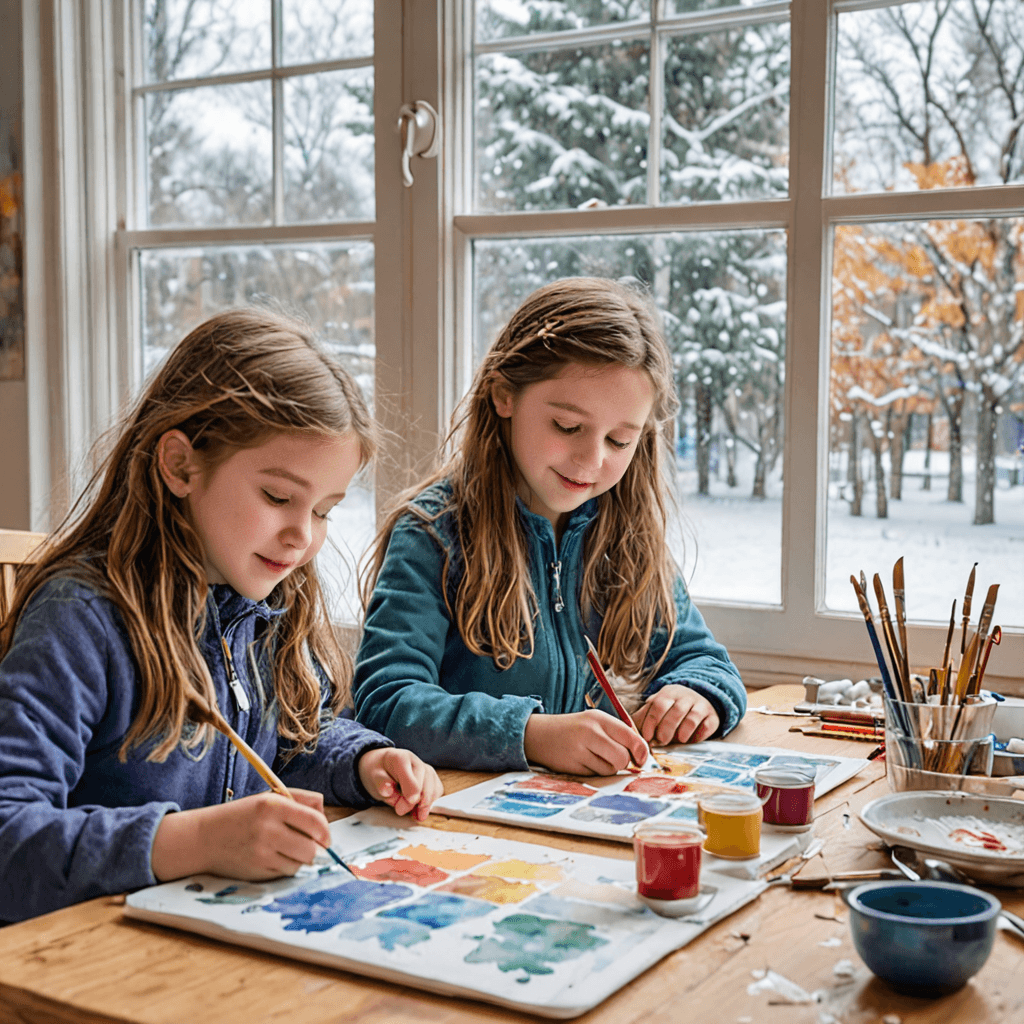
Winter Art Classes for Kids in Etobicoke: Seasonal Creative Projects
Table of Contents
Winter transforms the Greater Toronto Area into a landscape of creative possibility. While snow blankets outdoor spaces and temperatures drop, children’s creative energy requires thoughtful outlets that channel their imagination and develop artistic skills. At Muzart Music and Art School, our Etobicoke location near Cloverdale Mall becomes a warm haven where young artists explore winter’s unique creative potential through structured art education that celebrates the season.
The winter months present distinct advantages for children’s art education. Indoor focus eliminates weather-related distractions, seasonal themes provide rich creative inspiration, and the period between December and February offers ideal timing for establishing new educational routines. Families throughout Toronto, Etobicoke, and Mississauga discover that winter art classes provide both practical solutions to indoor entertainment needs and substantive artistic development that extends far beyond simple craft activities.
Understanding how seasonal inspiration combines with systematic skill development helps parents recognize the value of winter art education. These aren’t temporary activities to fill time—they’re opportunities for genuine artistic growth using winter as a creative catalyst.
The Unique Creative Potential of Winter Themes
Winter offers children a distinctive visual vocabulary that differs dramatically from other seasons. Snow’s crystalline structures, bare tree silhouettes, winter light’s particular quality, and the season’s color palette create artistic possibilities unavailable during other times of year. Young artists who explore these elements develop observational skills and technical capabilities while working with subjects that naturally engage their interest.
Winter’s limited outdoor time increases children’s focus during indoor activities. Without the competing pull of outdoor play, art lessons in Etobicoke capture children’s complete attention. This enhanced focus translates to deeper engagement with artistic concepts and more thorough skill development. Parents notice that children demonstrate greater willingness to spend extended time on detailed projects during winter months.
The season’s visual drama—stark contrasts between dark skies and white snow, the brilliant colors of winter sunsets, the geometric patterns of ice crystals—provides naturally compelling subject matter. Children don’t need artificial motivation to engage with these themes. Their genuine interest in winter phenomena creates organic entry points for teaching fundamental artistic concepts like contrast, pattern, composition, and color theory.
Seasonal art projects also connect children to their immediate environment. When young artists create work inspired by what they observe outside their windows or experience during their daily lives, art becomes personally relevant rather than abstract. This connection strengthens both artistic engagement and the relationship between art education and lived experience.
Winter-themed projects at our Etobicoke studio incorporate both representational and abstract approaches. Children learn to depict winter scenes realistically while also exploring how winter’s essential qualities—coldness, stillness, sparkle, coziness—can be expressed through abstract visual elements. This dual approach builds versatile artistic thinking.
Indoor Creativity: Structured Art Education vs. Casual Crafts
Many parents recognize their children need creative outlets during winter but may not understand the distinction between casual craft activities and structured art education. Both have value, but they serve different purposes and produce different outcomes. Understanding this difference helps families make informed decisions about winter activity investments.
Casual crafts typically focus on following instructions to create predetermined outcomes. Children might assemble pre-cut pieces, color within defined lines, or replicate specific examples. These activities provide entertainment and develop basic fine motor skills, but they offer limited opportunity for creative decision-making or technical skill development.
Structured art education, by contrast, teaches foundational skills that children apply to self-directed creative expression. In group art classes and private art lessons, students learn techniques—brushwork, color mixing, compositional principles, observational drawing—that become tools for expressing their own creative visions. Projects serve as vehicles for skill acquisition rather than ends in themselves.
The winter season provides excellent context for this distinction. A craft activity might have children glue cotton balls onto pre-drawn snowman templates. An art class explores how artists create the visual impression of snow through various techniques—stippling, dry brush, color temperature, value contrast—then encourages children to apply these techniques to their own winter compositions.
This educational approach respects children’s creative agency. Rather than producing identical snowmen, students create unique interpretations of winter that reflect their individual observations, preferences, and artistic choices. The resulting work demonstrates genuine creativity rather than simple craft completion.
Structured art education during winter months also builds cumulative skills that extend beyond seasonal projects. Techniques learned while painting winter landscapes apply equally to spring flowers or summer beach scenes. Color theory explored through winter’s palette becomes foundational knowledge for all future color work. The season provides context, but the education transcends it.
Winter Art Curriculum: Projects That Build Skills
Effective winter art education balances seasonal relevance with systematic skill development. At Muzart Music and Art School’s Etobicoke location, our winter curriculum incorporates projects specifically designed to teach fundamental artistic concepts while celebrating the season’s creative possibilities.
Watercolor winter landscapes introduce children to color temperature theory through direct experience. The contrast between warm indoor lights and cold outdoor blues provides intuitive understanding of how colors create emotional and atmospheric effects. Students learn wet-on-wet techniques that naturally suggest snowy softness, then explore how controlling water and pigment ratios creates different visual effects. These technical skills apply far beyond winter subjects, but winter’s visual characteristics make them especially accessible to young learners.
Winter tree studies develop observational drawing skills. Bare branches create clear linear structures that help children understand form, proportion, and spatial relationships. Unlike summer’s leaf-obscured complexity, winter trees present simplified shapes that build confidence in realistic drawing. Students practice seeing and recording what actually exists rather than drawing symbolic representations, a crucial developmental step in artistic maturity.
Mixed media snowflake projects combine geometry, pattern design, and material exploration. Children discover how different media—paint, collage, drawing materials—create distinct visual effects when combined. They explore radial symmetry through snowflake structure while learning that “rules” in art (like symmetry) can be bent or broken for expressive purposes. The mathematical precision of snowflake structure provides unexpected entry points for students who thrive on systematic thinking.
Winter light studies introduce dramatic value contrast. The season’s low sun angles and early darkness create striking light effects that children observe in their daily lives. Translating these observations into art teaches how value (lightness and darkness) creates form, depth, and mood. Students work with various grayscale media before applying these concepts to full color work, building understanding of value as a fundamental visual element independent of color.
Indoor still life arrangements featuring winter objects—pinecones, evergreen branches, winter vegetables, seasonal fabrics—develop compositional skills and textural rendering techniques. Children learn to arrange elements for visual interest, consider foreground and background relationships, and represent different surface qualities through varied mark-making approaches.
Group Classes vs. Private Lessons: Winter Format Considerations
Winter’s distinctive characteristics influence the relative advantages of group versus private art instruction. Understanding these seasonal factors helps parents select the format that best serves their child’s needs during the colder months.
Group art classes offer particular benefits during winter. The social dimension becomes especially valuable when children have fewer opportunities for peer interaction due to weather constraints. Collaborative winter projects—creating large-scale group murals depicting winter scenes, for example—teach cooperation while producing impressive results that exceed what individual students might accomplish alone.
Group dynamics during winter months also provide natural motivation. When children see classmates’ creative solutions to artistic challenges, they’re inspired to explore new approaches themselves. A child struggling to depict falling snow discovers multiple possible techniques by observing peers’ varied approaches. This exposure to diverse creative thinking enhances problem-solving skills and artistic confidence.
The structured social environment of group classes helps some children manage the seasonal restlessness that winter can bring. Regular weekly gatherings with peers who share artistic interests provide consistency and community during months when other activities may be weather-dependent or cancelled. Parents report that children anticipate their art class as a highlight of winter weeks.
Private art lessons offer different winter advantages. The undivided instructor attention allows deeper exploration of techniques that specifically interest individual students. A child fascinated by winter wildlife might spend multiple sessions developing animal drawing skills using seasonal subjects. Another student drawn to abstract winter color relationships might explore color theory in greater depth than group class pacing permits.
Private lessons also accommodate varying skill levels without creating comparison pressures. Winter projects can be adjusted in complexity to match each student’s current abilities and push their development appropriately. Advanced students tackle sophisticated techniques like atmospheric perspective in winter landscapes, while beginners focus on fundamental shape and color relationships using simpler winter subjects.
For families with children at significantly different skill levels, private lessons ensure each child receives appropriate instruction. Group classes typically organize by age ranges, which works well for many students but may not serve children whose abilities fall outside typical age expectations. Private instruction eliminates this concern entirely.
Many families at our Etobicoke location find that winter provides an ideal time to try both formats. A trial lesson in either format—with all art materials included—helps clarify which approach best suits a particular child’s learning style, personality, and artistic goals during these indoor-focused months.
Practical Considerations: Winter Art Class Logistics
The practical realities of winter affect art class logistics in ways that thoughtful parents consider when planning their children’s activities. Understanding these factors ensures smooth participation and maximum benefit from winter art education.
Transportation during winter requires realistic planning. Our Etobicoke location near Cloverdale Mall offers convenient access from major routes serving Toronto, Etobicoke, and Mississauga, but winter weather occasionally creates travel delays. Building extra travel time into your schedule prevents stress and ensures children arrive ready to engage creatively rather than feeling rushed.
Class scheduling during winter months often works more favorably than other seasons. After-school time slots that might compete with outdoor activities in warmer weather become more reliably available during winter. Families find it easier to maintain consistent weekly attendance when weather-dependent outdoor activities aren’t pulling children’s attention and time.
Art materials management becomes simpler in winter. All supplies are included in both group classes and private lessons at Muzart Music and Art School, eliminating concerns about purchasing or transporting materials during icy conditions. Students arrive empty-handed and leave with completed artwork, making winter logistics as simple as possible.
Indoor clothing considerations deserve attention. Art classes involve physical activity—bending, reaching, detailed hand movements—that generates warmth. Children often arrive in heavy winter outerwear but need flexibility and comfort during class. Having appropriate indoor clothing underneath winter gear ensures students can work comfortably without overheating.
Artwork transportation in winter weather requires minor accommodation. Wet paint and snowy conditions don’t mix well, so timing pickup carefully and having protective covering available helps preserve children’s creations during the journey home. Our instructors consider drying times and project selection with seasonal weather conditions in mind.
Enrollment Timing: Why Winter Start Makes Sense
Parents might wonder whether winter represents an optimal time to begin art education or if waiting for spring makes more sense. Multiple factors suggest winter enrollment offers distinct advantages that forward-thinking families recognize and utilize.
January enrollment aligns perfectly with New Year motivation and goal-setting. Families naturally evaluate activities and commitments at year’s beginning, making it psychologically ideal for beginning new educational investments. Children respond positively to fresh starts and new opportunities that coincide with this cultural moment of renewal and improvement.
Winter’s indoor focus eliminates competing demands on children’s time and attention. The absence of outdoor sports, playground time, and other weather-dependent activities means art classes receive children’s complete engagement rather than being one option among many competing for their interest. This enhanced focus typically translates to faster skill development and greater creative investment.
Starting art education in winter provides the full spring semester for skill building before summer break arrives. Students who begin in January develop substantial foundational skills by June, positioning them for more advanced work in subsequent years. In contrast, students who wait until fall to begin must work through winter to reach comparable skill levels, potentially missing a full season of artistic development.
Winter enrollment also avoids the September rush when families juggle multiple activity start dates simultaneously. Beginning art classes during winter’s relative calm allows dedicated focus on establishing this new routine without competing with back-to-school transitions, fall sports seasons, and other September demands.
For children struggling with winter doldrums or seasonal energy dips, art classes provide positive structure and engaging activity that counteracts winter’s potential dreariness. Parents report that children show improved mood and increased enthusiasm when they have regular creative outlets during darker months.
The practical logistics of winter enrollment work in families’ favor. Time slots often offer more availability than during peak September enrollment periods. Trial lessons can be scheduled promptly, allowing families to begin without extended waits. Booking now for winter start ensures access to preferred scheduling options.
Creating Winter Art at Home: Supporting Studio Learning
Parents can enhance their children’s art education by creating supportive home environments that complement studio instruction. Winter provides natural opportunities for creative exploration that reinforce skills learned during classes at our Etobicoke location.
Observational activities build artistic seeing. Encourage children to study winter phenomena—ice crystal patterns on windows, snow accumulation on branches, the way winter light creates long shadows. These observations translate directly into artistic subject matter and train the visual awareness that underlies all artistic skill. Simple sketching expeditions, even just to the window, develop this crucial capability.
Material exploration at home needn’t be elaborate or expensive. Basic supplies—paper, pencils, watercolors, markers—allow children to experiment between classes. The key is providing regular access rather than special occasions. When art materials are easily available, children naturally engage with them during free time, building comfort and confidence through informal practice.
Discussing artistic choices supports children’s creative decision-making. Rather than judging finished artwork as “good” or “bad,” ask about choices: “Why did you use blue here?” “What were you trying to show?” “How did you create this texture?” These questions develop metacognitive awareness about artistic process and validate children’s creative thinking.
Winter nature collections provide tangible connections to seasonal themes. Gathering pinecones, interesting twigs, seed pods, or evergreen branches creates material for observational drawing and provides inspiration for creative projects. These objects bring winter’s textures and forms indoors where children can study them carefully.
Creating dedicated display space for artwork demonstrates that creative work has value. When children see their art presented thoughtfully—framed, mounted, or simply displayed with care—they understand that their creative efforts matter. This validation encourages continued artistic engagement and risk-taking.
Setting reasonable expectations prevents frustration. Artistic skill develops gradually through regular practice over extended time. Winter provides an excellent three-month period for establishing consistent creative engagement without expecting dramatic transformation. Slow, steady growth produces more sustainable results than pressure for rapid advancement.
Frequently Asked Questions About Winter Art Classes in Etobicoke
What makes winter a good time to start art classes for my child?
Winter offers several unique advantages for beginning art education. Indoor focus eliminates weather-dependent distractions, allowing children to concentrate fully on creative learning. The season’s distinctive visual characteristics—snow, ice patterns, winter light, bare tree structures—provide naturally engaging subject matter that captures children’s imagination. January enrollment aligns with New Year motivation, creating psychological momentum for establishing new educational commitments. Additionally, winter’s relative calm compared to September’s multiple activity start dates allows families to dedicate appropriate attention to beginning art education without competing demands. Trial lessons at our Etobicoke location near Cloverdale Mall are available year-round, but winter timing consistently produces strong engagement and sustained commitment from students.
Are art materials included, or do I need to purchase supplies?
All art materials are completely included in both group classes and private lessons at Muzart Music and Art School. Students need only arrive ready to create—we provide all papers, paints, drawing materials, canvases, and specialized supplies required for projects. This inclusion serves multiple purposes: it ensures all students work with appropriate quality materials regardless of family budget, eliminates the confusion of purchasing correct supplies, simplifies winter logistics by removing the need to transport materials during potentially difficult weather, and allows immediate exploration of diverse media without requiring families to invest in supplies before determining their child’s sustained interest. Material costs are incorporated into program pricing, providing transparency and convenience for families.
How do I know whether group classes or private lessons would be better for my child?
The choice between group and private instruction depends on your child’s learning style, social preferences, and artistic goals. Group classes excel for children who thrive in social environments, enjoy collaborative projects, and benefit from observing peers’ creative approaches. The group dynamic provides natural motivation and introduces children to diverse artistic thinking. Private lessons better serve children who need individualized pacing, want to explore specific artistic interests in depth, or prefer undivided instructor attention. Some children work more comfortably without peer comparison, making private instruction ideal. We encourage families to consider trying a trial lesson in each format if uncertain—experiencing both helps clarify which environment best serves your child’s particular needs and personality.
What age groups do your winter art classes serve?
Our Etobicoke location offers art education for a broad age range, with both group classes for children and private lessons available for all ages including adults. Group classes typically organize by age ranges to ensure appropriate peer interaction and skill-level matching—we offer classes for younger elementary students (ages 5-7), older elementary students (ages 8-10), and tweens/teens (ages 11-14). Private lessons accommodate any age and can be customized precisely to individual developmental stages regardless of age. For families uncertain about appropriate placement, we assess each child during their trial lesson and recommend the format and grouping that will best support their artistic development and learning comfort.
What happens if winter weather makes us miss a class?
While our Etobicoke location remains open during typical winter weather, we understand that families occasionally face transportation challenges during severe conditions. Our attendance policies account for weather-related absences and provide reasonable accommodation for missed classes due to legitimate weather concerns. We recommend families communicate proactively if weather conditions make attendance difficult. Request more information about specific attendance policies and weather-related accommodations, as these details help families plan appropriately and ensure you receive full value from your enrollment even during challenging winter conditions.
Ready to channel your child’s creativity into structured winter art education? Book a trial lesson at Muzart Music and Art School’s Etobicoke location and discover how seasonal inspiration combines with systematic skill development. Serving families throughout Toronto, Etobicoke, and Mississauga with quality art education year-round. Visit our facility near Cloverdale Mall or book now to begin your child’s artistic journey this winter.