
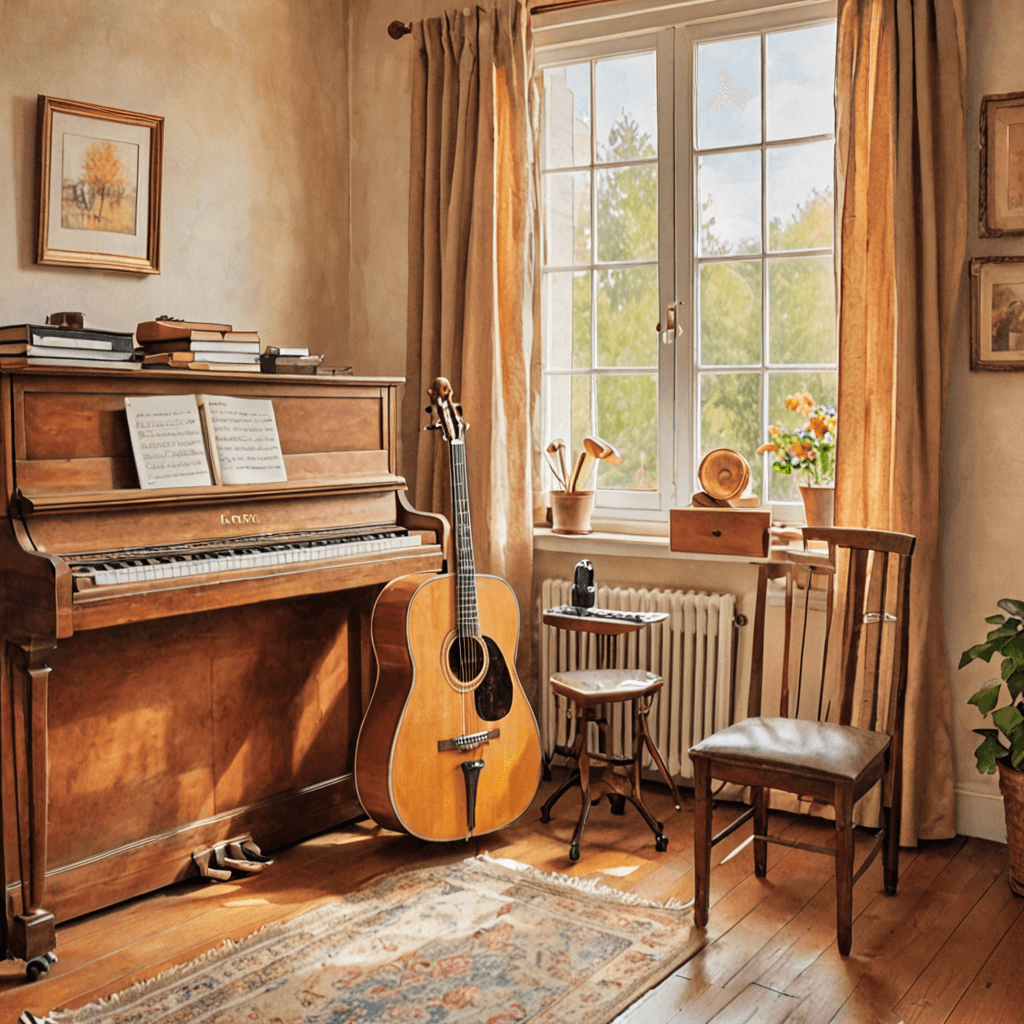
Piano, Guitar, Drums, or Voice: Choosing the Right Summer Music Lesson in Etobicoke
Table of Contents
When families decide to start music lessons in the summer, the conversation usually begins with a single question: which instrument? It sounds simple, but it’s actually the choice that shapes the next several years of a child’s or adult’s musical life. The wrong fit doesn’t ruin music for someone — but the right fit accelerates everything that follows.
At Muzart Music and Art School, we field this question constantly through May and June as Etobicoke families plan summer enrollment. The honest answer is that there’s no universally “best” first instrument, and anyone who tells you otherwise is selling something. But there are real, practical differences between piano, guitar, drums, and voice that make each one a better or worse fit depending on the student.
This guide walks through those differences specifically with summer enrollment in mind — because some instruments are easier to start in summer than others, and the lighter summer schedule changes the calculus.
Why Summer Is the Right Window to Start
Before getting into the instrument choice itself, it’s worth understanding why summer is one of the best windows in the year to begin music lessons of any kind.
During the school year, new music students are competing against homework, evening activities, and end-of-day fatigue for the time and energy practice requires. Beginning an instrument in September means the very first weeks — the hardest weeks, when nothing feels natural yet — happen during the most demanding part of the year. Many students who start in September struggle through October, lose momentum in November, and quit by February.
Students who start music lessons in summer get the opposite experience. The first six to eight weeks of learning — the foundation-building period when habits form — happen during the lightest stretch of the calendar. There’s time to practice properly. There’s space to be bad at something new without it competing with school stress. And by the time September arrives, the student isn’t a beginner anymore. They have eight weeks of foundation, established practice habits, and a relationship with the instrument before the school year ramps up.
This applies to children and adults equally. In our experience, adult learners who start in summer have noticeably higher retention than adult learners who start in September.
Piano: The Most Common First Instrument, and Why
Piano is the most commonly recommended starting instrument for good reason. The instrument lays out music theory visually — the relationship between notes, intervals, scales, and chords is literally physical and visible. A student playing C and then G doesn’t have to imagine the distance between them; they can see it on the keyboard.
This visual foundation makes piano the easiest instrument to pair with general musical literacy. Students who start with piano typically have an easier time later if they pick up a second instrument, because they’ve already internalized how Western music is organized.
The practical considerations for piano are real, though. Piano requires access to an instrument at home — a digital keyboard at minimum, ideally a full 88-key weighted keyboard. A real acoustic piano is better, but a quality digital keyboard works perfectly well for the first several years. Piano practice is also relatively quiet, which matters in apartments and shared spaces.
Summer is an excellent time to start piano lessons in Etobicoke. The foundation-building work — proper hand position, reading both clefs, basic scales — happens without the pressure of competing school commitments. Students who start piano in summer often arrive in September able to play simple pieces independently, which is a meaningful confidence anchor for the school year ahead.
Piano is a strong choice for: children aged five and up, adult beginners with no prior music experience, students with eventual interest in composition or music theory, families with space for a keyboard at home.
Guitar: The Most Adaptable Instrument for Different Goals
Guitar has the broadest range of what it can become. The same instrument can take a student into classical fingerstyle, rock and pop, jazz, blues, country, or singer-songwriter territory — and the student often doesn’t know which direction they want to go when they start. Guitar is forgiving about that uncertainty.
The early weeks of guitar are physically demanding in a way piano isn’t. Fingertips need to develop calluses, the left hand needs to learn unfamiliar shapes, and chord changes feel impossibly slow for the first month. This isn’t a reason to avoid guitar — it’s just useful to know going in, because parents whose children quit guitar after three weeks often do so right before the breakthrough.
Summer is particularly well-suited to starting guitar lessons in Etobicoke for this exact reason. The fingertip-toughening and chord-change-building period happens when the student has time to practice consistently. By the time school starts, the hardest part is behind them.
The practical considerations: students need their own guitar to practice on at home. For children, smaller-bodied acoustic guitars work better than full-size adult guitars. For adults, the choice between acoustic and electric depends largely on musical interest — folk, classical, and singer-songwriter directions lean acoustic; rock, blues, and metal lean electric. Either works for learning fundamentals.
Guitar is a strong choice for: children aged seven and up (younger children sometimes struggle with hand size), teenagers, adult learners with specific stylistic interests, students who want to accompany themselves singing.
Drums: The Most Underestimated Choice for Energetic Learners
Drums are often dismissed as the loud instrument or the disruptive instrument, but they’re frequently the right instrument for students who don’t respond well to sit-still-and-read instruments like piano. Drumming engages the whole body, demands constant coordination, and provides immediate kinetic feedback in a way other instruments don’t.
For children with high energy, kids who struggle to focus on stationary activities, and students with ADHD, drums often succeed where other instruments fail. The physical engagement matches the student’s natural way of operating rather than fighting against it.
Drums also develop musical timing and rhythm at a foundational level that benefits every other musical pursuit. Students who learn drums first often become more rhythmically confident piano players, guitarists, and singers if they pick up a second instrument later.
The practical considerations are the biggest hurdle. Drums require either an acoustic kit (loud, space-consuming) or an electronic kit (quieter, more apartment-friendly, but more expensive). Many families starting drum lessons in Etobicokebegin with a practice pad and snare for the first few months, then invest in a full kit once the student is committed. Summer is a good window for this initial assessment period — there’s time to determine whether the student is serious before the kit purchase.
Drums are a strong choice for: high-energy children, students with ADHD or attention challenges, adults who played in school bands and want to return, families with basement or garage space.
Voice: The Instrument You Already Have
Voice lessons are different from instrumental lessons in important ways. The instrument is internal — students can’t see it, can’t pick it up, can’t put it down. Progress is about awareness of subtle physical sensations: breath support, vocal cord tension, resonance, vowel shape.
This makes voice lessons harder for very young children, who don’t yet have the body awareness to articulate what they’re feeling vocally. We generally recommend voice lessons starting from around age eight or nine, with the most productive work happening from adolescence onward. Children younger than that can still benefit, but the lessons look more like musicianship and pitch development than technical voice training.
For teenagers and adults, singing lessons in Etobicoke are often where the most personal musical breakthrough happens. The voice is intimate in a way external instruments aren’t, and gaining real control over it is both more emotional and more empowering than developing skill on a guitar or piano. Adult voice students in particular often describe lessons as transformative in ways they didn’t expect.
Summer is a strong window for voice for two reasons. First, summer schedules give students energy and time to practice consistently — voice fatigue is real, and rushed evening sessions during school crunch don’t allow for the careful, repeated practice voice technique requires. Second, summer’s slower pace gives space for the gentle, exploratory work that voice training benefits from in early lessons.
Voice is a strong choice for: children aged eight and up, teenagers (especially those interested in musical theatre, choir, or contemporary singing), adults at any age, students with strong musical interest who don’t have access to a home instrument.
How We Help Families Choose
Most parents come to us with one of two situations: either the child has expressed clear interest in a specific instrument, or the parent wants the child to start music but doesn’t know which direction to point them. Both are normal starting points.
When a child has expressed interest, that’s usually the right starting instrument — motivation matters more than theoretical “best fit.” A child who wants to play drums and gets put on piano because piano is “more foundational” often disengages within months. A child who wants to play guitar and gets to play guitar typically practices.
When the choice is open, we usually recommend trial lessons across two or three instruments before committing. A $35 music trial lesson is a low-stakes way to see how a student responds to actually sitting at the instrument with a teacher, rather than guessing from outside. Many of our long-term students started with a trial lesson on one instrument and ended up enrolled in another after the trial revealed something unexpected.
For students preparing for RCM examination preparation, the instrument choice is more constrained — RCM offers paths for piano, guitar, voice, and other instruments, but the curriculum and expectations differ significantly. That’s a separate decision worth discussing with a teacher before enrollment.
Our music lessons run $155 monthly with materials included, and we offer private lessons across piano, guitar, drums, and voice at our Etobicoke studio. To explore what makes sense for your family, book a trial lesson or request more information.
Frequently Asked Questions
Which instrument is easiest to learn as an adult beginner?
Piano and guitar are both common adult-beginner choices for different reasons. Piano gives immediate musical satisfaction — a beginner can play a simple melody on day one — and builds general musicianship faster. Guitar has a steeper initial curve but rewards faster once chord shapes start to feel natural. Voice can also be a strong adult choice for people who don’t have time for instrument practice but want musical engagement.
Can my child take lessons on more than one instrument at the same time?
We generally recommend choosing one primary instrument for at least the first year. Once a student has built a foundation in one instrument, adding a second is much easier — the musical literacy transfers. Trying to learn two instruments simultaneously from scratch usually slows progress on both.
How do I know if my child is ready to start music lessons?
Most children are ready for music lessons somewhere between ages five and seven, depending on the instrument and the child. Piano can start as young as five with the right teacher; guitar typically works better from seven onward (smaller hands struggle with guitar fretboards); drums work well from six or seven; voice generally fits better from age eight or nine. The bigger predictor than age is the child’s interest and ability to sit through a 30-minute lesson with focus.
What if my child wants to switch instruments after starting?
This happens, and it’s not a failure. About one in five of our students switches instruments within their first year, and many of them thrive on the new instrument. We’d rather a student switch and continue than push through on the wrong fit. The trial lesson approach helps reduce these situations, but they still happen — and switching mid-summer is usually painless.
What’s included in the $155 monthly music lesson rate?
The monthly rate covers four weekly private music lessons (30 minutes by default, with longer options available) and all materials including method books, sheet music, and any printed practice materials the teacher provides. There are no separate material fees or surprise charges.
Choosing the right first instrument matters more than most families realize, but the choice doesn’t have to be made in isolation. Book a trial lesson at our Etobicoke studio or request more information, and we’ll walk through what makes sense for your family’s specific situation — child or adult, beginner or returning, summer start or year-round commitment.