
Mixed Media Art for Etobicoke Kids: Why Variety Builds Skill
Table of Contents
When parents picture children’s art classes, they often imagine a single activity — drawing, or painting, or maybe clay. But the most effective early art education isn’t built around one medium; it’s built around variety. Mixed media programs, where children move between drawing, painting, collage, sculpture, and printmaking, develop young artists in ways that sticking to one material can’t. Below, we explain what mixed media actually means for a child, why the variety is the point rather than a distraction, and what to look for in a quality program for your Etobicoke child.
What “Mixed Media” Actually Means for Kids
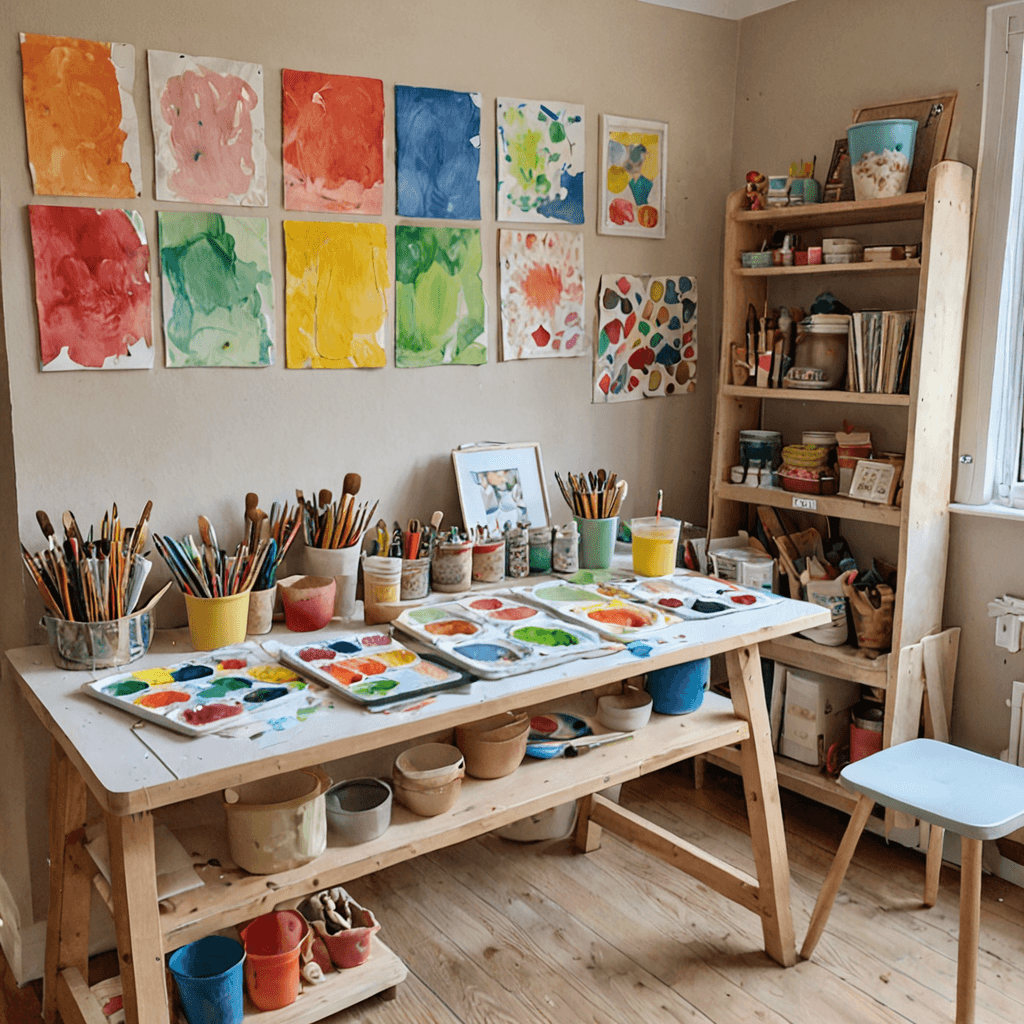
Mixed media simply means working with more than one material or technique — sometimes within a single piece, sometimes across different projects over a term. For children, that might look like a collage that combines painted paper, drawing, and pasted textures; a sculpture built from found objects; printmaking with simple stamps and rollers; or a painting that layers watercolour, oil pastel, and ink.
The idea isn’t to overwhelm a child with materials. It’s to let them discover that art isn’t one fixed thing with one right tool — it’s an enormous range of ways to make and express. For a young child, that discovery is genuinely formative.
Why Variety Builds Better Young Artists
Here’s the core argument, and it runs counter to the instinct that children should “master one thing first.”
Different materials develop different skills. Drawing builds observation and line control. Painting develops colour understanding and brush control. Sculpture builds spatial and three-dimensional thinking. Collage develops composition and an eye for arrangement. Printmaking teaches process and repetition. A child who only ever draws develops a narrow set of skills; a child who works across media develops a broad, transferable foundation.
Variety also keeps children engaged. Young attention spans thrive on novelty, and a child who might lose interest doing the same activity every week stays excited when each session brings something new to explore. Engagement isn’t a frivolous goal here — an engaged child practises more, experiments more, and builds confidence faster.
And critically, variety helps children discover what they love. A child who has only ever drawn might assume they’re “not good at art” because drawing doesn’t click for them — when in fact they might come alive with clay or paint. Exposing children to a range of media lets each child find the materials that resonate, which is often what turns a reluctant participant into a genuinely enthusiastic young artist. In our experience teaching children, the variety is frequently what reveals a child’s real strengths — strengths that a single-medium class would have left undiscovered.
Variety Builds Toward Real Foundations
Some parents worry that moving between media means children never develop depth. In practice, the opposite tends to be true in the early years. A broad foundation across materials gives children a richer visual vocabulary and stronger fundamentals — composition, colour, form, observation — that carry into any medium they later specialize in.
The depth comes later, and it comes more readily to a child with a wide foundation. A teen who eventually focuses on, say, drawing for a portfolio preparation program brings far more to that focus if their early years included paint, sculpture, and collage. Early breadth and later depth aren’t in tension — breadth is what makes depth possible.
What a Quality Children’s Program Looks Like
Not all children’s art classes are equal, and a few markers separate a strong program from glorified craft time.
A quality program is taught by real art instructors, not just supervised activity, so children receive actual guidance on technique and composition rather than just being handed materials. It’s age-appropriate, meeting young children where they are developmentally while still teaching genuine skills. It balances structure with freedom — enough guidance that children learn, enough openness that they create their own work rather than copying a template. And it groups children thoughtfully so the instruction fits the age range in the room.
For children specifically, a group setting is part of the value: kids learn from watching peers, draw energy from a shared creative space, and develop socially alongside artistically. Our art classes in Etobicoke are designed around exactly this kind of guided, varied, genuinely instructional experience, and our group art classes for children give young artists that shared creative environment near Cloverdale Mall.
Starting Your Child in Art
The best way to know whether a program fits your child is to let them try it. A trial lesson at Muzart Music and Art School is $35, and it’s a low-pressure way for your child to experience a real class, work with a few different materials, and for you to see how they respond before committing. Ongoing group art classes for children start at $155 monthly with all materials included, so there are no surprise supply costs as your child explores new media. You can request more information for the details that fit your child’s age, or book a trial lesson to get them started.
What matters most at this age isn’t producing gallery-ready pieces — it’s building a foundation, discovering what they love, and keeping the door to creativity wide open. A varied, well-taught program does all three.
Frequently Asked Questions
What is mixed media art for children?
It means working with more than one material or technique — drawing, painting, collage, sculpture, printmaking — either within a single piece or across different projects. For children, it’s about discovering the full range of ways to make art rather than being limited to one medium.
Isn’t it better for my child to master one medium first?
In the early years, breadth usually serves children better than narrow focus. Different materials build different skills — observation, colour, spatial thinking, composition — and a broad foundation makes later specialization easier and richer. Depth comes later, and comes more readily to a child with wide early experience.
What age should my child start art classes?
Quality programs are designed to meet young children where they are developmentally while still teaching real skills. Children can begin benefiting from guided, age-appropriate art instruction quite young — the key is a program structured for their age group rather than one-size-fits-all.
Are group art classes good for kids, or is private better?
For most children, a group setting adds real value — kids learn from watching peers, enjoy a shared creative environment, and develop socially alongside artistically. Private lessons suit children with specific goals or who need individualized pacing. Many families start in group classes and add private instruction later if a particular focus emerges.
How do I know if a children’s art program is high quality?
Look for real art instructors providing genuine technique guidance (not just supervised craft time), age-appropriate instruction, a balance of structure and creative freedom, and thoughtful age grouping. The best way to assess fit is to have your child try a class and see how they respond.
A varied, well-taught art program does more than fill an afternoon — it builds foundations and helps your child discover what they love. If you’d like your child to experience one, request more information or book a trial lesson to get started.