
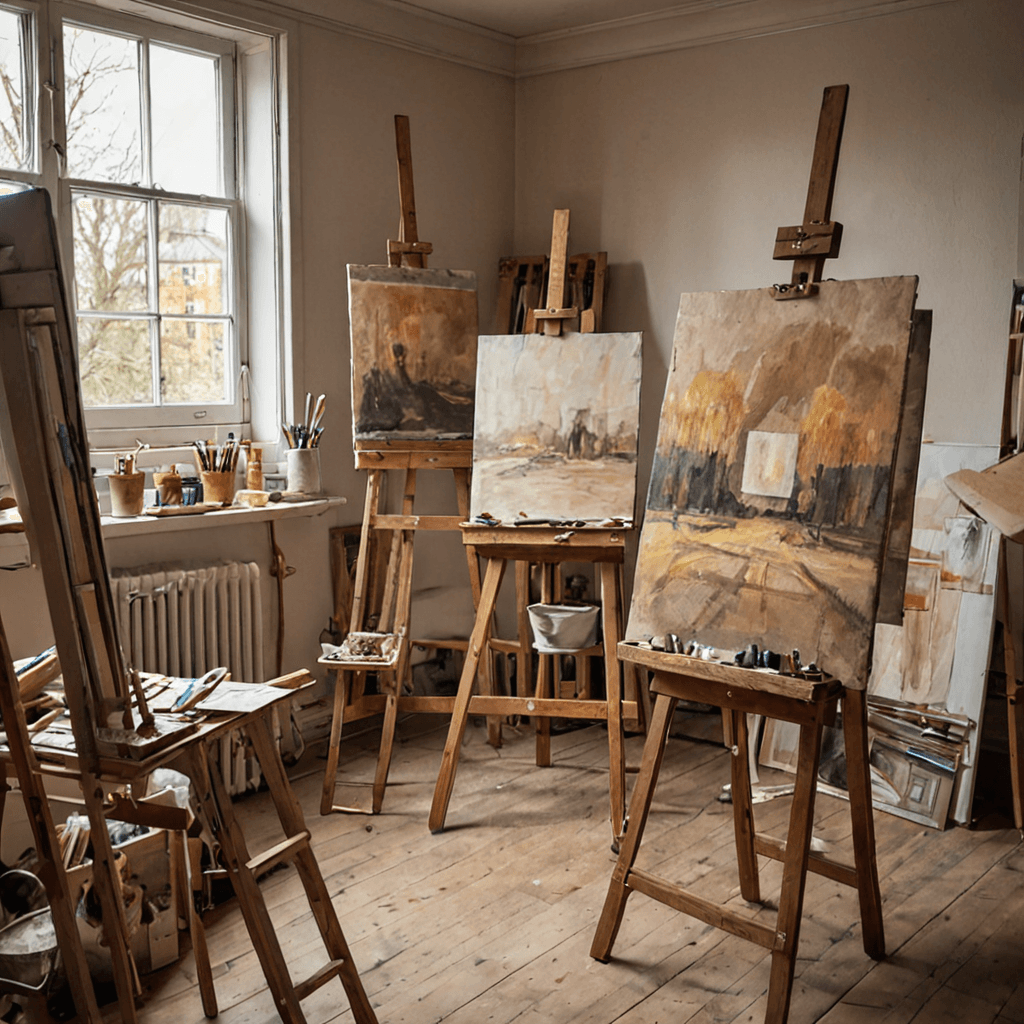
OCAD Drawing and Painting Portfolio: The Mix That Gets Accepted
Table of Contents
Applicants to OCAD University’s Drawing and Painting program often ask the same practical question: what should actually go in the portfolio, and in what proportions? The honest answer is that reviewers care far less about a stack of polished paintings than about a thoughtful mix that proves you can observe, experiment, and think as an artist. Below, we break down the right balance of pieces for a Drawing and Painting submission, the mistakes that quietly sink otherwise strong portfolios, and how to build the whole thing over time rather than in a panic.
What OCAD’s Drawing and Painting Reviewers Are Really Looking For
Drawing and Painting sits within OCAD University’s Faculty of Art, and reviewers reading these portfolios are trying to answer one question above all: can this student see, and can they translate what they see onto a surface with control and intention?
That’s why observational drawing carries so much weight. OCAD explicitly favours drawing from direct observation over drawing from photographs, and when work is referenced from a photo, reviewers want to see a creative departure from the source rather than a faithful copy. Life studies — drawing the figure from life — are especially valued because they reveal genuine visual analysis rather than memorized formulas. If your portfolio has one clear foundation, it should be evidence that you can look hard at the real world and render it convincingly.
But observation alone isn’t enough. Reviewers also want painting skill, a range of media, and — this is the part applicants underestimate — evidence of how you think. Skill, curiosity, personal voice, and the capacity to develop ideas matter as much as any single finished piece. A technically clean but conceptually empty portfolio consistently loses to one that shows a real mind at work.
The Right Mix of Pieces
OCAD’s general guidance for its studio programs asks for a manageable number of finished works — most programs request roughly eight to ten examples of original finished work that show a variety of skills and approaches — accompanied by process work or a sketchbook. Because exact numbers, formats, and deadlines can shift each cycle, always confirm the current requirements on OCAD’s official Preparing a Portfolio pages before you finalize anything. That said, the underlying balance for a Drawing and Painting submission tends to look like this.
Lead with observational work. A meaningful portion of your finished pieces should demonstrate that you can draw and paint from life — still lifes, interiors, figures, whatever puts your observational skill on display. This is the backbone.
Show range in media and approach. Reviewers want to see that you’ve explored beyond a single comfortable style. Mix drawing and painting, try different materials, and include work that shows you experimenting rather than repeating one safe formula.
Include process work. A sketchbook or body of process work is not filler — it’s some of the most revealing material in the portfolio. It shows your routine, your creative development, your inspirations, and how a finished piece came to be. Reviewers read it closely, and each sketchbook typically counts as one portfolio piece.
Add the written layer. OCAD portfolios are accompanied by a statement of intent and short explanations of each finished piece. These aren’t afterthoughts; they give reviewers the context to understand what you were trying to do. A strong statement can meaningfully lift a portfolio.
The goal isn’t to hit a maximum number of pieces. It’s to curate a set where every inclusion earns its place and the collection as a whole tells reviewers who you are as an artist.
The Mistakes That Sink Strong Portfolios
At Muzart Music and Art School — a single studio in Etobicoke, near Cloverdale Mall — portfolio preparation is one of the things we work on most, and a few avoidable mistakes come up repeatedly in Drawing and Painting submissions.
The most common is leaning too heavily on copied work — meticulous reproductions of photographs or of other artists’ pieces. These demonstrate patience but not the observational and creative thinking OCAD actually wants, and they can flatten an otherwise promising portfolio.
The second is a lack of range. A portfolio of ten similar pieces in one style reads as a student who found one thing they’re good at and stopped growing. Reviewers want to see exploration.
The third is neglecting process work, or treating the sketchbook as an afterthought scanned in at the last minute. Since process work reveals how you develop ideas, a thin or absent sketchbook removes one of your strongest chances to show your thinking.
And the fourth is timing. Portfolios built in a last-minute rush look rushed. Strong submissions are developed over many months, which gives students room to build observational skill, experiment, and select their genuinely best work rather than whatever they managed to finish in time.
Building It Over Time, Not Overnight
Because Drawing and Painting portfolios reward observational skill and range — both of which take months to develop — the most useful thing an applicant can do is start early. A student who spends a year building a habit of observational drawing, trying different media, and keeping an active sketchbook arrives at application season with real choices. A student who starts in the fall of their application year is choosing among whatever exists.
This is exactly what structured portfolio preparation is designed to support. Our Etobicoke portfolio preparation sessions focus on building the observational foundation first, then developing range and personal direction, and finally curating the strongest possible set of pieces with the accompanying written material. The program runs on one-hour sessions at $310 per month with all materials included, and families heading into an application year often start with a $70 trial session to see whether the approach fits before committing to an intensive year.
For students still deciding which OCAD major to target, it’s worth reading across the program-specific requirements, because a Drawing and Painting portfolio differs meaningfully from a design or animation one. Our companion breakdowns of the OCAD Illustration portfolio, the OCAD Animation portfolio, and the OCAD Environmental Design portfolio walk through how those submissions differ, and our overview of what accepted OCAD students actually submitted shows the pattern across successful portfolios.
Frequently Asked Questions
How many pieces should a Drawing and Painting portfolio have?
OCAD’s general guidance for its studio programs points to roughly eight to ten finished works plus process work or a sketchbook, though you should confirm the exact current requirement on OCAD’s official portfolio pages. What matters more than hitting a specific count is that every piece earns its place and the set shows range, observational skill, and personal direction.
Does OCAD prefer drawing from life or from photos?
From life. OCAD favours drawing from direct observation, and work referenced from photographs should show a clear creative departure rather than a faithful copy. Life studies are especially valued because they demonstrate genuine visual analysis. Building this skill is a central focus of our portfolio preparation program.
How important is the sketchbook or process work?
Very. Process work reveals how you develop ideas and is read closely by reviewers — it’s often where a portfolio is won or lost. Treat it as a core component, not a last-minute add-on, and keep it active throughout your preparation.
When should my teen start building an OCAD portfolio?
Ideally a year or more before the application deadline. Observational skill and range take months to develop, and an early start means a student selects their best work rather than settling for whatever they finished in time. You can request more information to talk through a realistic timeline for your teen.
Can Muzart help specifically with a Drawing and Painting portfolio?
Yes. Our Etobicoke portfolio preparation focuses on the observational foundation, media range, and curation that Drawing and Painting submissions reward, along with the statement and piece descriptions. It’s private, all-ages instruction built around each student’s goals.
How a Drawing and Painting Portfolio Differs From a Design One
One reason students stumble is that they treat “an OCAD portfolio” as one generic thing, when the expectations shift meaningfully by program. A Drawing and Painting submission is not interchangeable with a design portfolio, and understanding the difference helps a student aim their preparation correctly.
Design-focused programs tend to reward concept development, problem-solving, and evidence of thinking through a brief — often with more emphasis on ideas, iterations, and sometimes three-dimensional or media work. A Drawing and Painting portfolio, by contrast, puts the weight on fine-art fundamentals: observational skill, command of drawing and painting media, colour and composition, and a developing personal voice as a maker of images. Both value process work and range, but the centre of gravity is different.
This is why a student targeting Drawing and Painting should invest heavily in observational drawing and painting practice specifically, rather than assembling a scattered collection of whatever they’ve made. The portfolio should read as the work of someone who looks hard at the world and renders it with intention — and who is beginning to develop a point of view. Tailoring the portfolio to the program, rather than submitting a one-size-fits-all set, is one of the clearest markers of an applicant who has done their homework.
Start Your Portfolio the Right Way
A strong Drawing and Painting portfolio is built over months, from observation outward — not assembled in a scramble. If your teen is aiming for OCAD, the best time to lay the foundation is now. Book a trial session or request more information, and we’ll help map out the mix that gives them the strongest possible submission.