
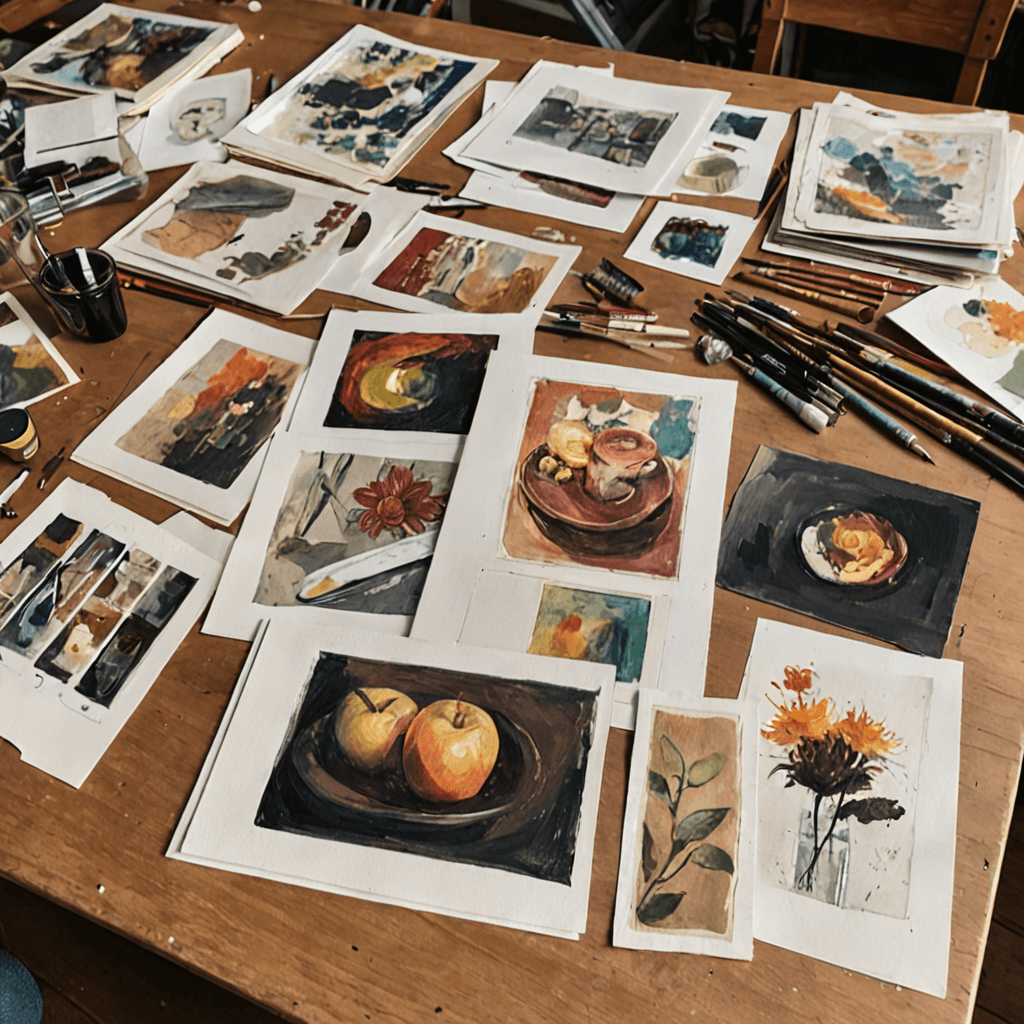
Art Portfolio Preparation Classes in Etobicoke: What’s Taught
Table of Contents
Families researching portfolio preparation in Etobicoke usually find plenty of programs advertising the service — but very few explain what actually happens inside those sessions, or why structured guidance changes outcomes. Below, we break down what’s genuinely taught in portfolio preparation classes: the skills, the strategy, and the review process that turn a folder of drawings into a competitive submission. Here’s what a real portfolio prep program covers.
Why Portfolio Prep Is More Than “Make More Art”
The most common misunderstanding about portfolio preparation is that it simply means producing more pieces. In reality, a strong portfolio is a curated argument — it demonstrates range, technical skill, conceptual thinking, and a personal voice, all shaped to what specific schools or programs are looking for. Making more art without strategy often produces a thicker portfolio that’s no more competitive.
Portfolio prep teaches students to think like an applicant and an evaluator. They learn what reviewers actually respond to, how to show process and not just polished outcomes, and how to assemble pieces into a body of work that reads as intentional rather than assembled at random. That strategic layer is what separates a guided portfolio from a self-assembled one.
At Muzart Music and Art School, our portfolio preparation classes in Etobicoke are private, one-hour sessions built around the individual student’s goals and target programs. Because portfolio work is so personal, that one-on-one structure lets the instruction follow the student rather than a fixed template.
The Core Skills a Portfolio Program Builds
Underneath the strategy, portfolio prep develops genuine technical foundations. Students typically strengthen observational drawing — the ability to render what’s actually in front of them, which reviewers across nearly every program weight heavily. From there, the work expands into a range of media and techniques so the portfolio demonstrates versatility.
Equally important is conceptual development: learning to generate ideas, develop them through sketches and iterations, and carry a concept from rough thinking to finished piece. Many strong young artists can render beautifully but struggle to show thinking, and portfolios that show only finished images without process often read as less mature than those that reveal how the artist works.
The right balance depends on where the student is applying. Our broader portfolio preparation program covers the full arc — observational skill, media range, concept development, and presentation — and tailors the emphasis to each student’s target schools. If you’d like to understand how a program would be shaped for your teen, you can request more information.
Strategy: Matching the Portfolio to the Target
A portfolio for a fine arts program looks different from one for design, illustration, or animation — and a program that ignores that distinction does students a disservice. Part of what’s taught is reading the requirements of specific schools and programs, then shaping the body of work to answer them directly.
This is where guidance earns its keep. Requirements vary, deadlines vary, and the unwritten expectations of reviewers vary even more. Rather than guessing, students learn to research each program’s stated requirements carefully — and we always direct families to verify current requirements directly with each school, since these change year to year. The portfolio is then built backward from those specifics rather than assembled generically and submitted everywhere.
Strategic curation also means knowing what to leave out. A portfolio is stronger when weaker pieces are cut, even beloved ones, so that every included work pulls its weight. Teaching a student to assess their own work honestly — and to make those hard cuts — is one of the most valuable parts of the process.
The Review Process: Feedback That Sharpens the Work
The element families most underestimate is structured review. Regular critique — where an experienced eye examines the work in progress and gives specific, actionable feedback — is what elevates a portfolio over months of preparation. Students learn not just to make work, but to revise it based on critique, which mirrors exactly what art school itself demands.
Good feedback is concrete: this piece needs stronger contrast, this concept isn’t reading clearly, this medium isn’t serving the idea. Learning to receive that feedback without defensiveness, and to act on it, is a skill in itself — and one that serves students long after the application is submitted.
Muzart’s portfolio preparation runs as one-hour private sessions, with a monthly program at $310 and a $70 trial, all materials included. The trial is a low-pressure way for a student to experience the critique process and see how structured guidance feels before committing to a longer preparation timeline. You can book a trial lesson to start there.
Frequently Asked Questions
When should my teen start portfolio preparation?
Earlier is almost always better — ideally a year or more before applications are due. Portfolio development takes time: building skills, developing concepts, creating finished pieces, and revising them through critique can’t be rushed in a few weeks. Our portfolio preparation classes in Etobicoke work best with a runway that allows real iteration.
What’s actually taught in portfolio prep classes?
A combination of technical skill (observational drawing, media range), conceptual development (generating and developing ideas), strategic curation (matching the portfolio to target programs), and structured critique. It’s far more than producing more art — it’s learning to build an intentional, competitive body of work. The full portfolio program covers all of these.
How many pieces does a portfolio need?
It varies significantly by school and program, and requirements change year to year. Rather than a fixed number, the focus should be on quality and intentional range. We help students research each program’s current requirements and always recommend verifying directly with the schools, since these specifications are updated regularly.
How much do portfolio preparation classes cost?
Portfolio prep runs as one-hour private sessions: a $70 trial lesson and $310 monthly, with all materials included. The trial lets a student experience the critique-based approach before committing. If you have questions about fit, reach out to us.
Can portfolio prep help with any art school, not just one?
Yes. The skills are transferable, and the strategic part of the program is precisely about tailoring a portfolio to each student’s specific target programs — whether fine arts, design, illustration, or animation. The body of work is shaped around where the student actually intends to apply.
Portfolio preparation is less about making more art and more about building an intentional, well-argued body of work through real skill and honest critique. If your teen is preparing to apply, book a trial portfolio lesson and see what structured guidance can do for their submission.