
Vocal Lessons in Mississauga for Adults: Starting Out
Table of Contents
Plenty of adults in Mississauga quietly want to sing better but assume the window closed sometime in childhood — that voice training is for kids, choirs, or the naturally gifted. It isn’t. Below, we walk through what starting vocal lessons as an adult actually involves, why adult learners often progress faster than they expect, and how to begin without the self-consciousness that holds so many people back. Here’s what your first season of singing can realistically look like.
It’s Not Too Late — And Adults Have Real Advantages
The belief that you have to start singing young is one of the most persistent myths in music, and it keeps a lot of capable adults from ever trying. The reality is that adults bring genuine advantages to vocal study: they understand instructions the first time, they can self-monitor, they bring emotional maturity to interpretation, and they actually practise on purpose rather than because a parent insisted.
What adults often lack isn’t ability — it’s permission to be a beginner. Singing feels exposing, and an adult who’s been told once, somewhere, that they “can’t sing” often carries that verdict for decades. A good teacher’s first job is frequently to dismantle that story, because in our experience the great majority of adults who believe they’re tone-deaf simply never had focused training.
If you’ve been curious about starting, Muzart Music and Art School offers private vocal lessons in Mississauga built for exactly this — adult learners starting fresh, with no expectation of prior experience. A $35 trial lesson is a low-stakes way to test the water.
What Actually Happens in Adult Vocal Lessons
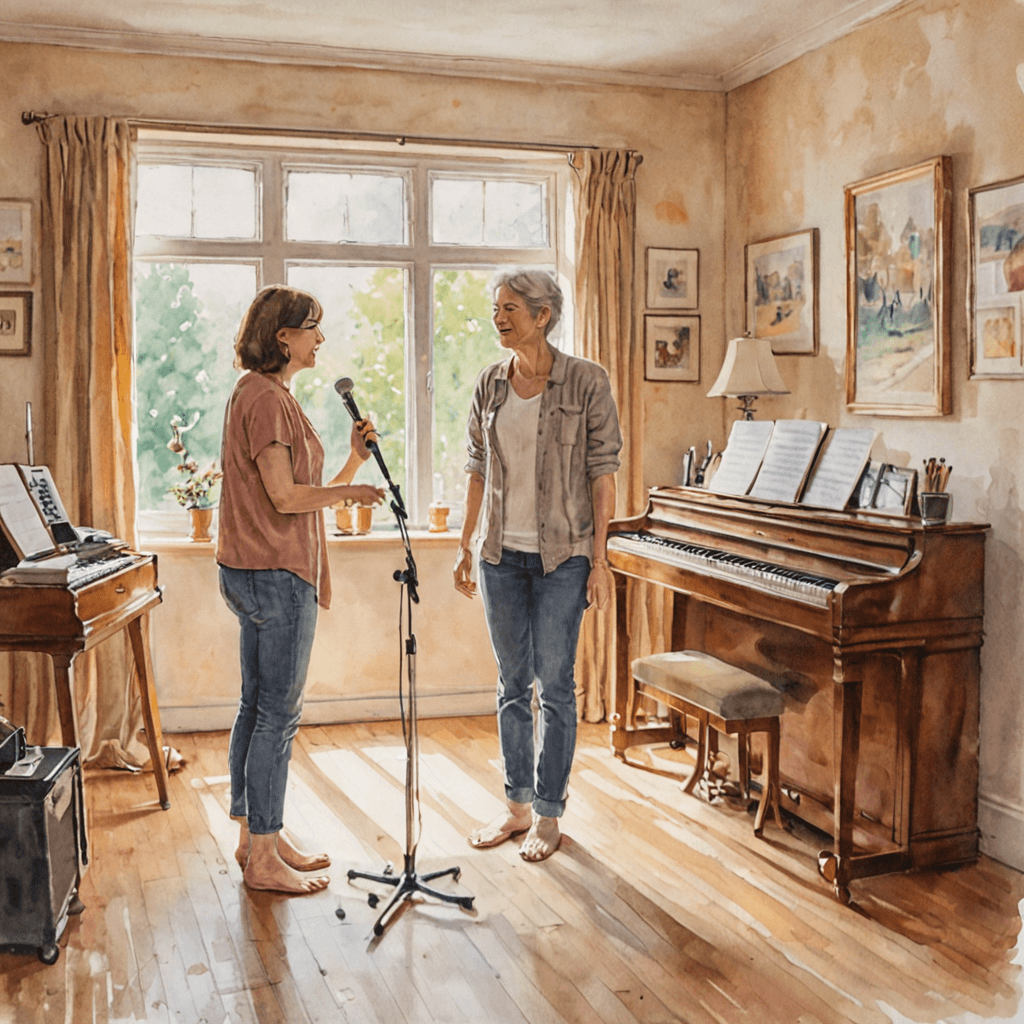
Adult singing lessons are private and individualized — and for voice, that’s not a luxury, it’s a necessity. Every adult arrives with a different range, different habits, and different goals, whether that’s singing confidently at a wedding, joining a community ensemble, or simply enjoying their own voice more.
A typical lesson builds from gentle warm-ups into breath work, then technical focus on tone and pitch, then repertoire the student actually cares about. Adults tend to be motivated by real songs, so a good teacher chooses material that’s both achievable and genuinely satisfying to sing. Progress in the early months is often about breath control and removing tension — small mechanical changes that produce surprisingly large improvements in sound.
Muzart’s monthly vocal program is $155 with all materials included, and because lessons are one-on-one, the pace follows the student. If you’d like to understand how a program might fit your schedule and goals, you can request more information before committing to anything.
Why Adults Often Progress Faster Than They Expect
Adult learners frequently surprise themselves. Because they can focus an entire lesson, apply feedback immediately, and practise deliberately between sessions, they often move through early milestones quickly. The breath-support concepts that take a child months to internalize can click for an adult in weeks, simply because an adult can understand the mechanics intellectually and then feel for them on purpose.
The most common obstacle isn’t technical — it’s the inner critic. Adults judge their own sound harshly, especially early on when the voice is still finding its footing. The students who progress fastest are usually the ones who give themselves permission to sound rough for a while, trusting that tone develops with technique. A patient teacher and a private setting make that vulnerability much easier to sit with.
Setting Realistic Goals as an Adult Singer
The healthiest way to approach adult singing is with goals that are concrete but kind. Rather than “become a great singer,” something like “sing this one song comfortably and in tune by the end of the season” gives a clear target and a real sense of progress. From there, momentum builds naturally.
It also helps to separate the goal of singing well from the goal of performing. Many adults have no interest in an audience — they simply want to enjoy singing and improve. That’s a completely valid goal, and a good teacher will honour it rather than push everyone toward a recital stage.
If you’re in the western GTA and have been meaning to start, the simplest first step is just to try a lesson. You can book a trial lesson and see how it feels to sing with guidance — most adults are surprised by how much changes in a single session.
Frequently Asked Questions
Am I too old to start singing lessons?
No. Voice can be developed at any age — adults often progress faster than they expect because they focus, apply feedback immediately, and practise on purpose. The main barrier is usually self-consciousness rather than ability. Our vocal lessons in Mississauga are designed for adult beginners with no prior experience.
What if I think I’m tone-deaf?
True tone-deafness is rare. Most adults who believe they can’t sing simply never had focused training to develop pitch and breath control. A trial lesson is a good way to find out where you actually stand — most people discover they have far more to work with than they assumed.
Are adult singing lessons private or group?
All of our vocal lessons are private. For adults especially, one-on-one instruction means the lesson is built around your range, your goals, and your pace — which is exactly what makes progress feel achievable rather than intimidating.
How much do adult vocal lessons cost?
A trial lesson is $35, and the monthly program is $155 with all materials included. The trial is the easiest way to experience the teaching approach before deciding on a regular schedule.
Do I have to perform or join a recital?
Not at all. Many adults learn purely for their own enjoyment and improvement, with no interest in an audience — and that’s a completely valid goal. If performing isn’t your aim, let us know and lessons will focus on what you actually want from singing.
Starting to sing as an adult takes a little courage and one good teacher — the rest follows faster than most people believe. If you’ve been meaning to try, book a trial vocal lesson and find out what your voice can do with a bit of guidance.