
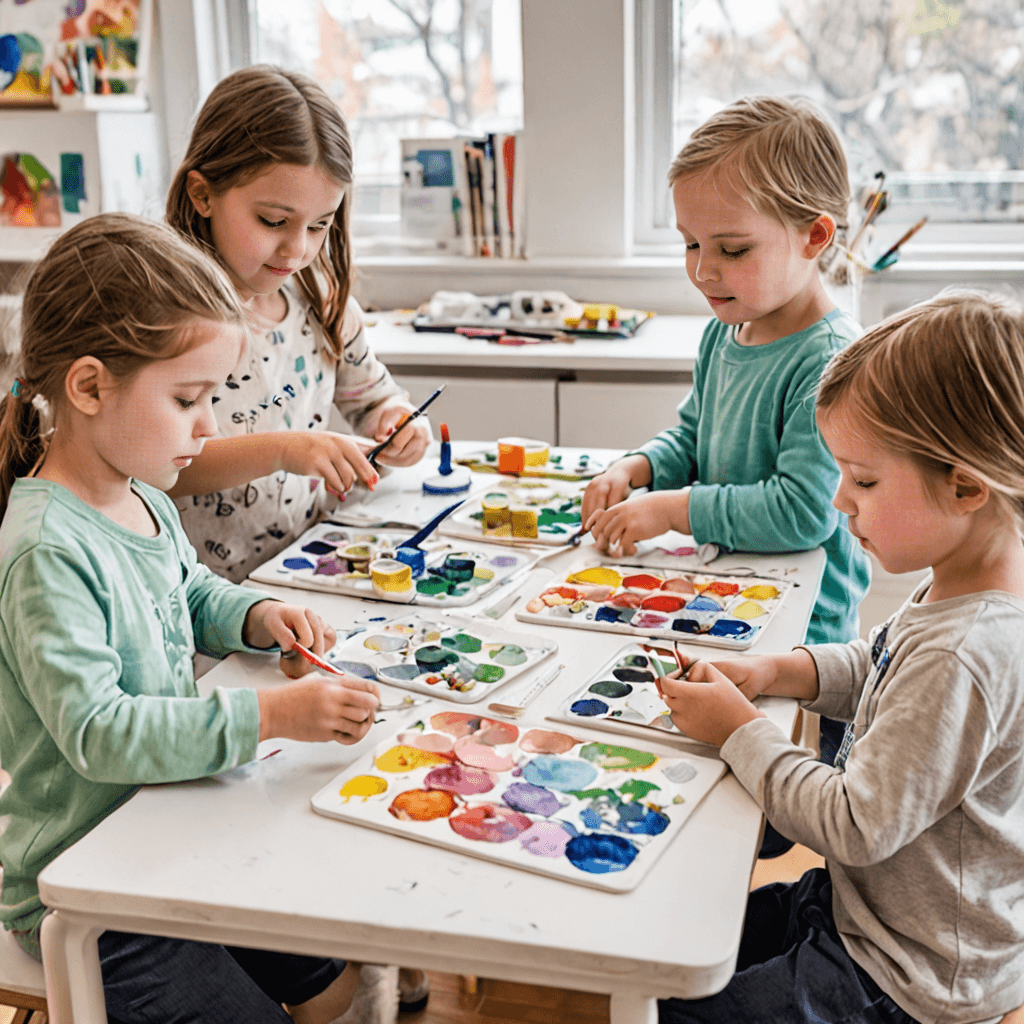
Art as a Screen-Free Activity: Toronto Families Finding Creative Balance
Table of Contents
Screen time concerns dominate modern parenting conversations. Between smartphones, tablets, computers for homework, gaming systems, and streaming entertainment, children today grow up immersed in digital experiences in ways that previous generations never encountered. While technology offers genuine educational and entertainment value, Toronto parents increasingly recognize the importance of balancing screen engagement with hands-on, tactile, real-world activities that develop different skills and provide different types of stimulation. Art education emerges as one of the most compelling screen-free alternatives—offering engagement, skill development, and creative satisfaction that genuinely compete with digital entertainment’s appeal.
At Muzart Music and Art School, located near Cloverdale Mall in Etobicoke, we’ve witnessed how art classes provide families throughout Toronto, Etobicoke, and Mississauga with structured screen-free time that children genuinely enjoy rather than endure. Unlike attempts to simply reduce screen time through restrictions—which often lead to conflict and resentment—providing compelling alternative activities creates positive choices that children make willingly. Understanding how art education functions as effective screen-free engagement helps families create balanced lifestyles without constant battles over device usage.
The goal isn’t eliminating screens—an unrealistic and arguably unnecessary objective in our digital world—but rather ensuring children develop diverse capabilities, maintain connection with hands-on physical creativity, and don’t miss developmental opportunities that only non-screen activities provide.
Why Screen-Free Time Matters
The concerns about excessive screen time emerge from research across multiple domains—developmental psychology, neuroscience, physical health, and educational outcomes. While moderate screen use integrated appropriately into children’s lives presents minimal concerns, heavy screen exposure, particularly passive consumption of entertainment content, correlates with various developmental disadvantages that parents rightfully want to avoid.
Cognitive development research indicates that hands-on manipulation of physical materials—the kind that group art classes and private art lessons provide—develops different neural pathways than screen interaction. When children mix paint colors, shape clay, draw with varied materials, or construct three-dimensional projects, they engage multiple sensory systems simultaneously while receiving immediate physical feedback about their actions. This multisensory, tactile engagement strengthens spatial reasoning, fine motor development, and understanding of physical cause-and-effect in ways that screen-based activities cannot replicate.
Visual development concerns represent another dimension of screen time research. The close-focus, two-dimensional, backlit nature of screen viewing differs fundamentally from how human vision evolved to function. Extended screen time has been linked to increased myopia rates in children, while activities requiring varied focal distances and non-backlit visual engagement support healthier visual development. Art-making naturally involves shifting visual focus—moving between close detailed work and stepping back to view overall composition, looking between reference materials and artwork, and engaging with three-dimensional space—providing the varied visual exercise that supports healthy eye development.
Attention and focus capacity also develop differently through screen-free versus screen-based activities. Screen media, particularly entertainment content, is deliberately engineered to capture and maintain attention through rapid pace, constant stimulation, and immediate rewards. While this makes screens compelling, it may not develop the sustained attention capacity that other types of activities require. Art projects naturally demand sustained focus on self-directed tasks without external stimulation providing constant engagement. Learning to maintain attention through intrinsic motivation rather than external entertainment engineering develops executive function skills that support academic success and life functioning.
Social and emotional development benefits from balanced screen and non-screen experiences. While some screen activities involve social interaction, much childhood screen time remains solitary and passive. Art classes—particularly group formats—provide face-to-face social engagement, shared experiences, and opportunities to learn social skills like collaboration, giving and receiving feedback, and appreciating others’ work. The emotional processing that occurs through creative expression also differs from and complements screen-based entertainment’s emotional engagement.
Physical activity and sedentary behavior represent additional considerations. Screen time is almost entirely sedentary, while art-making, though not aerobic exercise, involves fine motor activity, postural variety, and physical engagement that breaks up sedentary patterns. The hand-eye coordination, fine motor control, and physical dexterity that art develops support overall physical development in ways that screen interaction does not.
Art Education as Compelling Alternative
The key to successfully reducing screen time isn’t restriction alone but rather providing alternatives that children find genuinely engaging and satisfying. Many screen-free activities parents suggest—”go play outside,” “read a book,” “help with chores”—may be valuable but often lack the immediate appeal that makes them viable competitors to screen entertainment. Art education succeeds where other screen alternatives sometimes fail because it offers several characteristics that make it compelling to children.
First, art-making provides immediate visible results that create satisfaction similar to digital activities’ instant gratification. When children paint, draw, or sculpt, they see their creative ideas taking physical form in real-time. This tangible productivity—creating something that didn’t exist before—provides reward experiences that compete effectively with screens’ dopamine-triggering feedback loops. Unlike homework or chores, which children may resist despite potential long-term benefits, art naturally generates the immediate positive feedback that motivates continued engagement.
Second, art allows creative control and self-expression that children find intrinsically motivating. While some screen activities involve creativity (building games, design apps), many are fundamentally consumption experiences where children receive content created by others. In art classes in Etobicoke, children make countless creative decisions—choosing subjects, colors, compositions, styles—experiencing themselves as creators rather than merely consumers. This agency and creative authority addresses developmental needs for autonomy and self-expression that digital entertainment often fails to satisfy.
Third, art education provides appropriate challenge and skill progression that keeps children engaged over time. Like well-designed games that gradually increase difficulty, art instruction introduces progressively complex techniques and projects that match growing capabilities. Students who might initially paint simple subjects advance to complex compositions, from basic color mixing to sophisticated color theory application, from two-dimensional work to three-dimensional sculpture. This progression prevents boredom while building genuine competence, creating the mastery experiences that research identifies as crucial for intrinsic motivation.
Fourth, art classes create social experiences and community that many children deeply value. While digital communication enables connection, face-to-face interaction in shared creative work offers different social benefits—reading facial expressions and body language, experiencing real-time collaborative creation, forming relationships through shared physical space and activities. For socially-oriented children, the community aspect of group art classes represents a powerful draw that can compete effectively with social media or multiplayer gaming’s social pull.
Fifth, the tangible physical products that art-making produces provide lasting satisfaction beyond the immediate creative experience. Children can display their artwork, share it with family, give it as gifts, or collect it in portfolios. These physical artifacts create ongoing pride and identity formation—”I’m someone who creates art”—in ways that screen activities often don’t. The ability to point to physical evidence of their capabilities and creativity supports self-esteem and provides motivation for continued artistic engagement.
Practical Strategies for Screen-Free Art Integration
Successfully incorporating art education as screen-free activity in family life requires thoughtful planning and realistic expectations. Simply enrolling in art classes while maintaining otherwise screen-heavy lifestyles provides limited benefits—the most effective approach integrates formal art instruction with home support and broader family commitments to balanced media use.
Establishing art classes as protected, non-negotiable commitments in family schedules represents the foundational step. When weekly art lessons function like school attendance—something that happens consistently regardless of competing desires or schedule pressures—they become integrated parts of life rather than optional activities competing with screens. This consistency matters both for skill development and for establishing art-making as a valued family priority that supersedes casual entertainment choices.
Creating designated art spaces or art times at home extends the screen-free engagement beyond formal lesson times. When families establish that certain times (perhaps weekend mornings or after-school hours before dinner) or certain spaces (a corner with art supplies, the kitchen table during specific hours) are designated for screen-free creative activity, they normalize hands-on making as part of daily life rather than as special occasional events. These home art times needn’t be formal or instructed—simple availability of materials and protected time often suffices to encourage creative engagement.
Framing art-making as special privilege rather than as restriction from screens helps children develop positive associations. “Screen-free time” emphasizes what children can’t do; “creative making time” or “art time” emphasizes positive opportunities. When parents express enthusiasm for art projects, display children’s artwork prominently, and occasionally join in creative activities themselves, they communicate that art represents a valued, desirable experience rather than merely an alternative to unavailable screens.
Connecting art class content to home materials and projects helps sustain engagement between lessons. When children learn watercolor techniques in class, having watercolor supplies available at home for practice or personal projects extends the screen-free artistic engagement. When students work on drawing skills, providing sketchbooks for doodling, observational drawing, or comic creation gives them tools for self-directed creative time. This home-school connection doesn’t require expensive supplies—basic materials that support techniques students are learning provide sufficient support for spontaneous creativity.
Setting reasonable household screen-time norms while providing art alternatives creates environment where children naturally gravitate toward hands-on activities. Rather than allowing unlimited screen access except during art class, establishing reasonable daily screen limits (perhaps one to two hours on school days, slightly more on weekends, with exceptions for homework or special occasions) creates space in children’s time that art-making and other activities can fill. When screens aren’t constantly available, children develop capacity to engage with alternative activities rather than treating non-screen time as merely waiting until screens become available again.
Involving children in choosing art projects or directions gives them ownership that increases engagement. While formal art lessons provide structured instruction in techniques and skills, allowing children to apply those skills to subjects and projects they choose increases motivation and creativity. A child learning portfolio preparation techniques might focus on subjects they’re passionate about; one in general art classes might specialize in particular media or styles they find most engaging. This balance between guided skill development and personal creative choice optimizes both learning and intrinsic motivation.
Long-Term Benefits of Hands-On Creative Engagement
The advantages of maintaining screen-free creative activities extend beyond the immediate benefits of reduced screen exposure. Children who develop robust hands-on creative capabilities and habits establish foundations that support development across multiple domains and provide resources they carry into adolescence and adulthood.
Attention capacity and focus develop more robustly through sustained engagement with self-directed creative projects than through consumption of externally-paced screen entertainment. Children who regularly spend focused time on art projects—determining what they want to create, working through challenges, persisting to completion—develop executive function skills including planning, sustained attention, and task persistence. These capabilities transfer to academic work, eventually to professional pursuits, and generally to any domain requiring sustained effort toward self-chosen goals.
Problem-solving orientation and creative confidence emerge through repeated experiences of navigating artistic challenges. Every art project presents numerous small problems—how to mix a desired color, how to represent a particular subject, how to recover from an error or unexpected outcome. Children who regularly work through these creative challenges develop general problem-solving confidence and flexibility. They learn that challenges can be addressed through experimentation, that unexpected outcomes sometimes lead to interesting discoveries, and that persistence through difficulty yields results—psychological resources applicable far beyond art-making contexts.
Physical fine motor skills, hand-eye coordination, and spatial reasoning develop through hands-on manipulation of art materials in ways that screen interaction cannot replicate. While concerns about fine motor development in heavily-screen-focused children remain debated, ensuring children have abundant opportunities for activities requiring precise hand control, varied grip patterns, and three-dimensional spatial manipulation provides insurance against potential developmental gaps while offering skills valuable for numerous non-art activities from handwriting to athletic pursuits to future hobbies and professions.
Identity formation benefits from children developing competencies and interests beyond digital engagement. Children who think of themselves as creative, as artists, as people who make things have additional positive identity elements beyond “gamer,” “social media user,” or other screen-defined self-concepts. This diversified identity portfolio supports psychological resilience—challenges or changes in one domain don’t threaten overall self-worth when children have multiple sources of competence and positive self-regard.
The capacity for sustained engagement with physical reality rather than primarily mediated digital experience provides perhaps the most fundamental long-term benefit. While children growing up today will undoubtedly work and play in increasingly digital environments, maintaining robust connection to hands-on physical creativity, the satisfaction of making tangible objects, and the cognitive experiences unique to physical material manipulation ensures they don’t lose capacities that earlier generations developed naturally through everyday activities but that today require more intentional cultivation.
Addressing Common Challenges
Despite art education’s clear benefits as screen-free alternative, families sometimes encounter challenges in establishing and maintaining the balanced approach that maximizes these advantages. Understanding common obstacles and practical solutions helps families navigate these predictable difficulties.
Initial resistance represents perhaps the most common challenge. Children accustomed to high levels of screen time may initially resist alternatives, arguing that art is boring, that they’re not good at it, or that they’d rather use devices. This resistance often reflects not genuine lack of interest in creativity but rather the comparison with screens’ engineered addictiveness. Art-making’s rewards—creative satisfaction, skill development, tangible products—are real but develop more gradually than screens’ instant gratification.
Persistence through this initial resistance typically leads to genuine engagement once children experience actual art-making rather than their preconceptions of it. The trial lesson structure ($70 for portfolio preparation, included in group and private class exploration) allows children to experience art instruction directly rather than deciding based on abstract imagination. Many initially-resistant children discover unexpected enjoyment once they actually engage with materials and experience creating something they’re proud of.
Sibling dynamics can create challenges when one child embraces art enthusiastically while another remains screen-focused. Parents sometimes worry that different expectations or rules for different children create unfairness or resentment. However, children understand that different people have different interests and that activities aren’t distributed identically. The child taking art classes doesn’t necessarily get more screen time than their sibling—both have the same household screen limits, but each has different alternative activities (one does art, another plays sports, another pursues music) that they engage with during non-screen time.
Schedule and transportation logistics sometimes present practical barriers, particularly for families with multiple children, working parents, or limited transportation. Art classes requiring weekly attendance and regular practice time add to already-complex family schedules. However, the weekly structure—one consistent commitment rather than varying activities or multiple weekly sessions—is actually more manageable than more intensive programs. Treating art lessons as non-negotiable simplifies planning by creating predictable weekly patterns rather than constantly evaluating whether to attend any given week.
Cost considerations affect some families, though art education represents relatively affordable ongoing enrichment compared to many alternatives. The comprehensive nature of our programs—with all materials included—eliminates unexpected expenses and makes budgeting straightforward. Families prioritizing screen-free alternative activities often find that investing in quality instruction produces better outcomes than attempting to facilitate art engagement at home with purchased materials but no structured support.
Cleanup and mess management concerns some parents, particularly those with limited space or high housekeeping standards. While art-making does involve materials and occasional mess, art education professionals understand mess management and teach practices that minimize chaos. Home art projects can be similarly managed through designated spaces, protective coverings, and age-appropriate materials. The developmental benefits of hands-on creative engagement justify reasonable accommodation of the practical challenges that come with physical material manipulation.
Building Creative Lifelong Habits
The ultimate goal of providing screen-free creative alternatives extends beyond childhood screen time management to cultivating lifelong creative engagement, appreciation for hands-on making, and balanced relationship with technology. Children who develop robust artistic skills and habits establish foundations that support creative expression and making throughout their lives.
Adult art-making provides stress relief, creative outlet, and personal satisfaction that purely consumptive entertainment rarely matches. Adults who learned art during childhood—even those who don’t pursue art professionally—often return to creative making during various life stages as sources of relaxation, expression, or hobby engagement. The skills and confidence developed through childhood art education create possibilities that remain available throughout life.
Understanding and appreciating art represents another lifelong benefit. Children who create art develop insider understanding of artistic processes, techniques, and challenges that enriches their appreciation of others’ art throughout life. Museum visits, public art encounters, and exposure to visual culture become more meaningful when viewers understand how works were created and can appreciate technical skill and creative choices involved.
The identity as creative person—someone who makes rather than merely consumes—persists beyond childhood into adult self-concept. People who think of themselves as creative approach problems differently, maintain more balanced relationships with passive entertainment, and are more likely to pursue creative hobbies and interests throughout life. This creative identity formation represents one of childhood art education’s most valuable long-term outcomes.
The capacity to engage deeply with screen-free activities without constant digital stimulation becomes increasingly valuable as technology becomes more pervasive. Adults who developed robust capacity for sustained focus on self-directed physical activities have psychological resources for navigating device-saturated environments without becoming completely dependent on digital entertainment and communication. The attention control, tolerance for less-stimulating activities, and satisfaction with hands-on engagement that art education develops provide protection against the attention fragmentation and constant-stimulation-seeking that characterize problematic technology relationships.
Getting Started with Screen-Free Art Education
For Toronto families ready to provide compelling screen-free alternatives through art education, Muzart Music and Art School offers comprehensive art instruction at our single Etobicoke location near Cloverdale Mall. We serve families throughout Toronto, Etobicoke, and Mississauga with both group and private instruction designed to develop artistic skills while providing engaging screen-free enrichment that children genuinely enjoy.
Our group art classes for children provide structured screen-free time in social creative environments. These classes introduce various media and techniques while ensuring individual attention for each student. All materials are included, allowing children to explore diverse artistic possibilities without families needing extensive home supplies. The regular weekly schedule provides consistent screen-free engagement that becomes part of normal routines rather than requiring constant decision-making or negotiation.
Private art lessons offer individualized instruction tailored to each child’s interests, skill level, and goals. The one-on-one format allows deep engagement with artistic processes while providing intensive skill development. Private instruction particularly suits children working on specific projects like portfolio preparation or those who benefit from individualized pacing and attention.
Starting art education requires no previous experience—only willingness to engage with materials and creative processes. Many children who initially resist screen-free activities discover genuine enjoyment and creative confidence once they experience actual art-making with proper instruction and encouragement. The supportive environment we create helps children move past any intimidation or self-doubt while developing tangible skills and creative capabilities.
Frequently Asked Questions
How much screen time is too much for children?
Pediatric health organizations provide general guidelines that vary by age, but the question of “too much” depends partially on what screen time displaces and what type of screen use occurs. The American Academy of Pediatrics suggests that children ages 2-5 should have no more than one hour of high-quality screen time per day, while children ages 6 and older should have consistent limits that ensure adequate sleep, physical activity, and face-to-face social interaction.
However, these guidelines represent starting points rather than precise prescriptions, and families must consider their specific circumstances, their children’s overall functioning, and the nature of screen time involved. Educational screen use for homework differs from passive entertainment consumption. Video calling with distant relatives serves different purposes than gaming. Creative digital tools like drawing apps occupy a middle ground between consumption and creation.
The more important question than precise hour counts involves whether children maintain balanced lives including adequate physical activity, face-to-face social interaction, sufficient sleep, and hands-on activities that develop diverse skills. Children meeting all these needs while also engaging with screens likely have reasonable balance. Those whose screen use displaces sleep, prevents physical activity, or eliminates time for hands-on learning may need adjustments regardless of specific hour counts.
Art education supports healthy screen balance by providing structured time engaged in compelling screen-free activity. The weekly class time plus home practice or creative play with art materials creates several hours of guaranteed screen-free engagement that develops diverse capabilities. This isn’t eliminating screens but rather ensuring screens don’t crowd out other valuable activities.
Can digital art tools like drawing tablets provide similar benefits to traditional art materials?
Digital art tools offer genuine creative possibilities and can develop certain artistic skills effectively. Many professional artists work digitally, and digital media represents legitimate artistic medium with unique characteristics and advantages. However, digital art tools don’t provide identical developmental benefits to hands-on work with physical materials, particularly for younger children.
Physical art materials engage multiple sensory systems—tactile feedback of brush on paper, resistance of clay being shaped, smell of paint, three-dimensional spatial awareness—that digital interfaces cannot replicate. This multisensory engagement appears particularly important for younger children’s development, as research suggests hands-on manipulation of physical materials supports cognitive development in ways that screen-based interaction may not fully duplicate.
The learning curves also differ. Physical materials provide immediate feedback through direct cause-and-effect—mix blue and yellow paint and you see green form. Digital tools add interface layers—selecting colors through menus, adjusting digital brush settings—that can distance users from direct creative experience. For beginners, particularly younger children, physical materials often provide more intuitive introduction to artistic concepts.
The most developmentally comprehensive approach includes both physical and digital art experiences rather than one replacing the other. Children benefit from extensive hands-on work with traditional materials while also having opportunities to explore digital tools when developmentally appropriate. This balanced exposure develops the widest range of capabilities while ensuring the unique developmental benefits of hands-on physical manipulation aren’t lost.
For families specifically seeking screen-free alternatives, traditional physical art materials serve that goal more directly than digital art tools, which still involve screen time even though the engagement is creative rather than consumptive. However, for families comfortable with their children’s overall screen diet and seeking to make screen time more creative and productive, digital art tools can be valuable additions to artistic toolkit.
Will my child resist art classes if they’re being used to reduce screen time?
Children’s resistance to activities perceived as screen-time restrictions depends largely on how families frame and implement the changes. When parents present art classes as punishment for excessive screen use or explicitly as screen-time replacement, children may resist out of principle even if they might otherwise enjoy art. However, when families present art education as positive opportunity and maintain consistent expectations, most children adapt and often develop genuine enthusiasm.
Several factors influence how well children accept art classes. First, allowing children some voice in the decision helps. Discussing why the family wants to include more hands-on creative activities, asking children’s input about art versus other alternatives (music, sports, etc.), and involving them in choosing between group versus private lessons creates buy-in rather than imposed change.
Second, avoiding explicit connection between art enrollment and screen reduction helps. Art classes can be valued for their own sake—developing creativity, learning new skills, joining a creative community—rather than being framed as merely taking time away from screens. When children experience art as inherently valuable rather than as screen-time replacement, they’re more likely to engage positively.
Third, maintaining realistic screen limits consistently regardless of art participation creates clearer structure. If screen time is limited to (for example) one hour on school days, that limit applies whether the child has art class that day or not. Art class isn’t “taking away” screen time—it’s a valued activity during time that wouldn’t be screen time anyway.
Fourth, parents’ genuine enthusiasm for art matters enormously. Children whose parents express interest in their artwork, display pieces proudly, occasionally join creative activities, and generally convey that art is valued develop more positive associations than those whose parents treat art as merely obligatory screen reduction strategy.
Most children, even initially resistant ones, develop authentic engagement with art-making once they experience creating work they’re proud of, developing visible skills, and receiving positive recognition for their creative efforts. The key is persisting through any initial resistance long enough for these intrinsic motivators to emerge.
How can I encourage my child to do art at home between classes?
Home art engagement extends screen-free creative activity beyond formal lesson times, but forcing or pressuring children rarely produces the spontaneous creative play that provides maximum benefit. Several strategies encourage voluntary home art-making without creating conflict or making it feel like obligation.
Making materials accessible and visible helps enormously. When art supplies stay hidden in closets, requiring retrieval and setup, they’re less likely to be used. When basic supplies—paper, colored pencils, markers, paint—live in easily accessible locations where children can spontaneously grab them, creative engagement happens more naturally. A designated art corner, basket of supplies on a bookshelf, or regular spot at the kitchen table where art is welcome normalizes art-making as available option.
Connecting home materials to skills learned in class provides direction without pressure. After a lesson focusing on watercolor techniques, having watercolor supplies available allows practice and experimentation. Following drawing skill lessons, providing sketchbooks for doodling supports skill consolidation. This connection gives children concrete starting points rather than facing blank possibility of “make whatever you want” which can feel paralyzing.
Participating alongside children occasionally models valuing art without taking over their creative space. Parents doing their own art projects—even simple coloring or sketching—while children work on their pieces creates shared creative time without evaluation or instruction. This companionable making demonstrates that art is valuable activity for its own sake, not just as child enrichment.
Avoiding excessive evaluation, correction, or instruction during home art time helps maintain its playful, exploratory nature. While art classes provide structured skill development, home time can be more free and experimental. When parents comment appreciatively (“I love how you used those colors together”) rather than critically (“that tree doesn’t look quite right”), children experience home art as personally satisfying rather than as subject to evaluation.
Displaying children’s artwork prominently communicates its value. When artwork goes straight to recycling versus being displayed on refrigerators, walls, or in portfolios, children receive clear messages about its importance. Regular rotation of displayed pieces—choosing favorites to keep, respectfully recycling others—maintains manageable volume while showing ongoing interest.
Having specific dedicated art times—perhaps weekend mornings or after dinner—can establish patterns without rigidity. If Saturday mornings are when the family does creative projects, it becomes expected pleasant routine rather than something requiring negotiation each time. However, maintaining flexibility for spontaneous creative impulses alongside structured times provides optimal balance.
What if art classes don’t reduce screen time because my child still wants screens constantly?
Art classes alone won’t necessarily reduce screen time in households lacking consistent overall screen limits. If children have unlimited screen access except during art class hours, they’ll simply use screens during all non-art time. Art education provides compelling screen-free alternative, but works best within framework of reasonable household media use expectations.
The most effective approach involves three components working together. First, establish clear household screen time limits appropriate for your children’s ages—perhaps one to two hours daily on school days, slightly more on weekends, with specific exceptions for homework or family movie nights. These limits should be consistent and matter-of-fact, not punitive or presented as deprivation.
Second, provide multiple compelling alternatives including but not limited to art classes. Art education is one valuable screen-free activity, but children also benefit from outdoor play, reading, sports, music, board games, building toys, and imaginative play. The goal isn’t filling every non-screen minute with structured activities but rather ensuring children develop capacity to engage with diverse activities rather than defaulting exclusively to screens.
Third, model balanced media use yourself. Children whose parents constantly use devices learn that screen-heavy lifestyles are normal adult behavior. When parents maintain their own boundaries around device use—not checking phones during meals, putting devices away during family time, engaging in hobbies beyond screens—they model sustainable relationships with technology.
If screen limits create significant ongoing conflict despite clear expectations and compelling alternatives, that might indicate screen use has become genuinely problematic rather than simply preferred entertainment. In these cases, professional guidance from pediatricians or family therapists may help assess whether intervention beyond household rule-setting is warranted.
However, normal resistance to limits shouldn’t be confused with problematic use. Most children would prefer unlimited screen time just as they’d prefer unlimited dessert—both preferences are developmentally normal and don’t necessitate accommodation. Consistent expectations maintained with calm firmness typically result in adjustment, even if not immediate enthusiasm.
Creating Balanced Creative Childhood
Screen time management represents just one dimension of the broader goal of supporting children’s well-rounded development. Art education contributes to this goal not simply by occupying time that might otherwise involve screens, but by developing capabilities, providing creative outlets, and nurturing aspects of development that purely consumptive entertainment cannot address.
When families choose art classes, they’re investing in creative confidence, fine motor development, problem-solving skills, aesthetic sensitivity, and expressive capabilities alongside providing structured screen-free engagement. These multiple benefits justify art education’s place in children’s lives regardless of screen time considerations, though the screen-free dimension adds additional value in our device-saturated environment.
At Muzart Music and Art School, we welcome Toronto families seeking to create balanced lifestyles supporting their children’s creative development. Our single Etobicoke location near Cloverdale Mall serves families throughout Toronto, Etobicoke, and Mississauga with expert art instruction that children genuinely enjoy—not because it’s replacing screens but because creating art provides intrinsic satisfaction and skill mastery that compete effectively with any form of entertainment.
Ready to provide compelling screen-free creative engagement for your child? Book an art class trial lesson to experience our approach and discover how art education can enrich your family’s media balance. For questions about our program or to discuss which format—group or private lessons—would best serve your child’s needs, request more information to connect with our team. The skills, confidence, and creative engagement your child develops through art education will serve them throughout life, long after childhood screen time concerns have evolved into adult media literacy and balanced technology relationships.