
Beginner Drum Lessons in Etobicoke: Your First 6 Months Roadmap
Table of Contents
Starting drum lessons is exciting — but it also comes with a lot of unknowns. What will my child actually learn? How fast should they progress? When will they be able to play a real song? And what should practice look like at home when there is not even a drum kit in the house yet?
These are the questions every parent asks in the first few weeks, and having a clear roadmap makes the experience better for everyone. At Muzart Music and Art School in Etobicoke near Cloverdale Mall, our drum instructors guide beginner students through a structured progression that builds skills in the right order — so your child develops real ability rather than just making noise.
Here is what the first six months of beginner drum lessons in Etobicoke typically look like, month by month.
Month One: Building the Foundation
The first month is about fundamentals — and it involves far less hitting things than most kids expect. This is by design. The habits established in these early weeks determine how fast and how far a student progresses for years to come.
Grip and posture are the first priorities. How your child holds the drumsticks affects everything: speed, control, tone, endurance, and even injury prevention. There are two main grip styles — matched grip and traditional grip — and your child’s instructor will introduce the one that is most appropriate for their age, hand size, and goals. Getting the grip right from day one prevents the kind of tension and awkwardness that plagues self-taught drummers.
Basic stroke technique follows grip. Students learn to produce a clean, controlled single stroke — one stick at a time, alternating hands. This sounds simple, but achieving an even, relaxed stroke requires attention to wrist movement, rebound control, and stick height. Most of month one is spent refining this motion until it becomes natural.
Counting and basic rhythmic reading begin immediately. Even in the first lesson, students start connecting physical movement to rhythmic notation. They learn to count quarter notes, half notes, and whole notes, and they play these rhythms on a practice pad while reading from simple notation. This dual skill — reading and playing simultaneously — is foundational for everything that follows.
By the end of month one, your child should be able to hold sticks correctly, produce consistent single strokes with both hands, and read and play basic rhythmic patterns. They will not be playing songs yet, and that is perfectly fine.
Home practice in month one requires only a practice pad and sticks. Fifteen minutes of daily practice, focused on stroke consistency and basic reading exercises, is ideal at this stage.
Month Two: Coordination Begins
Month two introduces the concept that makes drums uniquely challenging among instruments: limb independence. Your child begins to use both hands and at least one foot simultaneously.
The bass drum enters the picture. Students learn to operate a bass drum pedal while maintaining a steady hand pattern. This is a genuine coordination challenge — the brain must manage three independent movements at once. Some students pick this up quickly; others need several weeks of focused practice. Both timelines are normal.
Simple rock beats are usually the first full-kit pattern students learn. A basic rock beat combines a steady bass drum and snare drum pattern with a consistent hi-hat rhythm. When your child plays their first complete beat, it is a milestone worth celebrating — they are playing drums, not just practicing exercises.
Rudiments expand beyond single strokes. Double strokes (two hits with each hand in sequence) are introduced, along with the paradiddle — a specific sticking pattern that is one of the fundamental building blocks of all drumming.
By the end of month two, most students can play at least one basic beat on a full kit and are beginning to develop the limb coordination that defines drumming. Lessons at this stage balance technical exercises with the satisfaction of playing recognizable rhythms.
Month Three: Expanding the Beat Vocabulary
With basic coordination established, month three focuses on variety. Students begin to understand that small changes in a beat pattern create entirely different musical feels.
Beat variations are introduced by shifting the bass drum or snare drum placement within a pattern. Students learn that moving the bass drum from beats one and three to beats one and the “and” of two creates a completely different groove. This teaches an important concept: drums are not just about keeping time — they shape the feel of the music.
Hi-hat variations add another dimension. Students learn to open and close the hi-hat, creating contrast between tight, controlled sounds and washy, sustained sounds. This is often where students start to feel like they are making music rather than just executing patterns.
Fill-ins — short transitional patterns that connect one section of a song to the next — are introduced in basic form. A simple four-beat fill using single strokes around the toms gives students their first taste of the dynamic, expressive side of drumming. Fills are usually the part of drumming that kids find most exciting.
Reading skills continue to develop. By month three, students should be comfortable reading eighth note patterns and beginning to sight-read simple rhythmic exercises without prior preparation.
This is the month where many students really fall in love with the instrument, because the sounds they are making start to resemble the music they hear in their favourite songs.
Month Four: Songs and Musical Context
Month four marks a shift from exercises to music. Students begin applying their growing skill set to actual songs — and this is where motivation often gets a significant boost.
Song-based learning begins in earnest. The instructor selects songs that match the student’s current technical level, and the student learns to play along with the recording. This introduces important skills: listening to other instruments, maintaining steady tempo over the length of a full song, and managing transitions between sections.
Dynamic control becomes a focus. Playing everything at the same volume is a common beginner habit, and month four is when students start learning to play quietly, play loudly, and transition between the two with control. Dynamics are what make drumming musical rather than mechanical.
Metronome work intensifies. Students who have been counting internally now begin practicing with a metronome to develop precise, consistent tempo. This can be frustrating at first — the metronome is unforgiving — but it is one of the most valuable skills a drummer can develop.
By the end of month four, your child should be able to play at least two or three simple songs from start to finish. They should also be developing an ear for how drums fit within a band context, even if they are playing along to a recording rather than with other musicians.
Month Five: Technical Growth and Reading Fluency
Month five deepens the technical and reading skills that support long-term development.
Sixteenth notes are introduced, doubling the rhythmic density of what students have been playing. Sixteenth-note patterns on the hi-hat create a driving, energetic feel that shows up in pop, rock, funk, and many other styles. The coordination required to play sixteenth notes cleanly while maintaining a bass drum and snare pattern is a meaningful step up.
Accent patterns teach students to emphasize certain notes within a stream of strokes. This is a subtlety that separates a rhythmic drummer from a musical one — accents create shape and interest within patterns that would otherwise sound flat.
Reading extends to more complex rhythms. Students begin reading syncopated patterns — rhythms where the emphasis falls on unexpected beats. Syncopation is everywhere in popular music, and the ability to read and play syncopated rhythms opens up a huge repertoire of songs and styles.
Musical styles begin to diversify. Up to this point, most students have been working primarily in a rock or pop context. Month five is often when instructors introduce jazz, Latin, or funk patterns — not in depth, but enough to show the student how versatile the drum kit is.
Students taking drum lessons in Etobicoke at Muzart experience this progression through a curriculum that balances technical development with musical engagement, keeping students challenged without overwhelming them.
Month Six: Putting It All Together
By month six, the transformation from total beginner to developing drummer is visible. Your child has a toolkit of beats, fills, techniques, and reading skills that allow them to engage with music in a meaningful way.
Performance preparation often happens around this stage. Whether it is a recital, a showcase, or simply playing for family at home, performing a complete piece from memory is a milestone that builds confidence and provides motivation for continued study.
Self-directed practice begins to develop. By month six, students should be able to work through assigned exercises and songs at home without needing step-by-step guidance for every bar. The instructor provides the roadmap, but the student is increasingly capable of following it independently.
Goal setting for the next phase happens in conversation between the instructor, the student, and the parents. Some students want to continue building toward RCM percussion examinations. Others want to focus on playing in a specific musical style. Some want to start learning songs they choose themselves. The six-month foundation supports any of these directions.
If you are considering whether your child is ready to begin, or if you have questions about what the first months look like in practice, request more information and our team will walk you through everything.
What Equipment Does a Beginner Need?
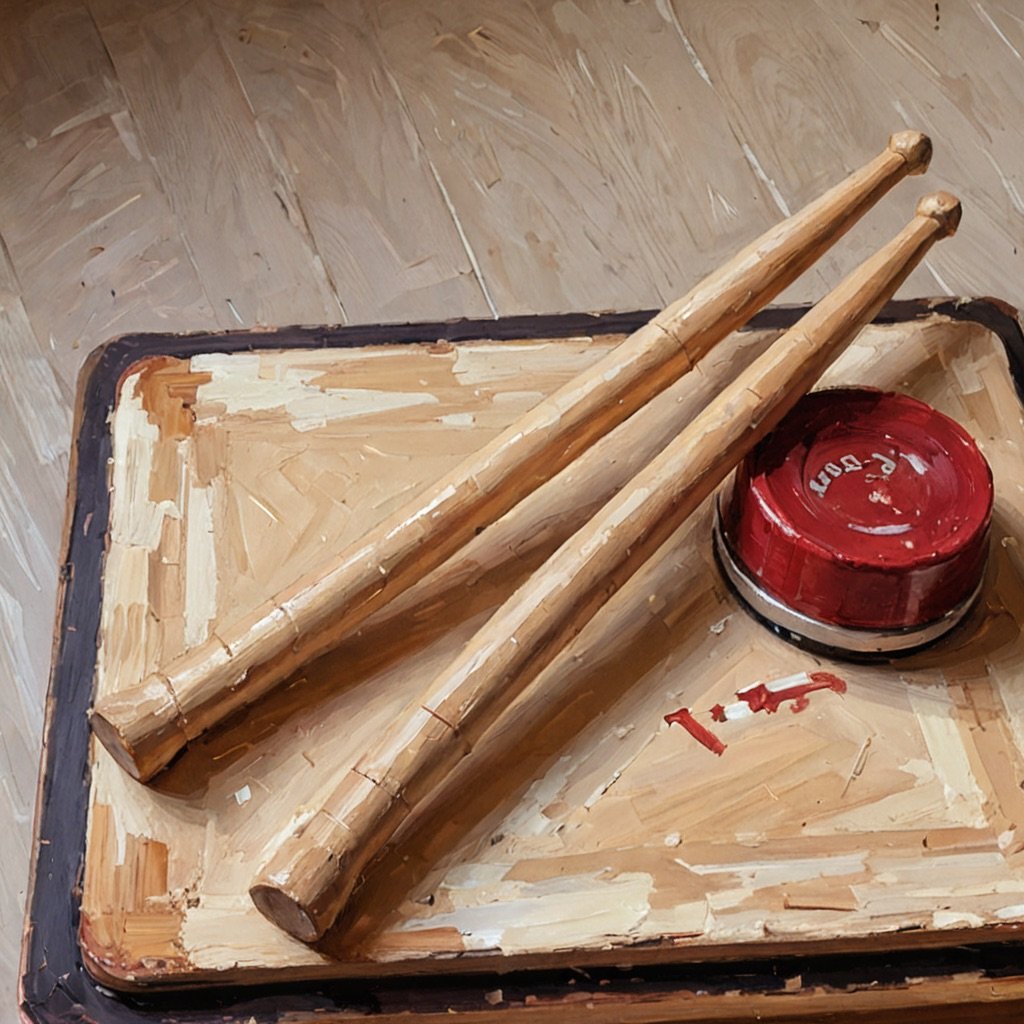
One of the best things about starting drum lessons is that you do not need a drum kit right away. For the first one to three months, a practice pad and a pair of sticks are sufficient for home practice. Your child’s instructor will work on a full kit during lessons, but the fundamental skills being developed — grip, stroke control, reading, and basic rudiments — are all practiced on a pad.
When the time comes to consider a kit, your instructor can recommend options based on your space, budget, and your child’s interests. Electronic kits with volume control are popular for families in apartments or townhouses. Acoustic kits offer a more authentic playing experience but require space and tolerance for volume.
At Muzart, the monthly program costs $155 and includes all lesson materials. You do not need to purchase method books, sticks, or practice resources separately — everything your child needs for lessons is provided.
Frequently Asked Questions
How often should my child take drum lessons as a beginner?
Weekly lessons are the standard and the most effective schedule for beginners. This provides enough time between lessons for your child to practice and absorb new concepts, while keeping the momentum going. Less frequent lessons — every two weeks, for example — tend to produce slower progress because students forget material between sessions.
What if my child loses interest after a month or two?
It is normal for the initial excitement to settle once the work of building fundamentals begins. A good drum instructor knows how to keep lessons engaging through variety, achievable goals, and incorporating songs the student enjoys. If your child seems to be losing interest, talk to their instructor before making any decisions about stopping — often a small adjustment in approach reignites motivation.
Can my child start drum lessons if they have no musical background?
Absolutely. Drums do not require any prior musical knowledge. Unlike piano or guitar, where students need to learn pitch and melody concepts from the start, drums focus primarily on rhythm — something every child already has a natural sense of. A $35 trial lesson at Muzart is a great way to see how your child responds to structured drum instruction. Book a trial lesson to get started.
Is six months enough to know if my child should continue with drums?
Six months gives you a very clear picture. By that point, your child has experienced the fundamentals, the coordination challenge, and the reward of playing songs. If they are engaged and progressing, they are well-suited to continue. If they are consistently resistant to practice and uninterested in lessons despite a good instructor, it may be worth exploring other instruments — and that is perfectly fine too.
How do Etobicoke drum lessons at Muzart differ from online lessons?
Private, in-person drum lessons allow the instructor to hear exactly how your child sounds in real time — microphones and speakers compress the dynamics of drums, making it nearly impossible to assess tone, touch, and technique accurately online. In-person instruction also allows the teacher to physically adjust a student’s grip or posture, which is critical in the early months. Our Etobicoke location near Cloverdale Mall makes weekly attendance convenient for families across the area.
Ready to start your child’s drumming journey? Muzart’s beginner drum lessons in Etobicoke follow a structured roadmap that builds real skills from the very first lesson. Book a $35 trial lesson and see what six months of focused instruction can accomplish.