
Building Fine Motor Skills Through Art: Toronto Children’s Classes
Table of Contents
Fine motor skill development forms a crucial foundation for children’s academic success, daily living capabilities, and overall independence. While these skills naturally develop through childhood, structured activities that systematically challenge and refine small muscle control, hand-eye coordination, and precise movements accelerate development while making the process engaging and enjoyable. Art education stands out among fine motor development activities because it combines necessary physical skill building with creative expression, cognitive engagement, and emotional satisfaction that sustains children’s motivation and participation. At Muzart Music and Art School, located in Etobicoke near Cloverdale Mall, we understand how art instruction serves dual purposes: developing artistic capabilities while simultaneously building the fine motor foundations that support success across all areas of children’s lives, serving families throughout Toronto, Etobicoke, and Mississauga.
Parents often enroll children in art classes primarily for creative development without fully recognizing the significant physical skill building that occurs simultaneously. Understanding this dual benefit helps families appreciate art education’s comprehensive value and make informed decisions about activity investments that support children’s holistic development.
The connection between art-making and fine motor development isn’t incidental—it’s fundamental to how humans develop manual dexterity, precision, and control throughout childhood and into adolescence.
Understanding Fine Motor Skills and Their Importance
Fine motor skills encompass the small muscle movements that control hands, fingers, and wrists, enabling precise actions like writing, buttoning clothing, using utensils, tying shoes, and countless other daily tasks. These capabilities don’t emerge fully formed but develop gradually through years of practice, challenge, and refinement beginning in infancy and continuing through adolescence.
The developmental progression follows predictable patterns. Infants gain basic grasp reflexes, toddlers develop crude grasping and release, preschoolers achieve more controlled movements like crude cutting and drawing, and school-age children refine precision enabling writing, detailed drawing, and complex manipulations. Each stage builds on previous capabilities while introducing new challenges that push development forward.
Academic success correlates strongly with fine motor proficiency. Children who struggle with pencil grip, letter formation, or sustained writing tasks experience frustration and reduced academic confidence that can cascade into broader school difficulties. Early fine motor development through activities like art lessons in Etobicoke provides foundations that make subsequent academic demands more manageable and less stressful.
Daily living independence depends on fine motor capabilities. Dressing independently, managing personal hygiene, preparing simple foods, and handling everyday objects all require adequate fine motor control. Children who develop these skills age-appropriately experience greater autonomy and confidence, while those who lag may require extended assistance that impacts both their independence and self-esteem.
Hand dominance establishment—the process of developing preference for left or right hand use—intertwines with fine motor development. Activities requiring sustained precision and control help children naturally discover and establish their dominant hand while developing appropriate strength and dexterity in both hands for complementary roles in complex tasks.
Bilateral coordination—the ability to use both hands together in coordinated ways—represents another crucial developmental milestone. Art activities frequently require bilateral coordination, as children use one hand to stabilize paper while the other draws, or coordinate both hands to manipulate scissors and paper simultaneously. These experiences build neural pathways supporting coordination across all activities.
Visual-motor integration—the ability to coordinate what eyes see with what hands do—develops through activities requiring precise hand movements guided by visual information. Drawing specific shapes, following lines while cutting, and placing collage pieces precisely all build visual-motor integration that supports later handwriting, athletic skills, and countless practical tasks.
How Art Activities Target Different Fine Motor Skills
Art instruction incorporates diverse activities that systematically challenge various aspects of fine motor development. Understanding which artistic activities develop which specific skills helps parents and educators select developmentally appropriate art experiences that target areas where individual children need support.
Drawing and coloring activities develop grasp patterns and pressure control. Young children typically use whole-hand grasps initially, gradually transitioning to mature tripod grips that allow greater precision and endurance. Art instruction guides this development through activities requiring increasingly refined control—coloring within boundaries, drawing specific shapes, creating detailed illustrations that demand precise mark-making. Pressure control develops as children learn to vary line weight intentionally, creating subtle versus bold marks depending on artistic intent.
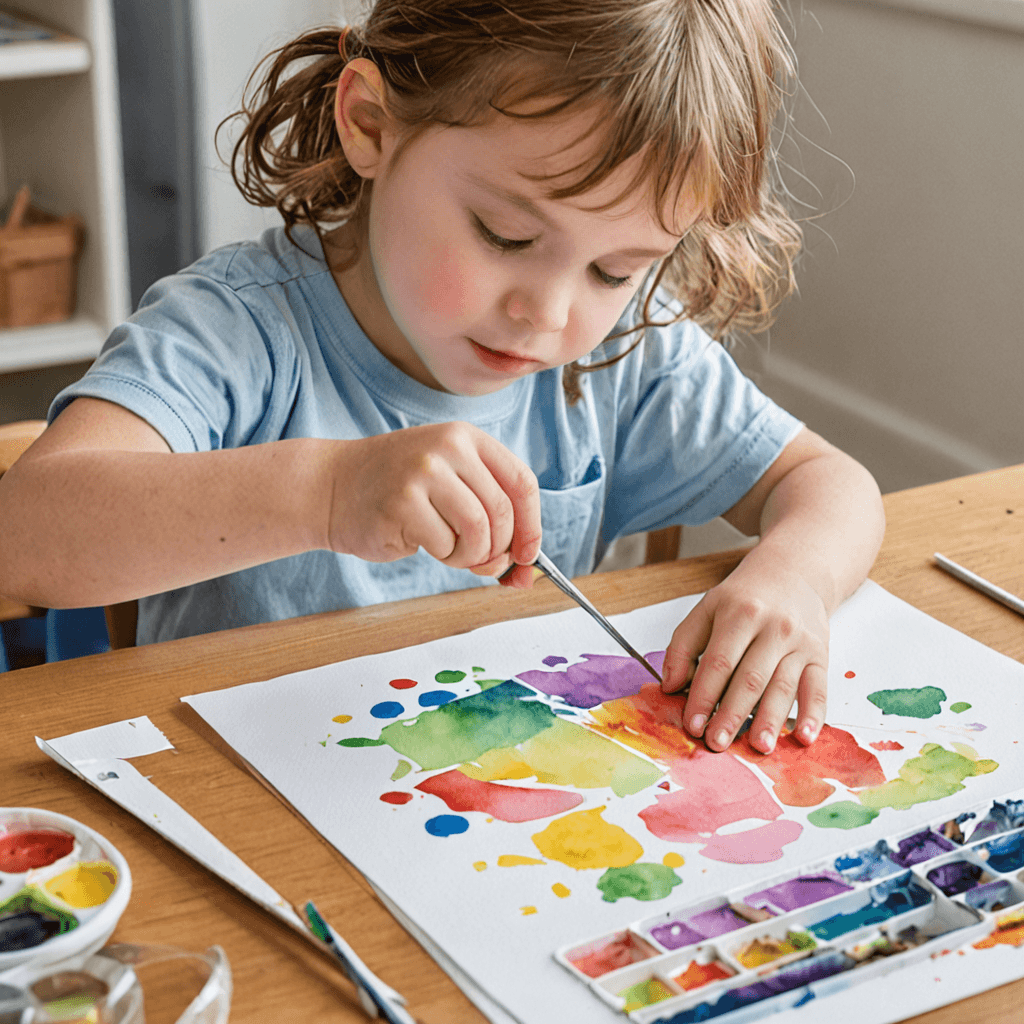
Painting activities build hand strength and brush control while introducing new grip patterns. Managing paintbrushes requires different hand positions than drawing implements, exercising hand muscles in varied ways that contribute to overall dexterity development. Loading brushes with appropriate paint amounts, controlling paint application, and creating specific stroke types all challenge coordination and precision while producing visually satisfying results that motivate continued practice.
Cutting activities specifically target scissor skills—a crucial fine motor milestone that many children find challenging. Group art classes incorporate cutting activities with progressive difficulty: cutting fringe edges, cutting straight lines, cutting curves, cutting complex shapes. These experiences build the hand strength, bilateral coordination, and visual-motor integration that scissors use requires while creating art components that children incorporate into larger projects, making practice purposeful rather than purely drill-based.
Collage projects develop precise placement and spatial awareness. Picking up small pieces, positioning them intentionally, and using appropriate amounts of glue all require fine motor control. The decision-making involved in collage composition adds cognitive engagement that makes skill practice meaningful. Children develop pincer grasp strength through manipulating small materials while exercising judgment about aesthetic placement.
Clay and sculpting activities build hand strength uniquely among art media. Kneading, rolling, pinching, and shaping clay exercises hand muscles differently than mark-making tools, providing comprehensive hand development. The three-dimensional nature of sculpture also enhances spatial reasoning and planning capabilities that complement fine motor growth.
Threading and weaving projects develop hand-eye coordination and sustained precision. Creating patterns through over-under weaving movements or threading beads onto strings requires visual tracking combined with controlled hand movements—exactly the type of integration supporting handwriting and other academic tasks. The repetitive nature of these activities builds endurance for sustained fine motor tasks.
Tearing paper—often overlooked as a developmental activity—actually provides important pre-scissor skill development. Controlled tearing requires bilateral coordination and thumb-finger strength while being accessible to children not yet ready for scissors. Our instructors at the Etobicoke location understand developmental progressions and match art activities to children’s current capabilities while gently pushing toward next developmental stages.
Age-Appropriate Art Activities and Developmental Progression
Effective fine motor development through art requires matching activities to children’s current developmental stages while providing appropriate challenges that stimulate growth without creating overwhelming frustration. Understanding typical developmental timelines helps parents and educators select beneficial art experiences.
Ages 3-4 focus on large muscle development transitioning toward fine motor refinement. Art activities for this age emphasize whole-hand grasps, large movements, and basic manipulation. Finger painting, large crayon or marker work, tearing paper, and simple clay manipulation provide appropriate challenges. Adults shouldn’t expect precise control or neat outcomes—the value lies in exploration and foundational skill building. Success means engagement and experimentation, not artistic refinement.
Ages 5-6 represent crucial periods for developing mature pencil grips and refined hand control. Art instruction helps this transition through activities requiring increasing precision while maintaining engagement. Drawing specific shapes, basic cutting along lines, painting with smaller brushes, and beginning collage work with varied-size pieces all challenge emerging capabilities appropriately. Many children establish hand dominance firmly during this period, and varied art activities support this natural process.
Ages 7-8 demonstrate significantly improved fine motor control that allows more detailed artistic work. Children can handle more complex cutting tasks, create detailed drawings with mature grips and good pressure control, manage thinner paintbrushes effectively, and work on projects requiring sustained precision over multiple sessions. Private art lessons can introduce techniques requiring greater refinement like printmaking, detailed observation drawing, and multi-step projects building complexity.
Ages 9-10 show refined capabilities approaching adult-level fine motor control for many tasks. Art instruction can incorporate sophisticated techniques like cross-hatching, detailed realistic drawing, complex cutting and construction, and extended projects requiring sustained precision. Children this age benefit from challenges that push their developing capabilities while providing creative freedom to apply skills in personally meaningful ways.
Ages 11+ continue developing endurance and speed alongside precision. While basic fine motor capabilities are largely established, practice refining specific artistic techniques—delicate brush control for detailed painting, precise measurement and cutting for construction projects, sustained detailed work for realistic drawing—continues strengthening and refining abilities that support all life areas.
Individual variation means chronological age provides only rough guidance. Some children demonstrate advanced fine motor development earlier while others need additional time and practice to reach typical milestones. Quality art instruction meets children at their current developmental stages regardless of age, providing individualized challenges that support their specific growth needs. Trial lessons at our Etobicoke location allow instructors to assess individual children’s current capabilities and recommend programming matching their developmental status rather than simply their birth year.
Recognizing and Supporting Children Who Struggle
Some children demonstrate delayed fine motor development or specific challenges with manual dexterity that make art activities frustrating rather than enjoyable. Parents and educators who recognize these difficulties and provide appropriate support help children develop needed skills while maintaining motivation and self-esteem.
Warning signs of fine motor difficulties include persistent immature pencil grips beyond typical developmental timelines, unusual fatigue during fine motor tasks, avoiding activities requiring precision, difficulty manipulating small objects, poor handwriting quality despite adequate instruction, and slow completion times for tasks peers complete quickly. These indicators suggest children might benefit from targeted support through activities like structured art education.
Art classes provide low-stakes environments for practicing challenging skills. Unlike handwriting homework that children must complete regardless of difficulty, art allows children to work at their own pace, experiment without judgment, and experience success through creative expression even while building needed physical skills. This positive emotional context often helps struggling children engage with skill-building they might resist in more academically-focused contexts.
Adaptive strategies within art instruction help children with specific challenges participate successfully. Modified grips on drawing tools, adapted scissors for children struggling with standard versions, slanted work surfaces improving wrist positioning, or frequent breaks preventing fatigue all allow children to engage productively with art-making while addressing their specific needs. Our instructors recognize when children need accommodations and implement them naturally without drawing attention that might embarrass students.
Incremental skill building prevents overwhelming children who find fine motor tasks particularly challenging. Breaking complex activities into smaller steps, allowing longer completion times, and celebrating partial progress rather than demanding perfection helps struggling children experience success and maintain motivation. The gradual improvement visible in their artwork provides concrete evidence of developing capabilities that builds confidence and persistence.
Parallel support through occupational therapy combined with art education benefits some children significantly. While art classes aren’t therapy, they provide enjoyable contexts for practicing skills that occupational therapists target through clinical interventions. Parents working with occupational therapists can discuss how art class participation might complement therapeutic goals, creating multiple practice contexts that accelerate development.
Patience and realistic expectations prove crucial for supporting children with fine motor challenges. Development occurs gradually, and struggles don’t indicate lack of intelligence or effort. Art education offers children alternative achievement pathways and opportunities for creative success even while physical skills develop more slowly than peers. This balanced approach maintains self-esteem while addressing developmental needs.
The Broader Benefits Beyond Physical Skills
While fine motor development alone justifies art education’s value, the additional benefits children gain make art instruction remarkably comprehensive in supporting holistic child development. Understanding these broader advantages helps families appreciate art education’s full impact.
Cognitive development intertwines with artistic practice. Decision-making about colors, compositions, techniques, and subject matter exercises judgment and planning. Problem-solving when artistic outcomes don’t match intentions builds resilience and flexible thinking. Following multi-step project instructions develops executive function and sequential processing. These cognitive capabilities extend well beyond art contexts into academic work and life challenges.
Emotional expression through art provides healthy outlets for feelings that children might struggle to articulate verbally. Creating visual representations of emotions, experiences, or imaginative content allows processing and communication that supports emotional health and self-awareness. This expressive capacity proves particularly valuable during challenging developmental periods or when children face difficult circumstances.
Focus and concentration naturally develop through engaging art projects. Children who struggle with attention in academic contexts often demonstrate surprising sustained focus during art activities that capture their interest. This concentration practice builds attentional capabilities generalizing to other areas, while the experience of sustained focus itself helps children understand their capacity for deep engagement.
Self-confidence grows through artistic achievement and creative expression. Completing projects, seeing skill improvement over time, and receiving recognition for creative work all contribute to positive self-concept. For children who struggle academically or athletically, artistic success provides crucial evidence of capability and competence that supports overall self-esteem.
Cultural awareness and artistic literacy develop through exposure to diverse art forms, techniques, and traditions. Art education introduces children to visual communication that transcends language barriers and connects them to human creative expression across cultures and throughout history. This broader perspective enhances children’s understanding of human diversity and creativity’s universal nature.
Choosing Art Programs for Fine Motor Development
Parents seeking art education primarily for fine motor development benefit from understanding what program characteristics best serve this goal. While most art instruction provides fine motor benefits, some approaches and formats offer particular advantages.
Hands-on media emphasis ensures maximum fine motor engagement. Programs heavily focused on digital art or passive art appreciation provide less physical skill building than those incorporating varied traditional media—drawing, painting, cutting, sculpting, printmaking, collage. Inquiring about typical project types during trial lessons helps assess whether programs provide sufficient hands-on activity for developmental goals.
Progressive skill building offers more systematic fine motor development than purely open-ended exploration. While creative freedom has value, programs that teach specific techniques, demonstrate proper tool use, and provide structured practice in foundational skills deliver more comprehensive fine motor benefits. The combination of technique instruction with creative application produces both skill development and artistic satisfaction.
Age-appropriate groupings in group art classes ensure activities match developmental stages appropriately. Mixed-age groups might create situations where some children find activities too easy while others struggle, reducing developmental benefit. Programs organizing by developmental stages provide optimal challenge levels for all participants.
Individual attention through private lessons benefits children with specific fine motor challenges or significant developmental delays who need accommodation that group settings can’t always provide. The ability to modify activities, pace, and techniques for individual needs makes private instruction particularly effective for targeted fine motor development when children need specialized support.
All art materials should be included in programs, as this ensures children work with quality tools appropriate for their developmental stages. Poor-quality scissors that don’t cut well, markers that skip, or brushes that shed bristles frustrate children and prevent effective skill building. Professional art education programs provide appropriate materials that support rather than hinder development.
Instructor expertise in child development distinguishes programs using art for comprehensive child development from those focused narrowly on artistic output. Instructors who understand developmental progressions, recognize when children struggle, and know how to modify activities appropriately provide superior support for fine motor development alongside artistic growth.
Frequently Asked Questions About Fine Motor Skills and Art Classes
At what age should I start art classes for fine motor development?
Children benefit from structured art experiences as early as age 3-4, though the specific activities and expectations should match their developmental stage. Very young children need large-muscle activities with minimal precision demands—finger painting, tearing paper, rolling clay—while older children handle detailed cutting, refined drawing, and complex construction. Our Etobicoke location offers age-appropriate programming for children starting at age 5 in group classes, with private lessons available for younger children when individualized instruction better serves specific developmental needs. Trial lessons help determine whether your specific child is developmentally ready for structured art education or whether waiting a few months would serve them better. Fine motor development varies significantly between individual children of the same age, making developmental assessment more valuable than chronological age alone.
How do art classes compare to occupational therapy for fine motor development?
Art classes and occupational therapy serve different purposes and work well as complementary rather than substitutive approaches. Occupational therapy provides clinical intervention for children with diagnosed developmental delays or specific motor challenges, using targeted exercises and activities designed to address particular deficits. Art classes offer developmentally appropriate creative activities that build fine motor skills naturally through engaging artistic practice. For children with significant fine motor delays, occupational therapy provides essential specialized intervention. For typically-developing children or those with mild delays, art classes offer enjoyable contexts for practicing and refining skills. Some families combine both approaches, using occupational therapy for targeted intervention while art classes provide additional practice in less clinical, more creatively engaging contexts. Our instructors can discuss with families how art class participation might complement other developmental supports children receive.
What specific art activities best develop fine motor skills?
Different art activities target different aspects of fine motor development, making varied experiences most beneficial for comprehensive skill building. Drawing and coloring develop pencil grip and pressure control. Cutting activities build bilateral coordination and scissor skills. Painting exercises brush control and varied grip patterns. Clay work strengthens hand muscles. Collage develops precise placement and pincer grasp. Threading and weaving build hand-eye coordination. Tearing paper provides pre-scissor skill development. Comprehensive art programs incorporate this variety, ensuring children develop broad fine motor capabilities rather than narrow skill sets. Both group art classes and private art lessons at our Etobicoke location provide diverse media experiences that systematically challenge multiple aspects of fine motor development while maintaining creative engagement that sustains children’s motivation and participation across weeks and months of instruction.
Will my child’s handwriting improve from taking art classes?
Many parents observe handwriting improvements following art class participation, though art education isn’t specifically designed as handwriting intervention. The connection exists because handwriting and art-making share underlying fine motor skills—pencil grip, hand-eye coordination, pressure control, sustained fine motor endurance. As children strengthen these capabilities through varied art activities, they often apply improved skills to handwriting naturally. However, handwriting also requires specific letter formation knowledge and practice that art classes don’t directly address. Art provides the physical foundation, but explicit handwriting instruction remains valuable for children struggling with letter formation. Some families find that combining art classes with school-based or home handwriting practice produces better results than either approach alone, with art building physical capabilities that make handwriting practice more successful and less frustrating.
How can I tell if my child has fine motor delays that art classes might help address?
Several indicators suggest fine motor development may lag behind typical timelines. Persistent immature pencil grips beyond kindergarten, unusual fatigue during writing or drawing tasks, avoiding activities requiring precision, difficulty managing buttons or zippers, poor handwriting quality despite adequate instruction, and slow completion of tasks peers complete quickly all suggest possible fine motor delays. If you observe multiple indicators, discussing concerns with your child’s pediatrician or school occupational therapist provides professional assessment. However, many children simply develop fine motor skills at slower rates than peers without having diagnosable delays. Art classes benefit both children with mild delays and typically-developing children seeking skill refinement. Trial lessons at our Etobicoke studio allow instructors to observe your child’s current fine motor capabilities and provide honest feedback about whether art classes would serve their developmental needs effectively or whether other interventions might better address more significant concerns.
Ready to support your child’s fine motor development through engaging art education? Book now for a trial lesson at Muzart Music and Art School’s Etobicoke location near Cloverdale Mall. Discover how creative expression and developmental skill-building combine in our age-appropriate art programs serving families throughout Toronto, Etobicoke, and Mississauga. All art materials included in both group and private lessons. Request more informationabout our developmental approach to art education.