
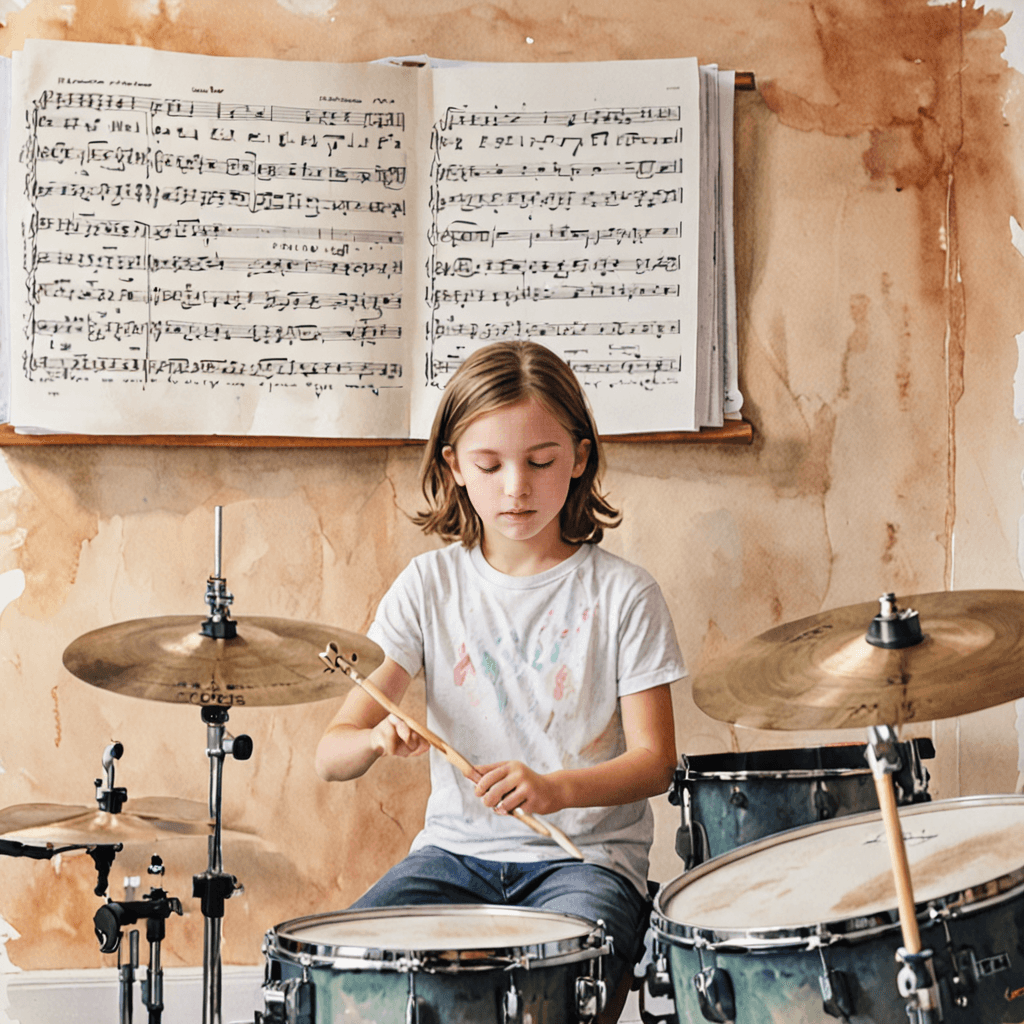
Drum Reading and Notation for Kids in Toronto: Musical Literacy for Drummers
Table of Contents
Musical literacy represents a fundamental component of comprehensive music education, yet drummers often face unique challenges in developing reading skills compared to their melodic counterparts. While pianists and guitarists read traditional staff notation with familiar note names, drummers must decode a specialized notation system where different line and space positions represent specific drums and cymbals rather than pitches. At Muzart Music and Art School, located in Etobicoke near Cloverdale Mall, we approach drum notation instruction as an essential skill that unlocks musical independence, ensemble participation, and long-term drumming success.
For families in Toronto, Etobicoke, and Mississauga seeking quality drum instruction for their children, understanding the role of notation reading in comprehensive percussion education helps set realistic expectations and appreciate the cognitive benefits these skills provide. Learning to read drum notation isn’t just about decoding symbols on a page—it’s about developing rhythmic literacy, understanding musical structure, communicating with other musicians, and accessing the vast repertoire of written drum music spanning all genres and styles.
This comprehensive guide explores how drum notation differs from melodic notation, age-appropriate approaches to teaching rhythm reading, effective strategies for developing notation fluency, and how reading skills integrate with overall drumming development. Whether your child has just begun drum lessons or has been playing by ear for months, understanding notation instruction helps support their journey toward musical independence and versatility.
Understanding Drum Notation: A Different Kind of Musical Reading
Drum notation uses the same five-line staff as other musical instruments but applies it differently. Rather than representing pitch (higher notes on higher lines), the vertical position on the staff indicates which drum or cymbal to strike. Standard drum kit notation places bass drum on the bottom space, snare drum on the third space, hi-hat on the top space or above the staff, and tom-toms on various lines and spaces depending on the number of toms in the setup. This spatial mapping requires a different kind of reading comprehension than melodic instruments demand.
Note heads in drum notation provide additional information through different symbols. A standard note head indicates a normal strike, an “x” note head typically represents cymbals or hi-hat, and special symbols might indicate ghost notes, rim shots, or other techniques. This visual coding system allows drum notation to convey not just what to play and when, but how to play it—information essential for authentic interpretation of written drum parts.
Rhythm notation remains consistent between drums and melodic instruments, using the same note values and rest symbols. Whole notes, half notes, quarter notes, eighth notes, and sixteenth notes appear in drum music just as they do in piano or guitar notation. This commonality means students who learn rhythm reading on drums develop skills transferable to other instruments, and students who read rhythm on another instrument bring valuable knowledge to drum notation study.
The unique challenges of drum notation include remembering which line/space represents which drum, coordinating reading with four-limb independence, processing multiple simultaneous rhythms (like bass drum and hi-hat together), and interpreting technique symbols alongside rhythmic notation. These challenges require patient, systematic instruction that builds skills progressively. Our drum lessons in Etobicoke provide the expert guidance that makes notation reading accessible and achievable for young drummers.
Age-Appropriate Approaches to Teaching Rhythm Reading
Children ages 6-8 beginning drum instruction benefit from simplified notation approaches that build foundational rhythm understanding before introducing full staff notation. Many effective methods begin with rhythm syllables (ta, ti-ti) or counting systems, iconic notation using pictures or symbols before traditional notation, and clapping or body percussion before applying rhythms to the drum kit. These preparatory activities develop rhythmic understanding in accessible formats, creating mental frameworks that support later staff notation reading.
Flash card games using rhythm patterns, matching exercises pairing written rhythms with their sounds, and copying simple rhythmic patterns by ear and then from notation make learning playful rather than purely academic. Young students who associate notation reading with fun, engaging activities develop positive attitudes toward musical literacy that serve them throughout their musical lives.
Students ages 9-12 possess the cognitive development to tackle staff notation more directly while still benefiting from gradual, systematic introduction. Instruction at this level typically begins with single-line notation focusing on one drum (usually snare), progresses to two-line notation combining bass and snare, introduces hi-hat as a third element, and eventually incorporates toms and additional cymbals. This sequential approach prevents overwhelm while building confidence through achievable steps.
Practice materials for this age group should include simplified versions of popular songs, original pieces written specifically for teaching, rhythm exercises that isolate specific challenges, and ensemble parts that allow students to read while playing with others. The social motivation of playing drum parts in a band context often accelerates reading development, as students want to successfully read their parts to contribute to the group.
Teenagers typically have the patience and cognitive capacity for more sophisticated notation instruction, including complex syncopated rhythms, odd time signatures, multiple simultaneous patterns, and stylistic notation conventions across different genres. However, teens who begin drums without prior musical training still benefit from systematic instruction beginning with fundamentals rather than jumping directly to advanced notation. Our experienced instructors assess each student’s current reading level and design instruction that challenges appropriately while ensuring steady progress. The $155 monthly program provides comprehensive instruction that develops reading skills alongside technique, musicality, and creative expression.
Building Notation Fluency Through Systematic Practice
Sight-reading practice—the ability to read and perform unfamiliar notation without prior practice—develops through regular exposure to new material at appropriate difficulty levels. Young drummers benefit from daily sight-reading exercises using material slightly easier than their performance repertoire, focusing on maintaining steady tempo rather than perfect accuracy, and gradually increasing complexity as fluency improves. Just as reading fluency in language develops through reading many different texts, musical reading fluency develops through exposure to varied rhythmic patterns and notational contexts.
Effective sight-reading practice includes short sessions (5-10 minutes) focused specifically on reading rather than extended practice sessions, new material each session rather than repeated practice of the same pieces, and systematic progression through increasing difficulty levels. Many method books provide graded sight-reading exercises designed specifically for this purpose, ensuring students encounter appropriate challenges in logical sequence.
Memorization versus reading represents an important balance in drum education. Some pieces students should memorize thoroughly for performance, while others serve primarily as reading practice and need not be committed to memory. Both skills matter: memorization allows for expressive, confident performance without reading distraction, while reading allows access to new material and participation in ensembles requiring notation fluency. Students need practice in both modes to develop comprehensive musicianship.
The relationship between ear training and notation reading runs deeper than many realize. Students with strong internal rhythm sense—the ability to feel and reproduce rhythms accurately—find notation reading easier because they connect written symbols to sounds and feelings they already understand. Conversely, notation reading reinforces rhythmic understanding by providing visual organization of temporal patterns. Effective drum instruction develops both ear and eye together, using each to strengthen the other. Our music lessons approach rhythm education holistically, ensuring students develop both intuitive feel and analytical reading skills.
Applying Notation Skills to Different Musical Contexts
Rock and pop drum notation tends toward simpler rhythmic structures compared to jazz or classical percussion, but developing reading skills in these styles provides valuable foundation. Students learn to read basic rock beats, common fills and transitions, song form roadmaps (verses, choruses, bridges), and dynamic markings indicating volume changes. Much rock and pop notation uses simplified charts showing basic patterns with improvisation expected in fills and variations, teaching students to interpret notation as a framework rather than exact prescription.
Reading drum set charts for popular music introduces important real-world skills including following song form through repeat signs and navigation symbols, interpreting written patterns while adding personal style, knowing when notation prescribes exact rhythms versus suggesting general feels, and translating written grooves into appropriate performance on the drum kit. These interpretive reading skills differ from classical music’s more literal approach to notation but prove essential for contemporary drumming.
Jazz notation presents unique challenges and conventions that advanced students eventually encounter. Swing rhythm interpretation (making eighth notes uneven), ride cymbal patterns notated in shorthand, improvised comping (spontaneous accompaniment rhythms), and complex syncopation and polyrhythms all appear in jazz drum notation. While beginning students won’t tackle these complexities immediately, intermediate drummers ready for jazz exploration benefit from understanding its notational conventions.
Classical percussion notation follows the most literal, detailed approach to written music. Every note, dynamic marking, articulation, and technique instruction appears explicitly in the notation, leaving minimal room for interpretation. Students preparing for formal examinations or considering percussion performance majors benefit from classical percussion reading skills. The discipline and precision required for classical reading transfers beneficially to all other styles, making it valuable even for students primarily interested in contemporary drumming.
Our comprehensive drum program exposes students to notation across multiple styles, ensuring versatility and broad musical understanding. Whether your child dreams of playing in rock bands, jazz ensembles, or orchestral settings, notation fluency opens doors to all these opportunities.
Overcoming Common Reading Challenges and Building Confidence
Many beginning drum students struggle initially with remembering which staff position represents which drum. Visual aids and mnemonic devices help overcome this challenge. Drum key diagrams showing staff positions next to pictures of drum kit components, color-coding different drums in early reading materials, physical mapping exercises (touching each drum while saying its staff position), and repetition through varied musical contexts all reinforce the staff-to-drum associations until they become automatic.
Some students find coordinating reading with four-limb independence particularly challenging—their eyes can follow the notation, but translating those visual symbols into coordinated physical actions proves difficult. This challenge requires breaking complex patterns into component parts, practicing each limb’s part separately before combining, using very slow tempos initially to allow processing time, and gradually increasing speed as coordination improves. Patience and systematic practice overcome this challenge reliably, though the timeline varies between students based on natural coordination and practice consistency.
Processing multiple simultaneous rhythms (such as bass drum quarter notes while snare plays syncopation) challenges students’ ability to divide attention. Effective practice strategies include isolating each rhythm and ensuring fluency before combining, using vocalization to internalize both rhythms separately, starting very slowly and increasing tempo gradually, and practicing specific combinations until they become automatic patterns. As students’ reading vocabulary grows—as they recognize common combinations as familiar units rather than novel challenges—this difficulty diminishes.
Fear of making mistakes while reading can create tension and actually increase reading errors. Creating a supportive, low-pressure practice environment where mistakes serve as learning opportunities rather than failures helps students relax and read more fluently. Emphasizing that professional musicians also practice sight-reading and make mistakes during that practice normalizes the learning process. Our instructors create encouraging environments where students feel safe taking reading risks necessary for growth. Students can explore our teaching approach through trial lessons—book now to experience our supportive, effective drum instruction firsthand, with trial lessons available for just $35.
Integrating Reading Skills with Overall Drumming Development
Notation reading represents one component of comprehensive drumming education alongside technique development, musical listening and style awareness, creative improvisation and composition, and ensemble skills and collaboration. These elements work together to create well-rounded drummers rather than one-dimensional technicians. Reading skills support and enhance other areas: good readers can learn new songs more quickly from charts, participate in ensembles requiring notation literacy, study classic drum parts through transcriptions, and communicate musical ideas precisely through written notation.
However, reading shouldn’t dominate instruction at the expense of other crucial skills. Students need time to develop improvisational skills and creative expression, play along with recordings and develop style awareness, practice technique and physical coordination, and explore personal musical interests that maintain motivation. The most successful drum students balance reading practice with these other essential activities, developing versatility that serves any musical direction they choose to pursue.
For students interested in long-term drumming—whether as professionals or serious hobbyists—notation literacy eventually becomes non-negotiable. Professional drummers regularly encounter reading situations including studio sessions where time doesn’t allow learning by ear, theatrical productions requiring exact adherence to written charts, orchestral and concert band percussion parts, and educational settings where teaching requires notation fluency. Building strong reading foundations early makes these situations manageable rather than stressful.
Even students pursuing drums purely for enjoyment benefit from reading skills. The ability to learn new songs from notation expands repertoire options far beyond what ear-learning alone allows, enables participation in school bands and community ensembles, provides systematic understanding of rhythm that deepens musical appreciation, and offers analytical tools for understanding how favorite songs work rhythmically. These benefits justify the effort notation study requires, even for recreational drummers.
Our drum program at our Etobicoke studio balances notation instruction with all other aspects of comprehensive drumming education, ensuring students develop reading literacy without sacrificing the joy, creativity, and personal expression that make drumming fulfilling.
FAQ Section
How long does it take for children to learn to read drum notation fluently?
Reading fluency timelines vary considerably based on several factors including age and cognitive development, prior musical experience, practice consistency and quality, and natural aptitude for symbol-pattern recognition. Generally, children who practice regularly (4-5 days weekly) can expect to read simple single-line rhythms within 2-3 months, combine bass and snare patterns confidently within 4-6 months, incorporate hi-hat and achieve basic reading fluency within 8-12 months, and sight-read intermediate-level notation within 1-2 years. However, these timelines assume consistent practice and quality instruction. Students who practice sporadically or miss lessons frequently progress more slowly, while particularly dedicated students with strong pattern recognition skills sometimes advance faster. True fluency—where reading feels as natural as playing by ear—typically requires 2-3 years of consistent study. Even professional drummers continue developing their reading skills throughout their careers, as more complex notation and unfamiliar styles always present new challenges. The key is steady, patient progress rather than rushing to advanced material before fundamentals solidify.
Should my child learn to read music before starting drum lessons, or can they learn simultaneously?
Children can absolutely learn notation reading simultaneously with beginning drum instruction—in fact, this represents the most common and effective approach. Learning notation in context, applied immediately to making music, proves more engaging and meaningful than abstract rhythm study before touching an instrument. Beginning drum instruction typically introduces rhythmic concepts through playing first, reinforcing those concepts with notation soon after to connect physical experience with visual representation. This play-then-read approach helps students understand what notation symbols represent because they’ve already felt and heard the rhythms. Students with prior musical training on other instruments often bring rhythm reading skills to drums, which accelerates their progress in drum-specific notation. However, even these students need to learn the drum-specific aspects (staff positions for different drums, technique symbols, etc.). Conversely, students beginning music study through drums develop reading skills that transfer to other instruments if they later choose to learn piano, guitar, or other instruments. The integrated approach—learning playing technique and reading skills together from the beginning—creates stronger musicians than either skill developed in isolation.
What practice materials help children develop drum reading skills at home?
Effective home practice for developing reading skills requires appropriate materials matched to the student’s current level. Essential resources include a method book matched to ability level (your instructor can recommend specific titles), rhythm flashcards for quick daily practice sessions, play-along tracks or recordings that encourage reading charts, and a practice pad or quiet practice kit for apartment or late-night practice. Many excellent drum method books present reading material systematically, with each lesson introducing new concepts while reinforcing previous learning. Supplementary materials like rhythm workbooks, sight-reading exercise books, and simplified chart books of popular songs provide variety that maintains engagement. Digital resources including notation apps, metronome apps for keeping steady time while reading, and online play-along tracks offer contemporary practice support. However, materials alone don’t ensure progress—students need clear practice instructions from their teacher, regular feedback on reading accuracy, and encouragement through challenging phases. Our instructors provide detailed practice assignments that make home reading practice productive and manageable, with materials recommendations tailored to each student’s level and interests. The $155 monthly program includes ongoing support for effective home practice alongside weekly lessons.
How important is reading for drummers compared to playing by ear?
Both reading and ear skills matter significantly for comprehensive drumming musicianship, serving different but complementary purposes. Reading skills provide access to written charts and formal arrangements, ability to learn complex parts accurately and efficiently, communication tools for professional and educational settings, and systematic understanding of rhythmic structure and organization. Playing by ear develops stylistic authenticity and groove feel, improvisational and creative abilities, quick adaptation in performance situations, and deep internalization of musical patterns. The most versatile, successful drummers develop both skill sets rather than relying exclusively on either. In professional contexts, reading requirements vary by genre—rock and pop drummers often work primarily by ear with occasional chart reading, jazz drummers need solid reading skills for ensemble work, studio drummers must read fluently to work efficiently, and orchestral percussionists require advanced reading abilities. For young students, developing both skills from the beginning creates the most options and flexibility for future musical directions. At our drum lessons in Etobicoke, we emphasize both ear training and notation reading, ensuring students become complete drummers prepared for any musical opportunity they choose to pursue.
Developing Musical Independence Through Notation Literacy
Reading drum notation represents far more than simply decoding symbols on a page—it’s a gateway to musical independence, professional opportunities, and lifelong learning. Students who develop strong reading skills gain the ability to teach themselves new material from notation, participate confidently in ensemble situations requiring charts, communicate musical ideas precisely with other musicians, and access the vast library of written drum literature spanning all styles and eras. These capabilities transform drumming from an intuitive but limited activity into a comprehensive musical discipline with unlimited growth potential.
At Muzart Music and Art School, we approach notation instruction as an essential component of complete drumming education, balanced with technique development, style exploration, creative improvisation, and pure musical enjoyment. Our experienced instructors understand that effective reading instruction requires matching approaches to developmental levels, providing systematic progression through increasing complexity, balancing reading practice with ear training and technique work, and maintaining enthusiasm through engaging material and realistic expectations. This comprehensive approach builds confident, literate drummers who view notation as a useful tool rather than an intimidating obstacle.
Located conveniently in Etobicoke near Cloverdale Mall and serving families throughout Toronto, Etobicoke, and Mississauga, our drum program offers the expert instruction that develops notation fluency alongside all other essential drumming skills. Whether your child is just beginning drums or seeking to strengthen existing skills through improved reading abilities, now is the perfect time to explore what comprehensive drum education can offer.
Our $35 trial lesson provides an opportunity to experience our teaching approach and discuss how notation instruction fits within your child’s overall drumming goals. Students develop reading skills most effectively within the context of regular, ongoing instruction, making our $155 monthly program the ideal environment for building musical literacy that lasts a lifetime. Request more information about our drum program and discover how expert guidance makes notation reading accessible, achievable, and ultimately indispensable for serious drummers.
The rhythmic literacy developed through drum notation study creates foundations for musical success that extend far beyond the drum kit. Whether your child dreams of professional drumming or simply wants to participate more fully in musical opportunities, reading skills open doors that remain closed to ear-only players. Visit our website to book your trial lesson and discover how comprehensive drum education including strong notation instruction builds confident, capable, musically independent drummers prepared for any direction their musical journey takes.