
OCAD Animation Portfolio: What Reviewers Actually Look For
Table of Contents
The OCAD University Animation program receives far more applicants than it accepts each year, and the portfolio is the single largest factor in admission decisions. Yet most applicants prepare their portfolios with the same approach they’d use for illustration or fine art — and many are rejected for reasons that have less to do with drawing skill than with what animation specifically tests. Below is a breakdown of what OCAD animation reviewers actually look for in a portfolio, drawn from years of coaching Etobicoke and GTA students through animation-specific preparation, and what separates accepted submissions from rejected ones.
What OCAD Animation Actually Trains For
Before reverse-engineering the portfolio, it helps to understand what the program itself prepares students for. OCAD’s animation track produces working animators across multiple industries — 2D animation, stop-motion, 3D, motion graphics, character design for studios, and increasingly game-industry animation work. The faculty are not just looking for students who can draw. They’re looking for students who can already think in time.
That last phrase is the key one. Illustration is about freezing a moment. Animation is about everything that happens between moments. A reviewer evaluating an animation portfolio is asking, fundamentally: can this applicant make a drawing imply movement, weight, anticipation, and follow-through? Can they imagine what a character does before and after the pose they’ve drawn? If the answer is no, even technically skilled drawings will not be enough.
This is why animation portfolios so often disappoint applicants who came from strong illustration backgrounds. The two disciplines test for different skills, and a portfolio assembled from illustration pieces — no matter how beautifully rendered — will usually miss what animation reviewers are scanning for.
The Core Portfolio Components: A Typical Breakdown
OCAD’s animation portfolio requirements vary slightly year to year, and applicants should always verify the current year’s specifications through OCAD’s admissions website. The structural pattern, though, has been consistent. A typical accepted animation portfolio contains 10 to 12 pieces and tends to break down approximately as follows:
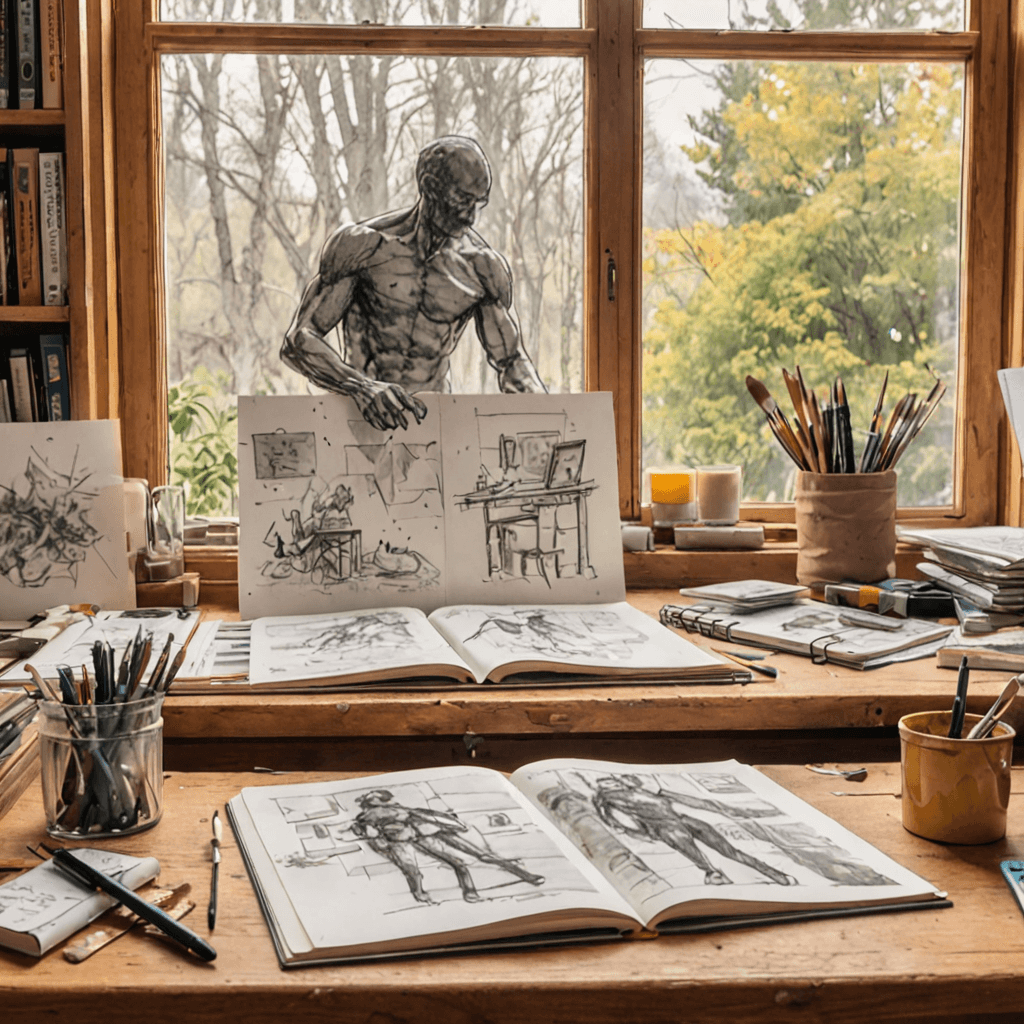
Gesture and life drawing (3–4 pieces). Quick studies of figures in motion or with strong implied movement. These are usually 30-second to 5-minute sketches, often loose and confident rather than tightly rendered. Gesture work is the most distinctive marker of an animation-aware portfolio — reviewers can spot the difference between a student who has done life drawing for animators (focused on flow, weight, and motion) and one who has done life drawing for illustration (focused on accurate proportion and rendering).
Character design (2–3 pieces). Original character designs that show personality, silhouette readability, and design sensibility. Strong submissions usually include character turnarounds (front, side, three-quarter, back views) for at least one character, and a sense that the character has a backstory, even if it’s not written out.
Sequential or narrative work (2–3 pieces). Storyboards, comic-style panel sequences, or short flipbooks. Sequential pieces show that the applicant can think about what comes before and after a single image — the core animation skill. Even a four-panel sequence is more revealing to a reviewer than a single polished illustration.
Observational drawing (2 pieces). Still life or perspective studies that demonstrate the fundamentals every visual art program requires. The bar here is lower than for illustration applicants — but the bar isn’t zero. Reviewers want to see basic drawing competence as a foundation.
Optional: animation samples. If the applicant has produced actual moving animation — even a six-second hand-drawn or digital test — submitting it is almost always advantageous. It’s not strictly required, but it strongly signals serious interest.
The Skills Reviewers Test (Beyond the Pieces)
The pieces themselves are the visible part of the portfolio. What reviewers are actually scanning for is harder to see in a single image:
Movement and weight. Can the applicant draw a character that feels like it’s about to fall over, has just landed, is mid-throw? Static, balanced poses suggest illustration thinking. Off-balance, mid-action poses suggest animation thinking.
Silhouette. When a character is filled in with solid black, can you still tell who they are and what they’re doing? Strong silhouettes are essential for animation legibility, and reviewers notice when applicants have already trained themselves to draw with silhouette clarity.
Personality through design. Two characters drawn back to back should feel like distinctly different people. Applicants who design characters as variations on themselves — same body type, same face, same proportions — fail this test. Applicants who design characters with distinct silhouettes, body types, ages, and visible personalities pass it.
Process visibility. Sketchbook spreads and rough drawings included alongside polished work signal that the applicant develops ideas iteratively — the way real animators do.
Common Mistakes That Sink Animation Portfolios
The patterns of rejection are unfortunately consistent.
Static, frozen poses. Portfolios full of figures standing still, arms at their sides, in formal poses borrowed from photo references. Animation needs motion, and motion has to be visible in the still drawings the applicant submits.
Single-style work. Particularly anime, manga, or one specific cartoon studio’s style. Reviewers are not against any particular aesthetic — they’re against a portfolio that lives inside one and never ventures out. Demonstrating that the applicant can also draw in observed, realistic terms is essential.
No sequential work. Submissions made entirely of single images, with no storyboards, comics, or sequences. This is the single most common gap in rejected animation portfolios — and the most fixable one.
Beautiful but inanimate characters. A portfolio of highly rendered, beautifully shaded character drawings that all sit in similar three-quarter standing poses tells a reviewer that the applicant can draw, but can’t think in animation terms.
Disregard for fundamentals. Some applicants assume that animation programs care only about animation-style work and skip the observational drawing component entirely. This usually backfires. Reviewers want evidence that the applicant has trained their hand and eye against real subjects.
How Animation Portfolios Differ from Illustration Portfolios
For students considering both programs — and many applicants apply to both — the differences matter. Our companion piece on the OCAD illustration portfolio covers what illustration reviewers want; the animation portfolio shifts those priorities significantly.
Where illustration emphasises single-image storytelling, animation emphasises sequential storytelling. Where illustration prizes finished, polished narrative pieces, animation prizes loose gesture work and movement implication. Where illustration values mood and atmospheric quality, animation values silhouette clarity and character readability. Where illustration looks for personal voice in subject matter, animation looks for design sensibility in character.
A portfolio assembled for illustration can be adapted for animation, but it usually requires meaningful rework — typically replacing one to two finished narrative pieces with sequential storyboard work, and adding several gesture-focused life drawing pieces. Doing this well within the final months before deadlines is difficult, which is why students considering both programs benefit from preparing with both in mind from the start.
Preparing for OCAD Animation in Etobicoke
The most common reason for a weak OCAD animation portfolio isn’t talent — it’s that the student tried to build an animation portfolio using illustration-trained habits. Students who succeed usually start animation-specific training at least 12 months before the application deadline.
A typical animation prep arc looks like this: months one through three focus on gesture drawing and movement fundamentals — getting comfortable drawing fast, loose, and confidently. Months four through six introduce character design — generating original characters, exploring silhouette, working through turnarounds. Months seven through nine develop sequential storytelling — storyboards, comic panels, simple animation tests. Months ten through twelve are dedicated to portfolio curation, refining the strongest pieces, and adding the observational drawing required as foundational evidence.
Portfolio preparation classes in Etobicoke at Muzart Music and Art School are tailored to the specific program the student is targeting — animation prep looks meaningfully different from illustration prep, and a coach with experience across OCAD’s animation track can guide students toward the assignments and exercises that build the right skills. Programs run at $310 per month for weekly one-hour lessons, with all materials included, and a $70 trial allows families to test the fit before committing.
For applicants serious about animation as a career path, the runway matters more than for almost any other OCAD program. Twelve months of focused preparation is the realistic minimum; eighteen to twenty-four months is where most accepted portfolios actually come from.
Frequently Asked Questions
What’s the difference between OCAD animation and illustration portfolio requirements?
The animation portfolio prioritises movement, gesture, character design, and sequential storytelling. The illustration portfolio prioritises single-image storytelling, observational drawing, and editorial sensibility. The two share some foundational drawing requirements, but the emphasis and the kinds of pieces submitted differ significantly. Many applicants apply to both programs with adapted versions of similar portfolios.
Do I need to submit actual moving animation for OCAD?
A finished animation sample is not always strictly required, but it’s strongly advantageous when included. Even a short hand-drawn flipbook or a six-second digital animation test signals serious commitment and demonstrates skills the still portfolio can only imply. Confirm current requirements through OCAD’s admissions website.
Can self-taught animators get into OCAD?
Yes — many do. OCAD does not require formal animation training before application. What matters is that the portfolio demonstrates the skills the program tests for. Self-taught applicants often have strong character design and animation-style work but weaker observational drawing fundamentals; coached preparation typically helps close that gap.
How important is life drawing for an animation portfolio?
Very important — but the kind of life drawing matters. Animation programs value gesture drawing (quick, motion-focused studies) more than tightly rendered anatomical drawings. Applicants who only have classical life drawing in their portfolio sometimes underperform applicants with looser, more dynamic gesture work.
What software should I know for OCAD animation?
OCAD teaches industry-standard animation software in the program itself, so prior software knowledge is not required for admission. That said, applicants who have already explored basic digital tools — Photoshop, Procreate, traditional flipbook techniques, or simple animation software like Krita or OpenToonz — have an easier transition into the program.
When should we start preparing for an OCAD animation portfolio?
Ideally during grade 11. Twelve months of focused preparation produces stronger portfolios than four to six months of grade-12 sprinting. Students starting earlier — sometimes during grade 10 — have the most room for experimentation and personal development.
If you’re preparing your teen for an OCAD animation application, request more information about Muzart’s portfolio prep program in Etobicoke, or book a $70 trial to meet with a portfolio coach. Animation portfolios benefit from early preparation more than almost any other application — the sooner the runway starts, the stronger the result.