
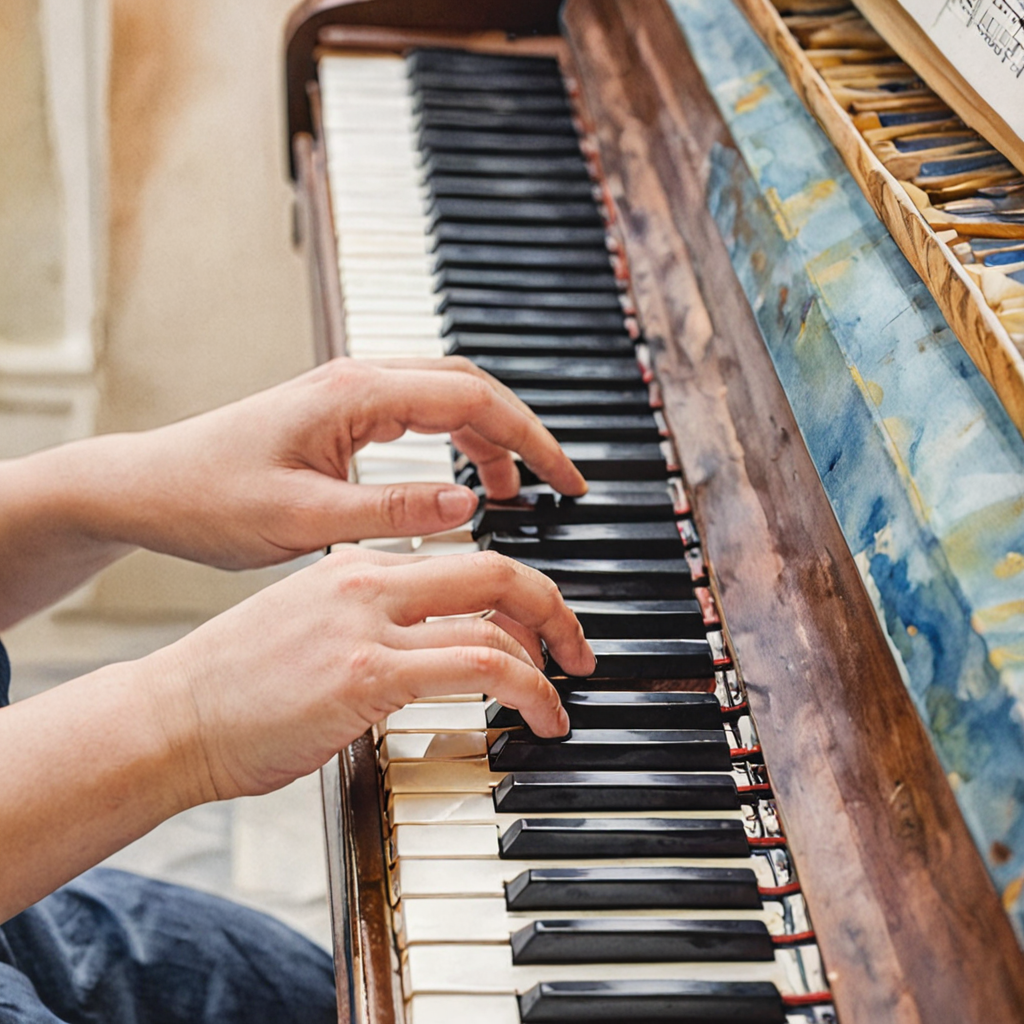
Piano Technique for Young Musicians in Etobicoke: Proper Form and Posture
Table of Contents
Every pianist, from absolute beginners to concert professionals, builds their playing upon the foundation of proper technique. At Muzart Music & Art School, located in Etobicoke near Cloverdale Mall, we recognize that establishing correct form and posture from the very beginning creates the pathway to musical success while preventing the physical problems that plague musicians with poor technical habits.
Young musicians learning piano face a critical window when their bodies and minds readily absorb fundamental movement patterns. Children develop muscle memory quickly, making early technical instruction either tremendously beneficial or potentially problematic depending on quality. Proper technique allows students to play with ease, expression, and physical comfort throughout their musical journey, while poor technique creates limitations, frustration, and potential injury as demands increase.
This comprehensive guide explores the essential elements of piano technique for young learners, from basic posture and hand position to more advanced considerations about arm weight, finger independence, and movement efficiency. Understanding these principles helps parents support their children’s development and recognize quality instruction that prioritizes long-term technical health alongside immediate musical progress.
Understanding Proper Piano Posture
Posture represents the foundation upon which all other technical elements build. How students sit at the piano affects everything from finger strength to musical expression, making attention to posture essential from the very first lesson.
Bench height and distance critically impact playing comfort and efficiency. Students should sit at a height where forearms are approximately parallel to the floor when hands rest on the keys, with elbows slightly higher than or level with the keyboard. This positioning allows gravity to assist playing through arm weight rather than requiring excessive muscular effort to depress keys. Young students often need adjustable benches or cushions to achieve appropriate height, which should be reassessed regularly as children grow.
Distance from the piano affects reach and body engagement. Students should sit far enough forward that elbows can move freely without the body restricting arm motion, yet close enough that reaching keys doesn’t require excessive forward lean. Generally, sitting approximately halfway back on the bench provides optimal positioning, though individual body proportions may require slight adjustments.
Feet positioning provides essential stability and body support. Young students’ feet should rest flat on the floor or on a footstool if they don’t yet reach the ground. Dangling feet create instability that travels through the entire body, interfering with control and causing fatigue. As students advance and begin using pedals, proper foot positioning becomes even more critical for technique and musical expression.
Spine alignment supports both physical health and optimal muscle function. Students should sit with a naturally straight spine—not rigidly military-straight, but maintaining the spine’s natural curves without slumping or excessive arching. Imagine a string gently pulling upward from the crown of the head, creating length through the spine without tension. This aligned posture allows free breathing, reduces fatigue, and provides stable support for arm and hand movements.
Shoulders should remain relaxed and level, neither hunched upward toward the ears nor collapsed forward. Many young pianists unconsciously raise shoulders during playing, creating tension that travels through arms and hands, limiting fluidity and eventually causing discomfort. Regular awareness checks during practice help students recognize and release shoulder tension before it becomes habitual.
Professional instruction through piano lessons in Etobicoke provides essential guidance on posture development. Qualified instructors assess individual students’ positioning, make necessary adjustments, and help students develop body awareness that allows them to self-correct over time. This attention to physical fundamentals early in learning prevents the need for difficult technical rebuilding later.
Hand Position and Finger Technique
Hand position directly determines the ease and efficiency with which students can execute musical passages. Proper hand shape and finger technique allow students to develop speed, control, and expressive capabilities while protecting delicate hand structures from strain.
Basic hand shape resembles holding a small ball or orange, with fingers naturally curved and knuckles slightly raised. This rounded position places fingers in optimal biomechanical alignment for depressing keys efficiently. Flat fingers, where joints collapse rather than maintain curves, lack the control and strength needed for precise playing and create strain in finger tendons.
The relationship between fingers and keys affects both tone quality and technical facility. Fingers should contact keys with the fleshy pad near the fingertip rather than playing with flat fingers or extreme fingertip angles. This contact point provides optimal control and develops the tactile sensitivity necessary for expressive playing. For young beginners, finding this contact point requires patient guidance and repeated attention until it becomes natural and automatic.
Finger independence represents one of piano technique’s primary challenges and goals. Each finger must move independently while others remain still or perform different movements simultaneously. This coordination develops gradually through carefully designed exercises and repertoire. Young students shouldn’t be rushed into complex independence demands before developing foundational single-finger control, as premature difficulty leads to tension and compensation patterns that undermine technique.
Thumb positioning requires special attention as it differs anatomically from other fingers. The thumb plays on its side edge rather than the tip, positioning naturally under the hand. Many students struggle initially with thumb tucking (moving the thumb under the hand) and thumb crossing (moving fingers over the thumb) during scale patterns. These movements must be taught carefully with attention to maintaining relaxed, natural motion rather than forcing awkward contortions.
Wrist position and movement complement finger technique significantly. Wrists should remain approximately level with the hand, neither dropping below keyboard level nor rising excessively high. During playing, wrists move subtly in gentle motions that facilitate finger changes and passage navigation, never remaining completely rigid. Students often need specific attention to wrist flexibility, as both excessive stiffness and unstable wobbling interfere with control.
Nail length may seem minor but significantly impacts technique. Fingernails should be short enough that finger pads contact keys properly rather than nails clicking against key surfaces. Long nails force flatter finger positions that compromise control and tone quality. For serious piano students, maintaining appropriate nail length becomes part of their musical discipline.
Learning proper hand position and finger technique requires time and patient repetition. The $35 trial lesson at Muzart provides introduction to these fundamentals, allowing students to experience correct positioning and understand the physical sensations associated with good technique. The $155 monthly program allows systematic development of these skills through regular instruction and guided practice.
Arm Weight and Movement
Beyond fingers and hands, efficient piano technique incorporates larger arm structures, using body weight and natural movement rather than relying solely on small finger muscles. Understanding and developing these concepts distinguishes effortless advanced playing from the tension-filled struggling that results from finger-only approaches.
Arm weight concept recognizes that gravity provides assistance for piano playing when technique allows it. Rather than holding arms suspended through constant muscular effort, proper technique allows arm weight to transfer through relaxed wrists and hands into keys. This weight transfer creates richer tone with less effort compared to finger-only pressing that produces thin, strained sound.
Students learn arm weight application gradually, beginning with simple exercises where they release arm weight into single keys, feeling the difference between pressed and weighted tone. As technical understanding develops, students learn to modulate weight application, using more weight for louder dynamics and less for softer sounds. This control allows expressive playing impossible through finger strength alone.
Arm movement and rotation facilitate technical passages that would be extremely difficult through finger motion alone. The forearm rotates slightly during many musical figures, positioning the hand optimally for upcoming notes. This rotation happens naturally in skilled playing but requires conscious awareness development in beginning and intermediate students who often lock their forearms rigidly.
Lateral arm movement (side-to-side across the keyboard) should involve the entire arm moving from the shoulder, not just reaching with extended fingers. When playing passages that span wide keyboard distances, the body and arms shift to keep hands positioned comfortably over the playing area. Young students frequently try to reach distant notes through finger extension alone, creating tension and limiting accuracy. Learning to move the entire arm unit preserves comfortable positioning throughout all passages.
Elbow positioning and movement deserve attention as they connect upper arm to forearm and hand. Elbows should remain relatively relaxed, hanging naturally from shoulders without being pinned rigidly to the body or splaying excessively outward. During playing, elbows move subtly to facilitate arm positioning and weight transfer, never remaining completely fixed.
Shoulder involvement becomes important in more advanced playing, particularly in large chords, octaves, or fortissimo passages. The shoulder girdle can provide additional weight and power when needed, though this involvement must remain free of tension. Many students unconsciously tense shoulders when attempting louder or more difficult passages, creating exactly the rigidity that prevents effective power production.
Professional guidance through music lessons ensures students develop these sophisticated concepts appropriately for their level. Instructors demonstrate efficient movement, provide tactile feedback to help students feel correct sensations, and design exercises that develop arm technique systematically rather than overwhelming young learners with complex concepts before they’ve mastered foundational skills.
Common Technical Problems and Solutions
Even with quality instruction, students sometimes develop technical issues that require specific attention and correction. Recognizing these common problems early and addressing them systematically prevents minor issues from becoming ingrained habits that limit progress.
Tension represents the most common and problematic technical issue. Students experiencing tension often show visible signs: raised shoulders, rigid wrists, clenched jaw, or held breath. Tension restricts movement, produces inferior tone, causes fatigue, and leads to physical problems if continued long-term. Addressing tension requires identifying its sources—often excessive effort, anxiety about mistakes, or compensating for inadequate technical skill in passages that exceed current abilities.
Solutions for tension involve conscious relaxation practice, reducing practice intensity temporarily, simplifying difficult passages to rebuild with proper technique, and addressing psychological factors like perfectionism or performance anxiety. Students learn to recognize their personal tension signals and pause to release tension before it becomes severe. Regular “technique checks” during practice where students assess their physical state help develop the self-awareness necessary for tension management.
Collapsed finger joints occur when students fail to maintain curved finger positions, instead allowing middle or end joints to buckle inward or flatten. This technical fault limits control and develops finger weakness rather than strength. Correction requires patient attention to hand position, often slowing practice significantly while students focus specifically on maintaining proper curves.
Finger tension and locking happens when students stiffen fingers rather than allowing natural, relaxed movement. This manifests as difficulty with finger independence, uneven tone, and limited speed development. The solution involves carefully guided relaxation exercises, slow practice emphasizing flexibility, and building awareness of the difference between the engagement needed to depress keys and the excessive tension that restricts movement.
Incorrect thumb position creates multiple downstream problems. Thumbs played flat rather than on their side edges, overly tucked thumbs creating cramped hand positions, or rigid thumbs that don’t participate flexibly in scale and arpeggio patterns all limit technical progress. Correction requires isolating thumb movements in specific exercises and slow scale practice with exaggerated attention to proper thumb positioning and movement.
Uncoordinated hand-crossing movements cause difficulty in passages requiring one hand to play over the other. Students often create awkward, jerky movements instead of smooth, ballet-like crossings. Solution involves practicing hand-crossing motions separately from note-playing, developing the spatial awareness and movement planning necessary for graceful execution.
Wrist problems come in various forms: dropped wrists below keyboard level straining finger tendons, excessively high wrists limiting power transfer, or rigidly locked wrists preventing necessary subtle movements. Each variation requires specific correction focusing on optimal wrist positioning for the individual student’s anatomy and developing flexibility that allows responsive adjustment during playing.
Addressing technical problems requires expertise that identifies issues accurately and applies appropriate corrections. Instructors at Muzart’s Etobicoke piano lessons monitor students’ technical development carefully, intervening when problems begin developing rather than allowing them to become ingrained. This proactive approach ensures students build clean, efficient technique from the beginning.
Age-Appropriate Technical Development
Technical instruction must respect developmental stages, introducing concepts when students can understand and execute them appropriately. Rushing technical demands creates frustration and poor habits, while pacing instruction properly allows steady progress that maintains student motivation and confidence.
Beginning students (ages 5-7) focus primarily on basic posture, hand position, and single-finger playing. Technical concepts remain very simple and concrete: sitting properly, finding correct finger positions, understanding finger numbers, and playing with curved fingers. Musical repertoire at this level should emphasize these fundamentals rather than complex technical demands that overwhelm young learners.
Early intermediate students (ages 7-10) can begin developing more refined technical concepts including basic arm weight awareness, wrist flexibility, simple finger independence exercises, and elementary scale technique. However, instruction must remain patient and concrete, using physical demonstrations and simple language rather than complex anatomical or physical concepts that young students cannot yet conceptualize.
Intermediate students (ages 10-13) can understand more sophisticated technical concepts and benefit from specific technique discussions about movement efficiency, tension recognition, and injury prevention. These students can practice technique-focused exercises separate from repertoire, understanding how technical skills transfer to musical contexts. Technique development at this stage should become more systematic and intentional while maintaining musical enjoyment and motivation.
Advanced young students (ages 13+) can engage with piano technique at relatively sophisticated levels, understanding biomechanics, making informed practice decisions, and taking increasing responsibility for their technical development. However, even mature teenage students require guidance and monitoring to ensure technical health, as this age group sometimes pushes too hard or practices inefficiently without adequate rest.
Physical size and strength development vary tremendously among students of similar ages. Some young students naturally develop hand strength and size earlier while others mature later. Quality instruction adapts to individual development rather than applying age-based expectations rigidly. Students with smaller hands may need modified fingerings or delayed introduction of certain techniques until hands grow adequately.
Attention span and focus capabilities also affect technical instruction pacing. Younger students benefit from brief, frequent technical reminders integrated throughout pieces rather than extended technique-focused practice. As students mature, they can sustain longer focused attention on specific technical elements during dedicated technique practice separate from repertoire learning.
Growth spurts temporarily affect coordination and technique. Students experiencing rapid growth often feel temporarily awkward at the piano as their body dimensions change. During these periods, patient, supportive instruction that acknowledges temporary challenges while maintaining technical standards helps students navigate these normal developmental phases without discouragement.
Professional instructors understand these developmental considerations and pace technical instruction appropriately. The $155 monthly program at Muzart provides ongoing personalized attention that adapts to each student’s individual development, ensuring technical demands remain appropriately challenging without becoming overwhelming or creating physical strain.
Building Practice Habits That Support Good Technique
Technical development happens primarily during home practice, making effective practice habits essential for translating lesson instruction into embodied skill. Students need guidance developing practice approaches that reinforce proper technique rather than accidentally ingraining poor habits.
Slow practice represents perhaps the most important practice technique for technical development. Slowing difficult passages substantially allows students to execute movements correctly, building accurate muscle memory from the beginning. Students often resist slow practice, wanting to play pieces at performance tempo immediately, but rushing before technique is secure leads to sloppy playing and technical problems. Effective practice gradually increases speed only after movements execute correctly at slower tempos.
Small section practice targets specific technical challenges within pieces. Rather than always playing pieces straight through from beginning to end, students isolate challenging measures or phrases, repeating these sections with focused attention on specific technical elements. This focused practice solves problems efficiently rather than hoping repeated full play-throughs will somehow improve difficult spots.
Hands-separate practice allows detailed attention to each hand’s technical demands individually before attempting coordination challenges of playing both hands together. Even advanced students benefit from occasional hands-separate practice on difficult passages, ensuring each hand executes its part cleanly before combining.
Mental practice or visualization helps students plan movements and reinforce learning without physical playing. Students can review pieces mentally, imagining the feel of proper technique, identifying challenging spots, and planning practice strategies. This cognitive rehearsal complements physical practice effectively, particularly valuable during times when physical practice time is limited.
Recording and listening to practice sessions provides feedback students often miss during playing. Listening to recordings helps students identify technical issues audible in the playing—uneven rhythm, inconsistent tone, or passages lacking clarity. Video recording allows students to observe their posture and movement, identifying visible tension or positioning problems they may not feel internally.
Rest and recovery between practice sessions allow muscles to consolidate learning and prevents overuse fatigue. Young students generally need shorter, more frequent practice sessions rather than marathon sessions that create mental and physical fatigue. Quality practice in focused sessions develops skills far more effectively than hours of unfocused, fatigued playing.
Parents play important roles supporting effective practice at home. While parents need not be pianists themselves, they can help structure practice time, provide encouraging feedback, remind students of teacher instructions, and recognize when frustration levels suggest stopping for the day. Parent involvement works best when focusing on supporting habits and motivation rather than attempting technical instruction that may conflict with teacher guidance.
Students developing strong practice habits at home consolidate learning from lessons efficiently, progressing steadily without plateaus caused by inefficient practice. Instructors teach practice strategies during lessons, helping students develop skills for independent learning that serve them throughout their musical journey.
The Role of Professional Instruction
While information about piano technique is widely available through books, videos, and online resources, professional instruction provides irreplaceable benefits that self-taught approaches cannot replicate. Understanding these benefits helps families appreciate the value of quality piano instruction.
Personalized assessment identifies each student’s specific technical strengths, challenges, and needs. Every pianist is unique—different hand sizes, flexibility, natural coordination levels, learning styles, and developmental stages require individualized instruction rather than one-size-fits-all approaches. Professional instructors observe students carefully, providing customized guidance addressing individual situations.
Real-time correction prevents poor habits from developing. When students practice alone, they may unknowingly repeat movements incorrectly, building muscle memory for improper technique. During lessons, instructors immediately identify and correct technical errors, ensuring practice time reinforces good habits rather than poor ones. This immediate feedback loop accelerates learning tremendously compared to self-teaching where errors may persist unnoticed for extended periods.
Physical demonstration and tactile guidance help students understand concepts that are difficult to convey through words alone. Instructors can show proper movement, guide students’ hands into correct positions, or even play duets that model technical concepts kinesthetically. These multi-sensory teaching approaches reach students who struggle to understand purely verbal or written instruction.
Progressive curriculum planning ensures technical development proceeds systematically. Professional instructors sequence learning carefully, introducing new technical challenges when students have mastered prerequisite skills. This strategic planning prevents both boring students with excessive repetition and overwhelming them with premature difficulty.
Motivation and accountability help students persist through challenging periods. Learning piano technique requires sustained effort over months and years—motivation naturally fluctuates. Regular lessons with supportive instructors who celebrate progress, provide encouragement during difficulties, and maintain accountability for practice help students persist toward long-term goals.
Injury prevention and early problem identification protects students’ physical health. Instructors trained in piano technique recognize early signs of strain or developing problems, intervening before issues become serious. Self-taught students may unwittingly practice in ways that lead to overuse injuries that could have been prevented through proper instruction.
Getting started with professional piano instruction is straightforward. Muzart offers a $35 trial lesson that introduces students to proper technique fundamentals and allows families to experience the quality of instruction provided. Following the trial, the $155 monthly program provides ongoing systematic technical development through weekly private lessons tailored to each student’s needs and goals. Booking a trial lesson represents an investment in technical foundation that benefits students throughout their entire musical journey.
Technique and Musical Expression
While this guide has focused extensively on physical technique, it’s essential to remember that technique exists to serve musical expression, not as an end in itself. The ultimate goal of technical development is enabling students to express musical ideas freely, translating internal musical imagination into sound.
Students sometimes view technique as separate from music-making—technical exercises as boring necessity divorced from enjoyable music playing. Quality instruction integrates technical development with musical goals, helping students understand how specific technical capabilities enable expressive freedoms. For example, developing dynamic control through arm weight allows playing from thunderous fortissimo to whisper-soft pianissimo, expanding expressive palette dramatically.
Touch and tone quality depend directly on technical approach. The physical manner of contacting and depressing keys determines the sound character produced. Through refined technique, students develop ability to create various tone colors—brilliant, warm, lyrical, percussive—all controlled through minute technical adjustments. This tonal palette allows musical interpretation and personal artistic voice development.
Phrasing and articulation require technical skills to execute. Musical phrases shape through subtle dynamic variations, tempo flexibility, and articulation choices (legato, staccato, accents). Students need technical control sufficient to execute these musical intentions, making technical development inseparable from musical development. As technique advances, expressive possibilities expand correspondingly.
Physical ease enables musical spontaneity. When students struggle technically with passages, cognitive resources focus on simply executing correct notes rather than musical expression. Secure technique frees mental attention for musical decisions—phrasing, dynamics, tempo, emotional communication—transforming mechanical playing into genuine music-making.
Performance confidence builds on technical security. Students who trust their technique approach performances with confidence that allows musical communication rather than anxiety about whether fingers will execute correctly. This confidence develops through thorough technical preparation combined with regular performance experience in supportive environments.
The relationship between technique and musicality develops throughout students’ entire musical education. Even concert pianists continue refining technical skills while deepening musical interpretation. This lifelong development makes piano study endlessly fascinating—there’s always room for growth both technically and musically.
At Muzart, technical instruction always serves musical goals. Instructors maintain this balance between necessary technical development and the musical expression that makes piano study rewarding and meaningful. This approach keeps students motivated through technical challenges by maintaining clear connections to musical outcomes they care about.
Frequently Asked Questions About Piano Technique
At what age should children start learning proper piano technique?
Children can begin learning age-appropriate technical concepts as soon as they start piano lessons, typically around ages 5-7. However, “proper technique” means different things at different developmental stages. Very young beginners (5-7) focus on basic fundamentals: sitting correctly, finding good hand position, using curved fingers, and playing with proper finger numbers. These foundational elements, though seemingly simple, establish the patterns upon which all future technique builds. As students mature (ages 8-12), instruction introduces more sophisticated concepts including arm weight, wrist flexibility, systematic scale technique, and beginning finger independence. Teenage and adult students can understand piano technique at increasingly analytical levels, making informed decisions about movement efficiency and problem-solving. The key is not waiting until students are older to address technique—proper technique should be emphasized from the very first lesson, adapted appropriately to the student’s developmental stage. Early attention to these fundamentals prevents bad habits from forming and makes advanced technique development far easier later. Professional instruction through piano lessons in Etobicoke ensures technique receives appropriate emphasis from the beginning, regardless of students’ starting age.
My child’s hands are small—will this affect their piano technique?
Hand size affects piano playing less than many people assume, and small hands should never prevent children from studying piano. Professional pianists have varied hand sizes, with some renowned artists having relatively small hands. Young students with smaller hands may need modified fingerings for certain passages, particularly pieces written for adult-size hands, but this accommodation doesn’t limit their technical development or musical enjoyment. More importantly, children’s hands grow continuously throughout their development, so size concerns in early years typically resolve naturally over time. Focus during childhood instruction should be on developing proper technique within current physical capabilities rather than worrying about ultimate hand span. Proper instruction adapts to students’ physical realities, selecting appropriate repertoire, teaching hand position and movement that maximizes small hands’ capabilities, and avoiding premature introduction of techniques requiring larger spans. Some technical skills like playing large chords or wide intervals may develop later as hands grow, but fundamental technique, musical understanding, and artistry develop fully regardless of hand size. Students with persistently small hands into adulthood can still achieve excellent technique through focus on efficient movement and strategic repertoire selection emphasizing qualities beyond pure physical span.
How much should my child practice piano technique versus learning pieces?
Balance between technical practice and repertoire learning varies by age, level, and individual circumstances, but generally, younger students spend most practice time on pieces with technical concepts integrated within that musical context rather than separate technical exercises. For beginners (first 2-3 years), perhaps 10-15% of practice time focuses specifically on technique—scales, finger exercises, or isolated technical patterns. The remaining time applies technique within actual pieces where musical context keeps students engaged. As students advance into intermediate levels, dedicated technical practice may increase to 20-30% of practice time as students can sustain focus on abstract technical work and benefit from systematic technical development separate from repertoire. Advanced students often dedicate 30-40% of practice time to technique, scales, arpeggios, and exercises because their musical goals demand highly refined technical capabilities. However, these percentages aren’t rigid rules—students particularly struggling with technical issues might temporarily emphasize technique more heavily, while students performing frequently may shift balance toward polishing pieces. Quality of practice matters more than time allocation—five minutes of focused, correct technique practice outweighs twenty minutes of mindless repetition. The $155 monthly program at Muzart includes personalized practice planning guidance, helping students understand how to structure home practice for their individual situations and goals.
What should I do if my child complains of hand or arm pain while playing piano?
Pain while playing piano is never normal and always requires immediate attention. Stop playing immediately when pain occurs—continuing to play through pain risks serious injury and worsens underlying problems. First, assess whether pain results from excessive practice time, poor technique, inappropriate repertoire difficulty, or physical tension. Often pain indicates students are practicing too long without breaks, using excessive force or tension, or attempting music beyond their current technical capabilities. Reduce practice time and intensity significantly, returning to simpler repertoire that doesn’t cause discomfort. Focus on releasing tension, relaxing shoulders and arms, and playing with appropriate effort rather than forcing. Schedule a lesson soon to have the instructor assess technique and identify problems. If pain persists despite these adjustments, medical evaluation becomes necessary—consult a physician, preferably one familiar with musicians’ injuries. Some pain sources like tendinitis require complete rest from playing temporarily, though this is relatively rare with young students who receive proper instruction and practice appropriately. Prevention is always preferable to treatment: proper technique from the beginning, appropriate practice time for age and development, regular breaks during practice, attention to tension and release, and working within current technical capabilities prevent most pain issues. Professional instruction that prioritizes healthy technique significantly reduces injury risk compared to self-teaching or instruction that pushes students beyond appropriate limits.
How long does it take to develop good piano technique?
Piano technique develops continuously throughout a pianist’s entire musical journey—even professional concert pianists continue refining technical skills after decades of study. However, fundamental technical competence allowing comfortable playing of intermediate-level repertoire typically requires 3-5 years of consistent study with good instruction and regular practice. During the first year, students establish basic posture, hand position, and elementary finger technique. Years 2-3 develop these fundamentals more fully, adding scale technique, basic arm weight concepts, and improving finger independence. Years 3-5 refine technical skills substantially, enabling students to play increasingly complex repertoire with comfort and control. Beyond this point, technical development continues at advanced levels, but students have internalized basic technical concepts sufficiently that playing feels natural rather than awkward. However, this timeline assumes consistent practice (30-45 minutes daily for intermediate students), quality instruction, and starting at typical ages (6-10 years old). Students beginning as teenagers or adults may progress somewhat faster cognitively but require similar physical adaptation time. Students practicing inconsistently or without quality instruction may take much longer to develop secure technique. The important point is that technical development requires patience and consistent effort over years—there are no shortcuts to solid technique. However, this extended timeline shouldn’t discourage students; musical satisfaction and enjoyment begin from the first lesson and grow continuously even while technique continues developing.
Can poor piano technique be corrected, or is it permanent?
Poor technique can absolutely be corrected at any age or level, though earlier intervention makes correction easier than addressing deeply ingrained habits developed over many years. Technical reconstruction requires several elements: accurate identification of specific technical problems, understanding of correct alternatives, slow, focused practice replacing poor movements with proper technique, and patience as new patterns feel awkward initially before becoming comfortable. The correction process often requires stepping back temporarily to less difficult repertoire that allows focus on technical changes without overwhelming musical demands. Many students find this temporarily frustrating, but the long-term benefits of improved technique far outweigh short-term inconvenience. Younger students typically adapt to technical corrections more readily than adults whose patterns have reinforced over many years. However, even adult pianists can successfully rebuild technique with appropriate instruction and dedicated effort. The key is working with a qualified instructor who can identify problems accurately, demonstrate proper alternatives, and guide the systematic rebuilding process. Self-diagnosis and correction of technical problems is difficult because faulty technique feels normal to the player and correct technique initially feels strange. This is why professional guidance becomes crucial for technical reconstruction. If you’re concerned about your child’s technique or suspect problems may be developing, don’t hesitate to seek evaluation from a qualified instructor. Early intervention prevents minor issues from becoming serious problems requiring extensive correction later. You can request more information about technique assessment and instruction at Muzart.
Should technique be taught differently for students interested in classical versus popular music?
Fundamental piano technique remains remarkably consistent across musical styles—proper posture, hand position, efficient movement, and injury prevention apply whether students play Bach or Billy Joel. The physical mechanics of playing piano are style-neutral; fingers, hands, and arms function according to biomechanical principles regardless of musical genre. However, some stylistic emphases differ: classical technique traditionally emphasizes curved fingers and precise articulation, ideal for clarity in contrapuntal music, while some popular and jazz styles use flatter fingers for certain effects or emphasize different touch approaches for stylistic authenticity. These differences represent variations in applying fundamental technique rather than completely different technical systems. Students studying popular music still benefit from developing solid technical foundations—scales, arpeggios, finger independence, and efficient movement. These capabilities enable playing popular repertoire more easily and musically than students lacking basic technical skills. Additionally, many students’ musical interests evolve over time; students initially focused on popular music may later discover interest in classical repertoire or jazz, making versatile technical foundations valuable regardless of starting interests. Quality instruction can absolutely accommodate students’ stylistic preferences while ensuring they develop healthy, efficient technique serving any musical direction they might pursue. The monthly program at Muzart supports students’ individual musical interests while maintaining technical standards that enable long-term musical growth and physical health regardless of style preferences.
How do I know if my child’s piano teacher is emphasizing technique appropriately?
Several indicators suggest an instructor appropriately emphasizes technique. The teacher should regularly comment on posture, hand position, and movement during lessons, making specific corrections rather than focusing exclusively on correct notes. Technique should be addressed from the very first lesson, not postponed until students reach higher levels. The instructor should teach age-appropriate technical concepts—not overly complex for young beginners, but not oversimplified for advancing students. You should hear your child using technical vocabulary like “curved fingers,” “relaxed wrists,” or “arm weight,” indicating the teacher discusses these concepts. The teacher should demonstrate technique visually, showing students proper movement rather than only verbal explanation. Your child should never experience pain during lessons or practice; if pain occurs, the instructor should address it seriously and modify approach accordingly. Practice assignments should include some specific technical focus, not just repertoire to learn. As students progress, some specifically technical materials like scales, exercises, or etudes should supplement pieces. Finally, observe whether your child’s playing appears physically comfortable and natural, or whether obvious tension, awkward positioning, or effortful struggling is visible. Trust your instincts—if something looks wrong physically, it probably is. Consider scheduling an evaluation trial lesson at another studio like Muzart to get a second opinion on your child’s technical development if you have concerns about current instruction.
Conclusion
Proper piano technique forms the foundation for musical success, enabling students to express themselves freely at the keyboard while protecting physical health throughout years of musical enjoyment. For young musicians in Etobicoke and Toronto, establishing healthy technical habits from the beginning creates pathways to whatever musical goals they pursue—whether playing for personal enjoyment or aspiring to advanced performance.
At Muzart Music & Art School, technical excellence receives careful attention within a comprehensive musical education approach. Our experienced instructors understand proper piano technique thoroughly and communicate it effectively to students at all developmental stages. Located conveniently in Etobicoke near Cloverdale Mall, we serve families throughout Toronto, Etobicoke, and Mississauga with piano instruction that builds both technical proficiency and genuine musical artistry.
Begin your child’s journey toward technical excellence and musical fulfillment by booking a $35 trial lesson today. During this introductory session, you’ll experience our approach to piano technique and receive personalized assessment of your child’s current technical development and potential. The $155 monthly program provides ongoing systematic instruction that develops healthy, efficient technique supporting a lifetime of musical enjoyment. Book your trial lesson now to give your child the technical foundation that makes all their musical dreams possible.