
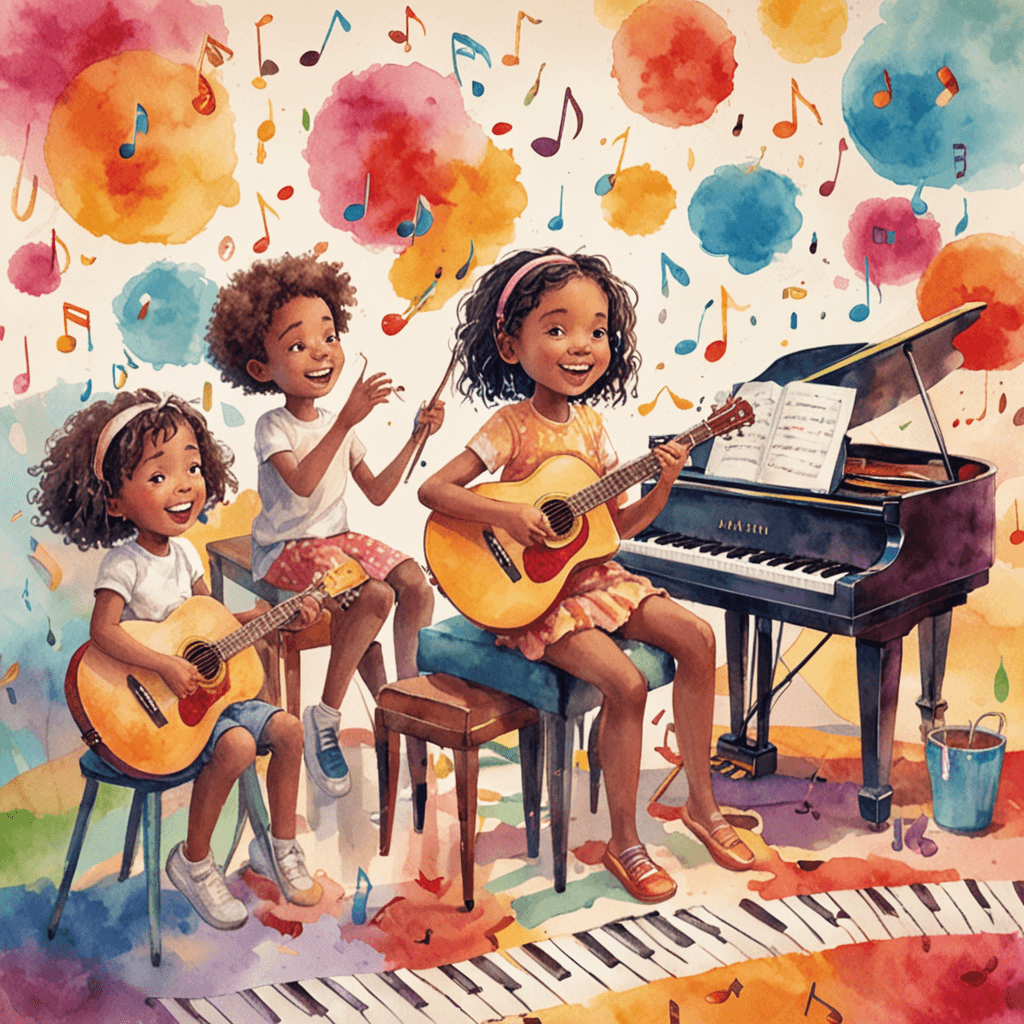
Why Children Should Start Music Lessons: Benefits Beyond the Notes
Table of Contents
When parents consider enrolling their children in extracurricular activities, music lessons often come to mind. At Muzart Music and Art School, located in Etobicoke near Cloverdale Mall, we’ve witnessed countless children transform through their musical journey. But the benefits of music education extend far beyond simply learning to play an instrument—they touch every aspect of a child’s development.
While the ability to perform a piece of music is certainly rewarding, the cognitive, emotional, social, and academic advantages that come with consistent musical training are truly remarkable. Understanding these benefits can help parents make informed decisions about their children’s education and development.
Cognitive Development and Brain Enhancement
Music lessons provide a unique form of mental exercise that engages multiple areas of the brain simultaneously. When a child learns to play an instrument, they’re not just memorizing notes—they’re building neural pathways that enhance overall cognitive function.
Research consistently shows that children who receive music education demonstrate improved memory, attention span, and problem-solving abilities. The process of reading sheet music, translating it into physical movement, and producing the correct sound requires the brain to process multiple streams of information at once. This multitasking strengthens executive function skills that benefit children in all areas of life.
Learning an instrument also enhances spatial-temporal reasoning, which is the ability to visualize and manipulate objects in space. This skill is particularly important for understanding mathematical concepts and can give children an advantage in STEM subjects. When students practice piano lessons in Etobicoke, for instance, they develop a deeper understanding of patterns, sequences, and relationships that translate directly to mathematical thinking.
Furthermore, the memorization required in music education exercises the brain’s working memory. Children learn to hold multiple pieces of information in their minds while simultaneously processing new input—a skill that proves invaluable in academic settings and beyond.
Social and Emotional Development
Music lessons provide a structured environment where children can develop crucial social and emotional skills. The teacher-student relationship in private lessons creates a safe space for children to take risks, make mistakes, and grow from constructive feedback.
Learning an instrument requires vulnerability. Children must accept that progress comes through persistent effort rather than immediate success. This builds resilience and emotional maturity as they learn to manage frustration and celebrate small victories. Whether pursuing guitar lessons in Etobicoke or exploring other instruments, students develop patience and perseverance that serve them throughout their lives.
Music also provides an emotional outlet for children who may struggle to express themselves verbally. The act of creating music allows for self-expression in a non-verbal format, which can be particularly beneficial for children dealing with stress, anxiety, or complex emotions. Playing an instrument becomes a healthy coping mechanism they can rely on during challenging times.
Additionally, performance opportunities—whether formal recitals or casual family gatherings—help children overcome stage fright and build confidence. The experience of preparing for and executing a performance teaches children to manage nervousness and develop poise under pressure.
Academic Performance Enhancement
The connection between music education and academic success is well-documented. Students who participate in music lessons often demonstrate higher grades, better test scores, and improved attendance compared to their non-musical peers.
One significant factor is the discipline and time-management skills that music study requires. Children learn to balance practice time with homework, social activities, and family commitments. This organizational skill becomes increasingly valuable as academic demands intensify through middle and high school.
The focused concentration required during practice sessions also transfers to academic work. Children who regularly spend 20-30 minutes in concentrated practice develop the ability to maintain focus for extended periods—a skill that directly benefits homework completion and test-taking.
Language development receives a particular boost from music education. The auditory processing skills developed through music training enhance phonological awareness, which is crucial for reading development. Children become better at distinguishing between different sounds, understanding speech in noisy environments, and grasping the rhythmic elements of language.
Mathematics and music share fundamental connections through rhythm, counting, and pattern recognition. Students who understand musical time signatures and note values often find fractions and ratios more intuitive. The logical structure of music theory provides a framework that makes abstract mathematical concepts more concrete.
Physical Development and Coordination
The physical benefits of music lessons are often overlooked, but they’re substantial. Learning to play an instrument requires the development of fine motor skills, hand-eye coordination, and physical stamina.
Piano students, for example, develop independent finger control and strength as they learn to coordinate both hands performing different tasks simultaneously. This bilateral coordination—the ability to use both sides of the body together in controlled ways—benefits children in numerous activities from sports to handwriting.
String and wind instruments require precise breath control, embouchure development, and postural awareness. These physical skills promote body awareness and control that extend beyond musical performance. Drummers develop limb independence and rhythmic precision that enhance overall coordination and timing.
The proprioceptive feedback that comes from producing sound on an instrument helps children develop a better sense of their body in space. They learn to make minute adjustments to their posture, hand position, and breath to achieve the desired musical result, cultivating a refined sense of physical control.
Long-term Life Skills and Character Development
Perhaps the most valuable benefits of music education are the character traits and life skills that students develop over years of study. These qualities become part of who they are and influence their approach to all of life’s challenges.
Discipline and Work Ethic: Regular practice teaches children that meaningful achievement comes through consistent effort over time. They learn that improvement isn’t always linear—there will be plateaus and setbacks—but persistence pays off. This understanding of the relationship between effort and results is perhaps one of the most valuable lessons music provides.
Goal-Setting and Achievement: Music education provides clear milestones, from learning a new piece to passing an examination or performing in a recital. Children learn to break large goals into manageable steps, creating a roadmap for achievement that they can apply to any endeavor.
Critical Thinking and Self-Assessment: As students advance, they develop the ability to critically evaluate their own performance, identify areas for improvement, and develop strategies for progress. This metacognitive skill—thinking about one’s own thinking—is crucial for lifelong learning and professional development.
Cultural Appreciation: Exposure to diverse musical styles and historical periods broadens children’s cultural awareness and appreciation for different traditions and perspectives. Music becomes a window into different times, places, and ways of experiencing the world.
Time Management: Balancing music practice with other commitments teaches children to prioritize, schedule, and make efficient use of their time—skills that become increasingly important as they move toward independence.
Getting Started with Music Lessons
For families in the Etobicoke area considering music education for their children, starting is easier than you might think. Muzart Music and Art School offers a $35 trial lesson that allows children to explore different instruments and experience the teaching approach before committing to regular lessons.
The monthly program, at $155, includes weekly private lessons and all required books and materials. This comprehensive approach ensures that families have everything they need for successful music education without unexpected additional costs. Lessons are available for piano, guitar, drums, and voice, allowing children to choose the instrument that most resonates with them.
The trial lesson is particularly valuable because it allows both parents and children to assess whether they’re ready for the commitment that music lessons require. It’s an opportunity to meet the teacher, understand the lesson structure, and get a realistic sense of what regular study would involve.
Frequently Asked Questions
What age should my child start music lessons?
Most children are ready to begin music lessons between ages 5 and 7, though this varies by individual. The key readiness factors include the ability to focus for 30 minutes, basic reading skills (knowing letters and numbers), and physical development appropriate for the instrument. During a trial lesson, instructors can assess whether a child is ready or if waiting a few months would be beneficial. Some instruments, like drums or singing, may be appropriate slightly earlier or later than piano or guitar depending on the child’s physical development and interests.
How much practice time is required?
For beginners, 15-20 minutes of daily practice is typically sufficient. As students advance, practice time gradually increases to 30-45 minutes daily. The key is consistency rather than length—regular, focused practice sessions are more effective than sporadic longer sessions. Parents can support practice by establishing a regular time each day and creating a dedicated, distraction-free practice space. Booking a trial lesson allows families to discuss realistic practice expectations for their specific situation.
What if my child loses interest?
Some fluctuation in motivation is normal and doesn’t necessarily mean a child should quit. Most students experience peaks and valleys in their enthusiasm. Working through these challenging periods often leads to breakthroughs and renewed interest. Teachers can adjust the repertoire, introduce new concepts, or modify the approach to reignite engagement. However, if a child remains consistently resistant over several months, it may be worth pausing lessons and revisiting music education when they’re older.
Do children need prior musical experience to start lessons?
No prior experience is necessary or expected for beginning music lessons. Quality instruction starts with absolute basics and builds systematically from there. In fact, starting with formal lessons ensures that children learn proper technique from the beginning, avoiding bad habits that can be difficult to correct later. Whether interested in drums, singing, or any other instrument, beginners are always welcome.
How long before my child can play recognizable songs?
Most children can play simple melodies within the first few months of lessons. The timeline varies by instrument and individual, but progress is typically noticeable within 6-8 weeks of consistent practice. By the end of the first year, most students can perform several complete pieces at a basic level. It’s important to remember that music education is a long-term journey—the goal isn’t just to play songs quickly, but to build a strong foundation for lifelong musical enjoyment and achievement.
Is the investment in music lessons worth it?
While music lessons represent both a financial and time commitment, the return on investment extends far beyond musical skill. The cognitive, social, emotional, and academic benefits discussed throughout this article contribute to overall child development in ways that few other activities can match. Additionally, music becomes a lifelong source of joy and fulfillment—a gift that continues giving throughout one’s entire life. Many parents report that music lessons are among the most valuable investments they make in their children’s education.
Taking the Next Step
The benefits of music education are clear and compelling, touching every aspect of a child’s development. From enhanced brain function to improved academic performance, from emotional resilience to physical coordination, music lessons provide a comprehensive developmental experience that prepares children for success in all areas of life.
At Muzart Music and Art School, we’re committed to providing high-quality music education that develops not just skilled musicians, but well-rounded individuals. Our experienced teachers understand that every child is unique and tailor their approach to each student’s learning style, pace, and interests.
If you’re ready to explore music education for your child, we invite you to book a $35 trial lesson at our Etobicoke location near Cloverdale Mall. During this trial, your child can experience the joy of making music while you assess whether lessons are the right fit for your family.
Have questions about which instrument might be best for your child, lesson scheduling, or our programs? Request more information and one of our team members will be happy to discuss your family’s specific needs and interests.
Music education is a gift that keeps giving throughout a lifetime. The skills, confidence, and joy that children develop through music lessons extend far beyond the practice room, enriching their lives in countless ways. Starting that journey begins with a single note—and we’d be honored to help your child discover their musical potential.