
Drum Lessons vs Buying Equipment: Making the Right First Move
Table of Contents
Every year, thousands of parents across the GTA face the same question: their child wants to play drums, and they’re not sure whether to sign up for lessons or start buying equipment. It feels like a chicken-and-egg problem — don’t you need drums to take lessons? Don’t you need lessons to know what drums to buy?
The good news is that this decision is simpler than it seems, especially when you understand how modern drum education actually works. The first move isn’t about equipment at all. It’s about finding the right instruction, and for families in Etobicoke, that path starts locally.
Why the First Move Should Always Be Lessons
When a child says they want to learn drums, the instinct to buy equipment is natural. You want to nurture their interest, and buying a drum kit feels like the most tangible way to do that. But experienced drum teachers will tell you the same thing almost universally: lessons first, equipment later.
The reason is practical. Drum lessons in the early weeks focus on skills that don’t require a full kit — stick grip, hand positioning, basic rudiments, and rhythmic reading. These foundational elements are best learned on a practice pad, which costs a fraction of a drum kit and takes up almost no space. More importantly, they’re skills that determine whether your child will be able to use a drum kit effectively when the time comes.
A child who receives two to three months of proper instruction before sitting behind a full kit approaches the instrument with control and purpose. They understand what each drum and cymbal does, they have the hand technique to produce clean sounds, and they have enough musical vocabulary to practise productively. Compare that to a child who receives a kit first and spends weeks hitting everything randomly before losing interest — it’s the difference between directed learning and expensive noise.
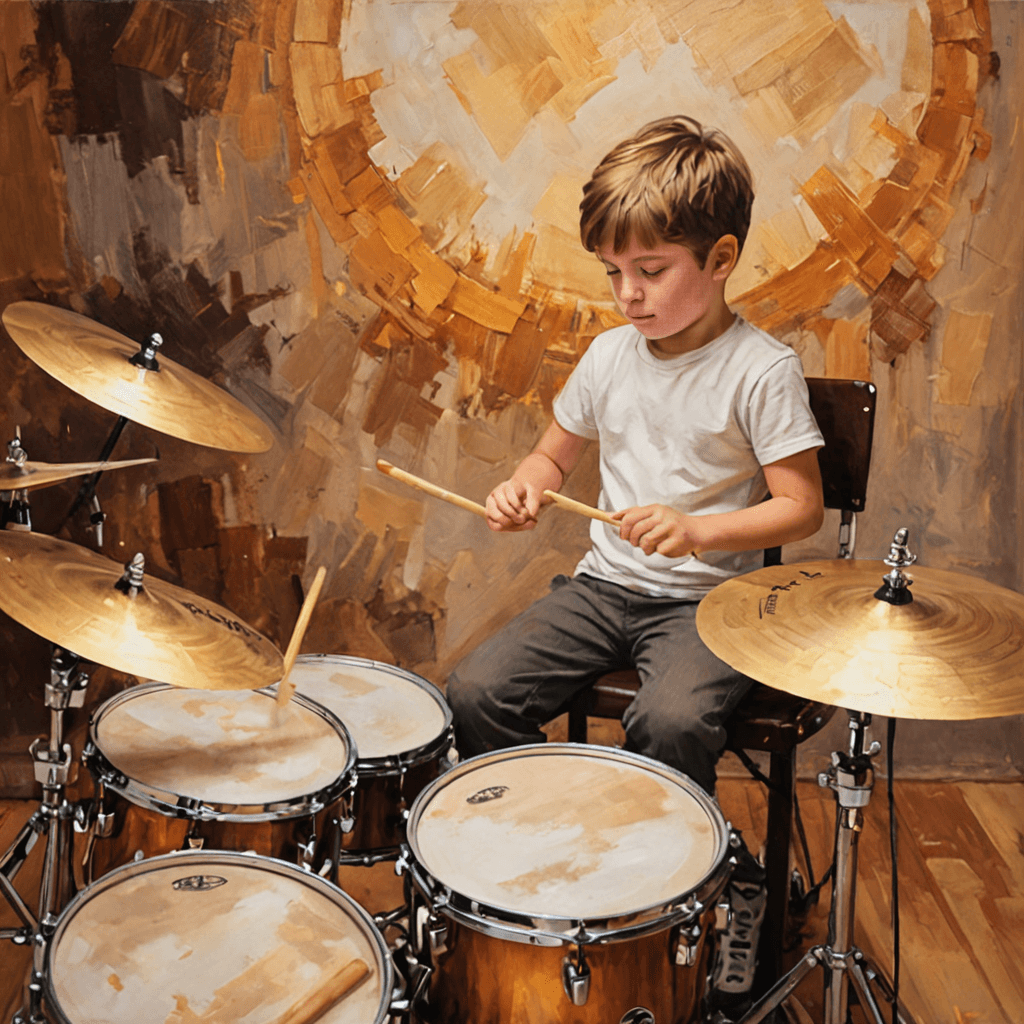
At Muzart Music and Art School in Etobicoke near Cloverdale Mall, beginner drum students use professional drum kits during every lesson. This means your child gets hands-on experience with real drums weekly, guided by a teacher who can correct technique in real time, without your family needing to own a kit during those crucial early months.
What the First Three Months of Drum Lessons Look Like
Understanding what happens in early drum lessons helps explain why equipment can — and should — wait.
Month One: Grip, Posture, and Single Strokes
The first few weeks of drum instruction establish the physical fundamentals. How you hold the sticks affects every sound you’ll ever produce on a drum. How you sit at the kit determines whether you can access all the drums and pedals comfortably. These aren’t minor details — they’re the foundation everything else is built on.
Students also begin learning single stroke rolls (alternating right-left-right-left patterns) on a practice pad. This develops the hand speed, control, and evenness that separate musical drumming from simple hitting. The practice pad is the primary home practice tool during this period.
Month Two: Basic Beats and Limb Coordination
By the second month, students begin combining hands and feet. They’ll learn their first basic rock beat — a pattern that coordinates the kick drum (foot), snare drum (one hand), and hi-hat cymbal (the other hand) simultaneously. This is the moment that usually hooks students completely, because they’re suddenly playing something that sounds like real music.
Limb independence — having each arm and leg doing something different at the same time — is the central challenge of drumming, and it develops best under guided instruction. A teacher can identify which limb is lagging, suggest specific exercises to address it, and adjust the difficulty level in real time based on how the student is progressing.
Month Three: Playing Along to Music
Around the third month, students start playing along to recordings. They’ll apply their basic beats to actual songs, adjusting their tempo and feel to match recorded music. This is where drumming becomes genuinely exciting — your child is no longer just practising patterns in isolation but playing music.
This is also the point where many teachers begin discussing home equipment options with parents, because the student now has enough skill and commitment to benefit from a kit at home. The teacher can recommend a specific type and size of kit based on the student’s development and your family’s space and noise considerations.
The Equipment Decision: What You’ll Eventually Need
When the time does come to invest in equipment, having a few months of lessons under your child’s belt makes the decision dramatically easier and more informed.
The Essentials for Home Practice (Immediately)
From day one of lessons, your child needs a practice pad and a pair of quality drumsticks. Together, these cost under sixty dollars. The practice pad provides a surface for rudiment work, stick control exercises, and everything else the teacher assigns for home practice. It sits on any flat surface, produces minimal noise, and is the most cost-effective piece of drum equipment you’ll ever buy.
A Full Kit (After Two to Four Months)
Once your child has demonstrated consistent interest and developed enough technique to practise productively, a drum kit becomes a worthwhile investment. Your teacher will help you decide between acoustic and electronic options.
Acoustic kits offer the most authentic playing experience but produce significant volume. A five-piece beginner acoustic kit (bass drum, snare, two rack toms, floor tom, hi-hat, and a crash/ride cymbal) typically costs between $400 and $800 for a reliable starter set.
Electronic kits use pads that trigger digital sounds, playable through headphones or a speaker. They’re dramatically quieter and take up less space, making them ideal for apartments, condos, and noise-sensitive homes. Quality beginner electronic kits range from $300 to $700.
For families in Etobicoke, where many homes are semi-detached or in close-quarter neighbourhoods, electronic kits are an increasingly popular choice. Your drum teacher at Muzart can recommend specific models that provide the best value and playing experience at each price point.
Additional Accessories
Beyond the kit itself, useful accessories include a drum throne (the stool — don’t use a regular chair), a metronome or metronome app, hearing protection for acoustic kit players, and a music stand for sheet music. These add another $50 to $100 to the total investment but make a real difference in practice quality.
What Makes Etobicoke Drum Lessons Different
Finding the right drum teacher matters as much as finding the right drum kit — arguably more. Private instruction tailored to your child’s pace, interests, and learning style produces results that group classes, YouTube tutorials, and self-teaching simply cannot match.
At Muzart, all drum lessons are private one-on-one sessions. This means your child receives the full attention of a qualified instructor for the entire lesson. The teacher adapts their approach in real time — slowing down for concepts that need more work, accelerating through material the student grasps quickly, and selecting songs and exercises that match the student’s musical tastes.
Our Etobicoke location near Cloverdale Mall is accessible from across the area, including Islington, Kingsway, Markland Wood, Richview, and Mississauga. For families juggling school schedules, extracurricular activities, and work commitments, having a music school close to home removes one of the biggest barriers to consistent weekly lessons — and consistency is the single most important factor in musical progress.
A trial drum lesson at Muzart is $35, and our monthly program is $155, covering weekly private instruction and all learning materials. You can book a trial lesson to experience the program before making any commitment.
How Drums Compare to Other Instruments for Beginners
Some families arrive at drum lessons after exploring other instruments, while others are considering drums alongside piano or guitar. Each instrument offers distinct benefits, and drums have particular strengths worth understanding.
Drums are one of the most physically engaging instruments. For children who are naturally energetic, kinesthetic learners, or who struggle with the stillness required by piano, drums offer an outlet that channels their energy into something structured and creative. The physical nature of drumming also provides a form of stress relief that many students — children and adults alike — find genuinely therapeutic.
Rhythmic skills developed through drum study transfer directly to every other instrument and to music appreciation in general. A child who understands rhythm at a deep level will have an advantage if they later decide to learn piano, guitar, or any other instrument.
Drums also offer relatively quick gratification. While piano and guitar require weeks before a student can play something that sounds like a complete piece of music, drum students are often playing recognizable beats within the first few lessons. That early sense of accomplishment builds the motivation that sustains long-term learning.
Frequently Asked Questions
Can My Child Practise Drums at Home in an Apartment?
Yes, with the right equipment. An electronic drum kit with headphones is an effective solution for apartment living — your child hears the full drum sound through the headphones while producing only the quiet tapping of sticks on rubber or mesh pads. A practice pad is even quieter and is all that’s needed for the first few months of lessons. Many of our students in Etobicoke live in apartments and condos and practise successfully with electronic setups.
What Age Can a Child Start Drum Lessons?
Most children can begin drum lessons around age six or seven. At this age, they have sufficient physical coordination and attention span for productive instruction. Some focused five-year-olds can start, and your teacher will assess readiness during the trial lesson. The practice pad work that forms early drum education is physically manageable for most school-aged children.
How Often Should a Beginner Drummer Practise?
Daily practice of fifteen to twenty minutes is ideal for most beginners. Short, focused practice sessions build muscle memory more effectively than longer, infrequent sessions. Your teacher at Muzart will assign specific exercises each week and guide your child on how to structure their practice time for maximum benefit.
Is Drumming Too Loud for My Neighbourhood?
Acoustic drums are loud — there’s no way around that. If neighbourhood noise is a concern, electronic drums with headphones are the practical solution. They offer a realistic playing experience at a volume that won’t disturb anyone. Your drum teacher can recommend electronic kits that provide good responsiveness and feel without the volume issues of acoustic drums.
How Do I Know If My Child Is Ready to Commit to Drum Lessons?
The best way to find out is to try a lesson. A $35 trial drum lesson in Etobicoke at Muzart gives your child a real lesson experience — not just a demonstration — with no obligation to continue. If they leave excited and asking when the next lesson is, you have your answer. Request more information or book directly online to get started.
The Right First Move Is the One That Builds a Foundation
Equipment doesn’t teach musicianship — teachers do. The best investment you can make in your child’s drumming journey isn’t a kit, a cymbal set, or a pair of premium sticks. It’s the instruction that gives them the skills and understanding to use those tools effectively.
Start with drum lessons in Etobicoke at Muzart, let your child build technique and confidence on professional studio equipment, and make the equipment decision later with the guidance of a teacher who knows your child’s abilities and needs. That’s the first move that leads to lasting musical growth.