
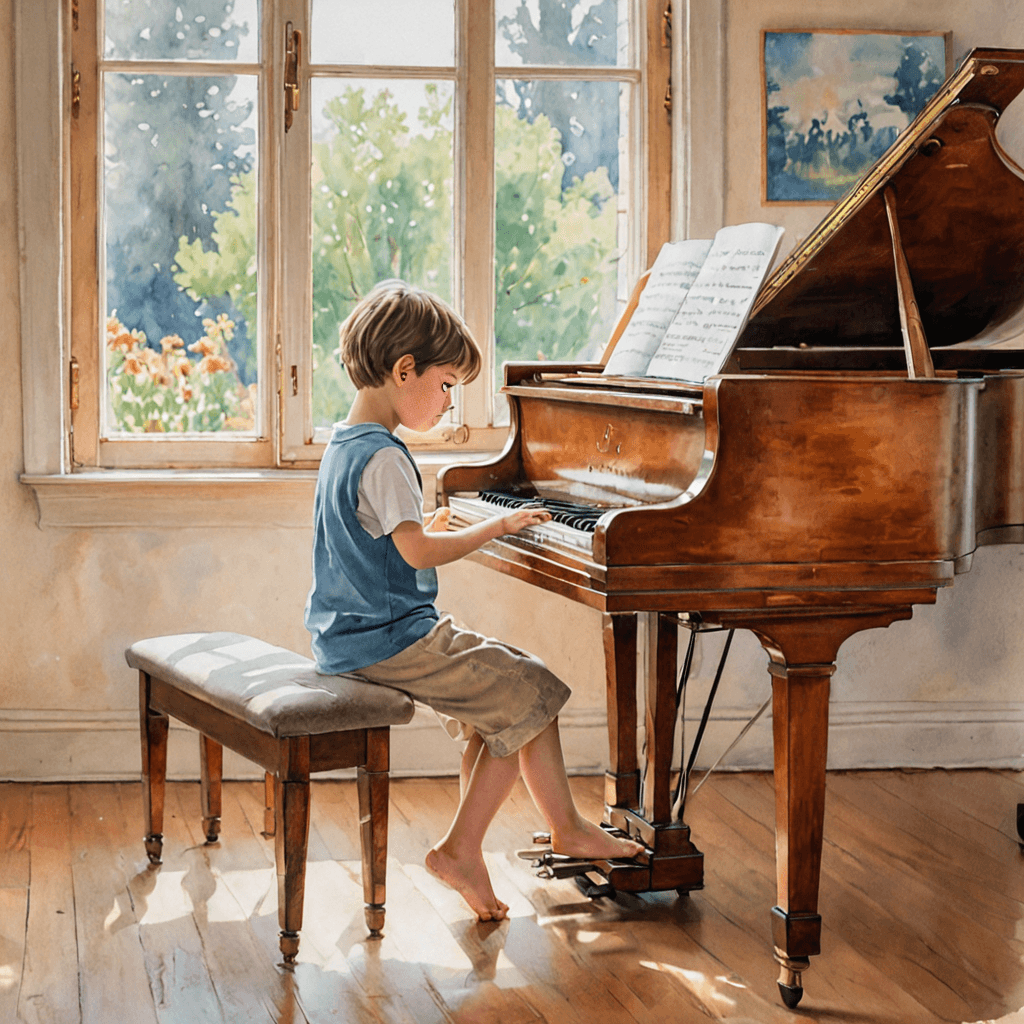
Piano Lessons for Children with Learning Differences: An Etobicoke Family Guide
Table of Contents
Many families with children who have learning differences — ADHD, autism spectrum, dyslexia, sensory processing differences, anxiety — wonder whether music lessons will work for their child. They’ve often been advised that structured activities are good, that music can support focus and self-regulation, that learning an instrument builds skills that transfer to other areas of life. But they also worry about the realities. Will the lesson format work? Can the teacher adapt? Will the child enjoy it, or will it become another source of frustration?
This guide is for those families. The honest answer, after years of teaching piano at Muzart Music and Art School to children with a wide range of learning differences, is that piano lessons can work very well — but the fit between teacher, child, and lesson structure matters enormously. Here’s what to know going in.
Why Music Lessons Often Work Well for Children With Learning Differences
There’s a reason occupational therapists, psychologists, and educators frequently suggest music lessons for children with learning differences. Music engages multiple cognitive systems at once — auditory processing, fine motor control, pattern recognition, sequencing, working memory, attention regulation. For children whose brains process information differently, this multi-channel engagement can be unusually rewarding.
Piano specifically offers some advantages. It produces immediate, clear sound feedback — press a key, hear a note. It involves both hands working independently, which builds bilateral coordination. It can be approached at any pace without the social pressure of group settings. And the sequential, structured nature of learning pieces can suit children who thrive on routine and predictability.
That said, no two children are alike, and the same set of features that helps one child will not necessarily help another. The framing isn’t “music lessons cure learning differences” — it’s “music lessons can be a meaningful, appropriately challenging activity for many children, including those with learning differences, when the lesson structure is right.”
What to Look For in a Piano Teacher for Your Child
This is where many families get stuck. Not every piano teacher is the right fit for a child with learning differences, and identifying the right teacher matters more than identifying the perfect curriculum.
Things that tend to predict good fit:
Patience that doesn’t condescend. Children with learning differences often have sharp emotional radar — they detect when an adult is lowering expectations or pretending. The right teacher holds high but appropriate expectations and meets the child where they are without being patronizing.
Willingness to adapt the lesson structure. Standard 30-minute piano lessons may need to be broken into shorter focus blocks for some children. Repertoire may need to be paced differently. Sight reading may need to be approached through different methods. A teacher who treats the curriculum as a flexible tool rather than a fixed sequence is what you want.
Comfort with non-linear progress. Children with learning differences often progress unevenly — bursts followed by plateaus, sudden mastery of one skill while another stalls. A good teacher anticipates this and doesn’t pressure the child during quieter periods.
Communication with parents. The teacher should be able to explain what’s working, what isn’t, and what adjustments are being tried. Parents are crucial partners in supporting practice at home.
When families are evaluating teachers for our piano lessons in Etobicoke, we encourage parents to use the trial lesson as a real assessment of fit. The $35 trial is a working session — the teacher and child interact, the parent observes, and everyone gets a real sense of whether the chemistry is there. If it isn’t, that’s important information.
Adapting Lessons for ADHD: What Practical Adjustments Look Like
ADHD is one of the most common learning differences among the children we teach. The accommodations that work well aren’t dramatic — they’re just thoughtful.
Shorter focus blocks. Instead of one 30-minute attention stretch, lessons might be structured as three 10-minute blocks with short transitions. The child rests cognitively, and the next block starts fresh.
Movement built in. A child who has been sitting still for school all day arrives at a piano lesson already saturated. Lessons that allow brief movement breaks, or that involve standing portions (rhythm work, body percussion), tend to work better.
Variety within the lesson. Rotating between technique, repertoire, ear training, and improvisation keeps the engagement up. A 30-minute lesson on a single piece is harder for many children with ADHD than a 30-minute lesson with several activity shifts.
Clear, immediate goals. “Play this measure correctly twice” is more workable than “practice this piece for 20 minutes.” Specific micro-goals with immediate feedback fit how ADHD attention often works.
Practice scaffolding for home. Practice sessions at home benefit from the same structure. Rather than “practice for 30 minutes,” parents and teachers can co-design 10-minute practice blocks with specific goals.
These aren’t accommodations that lower the music — they often produce children who progress faster and stay engaged longer than they would in a standard lesson format.
Adapting for Autism Spectrum: Structure, Predictability, Sensory Considerations
Children on the autism spectrum vary enormously in how they engage with piano lessons. What we tend to see work well:
Predictable lesson structure. Lessons that follow a consistent sequence — same opening warm-up, same closing routine, similar arc each week — provide the predictability many autistic children rely on for comfort. Variations within a lesson can be introduced gradually once trust is established.
Sensory awareness. The lesson environment matters. Lighting, noise from other rooms, the texture of the piano bench, even the smell of a studio space — all of these can affect comfort. We work with families to identify sensory issues early and accommodate them.
Strong interest as anchor. Many autistic children have deep interests, and tying piano work to those interests can transform engagement. A child fascinated by trains might learn pieces with rhythms that evoke trains; a child interested in specific composers can dive deep into one composer’s work for an extended period.
Direct communication. Many autistic children prefer clear, literal instruction over abstract or metaphorical teaching. “Press this key with this finger” tends to work better than “make it sing.”
Flexibility on the social conventions of lessons. Eye contact during lessons, conventional small talk, the “performance” of normal lesson interactions — all of these can be relaxed. The music gets taught regardless.
Reading and Processing Differences: Why Piano Can Actually Help
For children with dyslexia or other reading-related processing differences, piano can sometimes feel daunting because of its reliance on music notation. In practice, though, piano often becomes a positive experience for these children — and may even support reading development.
A few reasons:
Music notation is a different cognitive system from text. Children who struggle with reading words sometimes find music notation accessible because it’s spatial, pattern-based, and tied to immediate auditory feedback. The notation isn’t easy, but it’s different from the system that’s been frustrating them.
Pattern recognition is reinforced. Music involves recognizing recurring patterns, sequences, and relationships — skills that often benefit children with reading differences when developed through a different medium.
Multimodal learning. Music engages auditory, visual, kinesthetic, and tactile channels at once. For children whose strongest learning channels aren’t the dominant ones in classroom settings, music can feel like a place where they finally succeed.
Confidence building. A child who has struggled with reading and finds they can read music — and produce beautiful sound from it — often experiences a kind of confidence that transfers back to other areas. This is one of the most powerful indirect benefits of music lessons for children with learning differences.
This isn’t to say piano is a treatment for dyslexia or reading processing differences. It isn’t. But it can be a domain where the child experiences success on different terms, and that experience matters.
Frequently Asked Questions
My child has been told they can’t sit still long enough for piano lessons. Should we try anyway?
Often yes — but the lesson structure has to be right. Standard 30-minute lessons may not work, but adapted formats with movement, variety, and shorter attention blocks frequently do. The trial lesson is the way to test this without committing to anything longer-term.
Will my child be behind their peers in lessons?
This isn’t really the right framing. Music lessons aren’t a race, and our music lessons are individualized — there are no peers to be ahead of or behind. The right pace is the pace at which the child is engaged, learning, and enjoying the process. That pace is going to be different for every child regardless of learning differences.
Should we tell the teacher about our child’s diagnosis up front?
We strongly recommend yes. The more the teacher understands about the child going in, the better they can adapt. Sharing what’s worked elsewhere, what tends to be challenging, and what the child responds well to gives the teacher a head start. None of this information is judgmental — it’s just useful.
What if piano doesn’t work? Are there other instruments that might?
Sometimes yes. Some children with very high energy thrive on drum lessons, where physical movement is part of the instrument itself. Others connect better with voice or guitar. The principle is the same — the right instrument and the right teacher together, not just the right instrument.
How do we handle home practice for a child who resists structured tasks?
Home practice often needs scaffolding for any child, and more so for children with learning differences. Short blocks, specific goals, parental presence (without taking over), and clear connection between practice and lesson goals all help. Practice that becomes a battle is counterproductive — better to practice less effectively than to make piano a source of conflict.
Ready to Find the Right Fit for Your Child?
Every child with learning differences is different, and every family’s situation is different. What we can offer at Muzart is a teacher who will take the time to understand your child specifically, a lesson structure that adapts rather than enforces, and a real partnership with parents around what works at home.
You can book a trial piano lesson at our Etobicoke location near Cloverdale Mall, or request more information if you’d like to discuss your child’s specific situation before booking. The trial is $35 and gives you a real working session — the teacher and child meet, the lesson begins, and you can see what fit looks like in practice.
Music can be one of the best things in a child’s life, regardless of how their brain processes the world. We’d love to help your child find that.