
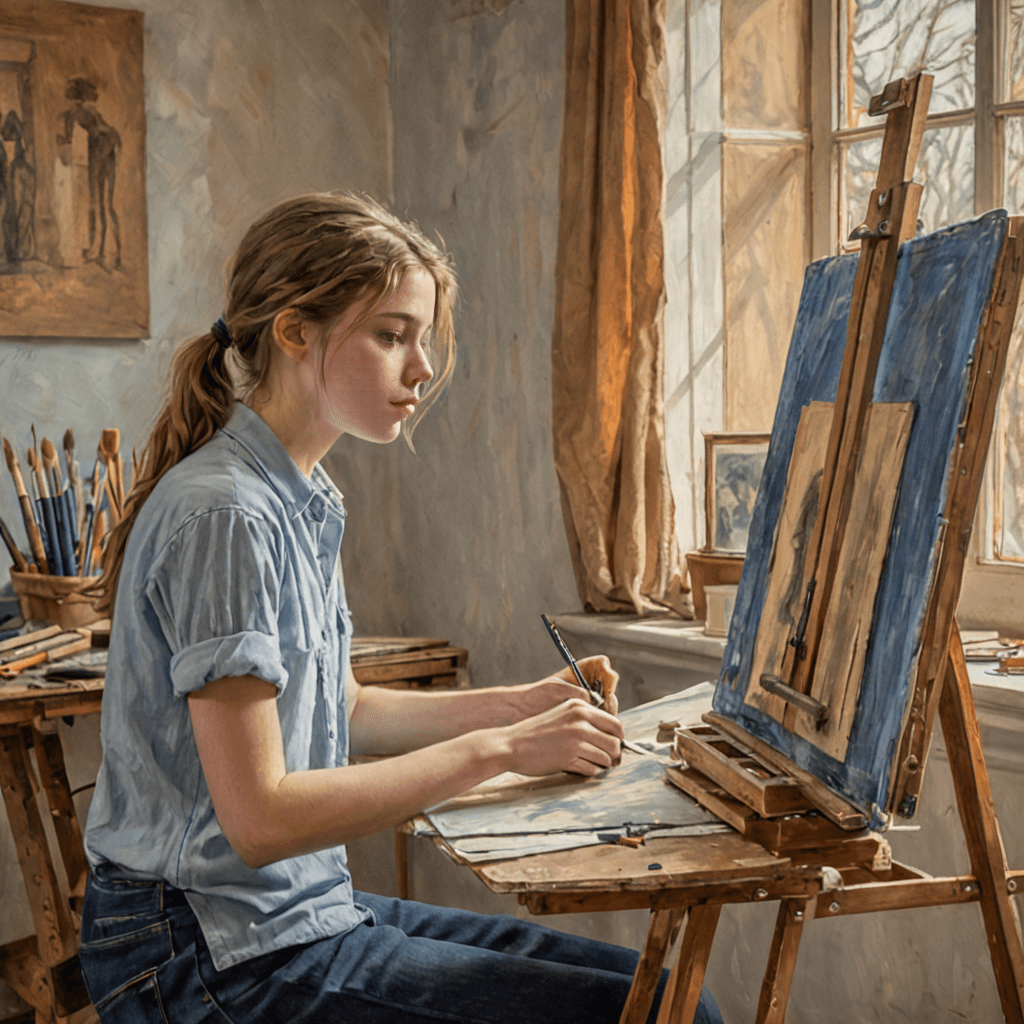
Portrait Drawing for Portfolio Preparation: Techniques Art Students Master
Table of Contents
Of all the skills an art school evaluator looks for in a portfolio, portrait drawing carries the most weight. It is the single discipline where technical weakness cannot hide. A landscape can be stylized. A still life can be loose. An abstract piece can redirect attention toward concept. But a portrait — especially a portrait of a real person — either reads as that person, or it does not. There is no middle ground, and evaluators know it within seconds.
This is why portrait drawing sits at the centre of serious portfolio preparation. Students who can render a convincing likeness demonstrate observational skill, structural understanding, control of value, and patience under pressure. They have done the quiet work that cannot be shortcut. Evaluators at OCAD, Sheridan, York AMPD, Emily Carr, and comparable programs look for exactly this kind of evidence — not because they want stylistic uniformity, but because they want to admit students who can handle any subject the program might throw at them.
At Muzart Music and Art School, portrait instruction forms a substantial part of how we prepare teens for art school applications. The techniques below are what our students work through, section by section, over months of intensive portfolio development.
Why Portraits Reveal Skill More Than Any Other Subject
A portrait is a test of whether you can see. Not glance, not look — see. The human face contains more visual information in a few square inches than most landscapes contain across an entire composition. The distance from eye to nose, the asymmetry of the mouth, the subtle plane shifts along the jaw, the way light falls across the forehead differently than across the cheek — all of this must be observed and translated before a single confident line can be drawn.
Students who skip the observation stage and jump straight to rendering produce portraits that feel generic. The eyes are a little too big. The mouth sits a little too high. The chin is flatter than it should be. Individually these errors are small. Collectively they mean the drawing is of no one. Evaluators spot generic portraits immediately, and once they do, they stop looking carefully at the rest of the portfolio.
This is the pressure that makes portrait drawing such a useful teaching tool. Students who master it develop observational habits that transfer to every other subject. The way they approach a still life changes. The way they handle figure drawing changes. Even their conceptual work becomes sharper because they have learned to notice what is actually in front of them rather than what they assume.
Construction Before Rendering
The single biggest mistake young artists make with portraits is starting from the eyes. The eyes are the most visually compelling feature, so students are drawn to them first — and then they spend the rest of the drawing trying to force the rest of the face to fit around eyes that are in the wrong position.
Proper portrait construction starts with the skull. Students work from the overall shape of the head — typically an egg modified for the specific subject — and then block in the major planes before any features appear. The brow ridge, the cheekbones, the jawline, the nose as a three-dimensional form rather than a cartoon shape — all of these structural landmarks come first.
Only after the underlying structure is correct do features get developed. This order of operations is counterintuitive for beginners, which is why it has to be taught deliberately through drills. Our portfolio preparation program builds construction into the earliest stages of every portrait session, not because it is artistically exciting, but because it is the foundation that everything else depends on.
Value Structure: The Hidden Skill
Once construction is reliable, value becomes the next battleground. A portrait rendered in line alone can be technically accurate but visually flat. A portrait with proper value structure — correct placement of lights, midtones, and shadows — feels dimensional, solid, and alive.
Students work through value studies in progressively complex stages. First, they reduce a reference photo to three values: light, midtone, and shadow. Then to five. Then they work with full continuous tone. The goal is to train the eye to see value groupings before the hand tries to render them. Artists who chase individual details without a value plan produce portraits that look busy and confused. Artists who establish the value structure first produce portraits that read cleanly from across the room.
Charcoal is particularly well-suited to this training because it forces decisive value choices. Pencil can tempt students into endless fiddling; charcoal pushes them to commit. Many of our portfolio students do their strongest portrait work in charcoal for exactly this reason.
The Features: Eyes, Nose, Mouth, Ears
Once construction and value are solid, individual features become manageable. Each feature has its own set of common mistakes that portfolio preparation specifically addresses:
Eyes are usually placed too high and drawn too large. The common rule — eyes sit roughly at the halfway point of the head — surprises many beginners, who assume the eyes sit higher because that is where attention concentrates. The iris is rarely fully visible; upper and lower lids cover portions of it. The eye is a sphere seated in a socket, not a flat almond shape.
Noses are the feature students fight with most. The key insight is that a nose is a three-dimensional form with planes — a top, two sides, and an underside — and only the bridge and nostrils read as hard lines in most lighting. The rest of the nose should emerge from value shifts, not outlines.
Mouths require observation of the philtrum (the groove above the upper lip), the subtle asymmetry most faces carry, and the way lips wrap around the dental arch. Lips drawn flat, symmetrical, and outlined produce the distinctive “generic portrait” look.
Ears are skipped by beginners and mastered by serious students. Ear proportions — the top aligning roughly with the brow, the bottom roughly with the base of the nose — are a reliable check on overall head construction.
Students in our art classes in Etobicoke work through each feature in isolation through dedicated studies before combining them in full portraits. This division of labour accelerates improvement dramatically.
Self-Portraits and Observational Portraits
Many art school applications specifically request a self-portrait, and for good reason. A self-portrait requires the student to work from direct observation — mirror, not photograph — which is a meaningfully different discipline. Photographs flatten faces and make certain features easier; mirrors preserve the full dimensional information and force the student to look, look again, and correct.
Observational portraits of other people — family members, friends, classmates — test the same skills with different subjects. Variety matters in a portfolio. An evaluator seeing eight portraits of the same subject will wonder whether the student can handle anyone else. Portfolios that include self-portraits alongside observational portraits of others demonstrate range, which matters as much as depth.
Students preparing portfolios should aim to complete several portraits per month during active preparation, with at least two or three making the final portfolio cut. The rest stay in the sketchbook as evidence of practice.
Sketchbooks Tell the Story
Most art schools want to see the sketchbook alongside the finished portfolio, and portrait pages are often what they look at most closely. A sketchbook full of quick portrait studies, value experiments, feature drills, and failed attempts reveals exactly what the finished portraits cannot — the path the student travelled to get there.
The sketchbook does not need to be beautiful. It needs to be honest. Pages where a student clearly struggled with a particular feature, then tried again, then broke through — these pages communicate more about the student’s trajectory than any polished final piece. Portfolio preparation takes this seriously and treats sketchbook development as equal in importance to finished work.
Families considering private art lessons or dedicated portfolio preparation often start with the same question: how much should my teen be drawing? The answer is almost always more than they currently are — and portraits specifically should be appearing in the sketchbook with real frequency during the year before applications.
Frequently Asked Questions
How long does it take to become good enough at portraits for an art school portfolio?
Most students need 6 to 12 months of consistent portrait work to develop the skills that read as “prepared” to evaluators. This assumes regular instruction plus substantial independent practice — typically several hours per week of drawing, including portrait-specific exercises. Students who start earlier have much more breathing room; students who start three months before applications will struggle.
Should portraits in a portfolio be done from life or from photographs?
Both, but life is more impressive when well-executed. Self-portraits drawn from a mirror and observational portraits of real people carry more weight than photo references. Evaluators can usually tell the difference, and they appreciate the harder work. That said, a few well-chosen photographic references are perfectly acceptable — just not an entire portfolio’s worth.
What media are best for portfolio portraits?
Graphite pencil, charcoal, and sanguine or toned pencil are classic choices and always safe. Oil or acrylic portraits can be stunning but require strong underlying drawing skill. Coloured pencil and pastel portraits work well when the student has mastered them. Whatever medium, evaluators want to see drawing ability first — flashy colour work without underlying draftsmanship is a red flag, not an asset.
How does Muzart’s portfolio preparation program approach portrait instruction?
Our portfolio preparation students work through a structured sequence — construction, value studies, feature drills, full portraits — with instruction that adapts to each student’s specific weaknesses. The $70 trial lesson gives families a direct look at how we teach portrait work. The monthly program is $310 and includes one-hour private lessons plus all materials. You can also request more information if you want to discuss your teen’s specific timeline and target programs.
What if my teen is starting portraits late in the application cycle?
It is not ideal, but it is workable — especially with intensive private instruction. A teen who dedicates themselves to portrait work for three to four months before applications, under proper guidance, can produce two or three portfolio-quality portraits. The rest of the portfolio will need to carry more weight in other areas. Start as soon as possible and commit to the work.
Can younger teens benefit from portrait instruction even if art school is years away?
Yes — and in fact, this is the best time to build these skills. Fourteen- and fifteen-year-olds who begin portrait work early have the luxury of struggling and improving without the pressure of an application deadline. By the time they reach Grade 11, portraits feel natural rather than intimidating, and their portfolio preparation year becomes about refinement rather than panic.
The Long Game of Observation
Portrait drawing rewards exactly the kind of patient, repeated looking that art schools want to admit. Students who invest in this skill during portfolio preparation gain more than a few strong pieces — they develop an observational habit that carries through every subsequent year of their art education.
If your teen is serious about art school applications, portraits deserve serious attention. The earlier the better, the more consistent the better. Book a trial lesson with our portfolio preparation program and let us show you what that work looks like in practice.