
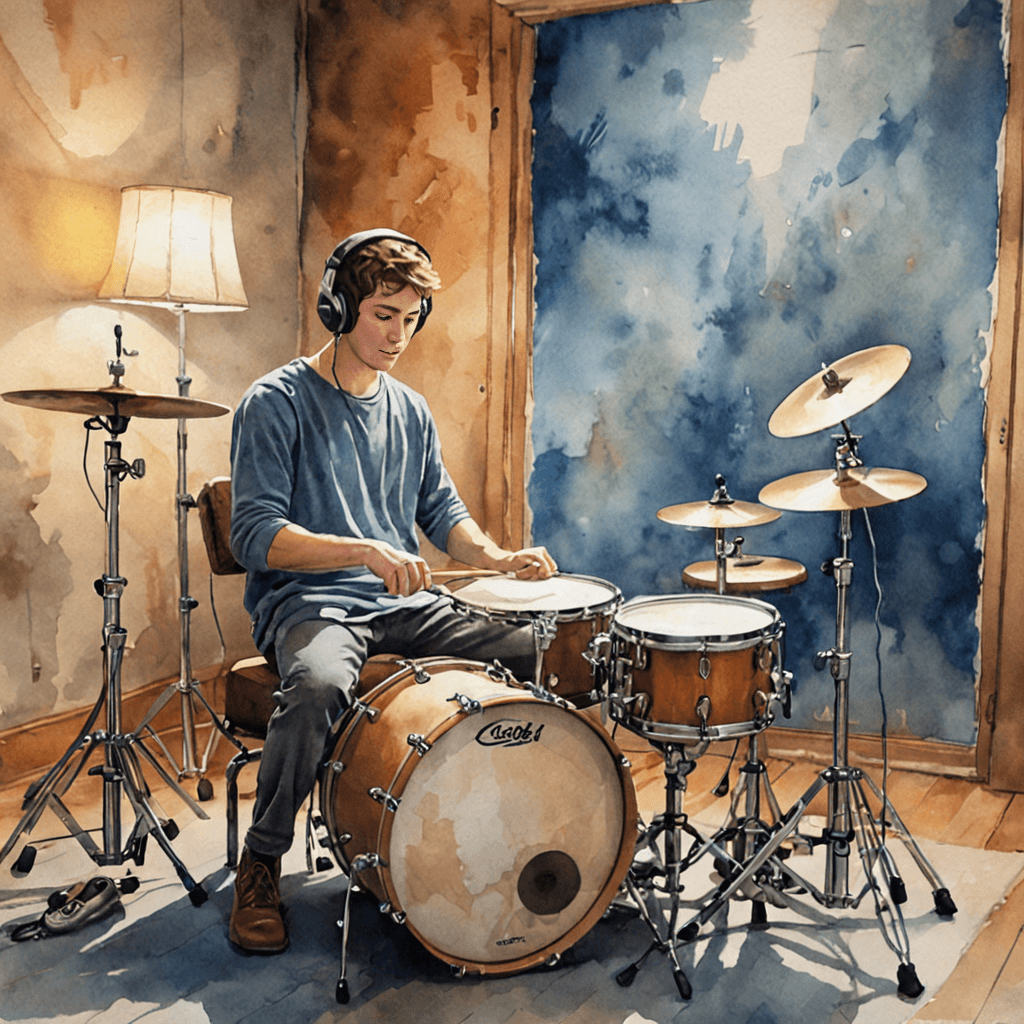
Drum Practice at Home: Setting Up for Success in Any Space
Table of Contents
After a few months of lessons, the question of where and how a drum student practices at home becomes the single biggest factor in their progress. Two students starting at the same time, with the same teacher, can diverge dramatically within a year based entirely on the quality of their home practice environment. One builds a daily habit on a well-set-up practice pad and a modest electronic kit. The other has a full acoustic kit crammed into an awkward corner, surrounded by restrictions on when it can be played, and practices inconsistently as a result.
At Muzart Music and Art School in Etobicoke near Cloverdale Mall, we teach drums to students across every imaginable home situation — detached houses with finished basements, semi-detached houses with shared walls, condos with downstairs neighbours, townhouses in dense neighbourhoods, and apartments of every configuration. The good news is that effective drum practice is possible in almost any space. The practice environment matters more than the square footage, and the setup matters more than the kit. This guide walks through how to build a functional home practice environment regardless of your space, your budget, or your neighbours.
Start With the Space You Actually Have
The single most common setup mistake we see is families trying to create a practice space in a location that does not actually work, because it seems like where a drum kit “should” go. A basement corner that floods occasionally, a garage that is unheated in winter, a bedroom too small to fit the kit without climbing over it — these spaces become reasons to avoid practicing rather than spaces where practicing happens naturally.
The right practice space is the one the student will actually use daily. This sometimes means a space the parent would not have chosen — a section of the living room, a finished basement room that doubles as a guest bedroom, a corner of the family room near where the student does homework. The aesthetic cost of having a drum kit visible in a common space is real, but it is usually smaller than the progress cost of putting the kit somewhere out-of-the-way where the student rarely goes.
For students taking drum lessons in Etobicoke, we often have conversations about home setup early in the lesson process. The practical question we ask is: where in your home would the student most naturally spend twenty minutes at a time? That space, whatever it is, is usually the right space for the kit.
The Noise Conversation With Household and Neighbours
If the kit is acoustic, noise management is the central practical concern. Acoustic drums are loud in a way that surprises people who have not lived with them — not just loud to the drummer, but loud through walls, ceilings, and floors. In most Etobicoke homes, the sound carries to neighbours regardless of what you do, which affects both practice scheduling and neighbourly relations.
For families with acoustic kits, some practical noise management tools make a significant difference. Mesh drumheads replace standard drumheads and reduce volume dramatically while preserving much of the playing feel. Low-volume cymbals do the same for the cymbal side. Together, these reduce the acoustic volume of a kit to roughly conversational levels, which makes practice feasible at almost any hour. The quality of the practice experience drops somewhat, but the total practice time the student accumulates increases significantly — and total practice time is what matters most for progress.
Electronic kits mostly avoid the noise conversation entirely when used with headphones. The pad impact sound is still audible — a steady thumping that carries somewhat through floors — but it is far less invasive than acoustic sound. A rubber practice mat under an electronic kit reduces this further by absorbing most of the vibration that travels through floors.
For households with neighbours directly below — condos and apartments — even electronic kits require attention. A combination of thick practice mat, isolation pads under the kit stand, and sometimes a second layer of dense rubber between the kit and the floor can reduce downstairs transmission to the point where drumming is sustainable in shared-wall living.
Setting Up the Kit Ergonomically
Many home drum students practice on kits that have been set up incorrectly from the start. The throne is too high or too low. The snare is at the wrong height relative to the thighs. The cymbals are angled in ways that encourage poor technique. These setup issues create bad habits that are then difficult to unlearn in lessons.
The general principles: the throne should be high enough that the hips are slightly above the knees when sitting. The snare should be at a height where the elbows hang comfortably when sticks rest on the head. Cymbals should be low enough and flat enough that the student strikes them naturally without reaching or angling the wrist awkwardly. Toms should be positioned so the student can reach them without significant body movement from the playing position.
For young students, setup changes as they grow. A six-year-old and a nine-year-old need different kit configurations, and the configuration needs to be adjusted every three to six months as children change size. We regularly coach parents on these adjustments during lesson pickup conversations, because a slightly incorrect kit setup at home undermines the technique work we do in lessons.
Building a Practice Routine That Actually Happens
The next piece is practice routine. A student who sits at the kit for twenty minutes daily progresses dramatically faster than a student who sits at the kit for two hours twice a week, even though the total minutes are similar. Consistency builds the muscle memory and coordination that drumming requires. Intermittent practice, however concentrated, does not.
Short daily sessions work best for most students. Twenty to thirty minutes after school, daily, outperforms longer weekend-only sessions in nearly every case we have observed. The routine the student uses within those minutes matters too. A typical effective routine includes five minutes of warm-up on a practice pad (stick exercises, rudiments), ten to fifteen minutes on the kit working on the current lesson material, and five minutes of free play — playing along with favourite songs or experimenting with ideas.
The free play portion is more important than it sounds. Drumming should feel like something the student wants to do, not only something they have to do. Leaving space for free playing, without the performance pressure of working on assigned material, keeps the instrument emotionally engaging. Students whose home practice is entirely structured assignment-completion often burn out. Students whose practice includes joyful time on the kit stay engaged for years.
Headphones, Metronomes, and Practice Tools
A few specific tools make home practice significantly more effective. Headphones — specifically, over-ear closed-back headphones rated for loud environments — are essential for electronic kit practice and highly valuable for acoustic kit practice as well. Acoustic drums can hit peak volumes that cause hearing damage over extended exposure, and even young students should practice with some form of hearing protection.
A metronome is the second essential tool. Drumming without a metronome builds inconsistent timing that becomes difficult to correct later. Most electronic kits include a built-in metronome, which is convenient. Acoustic drummers typically use a metronome app played through headphones or a small speaker. The habit of practicing with a metronome from the first weeks of lessons pays dividends for years afterward.
A recording tool — a phone on a tripod, or a simple audio recorder — transforms practice quality. Students who record themselves occasionally hear things they miss while playing: timing drifts, volume inconsistencies, technique gaps. A short recording reviewed once a week teaches self-assessment in ways that no teacher feedback can fully replicate. Our music lessons program encourages students to bring occasional recordings to lessons for review.
Practice Pad Time When Kit Time Is Not Possible
A practice pad is a rubber or mesh surface mounted on a stand or placed on a table, used to practice stick technique silently. Practice pads do not replace kit time, but they supplement it valuably. A student who spends ten minutes daily on a practice pad — working on rudiments, stick control, and hand-independence exercises — builds hand technique faster than a student who only plays on the full kit.
Practice pads are particularly useful for times when kit practice is not possible. Late-evening practice, shared-space situations, hotel stays during family travel, early-morning practice when the house is still asleep — all of these become possible with a practice pad and a pair of sticks. Some advanced drumming concepts are actually developed more efficiently on practice pads than on the full kit, because the silence focuses attention on stick mechanics rather than sound.
Practice Environments for Beginners vs. Intermediate Students
The setup that works for a first-year beginner differs from the setup that serves an intermediate student. Beginners benefit from a simple, limited setup — a basic kit with fewer cymbals and toms — because it forces focus on foundational skills rather than running around the kit. Intermediate students need a more complete kit to develop the spatial coordination that multi-surface drumming requires.
This progression affects how families should invest in equipment. Buying a fully-featured kit for a beginner often creates more confusion than benefit. Starting with a smaller setup and adding pieces as the student progresses generally produces better results and better long-term equipment decisions. Our Etobicoke drum lessons include guidance on when to add specific kit pieces based on what the student is currently working on.
When Home Practice Is Not Possible
Some families, despite best efforts, cannot create a functional home practice environment. Strict noise restrictions, impossible spatial constraints, or household conflicts can all make kit practice at home impractical. In these cases, home practice shifts primarily to practice pad work, and kit time happens in lesson rooms or other dedicated spaces.
This is a genuinely harder situation for long-term progress, but it is not hopeless. Students who develop strong stick technique on practice pads at home and then focus entirely on kit work during lessons can still progress significantly, especially if lesson time includes some dedicated practice time rather than only instruction. We sometimes extend lesson time for students in this situation, or suggest additional practice-only kit time that we can arrange at the school.
Trial lessons are $35, and the monthly program is $155 with all materials included — including the kits the students use during lessons. For families in challenging home-practice situations, the in-lesson kit time becomes especially valuable, and we structure curriculum accordingly.
Frequently Asked Questions
How many hours per week should a beginner drum student practice at home?
For beginners in the first year of lessons, consistent daily practice of twenty to thirty minutes works well — roughly two and a half to three and a half hours per week total. More is welcome but not required, and the daily habit matters more than the total weekly minutes. Students who practice six days a week for twenty minutes significantly outpace students who practice three days a week for forty minutes, even though the total time is similar.
Can my child practice drums in an apartment or condo?
Yes, with some planning. Electronic kits with mesh pads, used with headphones and placed on isolation pads, can make apartment and condo drumming feasible. A conversation with neighbours before starting usually prevents problems — most neighbours are accommodating if they are consulted and know practice happens at reasonable hours. Our drum lessons in Etobicoke include practical guidance for students in condo and apartment settings.
What is the best time of day for drum practice?
Whatever time the student can make consistent. For most school-age children, after-school before dinner works well — homework energy has dissipated, dinner provides a natural endpoint, and the family schedule usually accommodates it. Adult learners often practice in early evening after work or on weekend mornings. The specific time matters less than the consistency of the time.
Do I need to invest in soundproofing for home drum practice?
For most families, full soundproofing is not necessary and not cost-effective. Practical tools like mesh heads, low-volume cymbals, isolation pads, and rubber mats handle most noise situations at a fraction of the cost. True soundproofing requires substantial construction — decoupled walls, isolated floors, specific acoustic treatments — and usually makes sense only for advanced students or professional setups.
How do I know if my child is practicing well versus just making noise?
The signal to look for is not musicality — it is focused repetition. A student practicing well will repeat a short pattern many times rather than running through entire songs repeatedly. They will use the metronome. They will pause and start over when they make mistakes. The sound from the practice room should include plenty of stopping and restarting, not only continuous playing. If practice sounds like uninterrupted jamming, the student is probably not working on anything specific.
What do we do when the student does not want to practice?
Some resistance is normal and does not require intervention. Sustained resistance often signals that something in the practice environment is not working — the kit is uncomfortable, the space is unwelcoming, the practice material is too hard or too boring, or the routine has become joyless. A conversation with the teacher usually surfaces what is actually going on. Forcing a student to practice through sustained resistance rarely works and often damages the long-term relationship with drumming.
The right home practice setup makes the difference between a student who progresses smoothly through years of lessons and one who stalls within months. Book a drum trial lesson to have our teachers assess your current setup and suggest specific improvements, or request more information about how our drum program supports students across every home practice situation.