
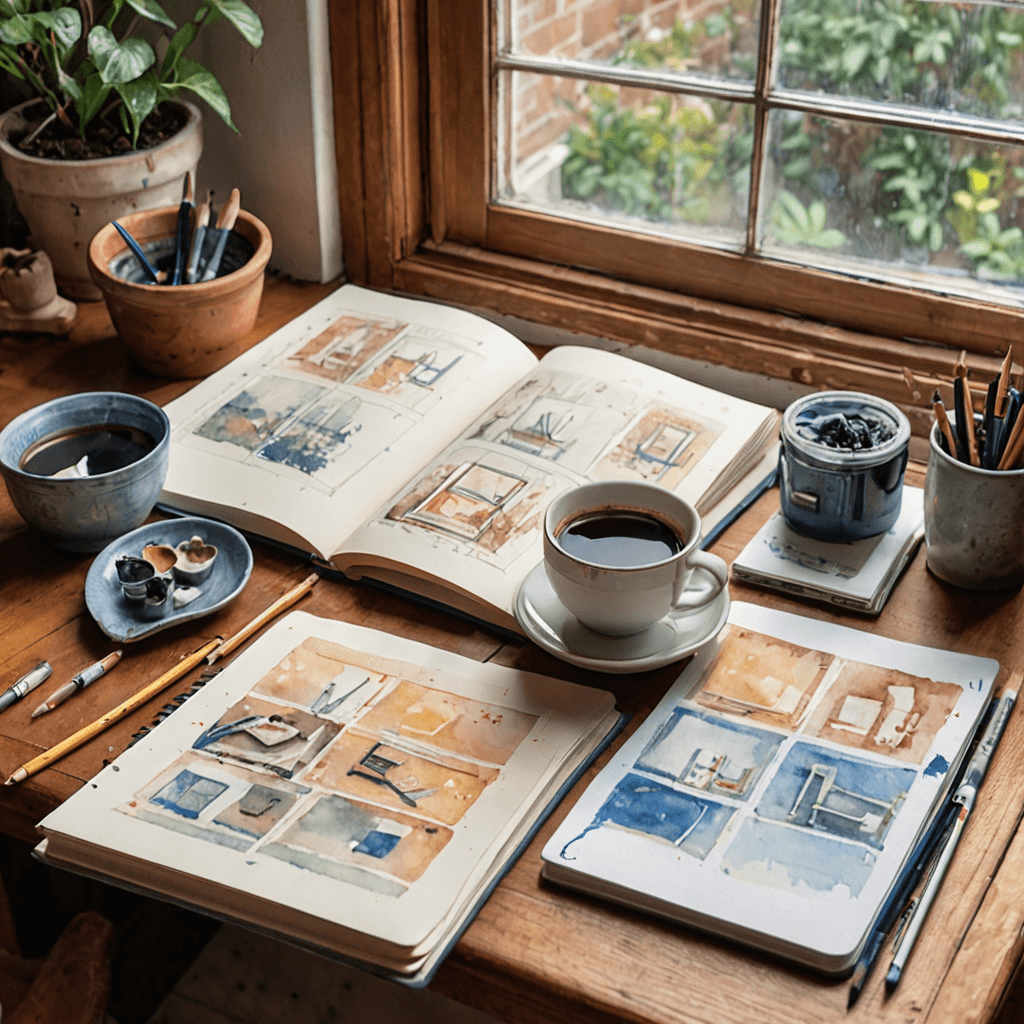
Sketching Every Day: How Daily Drawing Transforms Portfolio Quality
Table of Contents
The single most reliable predictor of portfolio quality, in our experience teaching art at Muzart Music and Art School, isn’t talent. It isn’t access to expensive materials. It isn’t even the number of formal lessons a student takes. It’s whether the student draws every day.
Daily sketching isn’t glamorous. It doesn’t produce finished work most days. It rarely results in pieces that go directly into a portfolio. But over months and years, daily drawing transforms a student’s eye, hand, and visual thinking in ways that nothing else can replicate. Strong portfolios are nearly always built on a foundation of consistent daily practice. Weak portfolios are nearly always built on intermittent intensity.
This post explains why daily sketching matters more than periodic studio sessions, what to draw when motivation is low, and how to sustain a habit that will quietly become the most valuable part of any teen’s art education.
Why Daily Sketching Matters More Than “Big” Studio Sessions
The instinct for many ambitious students is to treat art the way they treat school assignments — block out a long studio session, produce something polished, and call that progress. There’s a place for sustained sessions, especially when a student is developing a finished portfolio piece. But sustained sessions alone don’t build the underlying skill that makes finished pieces possible.
Drawing is a perceptual skill, not just a technical one. The ability to see proportions, observe light and shadow, capture gesture, and translate three-dimensional reality onto a flat surface is built through accumulated visual attention. A 20-minute sketch every day produces more skill development than a four-hour session once a week, because the daily session reinforces the perceptual habits over and over until they become second nature.
This is one of the most consistent patterns we see in our students. The teens who arrive at portfolio prep already drawing in a sketchbook every day make exponentially faster progress than the equally-talented teens who draw only during lessons. The gap widens over months. By the time portfolio submissions are due, the daily sketcher is on a different level — not because they’re more gifted, but because they have logged the volume.
What to Sketch When You Don’t Know What to Sketch
The most common reason daily sketching breaks down isn’t time — it’s the blank-page problem. A student sits down with a sketchbook, can’t think of anything to draw, scrolls their phone instead, and the habit dies for the night. Avoiding this is mostly about lowering the bar for what counts.
Some categories of subject that work well for daily sketching:
Whatever’s in front of you. A coffee cup, a backpack, a plant on the windowsill, your hand. Drawing from immediate surroundings forces observation skills and removes the question of what to draw.
The same subject repeatedly. Pick one object — a chair, a shoe, a piece of fruit — and draw it every day for a week from different angles, different lighting, different media. The repetition teaches you to see deeper into a single subject.
Quick gesture sketches. Two-minute sketches of people, animals, anything moving. The point isn’t accuracy — it’s training the hand to capture movement and gesture quickly.
Studies from photographs. Not finished pieces, just studies. A face from a magazine, a hand from a photograph, a tree from an old reference. These build observation without the pressure of original composition.
Master copies. Pick a drawing or painting you admire and copy it. Done thoughtfully, copying is one of the oldest and most effective ways to learn what makes good work good.
The point of all of these is to make sure that on a low-motivation day, the student has options that don’t require creative inspiration. Inspiration is unreliable. The habit needs to survive the days inspiration doesn’t show up.
The Sketchbook as a Document of Growth
For students preparing portfolios for university or arts high schools, the sketchbook itself can become a portfolio asset. Many programs — particularly ones with stronger fine arts orientations like Emily Carr or NSCAD — value the visible record of practice and thinking that a sketchbook provides. Evaluators often respond more strongly to a sketchbook full of varied, exploratory daily work than they do to a portfolio of polished finished pieces with no process visible behind them.
This is something our portfolio preparation program emphasizes from the beginning. We work with students to develop sketchbook practices that are real working tools — not curated highlight reels. The most valuable sketchbook is one with bad days, false starts, and abandoned ideas alongside the strong work, because that’s the honest record of how the student actually thinks and grows.
A sketchbook is also a medium for trying things you’d never put into a finished piece. Strange compositions, experimental media, ideas that don’t quite work. The freedom of low stakes is what makes a sketchbook generative. A teen who only draws when they think it might end up in their portfolio is too constrained to explore — and exploration is where the most interesting portfolio work eventually comes from.
Common Mistakes Students Make With Daily Practice
Watching students try to build daily sketching habits, we see a few predictable mistakes:
Treating every sketch as a finished piece. This kills the habit fast. If every sketch has to be good, the bar is too high to clear daily. Lower the bar — most sketches should be quick, exploratory, and unprecious.
Working in a single medium. Daily practice in one medium is fine for short stretches, but sustained variety builds broader skill. Pencil, pen, charcoal, ink wash, watercolour, even digital — rotating through media keeps the practice fresh and develops range.
Drawing only at home in the evening. This works for some students, but it’s the most fragile arrangement. The students with the most resilient habits tend to sketch in multiple contexts — during commutes, in waiting rooms, in coffee shops, during quiet moments at school. Embedding sketching into the texture of the day makes it harder to skip.
Comparing daily sketches to other people’s finished work. Social media has made this nearly automatic. Most of what students see online is curated final pieces — not the bad sketches that came before them. A daily practice should be measured against the student’s own previous work, not against polished work by other artists at unknown stages of their development.
Quitting after a missed day. Habits don’t die from a missed day. They die from the second missed day. After missing, just pick it back up. The habit is more durable than students think if they don’t catastrophize a single gap.
How to Sustain the Habit When Motivation Fades
Motivation always fades. Habits survive when they’re built to outlast motivation. A few practical approaches that work:
Start absurdly small. Five minutes a day, every day. Once that’s solid for a few weeks, expand. Most students fail at “I’ll draw an hour every day” but succeed at “I’ll do at least one quick sketch each day, even on bad days.”
Use a dedicated sketchbook. Not a stack of loose paper — a single bound book that fills up over time. Watching it fill is its own motivation, and looking back through old pages shows growth in a way nothing else does.
Pair it with an existing routine. Sketch with morning coffee. Sketch on the bus. Sketch right after dinner. Anchoring the habit to something already automatic makes it harder to forget.
Take short, focused private art lessons that give the practice direction. Daily sketching without instruction can stagnate. Periodic lessons that introduce new techniques, point out specific things to work on, and offer feedback on accumulated sketchbook work keep the daily practice productive instead of repetitive.
Don’t aim for masterpieces in the sketchbook. The masterpieces happen in finished portfolio pieces. The sketchbook is the gym, not the performance. This shift in framing relieves enormous pressure and lets the practice actually serve its purpose.
Frequently Asked Questions
How long should each daily sketch take?
It varies by student and goal, but as a starting point, anywhere from 10 to 30 minutes works for most teens. The point is consistency, not duration. Five minutes daily is more valuable than three hours once a week.
Will daily sketching alone build a strong portfolio?
No — but it will dramatically improve the quality of any portfolio work the student does. Portfolio pieces are typically larger, more developed, and require sustained sessions to complete. Daily sketching builds the underlying skill that makes portfolio pieces stronger. The two work together; neither replaces the other.
What if my teen is reluctant to start a daily practice?
Start with a low bar — one quick sketch a day, no pressure on subject or quality. Most reluctance comes from believing daily practice means daily masterpieces. Once a teen experiences a few weeks of low-stakes daily sketching, the habit usually starts feeling rewarding rather than burdensome.
Should daily sketching be supervised by a teacher?
Not daily — but periodic instructor review of the sketchbook is valuable. A teacher can spot patterns in the student’s work, suggest new directions, point out blind spots, and recommend exercises. Sketchbook review during regular lessons is built into the structure of our art lessons in Etobicoke, because the daily practice and the formal lessons reinforce each other.
Can adults benefit from daily sketching the same way teens do?
Absolutely. The principles are identical — perceptual skill develops through accumulated practice, regardless of age. Adult learners often actually have an advantage in habit formation if they can build the practice into existing daily routines, since their schedules tend to be more regular than a teen’s.
Ready to Build the Habit That Builds the Portfolio?
Daily sketching is the foundation of every strong art portfolio we’ve seen come together at Muzart. It’s also the easiest thing for a student to commit to and the hardest to sustain over months. The students who succeed long-term are usually the ones who combine daily personal practice with periodic structured instruction.
If your teen is starting to think seriously about portfolio preparation, the right time to begin building the daily sketching habit is well before formal portfolio work starts. The portfolio prep monthly program at our Etobicoke location runs $310 per month with all materials included, and starts with a $70 trial that includes a real assessment of where the student is and how to begin building the foundations the portfolio will eventually rest on.
You can book a portfolio preparation trial at our Etobicoke location near Cloverdale Mall, or request more information about our art programs if you’d like to talk through what daily practice and structured instruction together can do over a year.
The habit is small. The cumulative effect is enormous. We’d love to help your teen build it.