
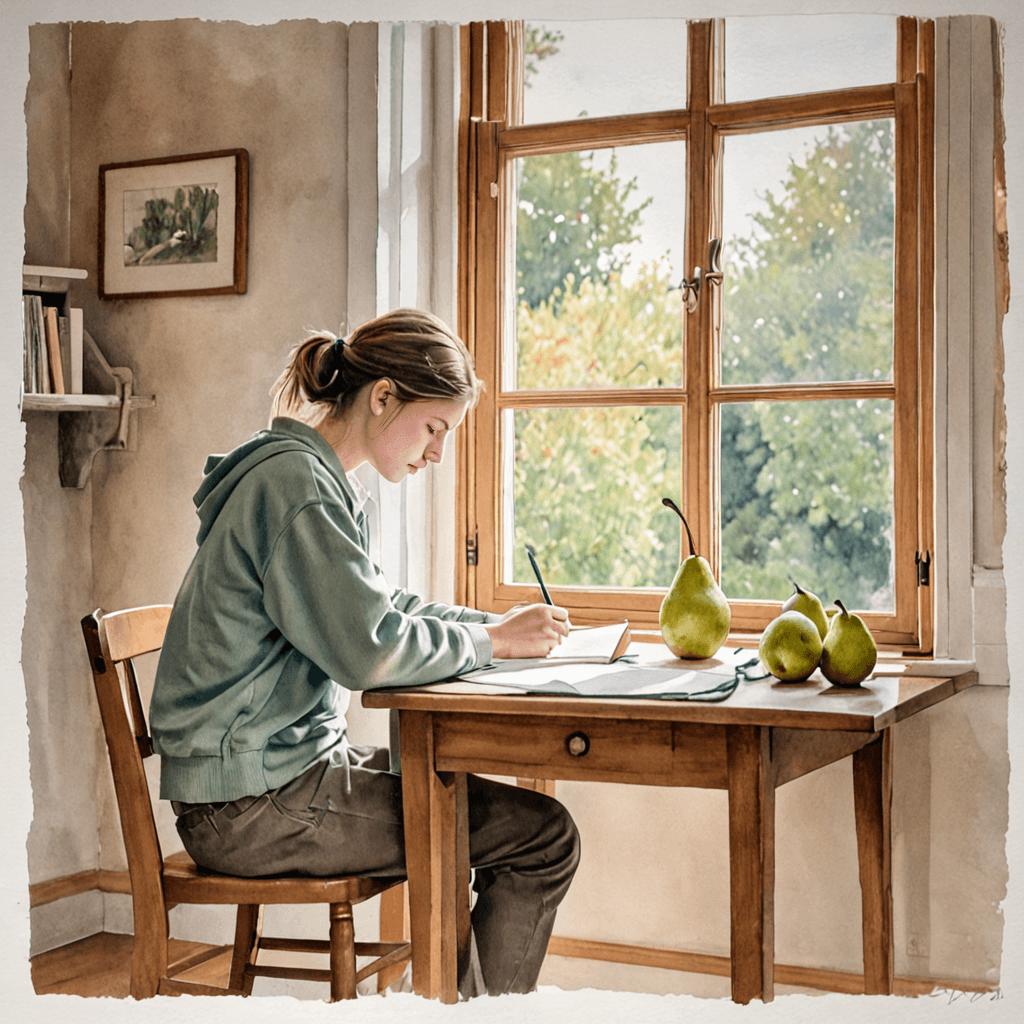
Still Life Drawing for Portfolio: Building Technical Skills From Scratch
Table of Contents
If a teen is preparing an art school portfolio for OCAD, ESA, Etobicoke School of the Arts, or any university visual arts program, still life is going to show up in the work — sometimes as a featured piece, more often as the technical foundation that everything else rests on. Evaluators look at still life because it strips away every excuse. There is no clever concept hiding weak fundamentals. There is no reference image that did half the work. There is just an arrangement of objects on a table and the student’s ability to see them accurately and translate what they see onto paper.
That translation step is where almost every teen student gets stuck. Not because they cannot draw — many of them are quite skilled at copying from photographs or following digital tutorials — but because still life forces a different kind of seeing that copying simply does not require.
Why Still Life Shows Up in Every Art School Portfolio
Art schools include still life expectations because it is the most reliable test of observational drawing skill. A still life portfolio piece tells an evaluator several things at once: whether the student can render proportion, whether they understand light and shadow, whether they can handle different surface qualities (metal, fabric, glass, organic material) in the same composition, and whether they have the patience to work through a sustained piece without abandoning it.
Programs like OCAD’s drawing and painting stream, the foundation portfolios for Sheridan and York, and the entrance requirements for arts-focused high schools all weight observational drawing heavily. Even programs that lean conceptual or digital — illustration, animation, concept art — expect to see traditional drawing fundamentals somewhere in the portfolio, and still life is the most efficient way to demonstrate them.
This means a student preparing for art school portfolio review needs at least one strong still life piece, and ideally several across different difficulty levels. Building those pieces is not something that happens in the final two months before submission. It needs months of consistent practice before the portfolio piece itself is even attempted.
The Proportion Problem (And Why It Is the Real Obstacle)
In our experience preparing teens for portfolio submissions at Muzart Music and Art School, the single most common difficulty is not shading, not composition, not material handling — it is proportion. Specifically, it is the act of translating a three-dimensional arrangement of real objects into accurately scaled relationships on a two-dimensional page.
This catches students off guard. Many of them have spent years drawing from reference photos, where they could trace, grid out the image digitally, or eyeball the proportions against a flat surface that already matched the dimensions of their paper. Still life takes all of that away. The objects sit in front of them in actual space, with depth, with their own scale relationships that must be observed from a single viewpoint. The bowl is not flat. The fabric drapes in three dimensions. The apple sits behind the vase, not next to it on a flat plane.
Translating that to paper requires sustained measurement, comparison, and adjustment — skills that most students have never been taught explicitly because they were not needed when copying from images. A teen who can produce a stunning copy of a Pinterest reference will sit down in front of a real arrangement and produce something where the bowl is too wide, the apple is the wrong size relative to everything else, and the whole composition feels off in a way they cannot diagnose.
Why Grid-Method Shortcuts Don’t Work for Still Life
Many students rely on the grid method when copying from photographs. They overlay a digital grid on the reference image, draw a matching grid on their paper, and transfer one square at a time. It is a legitimate technique with a long history, and it works well for translating one flat image to another flat image.
It does not work for still life. There is no way to overlay a grid on the actual three-dimensional arrangement on the table. Some students try to imagine one, but imagining a grid in space is much harder than seeing one drawn on a screen, and the imagined grid distorts as soon as the student’s perspective shifts even slightly. Other students try to grid their paper and then approximate proportions square by square, but without the reference grid to match it to, the approximations tend to compound errors rather than correct them.
The skills that actually work for still life — sighting with a pencil to compare relative measurements, establishing key proportional landmarks first, building the drawing from large shapes to smaller ones, and constantly checking proportions against each other rather than against a fixed grid — are different skills entirely from grid copying. They take time to learn, and they have to be taught directly.
This is one of the reasons private art lessons are so much more effective than self-teaching for still life specifically. A teacher watching the student draw can see exactly where the proportional misjudgments are happening and intervene in the moment, rather than letting the student finish a flawed piece and try to learn from the mistake afterward.
Building Still Life Skills Before Portfolio Season
The students who arrive at portfolio season with strong still life pieces are the ones who started building the underlying skills six to twelve months before the portfolio was due. Not building portfolio pieces — building skills. The piece that ends up in the portfolio is usually drawn in the final stretch, but it draws on accumulated technique that has been practiced for far longer.
A reasonable progression for a teen preparing seriously for art school looks something like this:
In the first two to three months of focused practice, the student works on simple single-object studies. One apple. One drinking glass. One folded cloth. The goal is to build the habit of measuring with a pencil, establishing landmarks, and committing to slow observation. Most of these will be rough, and that is fine — they are not portfolio pieces, they are training drawings.
In the next three to four months, the student moves to small multi-object arrangements where the relationships between objects matter. Two pieces of fruit. A cup and a small bowl. A bottle and a piece of fabric. Now the proportional comparisons get harder, because the student is judging the size of one object against another rather than against the page itself.
In the final stretch before portfolio submission, the student can attempt full still life compositions — three to five objects with deliberate lighting, varied surface materials, and a composition that has been thought through. Pieces from this stage are the ones that go into the portfolio.
This kind of staged progression is exactly what portfolio preparation at Muzart is designed to support, with one-hour weekly lessons at $310 per month, including all materials. The trial is $70, which is enough time for an instructor to evaluate where the student currently is and outline what the next several months should focus on.
Simple Subjects vs Ambitious Subjects in Still Life
A common mistake we see is teens choosing overly ambitious subjects for their first serious still life pieces. They want to draw something dramatic — a skull, an antique camera, a glass bottle with reflections, an elaborate fabric drape. These subjects can produce stunning pieces in the hands of a student who has the underlying skills, but they punish students who do not, because every weakness gets magnified.
Simpler subjects, well-rendered, are almost always more impressive in a portfolio than ambitious subjects executed at a 70 percent level. An evaluator looking at a beautifully rendered single pear on a plain background sees a student who understands form, light, and patience. The same evaluator looking at a half-rendered still life with five objects, glass reflections, and an ambitious lighting setup sees a student who reached past their skill level.
Choosing the right level of difficulty for each portfolio piece is something a teacher should help with directly. Students often misjudge their own skill level in either direction — overestimating it in their best moments and underestimating it after a bad session.
Frequently Asked Questions
How early should a teen start practicing still life for art school applications?
Ideally, twelve to eighteen months before the portfolio is due. That gives enough time to build observational drawing skills properly, work through the early rough phase, and end with several finished pieces that can be evaluated and revised. Six months is workable but tight. Three months is usually too compressed for a student who has not done much observational drawing before.
Can my teen learn still life on their own using YouTube tutorials?
Tutorials are useful for technique demonstrations, but they cannot watch a student draw and tell them where the proportions went wrong. The single biggest skill in still life — accurate observational measurement — is almost impossible to self-correct because the student does not yet have the trained eye to see their own errors. This is the part that benefits most from in-person feedback during the drawing itself.
What materials does a teen need to practice still life seriously?
For starting out, graphite pencils in a range of grades (HB through 6B is enough), a kneaded eraser, a sketchbook, and good drawing paper for finished pieces. Charcoal can be added later. Materials are included in our portfolio prep program at $310 per month, which removes the guesswork for parents and ensures the student is using appropriate-quality supplies from the start.
Is still life only relevant for traditional fine art programs, or do digital programs care too?
Digital programs care. Concept art, illustration, and animation programs all expect to see strong observational drawing fundamentals somewhere in the portfolio, even when the student’s primary work is digital. Still life remains the cleanest way to demonstrate those fundamentals. A student aiming for a digital-focused program who skips still life entirely is leaving an obvious gap that evaluators will notice.
How does Muzart’s portfolio prep approach still life specifically?
Our portfolio prep program builds still life skills sequentially — single objects first, then small arrangements, then full compositions — with the teacher adjusting pace based on what the student needs. Lessons are one hour, weekly, with all materials included. We work backward from the student’s target schools and application deadlines so the portfolio is ready well before submission, not the night before.
If your teen is preparing for art school applications and still life is on the list of things to develop, the earlier the work starts the better. To book a portfolio prep trial lesson at $70, visit our book now page, or request more information if you want to discuss your teen’s situation and target schools first. For broader context on the program, see our art lessons in Etobicoke overview.