
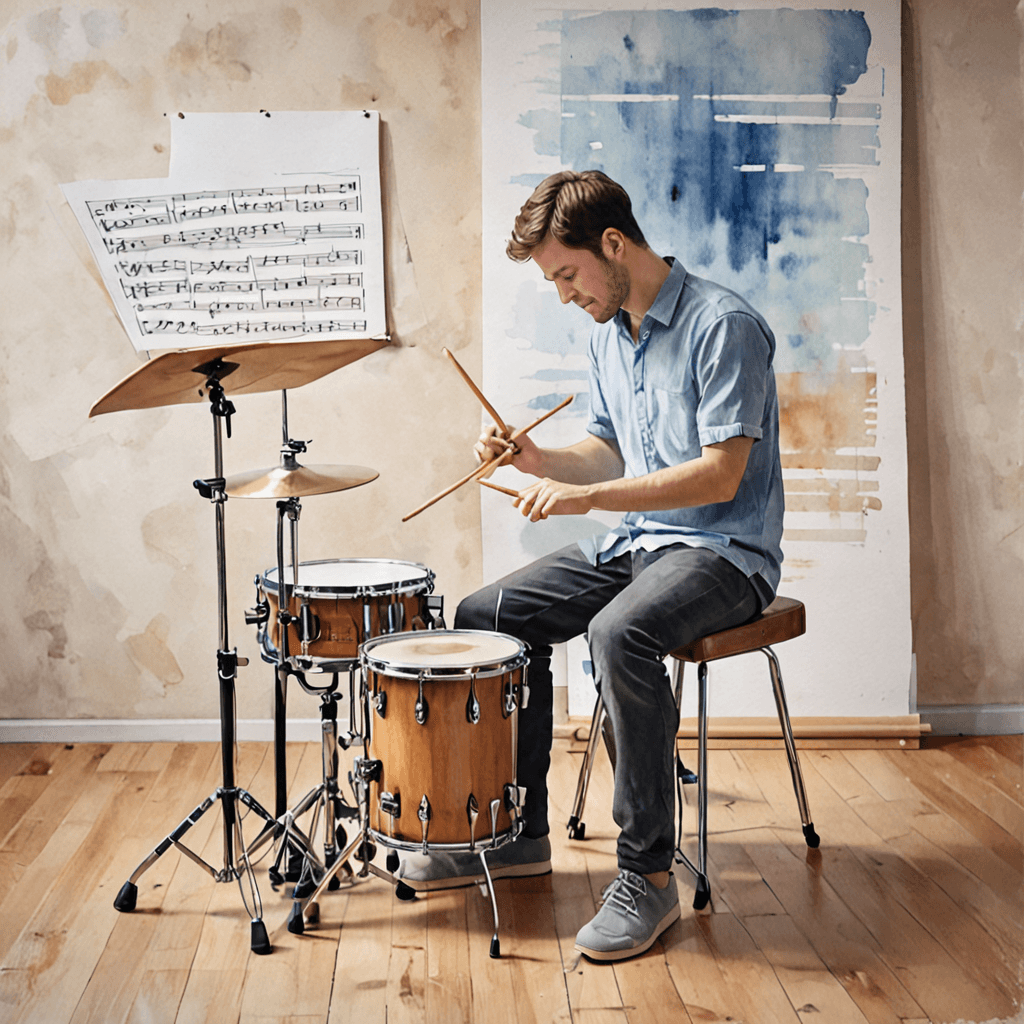
How Many Drum Lessons Before You Can Play a Full Song?
Table of Contents
This is one of the most common questions parents and adult beginners ask before booking a trial drum lesson, and it deserves a real answer rather than the usual “it depends” deflection. The honest answer at Muzart Music and Art School is more encouraging than most people expect: a beginner can usually play through a simple full song from start to finish around the sixth to eighth lesson, and they will be playing along to actual music — in a basic way — much sooner than that.
The longer answer involves what “playing a song” actually means at different stages, what kind of practice habits affect the timeline, and why the early small wins matter more for long-term progress than getting through a complete song quickly. All of which is worth understanding before you book.
The Honest Timeline — What “Playing a Song” Actually Means
The phrase “playing a song” hides a lot of variation. There is a difference between a student keeping a steady kick-and-snare pattern through a song while a recording plays, and a student performing the actual drum part of a song the way the original drummer played it. Both are legitimately “playing a song,” but they are very different milestones.
At Muzart, we usually mean the first one when we talk about beginners playing through a song. The student maintains a basic groove that fits the song, transitions between sections (verse to chorus, chorus to bridge), and finishes when the song finishes. The drum part is simplified compared to the recording, but it works. It is recognizably the song.
Reaching the second milestone — performing a real arrangement faithfully — usually takes considerably longer, depending on the complexity of the song. A simple rock or pop song might be playable in the original arrangement after several months of consistent lessons. A complex song with fills, dynamics, and tempo changes can take years to play accurately.
For most beginners, the first milestone is what matters. It is the moment where the student stops “learning drums” and starts “playing drums.” That distinction is psychological as much as technical, and it is the single biggest predictor of whether a student will stay with lessons long term.
Lesson 1 Small Wins — Why They Matter More Than Speed
In our experience teaching beginners, most students play along to a simple rhythm by the second half of their first lesson. That rhythm is very basic — usually a steady quarter-note pattern on the kick and snare, sometimes paired with a count on the hi-hat — and the song chosen is something with a clear, easy backbeat that does not require fills or transitions. But the student is genuinely playing, in time, to actual music, on day one.
This matters more than it sounds. Beginners — especially children, but also adults who tried lessons years ago and quit — often arrive expecting to spend weeks doing exercises before any music happens. When music happens in the first thirty minutes, something shifts. The student leaves the lesson believing they can do this, which is exactly the belief they need to come back for the second lesson and practice in between.
Small wins early are not just morale management. They are a practical teaching strategy. Students who experience real musical reward in the first session practice differently during the week — they practice playing along to songs they like, which builds timing and feel, instead of grinding exercises that feel disconnected from music. That habit difference compounds over months.
The Sixth-to-Eighth Lesson Milestone
By around the sixth to eighth lesson, most students can play through a simple full song from start to finish at a reasonable tempo. By “simple full song” we mean something with a clear structure (intro, verse, chorus, repeat), a steady tempo throughout, and no demanding fills. The drum part the student plays is a basic, locked-in groove that fits the song — not the original drummer’s part, but a workable equivalent.
Getting from “playing a basic rhythm to a song” in lesson one to “playing through a full simple song” by lesson six to eight is about building three things in parallel: hand and foot independence (so the kick, snare, and hi-hat can do different things at the same time), tempo stability (so the student can hold a beat without speeding up or slowing down), and song-form awareness (so the student can hear the difference between sections and transition between them).
None of these skills are mastered by lesson eight. They are functional. The student can use them well enough to get through a song. They will keep developing for years afterward, but the initial barrier — the gap between “I am taking drum lessons” and “I can play drums” — has been crossed.
For students considering drum lessons in Etobicoke, this six-to-eight-lesson window is typically when they realize the investment is paying off. Lesson packages run on a monthly basis at $155, which works out to four lessons per month, so most students hit this milestone in roughly the second month of consistent practice.
Why Some Students Get There Faster (And Why That Doesn’t Matter)
Students vary in how quickly they reach the full-song milestone. Some students get there by lesson four, especially if they have prior musical experience, strong natural rhythm, or particularly consistent at-home practice habits. Others take ten or twelve lessons, especially younger children who are still developing physical coordination, or adults who think more analytically and want to understand the mechanics before committing to a pattern.
Neither pace predicts long-term success. We have seen students who breezed through the first month plateau hard at the intermediate stage, and students who struggled through the basics develop into deeply musical drummers. What separates students who continue to grow from students who stall is rarely how fast they hit the early milestones — it is whether they are practicing consistently and whether the lessons are challenging them appropriately for their current level.
This is one of the reasons private drum lessons work better than group programs for most students. A private teacher adjusts the pace constantly. A student who is moving quickly gets harder material sooner. A student who is moving more slowly gets more time on fundamentals without holding anyone else back. The student moves at their own pace without the comparison stress that often shows up in group settings.
What Makes the Difference Between Progress and Stagnation
The number-one predictor of how fast a student progresses, in our experience, is consistency of practice — not the amount of practice, just the consistency. A student who practices fifteen minutes per day, six days a week, will progress significantly faster than a student who practices for two hours once a week, even though the total minutes are similar. The brain consolidates motor learning during sleep, which is why daily short practice outperforms infrequent long practice for skill-building.
Beyond consistency, what helps most is practicing along to music rather than only doing isolated exercises. Exercises matter for technique, but they do not build the skill of playing in time with other musicians, which is ultimately what drumming is. Students who spend most of their practice playing along to recorded music — even if they are simplifying the drum parts dramatically — develop better timing, feel, and song-form instinct than students who grind exercises in isolation.
Equipment access also matters, but not in the way most parents assume. A student does not need a full drum kit at home to make progress in the early months. A practice pad and a metronome are enough for the first several lessons. Beyond that, an electronic kit with headphones is often more practical than acoustic for home practice in apartments or shared spaces. The right setup depends on the household, but the wrong setup — having no way to practice between lessons — is the most common reason students stall.
Easy Beginner Songs Drummers Typically Learn First
The songs most beginners use to hit the full-song milestone share a few characteristics: a steady tempo, a clear backbeat, recognizable structure, and no demanding fills or dynamic changes. Common starting songs include simple rock and pop tracks with a strong four-on-the-floor or basic eighth-note groove. Songs from classic rock catalogues, straightforward pop hits, and many beginner-friendly punk and indie tracks all work well.
Teachers often choose songs the student already knows and likes, which makes practice much more enjoyable than an unfamiliar exercise piece. If your child has favourite music — or if you have favourite music as an adult learner — bring that to the trial lesson. A good teacher will figure out which of those songs are realistic starting points and use them in the curriculum.
Frequently Asked Questions
How long does it take to learn drums for an absolute beginner?
If “learning drums” means being able to play simple full songs through, six to eight lessons is typical at one lesson per week. If it means being able to play more sophisticated arrangements with fills and dynamics, that is closer to a year of consistent practice. If it means being able to play virtually any song competently, that is multi-year territory. The first milestone is reachable surprisingly quickly. The deeper skills take time, like with any instrument.
What are the easiest songs to play on drums for a beginner?
Songs with a steady tempo, a clear backbeat, and a simple repeating structure are the easiest starting points. Many classic rock songs, basic pop hits, and beginner-friendly indie or punk tracks fit this category. Specific song choices depend on the student’s musical taste and the teacher’s curriculum, but almost any song with a four-on-the-floor or basic eighth-note groove is accessible early on. Your trial lesson teacher can suggest options once they hear what kind of music you or your child enjoys.
Do beginners need a drum kit at home to make progress?
Not in the first several weeks. A practice pad and metronome are enough to develop the hand technique and timing fundamentals taught in early lessons. Most students benefit from access to a full kit (acoustic or electronic) by the second month, when learning grooves and song structure becomes the focus. Electronic kits with headphones are common for home practice, especially in shared living situations. We can advise on equipment during the trial.
Will I be able to play my favourite songs after a few months of lessons?
Probably yes — in simplified versions. Most beginners can play simplified versions of their favourite songs within two to three months, assuming the song is not unusually complex. Playing the original recorded arrangements faithfully takes longer, often much longer for songs with virtuoso drum parts. Simplification is not a compromise — it is how almost every drummer learns their favourite songs initially, and the simplified versions are still enjoyable to play and listen to.
What does a drum trial lesson cost, and what happens in it?
A drum trial lesson at Muzart is $35 and runs thirty minutes. The teacher will introduce the kit, teach a simple basic beat, and most students will play along to a song before the lesson ends. The trial gives both the student and the teacher a clear sense of fit before any longer commitment. After the trial, students typically enrol in our monthly program at $155, which includes four weekly thirty-minute private lessons and all materials.
If you are weighing whether to start drum lessons and the realistic timeline matters to your decision, the trial is the best next step. To book, visit our book now page. For broader context on what we offer, see our music lessons in Etobicokeoverview, or request more information if you want to discuss your specific situation with us before booking.