
Piano Practice at Home: What Etobicoke Families Get Right
Table of Contents
Most parents enrolling a child in piano lessons spend a lot of time researching teachers, locations, and curriculum — and very little time thinking about what practice will actually look like at home. This is backwards. The teacher is responsible for one hour a week. The home practice routine is responsible for the other six days. Below is a practical guide to setting up piano practice at home for Etobicoke families, based on what we consistently see working — and not working — across hundreds of beginner students at Muzart Music and Art School.
The Single Biggest Setup Mistake (Treating Practice Like Inspiration)
The most common reason home practice fails has nothing to do with the child, the teacher, or the instrument. It has to do with the parent’s mental model of what practice is supposed to look like.
Most parents, often unconsciously, treat piano practice as something the child should want to do — something self-initiated, fuelled by inspiration, that happens because the child is interested in music. When the child doesn’t sit down at the piano on their own, the parent reads it as a signal that interest is fading. This interpretation leads to two equally unhelpful outcomes: either the parent stops enforcing practice (assuming forcing it would kill the love of music) or the parent starts pressuring the child (assuming the child needs to find motivation internally).
Both outcomes share the same flawed assumption — that practice is supposed to be self-initiated. For most children under twelve, it isn’t. And expecting it to be sets up the household for a year of frustration.
The “Homework Frame”: Why It Changes Everything
At Muzart, we find that the most useful question for parents to ask is not “is my child practising?” but “does my child do their school homework without being reminded?” The honest answer, for most children, is no. School homework requires structure, prompts, scheduling, and a parent who treats it as a normal part of the week. Piano practice works the same way.
When parents begin framing piano practice the way they frame homework — as something that happens at a set time, in a set place, because it’s part of the routine rather than because the child feels like it — the dynamic changes within a week or two. The struggle ends. The practice happens. And, almost always, the progress that follows convinces the child that they like piano after all.
The shift is small but profound. Practice stops being a motivational question and becomes a logistical one. And logistical questions have answers that work.
The Physical Setup: Where the Piano Lives Matters
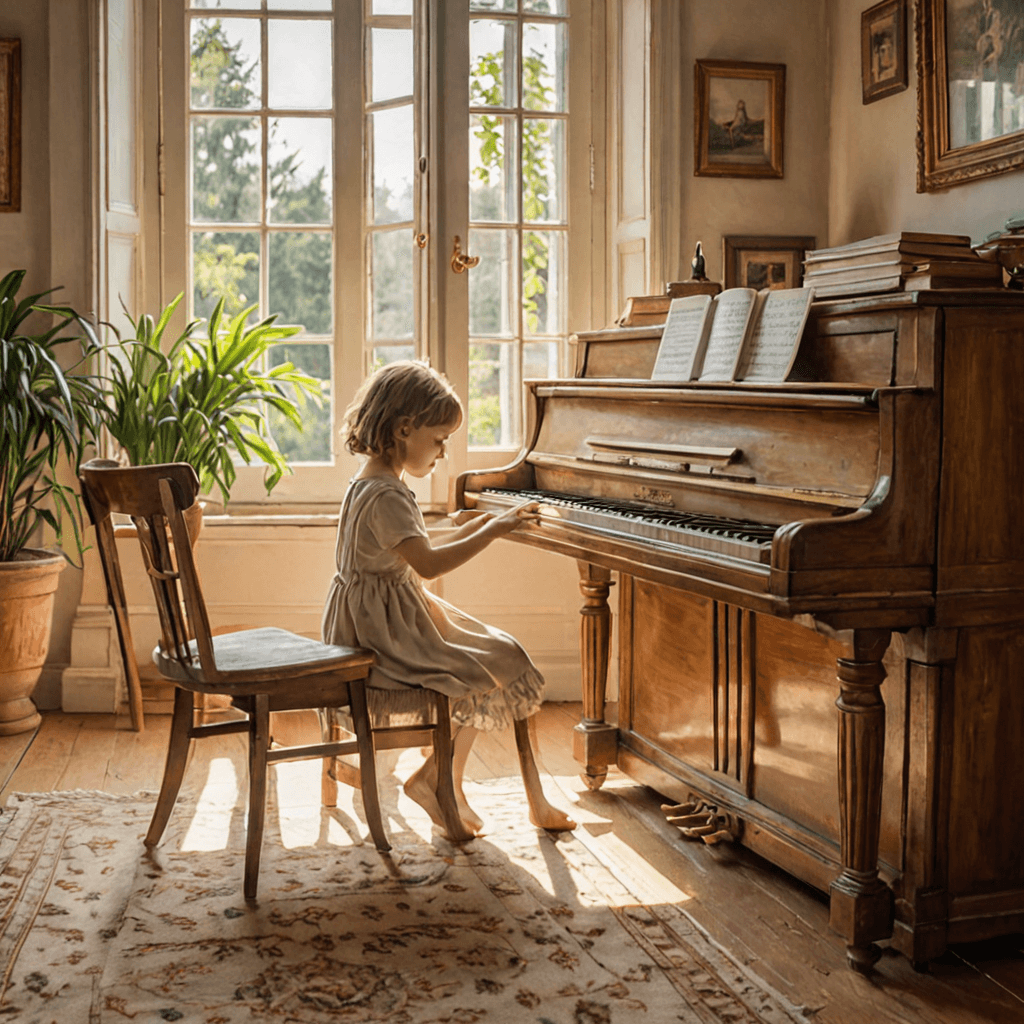
The physical placement of the piano in the home is one of the most underrated variables in practice success. A piano in a basement, alone, in a cold room, with no one else around will be practised less. A piano in a busy household corner, in a room where life is happening, where the child can hear the family while they play, will be practised more.
The right setup for most Etobicoke families is:
Visible. The piano should be somewhere the child sees it regularly — passing it on the way to the kitchen, walking by it after school. Out of sight, out of mind is genuinely true for young children.
Audible to others. Most children, especially in the early stages, actually like being heard. Practising alone in a closed room is isolating. Practising in a living room where a parent is cooking dinner nearby, occasionally calling out something supportive, feels social — and social practice happens more reliably than private practice.
Well-lit and comfortable. A practice space that is cold, dim, or uncomfortable will be avoided. The piano should sit in a space the child wants to be in.
Bench at the right height. This matters more than parents realise. A child whose feet dangle uncomfortably or whose wrists are at the wrong angle will not enjoy practice. Adjustable benches solve this — and most piano teachers will recommend specific bench heights for specific student heights.
For families weighing whether to buy an upright acoustic piano or a digital keyboard, the answer depends on the child’s level and the household. A quality digital keyboard with weighted keys is an entirely valid starting instrument for the first one to three years of lessons. By the time a student reaches RCM Level 3 or 4, an acoustic instrument generally becomes worth the investment — but pushing for one at the start can delay starting altogether, which is the worst outcome.
The Weekly Schedule: How Working Etobicoke Parents Actually Make It Work
Most parents in Etobicoke, Toronto, and Mississauga are working parents, often with multiple children and complex weekly schedules. The good news is that piano practice doesn’t require large blocks of time. The bad news is that it requires consistent small blocks, which is sometimes harder to organise than one big one.
A schedule that consistently works for elementary-aged students looks something like this:
Monday through Friday: A 15 to 20-minute practice session immediately after school snack, before homework, or right after dinner. Pick one slot and stick with it. The specific time matters less than the consistency.
Saturday morning: Slightly longer session — 25 to 30 minutes — when the household is more relaxed. This is often when the most enjoyable practice happens.
Sunday: Either a short session or a day off. Days off are fine and often helpful; what matters is that the rest of the week stays consistent.
For families enrolled in piano lessons in Etobicoke at Muzart, the lesson itself becomes the anchor point of the week. Many families find that practice happens most reliably on the two or three days closest to the lesson — the day after (to consolidate what was learned) and the two days before (to prepare what’s coming).
The Parent’s Role in the First 8 Weeks
For the first eight weeks of lessons specifically, the parent’s role is more active than it will be later. This isn’t because young children can’t practise alone — it’s because the routine itself doesn’t exist yet, and routines have to be built before they run on their own.
During this window, helpful parental behaviour looks like:
Reminding without nagging. “It’s 5:15, time for piano” — said the same way you’d say “time for homework.” Calm, factual, scheduled.
Sitting nearby. Not correcting technique — that’s the teacher’s job — but being in the room, occasionally listening, occasionally commenting on something the child played well. Presence matters more than feedback.
Asking what’s being practised. “What did your teacher want you to work on this week?” Once a week is enough. This builds the child’s awareness that practice has goals.
Celebrating finished pieces. When a child finishes learning a piece, asking them to play it for another family member or for grandparents on a video call. Performance — even small, low-stakes performance — compounds motivation enormously.
What parents should not do during this window: correct fingering, demand specific repetitions, hover over the music with critical comments, or compare practice quality to other children. The role is supportive scaffolding, not co-teaching.
When (and How) to Step Back
By around month three or four, most children have a routine. They sit down at the scheduled time without prompting half the time, and grudgingly the other half. This is the right moment to start stepping back.
Stepping back doesn’t mean disengaging. It means reducing the active scaffolding while keeping the structural enforcement. The set practice time stays. The expectation stays. But the parent moves from “sitting in the room” to “in the next room, listening.” Eventually, to “elsewhere in the house entirely.” By the end of year one, most students practise independently and only check in occasionally.
For Etobicoke families considering Muzart’s monthly piano program — $155 per month for weekly lessons with all curriculum materials included — the continuity of monthly enrolment is part of what makes the home routine sustainable. Practice habits take six to eight weeks to set, and the ongoing weekly lesson is the structural anchor that holds them in place.
Frequently Asked Questions
How long should my child practise piano per day?
For beginners aged 5 to 8: 10 to 15 minutes per session, 4 to 5 days a week. For ages 9 to 12: 20 to 25 minutes per session, 5 days a week. For teenagers preparing for RCM exams: 30 to 45 minutes per day. Frequency matters more than duration, especially in the early years.
Should I sit with my child during piano practice?
For the first 8 weeks of lessons, yes. After that, transition gradually to being in the next room, then elsewhere in the house. Your job during practice is presence and structural support, not technique correction.
What if my child refuses to practise?
Refusal usually means the routine isn’t established yet, or has been allowed to lapse. The fix is almost always to return to a fixed practice time, treat it the way you’d treat homework, and stop framing it as something the child should want to do on their own. The desire to practise comes from the progress that practice produces — not the other way around.
Is a digital keyboard okay, or do we need an acoustic piano?
A quality digital keyboard with fully weighted 88 keys is entirely sufficient for the first one to three years of lessons. Past RCM Level 3 or 4, an acoustic instrument becomes meaningful — but waiting to enrol until you can afford an acoustic piano is a worse outcome than starting on a digital. Start with what you have.
How do I tell if practice is going well or poorly?
The clearest signal is whether the routine is happening regularly, not whether each individual session sounds good. Most practice sounds messy — that’s what learning sounds like. The wrong signal to track is mood; the right signal to track is consistency. Five mediocre 15-minute sessions in a week beat one excellent 60-minute session.
What if we live in a small Etobicoke condo — can the piano still be practised?
Yes. Most condos in Etobicoke and Toronto accommodate piano practice during reasonable hours. Digital keyboards with headphones solve any remaining noise concerns. The bigger issue is usually placement — even in a small space, the piano should be in a room where life happens, not in a corner the family rarely uses.
The home setup matters as much as the lessons themselves. If you’d like to talk through what a sustainable practice routine could look like for your family, request more information or book a $35 trial lesson at our Etobicoke studio near Cloverdale Mall. The setup decisions made in the first month tend to shape the next several years.