
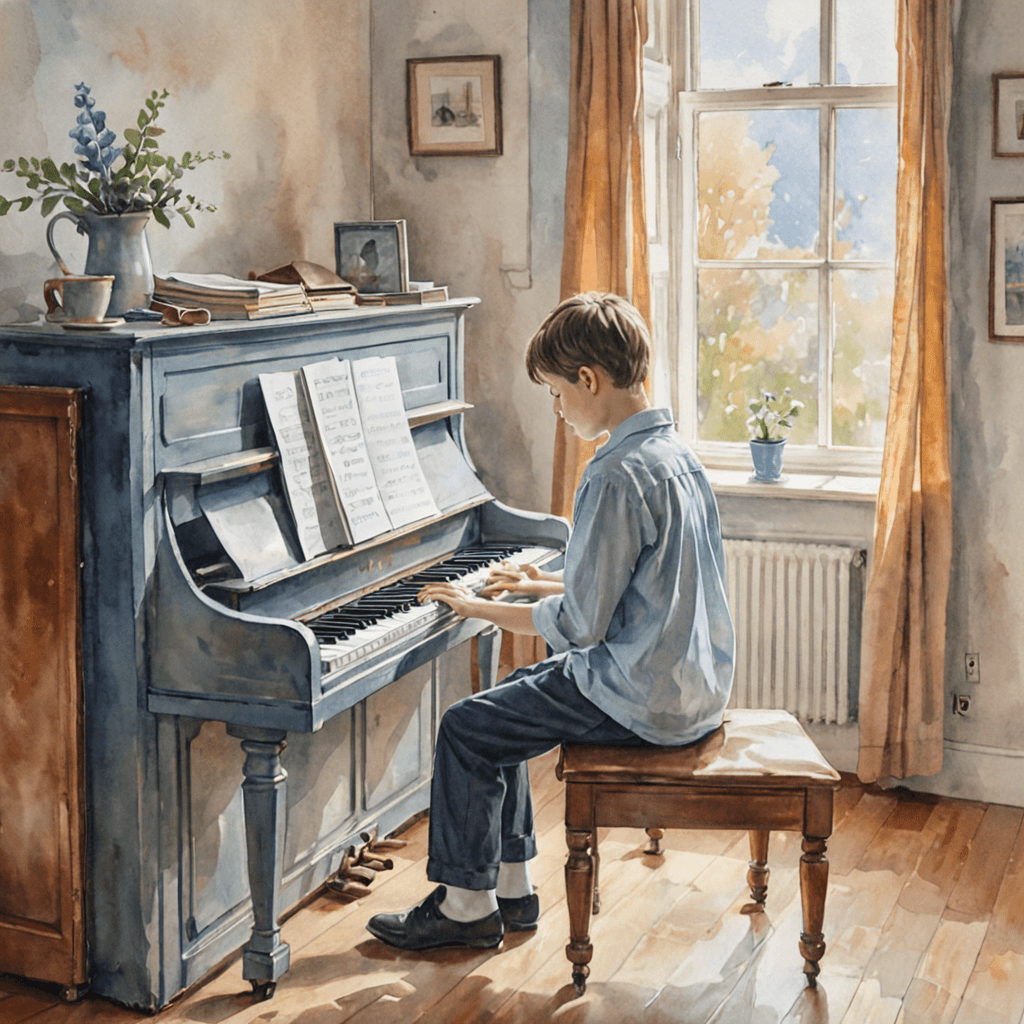
Piano Lessons in Etobicoke vs Online: What Works for Kids
Table of Contents
Online piano lessons exploded in availability over the past few years, and for busy Etobicoke families the appeal is obvious — no commute, flexible scheduling, often a lower price. But “convenient” and “effective” aren’t the same thing, especially for children. Below, we lay out where online lessons genuinely work, where they quietly fall short for young learners, and the hidden variables that determine which format will actually serve your child best. The honest answer isn’t that one is universally better — it’s that they’re better for different children and different stages.
The Real Trade-Off Isn’t Convenience vs Quality
Let’s start by being fair to online lessons, because they aren’t a scam or a downgrade by default. For a self-motivated teenager or an adult learner, online piano lessons can work well. Older students can follow verbal instruction, position their own hands correctly, manage their own practice, and articulate what they’re struggling with. For these learners, the convenience is a real win with little cost.
The picture changes for young children, and it changes for specific, concrete reasons — not vague ones. The difference isn’t about screen quality or internet speed. It’s about the things a teacher does in the room that a camera can’t replicate, especially in the early years when physical habits are being formed.
What an In-Person Teacher Catches That a Screen Can’t
The single biggest advantage of in-person lessons for young children is the teacher’s ability to see and adjust the body directly. Piano is physical: hand shape, wrist height, finger curvature, posture, and the weight transferred into each key all matter enormously, and all of them are hard to assess accurately through a webcam.
In a room, a teacher notices a collapsing wrist or a flattening finger instantly and can gently reposition the child’s hand. Over a screen, those details are often invisible — the camera angle hides the hands, the child’s framing drifts, and small problems compound for weeks before anyone catches them. With young children, who can’t reliably self-diagnose or describe what their hands are doing, this is a serious limitation.
There’s a hidden variable here that deserves naming directly. In our experience teaching beginners, the most damaging technique problems develop quietly at home — and they’re often masked when a child practises on a light, unweighted keyboard. On a keyboard with no key resistance, a child barely has to do anything to make a sound, so weak finger and hand muscles never get challenged and the gaps stay invisible. We typically see this surface around the six-month mark: the student suddenly can’t manage staccato, dynamics, or faster passages on a real piano because the muscles were never built. An in-person teacher catches the developing problem early because they can feel and see what’s happening; an online setup, especially paired with an unweighted home keyboard, can let it run undetected for months. The format and the home instrument are linked variables, and for young children both lean toward in-person.
Attention, Engagement, and the Younger Child
Beyond technique, there’s the simple matter of attention. Young children are physically present in a way screens struggle to hold. In a studio, a teacher can read a child’s focus, redirect a wandering mind, use the physical instrument hands-on, and maintain the kind of engaged back-and-forth that keeps a six- or eight-year-old learning. Online, attention frays faster, distractions at home multiply, and the teacher loses many of the tools they’d use to re-engage a child in person.
This doesn’t mean every child needs in-person lessons forever. It means that for the foundational years — when habits, technique, and a love of the instrument are all being established — the in-person setting gives young children meaningful advantages. Our piano lessons in Etobicoke are built around that hands-on, in-room teaching precisely because it’s what serves children best during the years that matter most for technique.
When Online Lessons Make Sense
To be balanced: there are situations where online lessons are a reasonable choice. A motivated teen with solid fundamentals already in place can often continue well online. An adult learner who can self-manage may prefer the convenience. A family in a genuinely remote area, or one juggling impossible logistics, may find online lessons far better than no lessons at all. And online can work as a supplement — an occasional remote lesson when in-person isn’t possible that week.
The key is to be honest about which category your child falls into. A self-directed fifteen-year-old and a wiggly seven-year-old beginner are completely different cases, and the format that suits one may shortchange the other.
The Setup That Actually Works
If you do choose in-person lessons for your young child, pair them with the right instrument at home — a weighted digital piano or an acoustic piano, not a light unweighted keyboard — so practice and lessons train the same muscles. And if you’re leaning toward online for an older, more independent learner, the same instrument advice applies even more strongly, because there’s no teacher in the room to catch a developing problem.
Whichever direction you’re considering, the easiest way to decide is to experience an in-person lesson first and compare. A trial lesson at Muzart Music and Art School is $35, and it lets you see how your child responds to hands-on teaching before committing to any format. Ongoing private piano lessons run $155 monthly with all materials included. You can book a trial lesson or request more information to talk through what’s right for your child’s age and stage.
Frequently Asked Questions
Are online piano lessons effective for young children?
They can work in a pinch, but for young beginners in-person lessons offer real advantages, because a teacher in the room can see and adjust hand shape, wrist position, and posture directly — things that are hard to assess through a webcam. Online lessons tend to suit self-directed teens and adults far better than young children forming their first habits.
What’s the main downside of online lessons for kids?
The teacher can’t physically see or correct the body as well, and developing technique problems can go undetected for weeks — especially if the child practises on a light, unweighted keyboard at home that masks weak technique. Young children also tend to lose focus more easily over a screen.
Is in-person worth the extra commute and cost?
For young children in their foundational years, the hands-on correction and engagement usually justify it, because that’s when technique and habits are set. For independent older students, the calculus can tip toward online convenience. It depends on the child’s age and self-direction.
Can we combine online and in-person lessons?
Yes — online can work well as an occasional supplement when in-person isn’t possible. Many families use in-person as the primary format and lean on online only for the weeks when getting to the studio isn’t feasible.
What instrument should we have at home for either format?
A weighted digital piano or an acoustic piano. Avoid light, unweighted keyboards, which don’t build proper finger and hand strength and can hide developing technique problems — a risk that’s even greater with online lessons, where no teacher is in the room to catch it.
The right format depends on your child, not on which option is trendiest. If you’d like to see how your child responds to hands-on teaching before deciding, book a trial lesson and compare for yourself.