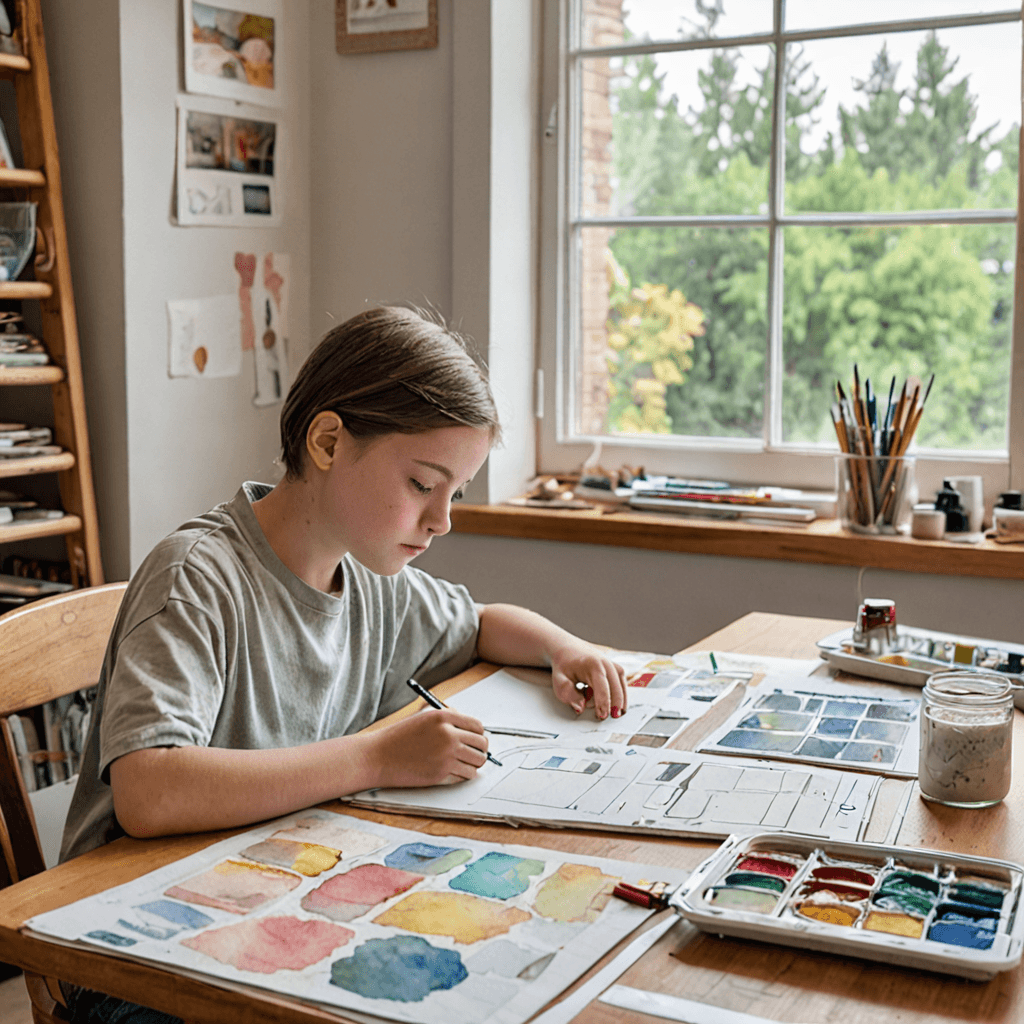
Category: Articles

  • The Role of Art in Child Development: More Than Just Creativity

    The Role of Art in Child Development: More Than Just Creativity

    The Role of Art in Child Development: More Than Just Creativity

    When parents enroll children in art classes, they often think primarily about fostering creativity or giving their child a fun activity. While these benefits are real and valuable, art education contributes far more to child development than most parents realize. The cognitive, emotional, physical, and social impacts of regular art practice extend into every area of a child’s life.

    At Muzart Music & Art School in Etobicoke, we’ve observed these developmental benefits across hundreds of students over years of instruction. Children who consistently engage with art lessons demonstrate improvements not just in artistic skill but in academic performance, emotional regulation, social competence, and physical coordination.

    Understanding art’s broader developmental role helps parents appreciate the true value of art education. It’s not frivolous or purely recreational—it’s fundamental to healthy child development, building capabilities that support success in school, careers, and life.

    For families near Cloverdale Mall considering art education for children, this deeper understanding reveals why art deserves a place in every child’s development, regardless of whether they show exceptional talent or pursue art professionally. The benefits are universal, substantial, and supported by extensive research.

    Cognitive Development: How Art Makes Children Smarter

    Art education strengthens cognitive functions in ways that transfer directly to academic performance and problem-solving across all domains.

    Visual-Spatial Intelligence

    Creating art requires understanding spatial relationships—how objects relate to each other in space, how perspective changes with viewpoint, how two-dimensional representations can convey three-dimensional reality. This visual-spatial intelligence is crucial for mathematics, particularly geometry, engineering, architecture, and many sciences.

    Children studying art regularly develop superior spatial reasoning compared to peers without art exposure. They learn to visualize objects from multiple angles, understand how pieces fit together to form wholes, and manipulate mental images—all skills that support STEM learning and everyday tasks from packing a suitcase to navigating new spaces.

    Pattern Recognition and Analysis

    Art involves recognizing and creating patterns. Whether it’s the repeating elements in a border design, the color patterns in a landscape, or the proportional relationships in a face, art constantly exercises pattern recognition abilities.

    This skill transfers directly to mathematical thinking, reading (recognizing letter and word patterns), music, and scientific analysis. Children who develop strong pattern recognition through art apply this ability across academic subjects, often showing unexpected strength in areas like algebra or coding.

    Critical Thinking and Decision-Making

    Every artistic choice requires decision-making. What color should this be? Where should this element go? Is this composition balanced? How can I solve this technical problem? Art presents constant decision points that exercise judgment and critical thinking.

    Unlike academic subjects with clear right and wrong answers, art requires evaluating multiple valid options and choosing based on aesthetic judgment, emotional impact, and technical considerations. This nuanced decision-making builds cognitive flexibility and sophisticated thinking skills.

    Creative Problem-Solving

    Art inherently involves problems—how to achieve a desired effect, how to overcome technical limitations, how to express an abstract idea visually. Children learn that problems have multiple solutions, that experimentation yields insights, and that persistence through challenges produces breakthroughs.

    These problem-solving habits transfer beautifully to academic work, career challenges, and life obstacles. Children who regularly solve artistic problems develop resilience and creative thinking that serves them in every domain.

    Memory and Concentration

    Creating art requires sustained attention and working memory—holding the overall vision while working on details, remembering what you intended to do, staying focused through multi-step processes. Regular art practice strengthens attention span and memory capacity.

    Studies show children in quality art programs demonstrate better attention control and memory performance than peers without regular art engagement. These cognitive improvements support all academic learning.

    Emotional Development: Art as Emotional Intelligence Training

    Art education contributes substantially to emotional intelligence—the ability to understand, express, and regulate emotions effectively.

    Emotional Expression and Processing

    Art provides a non-verbal outlet for emotions that children might struggle to articulate. A child feeling anxious can channel that anxiety into intense colors or chaotic compositions. A child feeling peaceful can create serene landscapes. Art becomes a language for feelings that words can’t capture.

    This emotional expression serves crucial psychological functions. It helps children process difficult experiences, communicate internal states, and develop self-awareness about their emotional landscape. Children who regularly express emotions through art often show better emotional regulation and mental health.

    Building Resilience Through Mistakes

    Art teaches that mistakes aren’t failures—they’re part of the creative process. A “wrong” color choice can lead to unexpected beauty. A “messed up” section can be painted over or incorporated into the final piece. Art normalizes revision, experimentation, and acceptance of imperfection.

    This psychological flexibility builds resilience. Children learn that setbacks are temporary, that problems have solutions, and that persistence yields results. These lessons transfer to handling academic challenges, social disappointments, and life obstacles.

    Self-Esteem Through Achievement

    As children develop artistic skills and complete projects they’re proud of, their self-esteem grows. They have tangible evidence of their capabilities—artwork they’ve created that demonstrates their improving skills. This concrete achievement builds confidence in ways that abstract praise cannot.

    Importantly, art builds self-esteem through genuine accomplishment rather than empty flattery. Children recognize when they’ve improved, when they’ve solved a difficult technical challenge, or when they’ve created something beautiful. This authentic pride in real achievement creates lasting confidence.

    Patience and Delayed Gratification

    Artistic projects take time. A painting develops through multiple sessions. A careful drawing requires hours of focused work. Children learn that worthwhile accomplishments require sustained effort and that immediate gratification isn’t always possible or desirable.

    This capacity for delayed gratification—working toward long-term goals rather than seeking instant rewards—predicts success in academics, career, and life satisfaction. Art provides natural practice in patience and sustained effort.

    Stress Reduction and Mental Health

    The act of creating art reduces stress hormones and induces relaxed, focused mental states similar to meditation. Children absorbed in drawing or painting enter “flow” states where anxiety recedes and mental chatter quiets.

    For children facing academic pressure, social challenges, or family stress, art provides essential emotional relief. Our art lessons in Etobicoke create supportive spaces where children can decompress while developing skills.

    Physical Development: Fine Motor Skills and Coordination

    Art education contributes significantly to physical development, particularly fine motor control and hand-eye coordination essential for many daily tasks.

    Fine Motor Skill Development

    Controlling a pencil to create precise lines, manipulating a paintbrush to achieve desired strokes, cutting intricate shapes with scissors—these artistic activities build fine motor skills that support handwriting, typing, using tools, and countless other activities requiring hand dexterity.

    Young children (ages 5-7) especially benefit from art’s motor skill development. The same muscles and neural pathways used in drawing support learning to write letters and numbers. Children with strong fine motor skills from art often find handwriting easier and develop neater writing.

    Hand-Eye Coordination

    Creating art requires continuous coordination between what eyes see and what hands do. Drawing an object requires looking at it repeatedly while the hand translates that visual information into marks on paper. This constant feedback loop strengthens neural connections between visual processing and motor control.

    Enhanced hand-eye coordination benefits sports performance, playing musical instruments, learning to drive eventually, and many career skills from surgery to mechanics.

    Bilateral Coordination

    Many art activities require both hands working together—one hand holds paper while the other draws, one hand holds clay while the other shapes it. This bilateral coordination (using both sides of the body together) supports neural integration between brain hemispheres and builds coordination for complex activities.

    Spatial Awareness and Body Control

    Creating large-scale artwork requires understanding how one’s body moves through space. Painting at an easel involves reaching, maintaining balance, and controlling body position. These activities build spatial awareness and body control that support all physical activities.

    Strength and Endurance

    While not vigorous exercise, art does build specific physical capabilities. Hand and finger strength improve through gripping tools, applying pressure, and manipulating materials. Arm strength and shoulder stability develop through sustained reaching and controlled movements. These physical developments support all activities requiring manual dexterity.

    Social Development: Art as Social-Emotional Learning

    Art education in group settings particularly supports social skill development and understanding of diverse perspectives.

    Learning to Give and Receive Feedback

    In group art classes, children learn to give constructive feedback to peers and receive criticism of their own work without defensiveness. These skills—acknowledging what works well, suggesting improvements respectfully, accepting others’ perspectives on your work—are essential social competencies.

    Children learn that feedback aims to help rather than hurt, that multiple viewpoints provide valuable insights, and that criticism of work isn’t criticism of the person. These lessons apply to all collaborative endeavors throughout life.

    Appreciating Diverse Perspectives

    When classmates approach the same art project differently—using different colors, compositions, or styles—children learn that multiple valid approaches exist to any challenge. This appreciation for diversity of thought and expression builds tolerance and open-mindedness.

    Art teaches that difference isn’t wrong—it’s enriching. The child who draws realistically isn’t “better” than the one who draws abstractly; they’re just different. This lesson transfers to accepting diverse personalities, cultures, opinions, and approaches in all areas of life.

    Collaborative Skill Building

    Group art projects require cooperation, communication, compromise, and shared problem-solving. Children learn to negotiate shared vision, divide responsibilities fairly, support each other through challenges, and celebrate collective success.

    These collaborative skills are increasingly valuable in school and career contexts that emphasize teamwork. Children who develop collaboration skills through art carry them into group academic projects, sports teams, and eventually workplace teams.

    Building Community and Belonging

    Art classes create communities of young artists who share interests and support each other’s creative growth. This sense of belonging contributes enormously to children’s well-being, particularly for those who don’t fit typical social groups or struggle with traditional academic subjects.

    Finding “their people” through art gives children confidence, reduces isolation, and provides social networks that often extend beyond class time into meaningful friendships.

    Developing Empathy

    Creating art often involves considering others’ perspectives—what will viewers see in this piece? How might this color combination affect people emotionally? What story does this artwork tell? This perspective-taking builds empathy and social awareness.

    Additionally, studying art by diverse artists from various cultures and time periods expands children’s understanding of human experience across differences. Art becomes a window into lives unlike their own, building empathy and cultural awareness.

    Academic Performance: The Surprising Connection

    Perhaps most surprising to parents focused on academic success, art education actually improves performance in core academic subjects.

    Mathematics Achievement

    The spatial reasoning, pattern recognition, and geometric understanding developed through art transfer directly to mathematics learning. Studies consistently show that children with regular art education perform better in math, particularly geometry, spatial reasoning, and visual problem-solving.

    Art provides concrete, hands-on experience with mathematical concepts like symmetry, proportion, ratio, and geometric shapes. These tactile experiences build intuitive mathematical understanding that supports abstract mathematical thinking later.

    Reading and Language Development

    Art education strengthens symbol recognition and sequencing—skills fundamental to reading. Understanding that marks on paper represent meaning translates directly to understanding that letters represent sounds and words represent ideas.

    Additionally, discussing artwork builds vocabulary as children learn descriptive language for colors, textures, emotions, and artistic choices. Creating visual narratives (telling stories through sequential images) supports understanding story structure and sequencing in reading.

    Science and Observation Skills

    Art training teaches careful observation—looking closely, noticing details, seeing relationships. These observational skills are essential for scientific inquiry. The child trained to notice subtle color variations or small proportion errors becomes the student who notices patterns in scientific data.

    Additionally, understanding how light, color, and materials work in art provides intuitive physics and chemistry understanding. Children experimenting with color mixing learn about primary colors and additive/subtractive color theory—chemistry concepts through artistic exploration.

    Writing and Communication

    Creating visual art and discussing it builds communication skills that transfer to writing. Children learn to organize ideas, revise and refine their work, consider audience perspective, and express complex thoughts—all skills essential for effective writing.

    Many successful writers credit art experience with teaching them about composition, pacing, and the importance of showing rather than telling.

    The Lifelong Benefits Beyond Childhood

    The developmental benefits of art education extend far beyond childhood, shaping successful, well-rounded adults.

    Career Preparation for Creative Economy

    The modern economy increasingly values creativity, problem-solving, innovation, and ability to think outside conventional boundaries. These capabilities—developed through art education—matter across industries, not just for professional artists.

    Engineers need creativity to design solutions. Business leaders need innovation to stay competitive. Teachers need creativity to engage students. Nearly every career benefits from the creative thinking and problem-solving skills art education develops.

    Stress Management and Mental Health

    Adults who engaged with art as children often maintain artistic practices for stress relief and mental health management. The capacity to use creative expression for emotional processing and stress reduction serves people throughout life.

    Even those who don’t continue creating art often retain the mental flexibility, emotional intelligence, and coping strategies developed through childhood art education.

    Aesthetic Awareness and Quality of Life

    Art education develops aesthetic awareness—appreciation for beauty, design, and visual harmony. This awareness enhances quality of life through more thoughtful home environments, better personal presentation, and greater appreciation for beauty in daily life.

    Adults with art education tend to create more intentional, aesthetically pleasing living spaces, make more thoughtful design choices, and find more beauty in everyday experiences.

    Continued Learning and Adaptability

    Perhaps most valuable, art teaches that learning continues throughout life, that skills develop through practice, and that challenges can be overcome. These metacognitive skills—understanding how one learns and grows—support continued development and adaptation throughout adulthood.

    Supporting Your Child’s Developmental Growth Through Art

    Understanding art’s developmental benefits helps parents support their children’s growth effectively.

    Choosing Quality Art Education

    Not all art programs provide equal developmental benefits. Quality programs like our group art classes and private art lessons feature experienced instructors, age-appropriate curriculum, balance between technique and creativity, and emphasis on process alongside product.

    Look for programs that teach actual skills rather than just free play, provide constructive feedback and guidance, expose children to diverse artistic mediums and styles, and create supportive, encouraging environments where mistakes are learning opportunities.

    Consistency Matters

    Like any developmental influence, art’s benefits accumulate with consistent engagement. Weekly classes over months and years produce far greater impact than sporadic exposure. The neural pathways strengthened, skills developed, and habits formed require repetition and time.

    When you invest in our art programs, you’re investing in ongoing developmental support, not just individual class experiences. The cumulative effect of regular art practice shapes brain development, emotional capabilities, and physical skills in lasting ways.

    Supporting Without Pressuring

    Children benefit from parental interest and support but suffer from excessive pressure or criticism. Celebrate your child’s effort and creative choices without imposing your aesthetic preferences or comparing their work to others.

    Let art remain a space for exploration and personal expression rather than another arena for achievement pressure. The developmental benefits flourish when children feel free to experiment, take risks, and develop their own artistic voice.

    Extending Learning at Home

    Support your child’s artistic development by providing quality art supplies for home exploration, displaying their artwork proudly, visiting museums and galleries together, discussing art and beauty in everyday life, and modeling your own creative pursuits (even if you’re not artistic—trying matters more than skill).

    These extensions of formal art education reinforce lessons learned and demonstrate that art holds value in your family’s life.

    Frequently Asked Questions About Art and Child Development

    Can art really improve my child’s math and reading scores?

    Yes, research consistently demonstrates this connection, though art isn’t a magic bullet that instantly raises scores. Art develops underlying cognitive skills—spatial reasoning, pattern recognition, symbol understanding, attention control—that support academic learning across subjects. Children with regular art education (particularly multi-year engagement) show measurably better academic performance compared to similar peers without art exposure. The benefits appear most strongly in visual-spatial subjects like geometry but extend to reading comprehension and general academic achievement. That said, art shouldn’t be justified solely by academic benefits—its intrinsic value and broader developmental contributions matter equally. Think of academic improvement as a beneficial side effect rather than the primary purpose.

    My child isn’t particularly artistic or talented. Will they still benefit from art classes?

    Absolutely—art’s developmental benefits apply to all children regardless of natural talent or artistic inclination. The cognitive, emotional, physical, and social benefits discussed happen through the process of creating art, not through producing exceptional artwork. A child struggling with drawing still develops fine motor skills, problem-solving abilities, and emotional expression through artistic engagement. In fact, children without natural artistic talent often benefit more from structured instruction than naturally gifted children who might progress without formal teaching. Our art lessons in Etobicoke are designed for all skill levels, ensuring every child receives appropriate challenge and support for their developmental needs regardless of artistic aptitude.

    At what age should children start formal art classes for developmental benefits?

    Most children benefit from structured art classes starting around age 5-6 when they have sufficient fine motor control and attention span to follow basic instruction. Before this age, unstructured creative play and art exploration at home provide appropriate development. Between ages 5-12, children experience optimal developmental windows for many skills art education supports—fine motor development, emotional vocabulary building, cognitive flexibility, and social skill development. Starting art education during these years maximizes developmental impact. That said, children starting art classes at any age receive benefits—there’s no expiration date on art’s developmental contributions. Older children and even adults experience cognitive, emotional, and social benefits from art engagement.

    How often should my child take art classes to see developmental benefits?

    Weekly classes provide optimal balance between consistency and practicality for most children. One well-structured class per week, combined with occasional art exploration at home, delivers substantial developmental benefits without overwhelming schedules or budgets. More frequent classes (2-3 times weekly) accelerate skill development and deepen benefits for children with serious artistic interests or goals like portfolio preparation. Less frequent classes (bi-weekly or monthly) provide some benefits but lack the consistency needed for optimal developmental impact—the spacing between sessions interrupts momentum and skill building. Our standard programs assume weekly attendance, which research and experience show provides the sweet spot between effectiveness and sustainability.

    Will art classes help my shy or anxious child with emotional development?

    Yes, art often particularly benefits shy, anxious, or emotionally sensitive children. Art provides non-verbal emotional expression, reducing pressure that verbal communication creates for some children. The focused, absorbing nature of creating art induces calming mental states that reduce anxiety. In group classes, the shared artistic focus provides easier social connection than purely social settings—children connect through creating alongside each other rather than forced interaction. Success in art builds confidence that generalizes to other areas. Many shy children who initially struggle in group art classes gradually become more comfortable, using art as a bridge to social connection. For particularly anxious children, private lessons provide developmental benefits without social stress, allowing them to build confidence before potential group participation.

    The Essential Role of Art in Raising Well-Rounded Children

    Art education isn’t a luxury or frivolous activity—it’s essential to healthy child development. The cognitive, emotional, physical, and social benefits of regular art engagement shape children into capable, confident, creative adults equipped for success in our complex, rapidly changing world.

    At Muzart Music & Art School in Etobicoke near Cloverdale Mall, we’ve witnessed these developmental transformations across hundreds of students. The child who enters our program struggling with fine motor control gradually develops fluid, controlled artistic capabilities. The anxious child finds peace and confidence through creative expression. The academically struggling child discovers unexpected strengths and problem-solving abilities.

    These changes aren’t magical—they’re the natural result of providing children with consistent, quality art education that exercises their developing brains, hearts, hands, and social capabilities. Every class session contributes to this ongoing development, building skills and capacities that serve children throughout their lives.

    Whether your child shows exceptional artistic talent or simply enjoys creative activities, whether they dream of art careers or pursue art alongside other interests, art education provides irreplaceable developmental benefits. The question isn’t whether art matters for child development—research and experience answer that definitively. The question is simply when and how you’ll incorporate quality art education into your child’s life.

    Book a trial art class today and begin supporting your child’s comprehensive development through art. Our age-appropriate programs provide the structured, skilled instruction that maximizes art’s developmental benefits while maintaining the joy and creativity that make art meaningful.

    Your child’s developing brain, emotional life, physical capabilities, and social skills will all benefit from this investment. Beyond learning to draw, paint, and create, your child will develop capabilities that support every area of their life—now and for decades to come.

  • Guitar Lesson Structure: What Happens in a 30-Minute Session?

    Guitar Lesson Structure: What Happens in a 30-Minute Session?

    Guitar Lesson Structure: What Happens in a 30-Minute Session?

    Parents considering guitar lessons for their children often wonder what actually happens during those weekly 30-minute sessions. Understanding lesson structure helps set realistic expectations, prepares children for what they’ll experience, and enables parents to support practice effectively at home.

    At Muzart Music & Art School in Etobicoke, our guitar lessons follow a carefully designed structure that maximizes learning within the time available. Every minute serves a purpose—whether building technique, learning repertoire, developing music reading skills, or preparing for performance.

    The structure isn’t rigid or identical every week. Good instructors adjust based on student progress, upcoming goals, and specific challenges. However, effective lessons generally include consistent components that work together to develop well-rounded guitarists rather than students who can only play by rote memorization.

    For parents near Cloverdale Mall exploring music education options, understanding lesson structure clarifies the value proposition. Thirty minutes might sound brief, but when used efficiently with expert instruction, it provides substantial weekly guidance that shapes hours of home practice. Let’s explore what happens during a typical guitar lesson and why each component matters.

    The Five Core Components of Effective Guitar Lessons

    While every instructor develops their own style and every student has unique needs, most effective 30-minute guitar lessons incorporate five essential components. The time allocation shifts based on student level and current focus, but all five elements play important roles.

    Warm-Up and Technical Work (5-7 minutes)

    Every lesson begins with warm-up activities that prepare hands for playing while building fundamental technique. This isn’t wasted time—it’s essential foundation work that prevents injury and builds skills supporting everything else in the lesson.

    Physical Warm-Up: Lessons typically start with simple exercises that get blood flowing to fingers and wake up hand muscles. This might include finger stretches, basic scales, or simple chord progressions the student knows well. These warm-ups are low-pressure—students aren’t learning anything new, just preparing their hands to work.

    Technical Exercises: After basic warm-up, instructors introduce or review technical exercises targeting specific skills. For beginners, this might mean practicing chord changes, working on fingerpicking patterns, or building left-hand finger strength. For advanced students, this could include scales in different positions, complex picking patterns, or difficult chord voicings.

    These technical exercises aren’t glamorous, but they’re crucial. They build the physical capabilities that allow students to play the music they want to play. Without solid technique, students hit ceilings they can’t break through.

    Review of Previous Material (7-10 minutes)

    A significant portion of each lesson involves reviewing material assigned the previous week. This review serves multiple purposes—it allows the instructor to assess how practice went, identify problems that need addressing, and reinforce learning before moving forward.

    Performance and Assessment: Students play through pieces or exercises assigned for practice. The instructor listens carefully, noting what’s improved and what needs more work. This isn’t about catching mistakes to criticize—it’s diagnostic, helping the instructor understand where the student stands and what they need next.

    Good instructors praise improvement they notice, even small progress. They also identify specific problems—a chord change that’s still awkward, a rhythm that’s not quite right, a section where the student loses confidence. This specific feedback helps students know what to focus on during the coming week.

    Problem-Solving: When review reveals persistent problems, instructors use lesson time to diagnose causes and teach solutions. Perhaps the student struggles with a chord change because their hand position is off, or they’re attempting the change at the wrong angle. The instructor demonstrates proper technique, has the student try, provides feedback, and ensures the student understands what to practice.

    This problem-solving represents enormous value. Without expert observation and guidance, students often practice mistakes repeatedly, ingraining bad habits that become harder to break later. The instructor catches these issues early and redirects practice toward correct technique.

    New Material Introduction (8-12 minutes)

    Once review is complete and any issues are addressed, the instructor introduces new material. This might be a new song, a new technique, a new chord, or advancement in music reading skills. The specific content depends on the student’s current level and goals.

    Demonstrating New Concepts: The instructor first demonstrates what the student will learn. For a new chord, they show proper finger placement and how it sounds. For a new song, they play it so the student hears the target. For a technique, they demonstrate correct execution and common mistakes to avoid.

    This demonstration is crucial. Students learn music aurally and visually before tackling it themselves. Hearing and seeing the target gives them a clear goal to work toward.

    Guided Practice: After demonstration, the student tries the new material with the instructor’s immediate feedback. For beginners learning a new chord, this might mean placing fingers one at a time with the instructor checking position before the student strums. For intermediate students learning a new song section, they might play through slowly with the instructor counting rhythm or pointing out fingering.

    This guided practice ensures students start correctly from their very first attempt. It prevents the common problem of students going home, practicing incorrectly all week, and returning having ingrained mistakes.

    Assignment and Explanation: Before moving on, the instructor clearly explains what the student should practice during the coming week. Specific practice instructions matter enormously—not just “practice this song,” but “practice measures 1-8, slowly, five times daily, focusing on smooth chord changes.”

    Clear assignments combined with understanding how to practice effectively turn lesson content into actual skill development.

    Music Reading and Theory (3-5 minutes)

    Most quality guitar lessons in Etobicoke include some music literacy work. The time allocated varies based on student level and goals, but understanding written music enhances every other aspect of guitar playing.

    Reading Practice: Students might work on reading standard notation, reading tablature, or both. Beginners start with identifying notes on the staff and finding them on the guitar. Intermediate students work on reading simple melodies or chord charts. Advanced students tackle more complex notation including rhythm, dynamics, and articulation markings.

    Theory Concepts: Instructors introduce age-appropriate music theory—understanding how chords are constructed, learning key signatures, recognizing patterns in music. This theoretical knowledge helps students understand what they’re playing rather than just memorizing finger positions.

    Theory isn’t taught for its own sake but to make practical playing easier. When students understand that a chord progression follows a predictable pattern, they learn songs faster. When they recognize scale patterns, they navigate the fretboard more confidently.

    Performance Practice and Closing (3-5 minutes)

    Lessons typically conclude with performance-focused playing—running through songs the student knows well, practicing playing for an audience (even an audience of one), and building confidence in their abilities.

    Play-Through Practice: The student plays through one or more songs they’ve learned, focusing on performance rather than stopping to fix every mistake. This practice teaches students to recover from errors and keep playing—essential performance skills.

    The instructor might record these performances so students can hear their own playing objectively. Many students are surprised to discover they sound better than they thought.

    Positive Conclusion: Good instructors end lessons positively, highlighting progress made during the session and expressing confidence in the student’s upcoming week of practice. This positive closure sends students home motivated rather than discouraged.

    The instructor also confirms what the student should practice before the next lesson, ensuring everyone has clear expectations.

    How Lesson Structure Changes by Level

    While the five core components remain consistent, how time is allocated among them shifts dramatically as students progress from beginner to advanced levels.

    Beginner Lessons (First 3-6 Months)

    Beginning guitar students need substantial time on fundamentals. Their lessons might allocate:

    • Warm-up and technique: 8-10 minutes (building proper hand position, finger strength, basic strumming)
    • Review: 5-7 minutes (limited material to review initially)
    • New material: 10-12 minutes (learning moves slowly at first)
    • Music reading: 3-5 minutes (introducing note names, basic rhythms)
    • Performance: 2-3 minutes (brief play-through of simple exercises)

    Beginners need extra time establishing correct technique and ensuring they understand new concepts before taking them home to practice. The instructor moves slowly, checks understanding frequently, and breaks concepts into small, manageable pieces.

    Intermediate Lessons (6 Months – 3 Years)

    As students develop competency, lesson structure shifts:

    • Warm-up and technique: 5-7 minutes (more efficient, targeting specific skills)
    • Review: 8-10 minutes (more material to review weekly)
    • New material: 10-12 minutes (learning faster but concepts more complex)
    • Music reading: 3-5 minutes (continuing literacy development)
    • Performance: 3-5 minutes (longer play-throughs of complete songs)

    Intermediate students accomplish more in less time because fundamentals are established. They spend less time on hand position basics and more time on musical interpretation and expression.

    Advanced Lessons (3+ Years)

    Advanced students work efficiently:

    • Warm-up and technique: 3-5 minutes (targeting very specific technical challenges)
    • Review: 10-12 minutes (substantial material, complex feedback)
    • New material: 8-10 minutes (learning quickly but tackling difficult concepts)
    • Music reading: 2-3 minutes (literacy well-established, minimal time needed)
    • Performance: 5-7 minutes (longer pieces, performance refinement)

    Advanced students might spend entire lessons preparing for specific performances, competitions, or examinations, temporarily setting aside the standard structure to focus intensively on performance readiness.

    The Role of Home Practice in Lesson Effectiveness

    Understanding lesson structure clarifies why home practice matters so much. The 30-minute weekly lesson provides guidance, feedback, and new material—but the real learning happens during the hours of practice between lessons.

    What Practice Should Look Like

    Effective practice mirrors lesson structure. Students should:

    • Warm up before practice sessions (2-3 minutes of easy material)
    • Review material they’re working on (most of practice time)
    • Work on new material slowly and carefully (building correct habits)
    • Include brief performance practice (playing through complete songs)

    When students practice this way, they come to lessons ready to demonstrate progress, receive new material, and advance steadily. When practice is haphazard or non-existent, lessons become frustrating repetition of the same material week after week.

    Recommended Practice Time

    Our instructors at Muzart recommend:

    • Beginners: 15-20 minutes daily (establishing habit and building basic skills)
    • Intermediate: 25-35 minutes daily (developing fluency and expanding repertoire)
    • Advanced: 40-60 minutes daily (refining technique and learning complex material)

    These might sound like substantial time commitments, but they represent the minimum needed for steady progress. Our $155 monthly program assumes students practice consistently between lessons—without this practice, even the best instruction can’t produce results.

    When Practice Isn’t Happening

    Sometimes students don’t practice between lessons. When instructors notice this pattern, they address it directly but constructively. They might:

    • Reduce the amount of new material assigned
    • Simplify material to make practice feel more achievable
    • Help students create practice schedules that fit their lives
    • Discuss with parents how to support practice routines

    If lack of practice continues, the instructor has an honest conversation with student and parents about whether continuing lessons makes sense at this time. Lessons without practice waste everyone’s time and money.

    Parent Involvement in Supporting Lesson Structure

    Parents play crucial roles in maximizing lesson effectiveness, even if they know nothing about guitar themselves.

    Before the Lesson

    Help your child arrive on time with all necessary materials—guitar, books, assignment sheets, pencil. Rushing in late steals valuable lesson time, and forgotten materials disrupt lesson flow.

    For younger students, review what they practiced during the week. This helps them remember what to show the instructor and demonstrates that parents value the lessons.

    During the Lesson (for Young Students)

    For children under age 8-9, parents often sit in on lessons, at least initially. This observation helps parents:

    • Understand what’s being taught
    • Learn what to reinforce during home practice
    • Support the instructor’s teaching rather than contradicting it
    • Celebrate progress they might otherwise miss

    However, parents should observe quietly without interrupting. Let the instructor teach. You can ask questions after if something was unclear.

    Older students often prefer parents wait outside. This independence is healthy and appropriate—respect your child’s need for their own relationship with their instructor.

    After the Lesson

    Review assignments with your child. What should they practice? How should they practice it? This conversation reinforces the lesson and helps ensure productive practice during the week.

    For young children, help establish practice routines. Decide when practice happens daily and hold that boundary gently but firmly.

    Supporting Without Over-Involvement

    While parental support helps, over-involvement backfires. Don’t become the guitar police, nagging constantly about practice. Don’t criticize your child’s playing—leave technical feedback to the instructor.

    Instead, show genuine interest in their progress, celebrate efforts rather than only achievements, and provide logistical support for consistent lessons and practice. This balanced approach supports learning without creating power struggles.

    What to Expect as Your Child Progresses

    Understanding how lessons and progress evolve over time helps parents stay patient through different phases of learning.

    First Month: Establishing Foundation

    The first month focuses on basics—holding the guitar correctly, fretting notes clearly, strumming in rhythm, reading simple notation. Progress feels slow because so much is new.

    Students learn a few simple songs or exercises but spend most time on fundamentals. Parents should celebrate small achievements—the first clear chord, the first song played from start to finish, the first week of consistent practice.

    Months 2-6: Building Skills

    Skills build steadily during this period. Students learn more chords, play simple songs, develop basic music reading, and improve coordination between hands. Progress becomes more visible—family members can recognize songs the student plays.

    This period requires patience. Progress happens but not always linearly. Some weeks show dramatic improvement; other weeks feel stuck. Both are normal parts of learning.

    Months 6-12: Gaining Confidence

    By the second half of year one, students gain real confidence. They have repertoire they can perform, enough technical skill to learn new songs somewhat independently, and sufficient experience to know what practice approaches work for them.

    This is often when students decide whether guitar will remain a hobby or become more serious. Those continuing show increased self-motivation and begin setting their own musical goals.

    Beyond Year One: Individual Paths

    After the first year, students follow increasingly individual paths based on their interests and goals. Some focus on specific styles—rock, classical, jazz. Others pursue music lessons more casually, learning songs they enjoy without intensive study.

    Both paths are valid. The lesson structure adapts to support whatever musical journey the student chooses.

    Frequently Asked Questions About Guitar Lesson Structure

    Is 30 minutes really enough time for an effective lesson?

    Yes, when structured efficiently. Thirty-minute lessons work well for children aged 5-12 because they match typical attention spans while providing sufficient time for all essential components. The key is weekly consistency—one focused 30-minute lesson each week produces better results than sporadic longer sessions. Think of lessons as guidance that shapes daily practice rather than the primary learning time. Advanced students or those preparing for competitions might benefit from 45-60 minute lessons, but most children through age 12 learn effectively in 30-minute sessions. When you book your $35 trial lesson at Muzart, you’ll experience how much can be accomplished in this timeframe with proper structure and expert instruction.

    What should my child bring to guitar lessons besides their guitar?

    Students should bring their guitar (obviously), method books or sheet music being used, an assignment notebook or folder with practice instructions, a pencil for marking music, a guitar pick if they use one, and a music stand if they have one portable enough. Some instructors provide materials, but it’s best to check. At our Etobicoke guitar lessons, all books and method materials are included in the $155 monthly program, so families don’t need to purchase these separately. Students should also bring a folder or bag to keep materials organized and protected. Young students might need a parent to help carry everything until they’re old enough to manage independently.

    Can parents sit in on guitar lessons, or should we wait outside?

    This depends on the child’s age and preference. For children ages 5-7, parent observation often helps—you can reinforce teaching at home, understand assignments, and support practice. Many young children feel more comfortable with a parent present initially. Children ages 8-10 vary—some want parents there, others prefer independence. Respect your child’s preference while ensuring they’re old enough to remember and communicate assignments. Students 11 and older typically prefer parents wait elsewhere, which is developmentally appropriate and healthy. Instructors usually discuss observation preferences at the first lesson. Regardless of age, parents should observe quietly without interrupting or coaching from the sidelines, which undermines the instructor-student relationship.

    How can I tell if my child is progressing appropriately?

    Appropriate progress means your child learns a few new things each month, plays songs more smoothly and confidently over time, practices with decreasing resistance and increasing independence, and shows enthusiasm about their musical accomplishments. Progress isn’t always linear—expect plateaus and even temporary regressions, especially during growth spurts or stressful school periods. Warning signs of problems include complete lack of new material over several months, visible frustration every lesson, consistent reports of not understanding assignments, or instructor repeatedly teaching identical material. If concerned, request a progress conference with the instructor to discuss your child’s development trajectory and whether adjustments might help. Most children progress at perfectly appropriate rates when receiving quality instruction and practicing consistently.

    What happens if my child doesn’t practice before a lesson?

    Good instructors handle this constructively. They might use the lesson to practice together, demonstrating and reinforcing correct technique since the student didn’t internalize it during the week. They’ll have an honest conversation about practice—not shaming but problem-solving. Occasional missed practice weeks happen to everyone; life gets busy. However, if students consistently arrive unprepared, instructors discuss with both student and parents whether continuing lessons makes sense at this time. Lessons can’t overcome complete lack of practice—without practice between lessons, students stagnate or regress, wasting everyone’s time and the family’s financial investment. Request more information if you’re concerned about establishing effective practice routines or if your child struggles with consistent practice.

    Maximizing Your Child’s Guitar Lesson Experience

    Understanding lesson structure represents just the first step. Parents can actively support their child’s musical development by respecting the lesson structure and not requesting the instructor skip warm-ups or theory to “just teach songs,” supporting consistent attendance and recognizing that missing lessons disrupts learning rhythm, and encouraging daily practice while maintaining realistic expectations about speed of progress.

    The 30-minute guitar lesson is a carefully designed learning experience. Each component serves a purpose, and removing or shortening components to focus exclusively on preferred aspects undermines the balanced skill development that creates competent, well-rounded guitarists.

    When students receive structured lessons, practice consistently, and benefit from parental support, they develop not just guitar skills but broader capabilities—discipline, goal-setting, persistence through challenges, and confidence in their ability to master complex skills. These benefits extend far beyond music into every area of life.

    Experience Structured Guitar Instruction at Muzart

    At Muzart Music & Art School in Etobicoke near Cloverdale Mall, our guitar instructors design each 30-minute lesson to maximize learning while maintaining engagement and enjoyment. We balance all essential components—technique, repertoire, music reading, problem-solving, and performance practice—to develop well-rounded young guitarists.

    Our structured approach ensures no gaps in foundation that would limit future advancement. Students build skills systematically, with each lesson connecting to previous learning while introducing appropriately challenging new material. This careful scaffolding produces steady, sustainable progress.

    Whether your child is a complete beginner or already has some guitar experience, our guitar lessons in Etobicoke provide expert instruction structured to support their individual learning needs and musical goals.

    Book your $35 trial lesson today and experience how effective lesson structure accelerates your child’s guitar development. With weekly 30-minute sessions for $155 monthly (including all books and materials), your child will receive comprehensive instruction that builds lasting musical skill and enjoyment.

    The structure of those 30 minutes matters more than you might think. Every moment serves your child’s musical growth, guided by instructors who understand both guitar pedagogy and child development. Let’s begin your child’s guitar journey with a solid foundation and clear structure that supports success.

  • Age-Appropriate Art Projects: What to Expect at Different Stages

    Age-Appropriate Art Projects: What to Expect at Different Stages

    Age-Appropriate Art Projects: What to Expect at Different Stages

    Children’s artistic development follows predictable patterns, with each age bringing new capabilities, interests, and creative expressions. Understanding what’s developmentally appropriate at different stages helps parents set realistic expectations, celebrate genuine progress, and provide art experiences that challenge without frustrating.

    At Muzart Music & Art School in Etobicoke, we’ve guided hundreds of children through their artistic development, designing age-appropriate art lessons that match children’s cognitive, motor, and creative abilities at each stage. What works beautifully for an eight-year-old may bore or overwhelm a five-year-old, and vice versa.

    When parents understand typical artistic development, they avoid the trap of comparing their child’s artwork to unrealistic standards or pushing techniques before children are ready. They also recognize genuine advancement rather than dismissing age-appropriate progress as “not good enough.” This knowledge creates realistic expectations while honoring each child’s unique creative journey.

    For parents near Cloverdale Mall considering art classes for children, this guide clarifies what kinds of projects and skills align with different developmental stages, helping you choose appropriate programs and support your child’s artistic growth effectively.

    Ages 5-6: Foundation Stage – Exploring Materials and Basic Control

    The 5-6 age range marks the beginning of formal art education for many children. At this stage, the focus centers on exploration, basic motor skills, and building comfort with art materials rather than producing refined artwork.

    Developmental Characteristics

    Five and six-year-olds are developing fine motor control but still have limited hand strength and coordination. They’re learning to hold tools correctly, control pressure, and coordinate hand movements with visual input. Their attention span typically ranges from 15-25 minutes for focused activity, and they learn best through playful exploration rather than rigid instruction.

    Cognitively, children this age think concretely and literally. Abstract concepts like perspective, shading, or symbolic representation remain challenging. They draw what they know about objects rather than what they see, which is why a house has windows you can see through from the side, and people are depicted with basic circles and lines.

    Appropriate Projects and Techniques

    At our group art classes, 5-6 year-olds work with:

    Basic drawing: Simple shapes, lines, patterns, and recognizable objects (houses, trees, families). Projects focus on controlling pencils and crayons rather than achieving realistic representation.

    Painting exploration: Finger painting, brush painting with large brushes, learning primary colors and basic mixing. The process matters more than the product—children learn how paint feels, how colors combine, and how to control the amount of paint.

    Collage and paper crafts: Cutting simple shapes, gluing, assembling basic constructions. These projects build scissor skills and spatial understanding while creating satisfying finished products.

    Textured projects: Pressing objects into clay, creating rubbings, experimenting with different materials. Tactile exploration reinforces learning and maintains engagement.

    What Success Looks Like

    At this age, success means children enjoy the creative process, willingly try new materials, follow basic instructions for 15-20 minutes, develop proper grip on tools, and begin naming or explaining their artwork (“This is my dog” or “I made a pattern”).

    Projects won’t look refined or realistic, and that’s completely appropriate. The stick figure family with disproportionate features represents normal development. The painting that’s mostly mixed into brown demonstrates healthy color exploration. Parents who understand this celebrate the process rather than critiquing the product.

    Ages 7-8: Skill Building Stage – Developing Technique and Observation

    Seven and eight-year-olds show significant advancement in fine motor control, attention span, and ability to learn specific techniques. They’re ready for more structured instruction while maintaining creativity and individual expression.

    Developmental Characteristics

    By age 7-8, children have better hand-eye coordination and finger strength. They can hold drawing tools correctly, control pressure more consistently, and work on projects for 30-40 minutes. Their cognitive development allows following multi-step instructions and understanding basic artistic concepts.

    Children this age begin noticing that their artwork doesn’t match reality and may become frustrated with this gap. They’re developing critical thinking about their work and want to improve. This motivation creates ideal conditions for learning specific techniques that bridge the gap between vision and execution.

    Appropriate Projects and Techniques

    Our art lessons in Etobicoke for 7-8 year-olds include:

    Observational drawing: Drawing from real objects, learning to see shapes within complex subjects, beginning proportion work. Projects might include still life drawings of fruit, toys, or simple objects.

    Color theory introduction: Learning primary, secondary colors, and basic mixing. Creating color wheels, experimenting with warm and cool colors, understanding how colors interact.

    Basic painting techniques: Brush control, layering colors, creating texture with paint. Projects advance beyond process exploration to creating intentional effects.

    Introduction to 3D work: Building with clay (beyond just smashing and pressing), creating coil pots, sculpting simple animals or objects. Understanding that art exists in three dimensions.

    Pattern and design: Creating repeating patterns, understanding symmetry, designing decorative works. These projects combine creativity with mathematical thinking.

    What Success Looks Like

    Success at this stage means children demonstrate improved control in their artwork, can follow multi-step project instructions, begin showing personal style preferences, understand and apply basic techniques taught, and work independently for longer periods.

    The artwork becomes more recognizable and controlled, though still distinctly childlike. That’s perfect—children should create art that reflects their age and experience, not try to mimic adult work.

    Ages 9-10: Refinement Stage – Complexity and Personal Expression

    Nine and ten-year-olds possess significantly more sophisticated motor skills, longer attention spans, and deeper cognitive capabilities. They’re ready for complex projects and can handle techniques requiring patience and precision.

    Developmental Characteristics

    Children this age have well-developed fine motor skills and can handle detailed work. Their attention span extends to 45-60 minutes on engaging projects. They think more abstractly and can understand concepts like perspective, shading, and symbolic representation.

    Significantly, 9-10 year-olds develop stronger artistic self-awareness and may become self-critical. They compare their work to others and to idealized images. This critical awareness can enhance learning when channeled positively but may create discouragement if not managed carefully.

    Appropriate Projects and Techniques

    At this level, our private art lessons and group classes incorporate:

    Realistic drawing techniques: Shading to create dimension, basic perspective, proportion study, contour drawing. Children learn to see values (light and dark) and translate them to paper.

    Advanced painting: Blending colors smoothly, creating backgrounds, understanding composition, working with different paint types (watercolor, acrylic). Projects produce more refined, complete artworks.

    Introduction to portraiture: Basic face proportions, capturing expressions, understanding that features follow patterns. This challenging subject becomes accessible with proper instruction.

    Multimedia projects: Combining different materials and techniques, creating mixed media pieces, understanding how materials interact. These projects encourage creative problem-solving.

    Perspective and spatial relationships: One-point perspective, understanding how objects appear at distances, creating depth in two-dimensional work.

    What Success Looks Like

    Success means children produce artwork showing technical skill advancement, can execute longer, more complex projects, develop recognizable personal style and preferences, give and receive constructive feedback appropriately, and show pride in their artistic improvement.

    The work begins looking genuinely impressive—not professional, but clearly skilled. Nine-year-olds studying art seriously create work that makes visitors say “Wow, you made that?”

    Ages 11-12: Specialization Stage – Advanced Skills and Portfolio Building

    Eleven and twelve-year-olds approach or reach early adolescence, bringing more mature capabilities and potentially serious artistic aspirations. Students this age who’ve studied art for several years possess substantial skill, while beginners still make rapid progress due to advanced motor skills and cognitive abilities.

    Developmental Characteristics

    Pre-teens have essentially adult-level fine motor control. They can work on detailed, precise projects for extended periods. Their abstract thinking is sophisticated enough to understand complex artistic concepts including composition, style analysis, artistic movements, and symbolic meaning.

    This age often marks a fork in the road—some students develop serious artistic interests and consider arts-focused education paths, while others participate in art more casually alongside other activities. Both paths are valid, but the instruction should match the student’s goals and commitment level.

    Appropriate Projects and Techniques

    For serious students, particularly those considering portfolio preparation, 11-12 year-olds work on:

    Advanced drawing: Figure drawing, complex still life, detailed landscapes, mastering shading techniques, understanding anatomy basics.

    Sophisticated painting: Creating complete compositions, mastering various painting styles, understanding color relationships deeply, developing personal artistic voice.

    Introduction to specialized mediums: Charcoal, pastels, ink, printmaking, digital art. Exploration of various materials helps students find their preferred mediums.

    Portfolio development: For students eyeing arts programs, creating cohesive bodies of work demonstrating range and skill. This includes self-directed projects alongside assigned work.

    Art history and analysis: Understanding artistic movements, analyzing famous works, connecting technical skills to broader artistic contexts.

    What Success Looks Like

    Success at this advanced level means students create portfolio-quality work suitable for program applications, demonstrate consistent personal artistic style, work independently on self-directed projects, understand and articulate artistic choices, and may begin considering art for post-secondary education or careers.

    The work often surprises adults with its sophistication. While still developing and learning, these young artists create genuinely impressive pieces that demonstrate serious skill and artistic thinking.

    Supporting Age-Appropriate Artistic Development

    Understanding developmental stages is only useful if parents and educators apply this knowledge to support children effectively.

    Providing Appropriate Challenges

    The ideal art project challenges children slightly beyond their current comfort level without overwhelming them. Too easy creates boredom; too difficult creates frustration and discouragement. Quality art instruction continuously calibrates this balance.

    When you enroll your child in our Etobicoke art classes, instructors assess their current skill level during trial sessions and place them with age-peers of similar ability. This grouping ensures projects match developmental readiness while providing appropriate challenge.

    Avoiding Inappropriate Expectations

    Perhaps the biggest mistake parents make is expecting artwork to look more advanced than developmentally appropriate. A six-year-old’s painting that looks “messy” by adult standards may actually demonstrate excellent exploration and color understanding for their age.

    Similarly, parents sometimes push techniques before children are ready. Teaching complex perspective to a seven-year-old creates frustration because their brain hasn’t developed the spatial reasoning required. Wait two years, and the same child grasps it quickly.

    Celebrating Process Over Product

    At every age, the creative process matters more than finished products. A five-year-old who enthusiastically explores paint mixing learns more than one who timidly follows rigid instructions. A ten-year-old who experiments with shading techniques learns more than one who traces to achieve perfect-looking results.

    Celebrate your child’s willingness to try, their problem-solving when facing challenges, their persistence when projects prove difficult, and their creative thinking. These process skills matter far more than any single finished artwork.

    Providing Rich Artistic Experiences

    Beyond formal lessons, expose children to diverse art experiences appropriate to their age. Visit art museums and galleries, discuss artwork in books or online, provide quality art supplies for home exploration, and let children see adults engaging in creative activities.

    These experiences build artistic literacy—understanding that art is valuable, diverse, and personally meaningful. This literacy supports continued artistic development regardless of whether your child pursues art seriously.

    Common Developmental Concerns

    Parents often worry when their child’s artistic development doesn’t match expectations or differs from peers. Understanding common variations helps distinguish normal differences from genuine concerns.

    “My child only draws the same thing repeatedly”

    Many children go through phases of drawing favorite subjects repeatedly—dinosaurs, princesses, sports scenes. This repetition serves learning. Each drawing refines understanding and technique. Children working through a subject thoroughly often emerge with stronger skills.

    Gentle encouragement to try new subjects helps, but forced variety usually backfires. If repetition persists concerning you, private lessons can introduce new subjects gradually within a supportive relationship.

    “My child’s art looks less advanced than classmates”

    Artistic development varies enormously among same-age children based on practice time, instruction quality, natural aptitude, and fine motor development. These variations are normal and don’t predict long-term artistic potential.

    Early advancement doesn’t guarantee later success, and early struggles don’t prevent later achievement. Consistent instruction and practice matter far more than starting point.

    “My child wants to quit art class”

    Loss of interest happens for various reasons—frustration with skill level, preference for other activities, social dynamics in class, or simply changing interests. Explore the underlying reason before accepting the decision.

    Sometimes changing class format (group to private or vice versa) renews interest. Sometimes children need breaks and return later. True artistic passion usually persists through temporary disinterest.

    How Formal Instruction Accelerates Development

    While children develop artistic skills naturally through play and exploration, formal instruction significantly accelerates this development by providing structured skill building, exposure to diverse techniques and materials, and expert feedback and guidance.

    Structured Skill Building

    Quality art programs introduce skills sequentially, building on previous learning. Children master basic techniques before advancing to complex ones. This structure prevents gaps in foundation that limit later advancement.

    Our curriculum at Muzart carefully sequences skill development to match age-appropriate capabilities while ensuring comprehensive artistic education across all mediums and techniques.

    Expert Feedback

    Instructors identify technical issues children don’t recognize themselves—grip problems that limit control, proportion errors that could become habits, or composition weaknesses that undermine otherwise good work. Correcting these early prevents frustration later.

    Positive, specific feedback also helps children recognize their genuine progress and developing strengths, building confidence and motivation to continue.

    Peer Learning

    Particularly in group art classes, children learn from observing peers tackling similar challenges. Seeing multiple approaches to projects expands creative thinking beyond individual perspective.

    The social aspect of group classes also provides motivation—children often try harder and persist longer when working alongside age-peers than when working alone.

    Frequently Asked Questions About Age-Appropriate Art Development

    Should I enroll my very talented 6-year-old in classes with older children?

    Generally, no—age-appropriate placement matters more than matching technical skill level. Even gifted young artists benefit from age-peer social interaction and developmentally appropriate instruction pacing. Advanced six-year-olds still have six-year-old attention spans, emotional regulation, and cognitive development. Rather than placing them with older students, consider private lessons where instruction can be customized to their advanced skills while maintaining age-appropriate engagement. Private instruction accelerates talented students without the social challenges of mixed-age groups. They can also participate in age-appropriate group classes for social benefits while receiving advanced private instruction.

    My 9-year-old draws constantly but refuses formal art classes. Should I push it?

    Probably not—forcing lessons on a reluctant child often backfires, creating negative associations with structured art instruction. Many successful artists are self-taught, learning through passionate personal practice. That said, explore why your child resists classes. Is it the time commitment? Social anxiety? Preference for independent work? Understanding the reason might reveal solutions—perhaps private lessons appeal more than group classes, or maybe trial classes would reveal that fears were unfounded. Alternatively, support their independent art practice with quality materials and resources, respecting that formal instruction isn’t the only path to artistic development.

    At what age should children start building art portfolios for school applications?

    Serious portfolio preparation typically begins around age 13-14 for students applying to specialized high school arts programs. However, younger students (ages 10-12) benefit from beginning portfolio-building habits—saving their best work, creating pieces on various themes, and developing range. This early collection provides foundation when serious portfolio work begins. If your child shows serious artistic interest and potential arts-program ambitions, starting portfolio guidance at age 10-11 isn’t too early. Our portfolio preparation program helps students understand requirements and begin developing appropriate work. Trial sessions for portfolio prep start at $70, with monthly programs at $310 including all materials and individualized guidance.

    Is it normal for my 8-year-old to suddenly become frustrated that their art doesn’t look “real”?

    Completely normal—around ages 7-9, children develop critical awareness that their artwork doesn’t match their mental vision or photographic reality. This cognitive shift is actually positive (it shows developing observational skills) but can create discouragement. This is often when formal instruction becomes most valuable, as teachers can provide techniques that help bridge the gap between vision and execution. Shading, proportion, and observation exercises help children’s work better match their expectations, rebuilding confidence. Without instruction during this critical period, some children abandon art altogether. If you notice this frustration in your child, consider enrolling them in art lessons where they’ll learn specific techniques that produce satisfying results.

    Should we provide expensive art supplies at home, or are basic materials sufficient?

    or home use, mid-quality materials work perfectly fine for children through age 10-12. The difference between student-grade and professional materials matters less when children are building basic skills than when creating advanced work. Invest in decent quality (not dollar-store) crayons, markers, paint, and paper, but professional-grade supplies aren’t necessary. As children advance (especially those pursuing portfolio work), quality materials become more important because they allow techniques that cheap supplies can’t achieve. In our classes at Muzart, all necessary materials are provided, including age-appropriate quality supplies, so families don’t need to purchase these separately. We include art kits as part of program fees, ensuring children work with suitable materials during instruction.

    The Developmental Journey of Young Artists

    Understanding age-appropriate artistic development transforms how parents support their children’s creative growth. Instead of comparing eight-year-old artwork to adult standards or wondering why their child isn’t producing portfolio-ready pieces at age six, parents can celebrate the genuine achievements and growth happening at each stage.

    Every age brings unique artistic capabilities and challenges. The five-year-old joyfully exploring color mixing demonstrates age-appropriate creativity as surely as the twelve-year-old working on sophisticated figure drawings demonstrates advanced skill. Both children are developing as artists—just at different points on the journey.

    At Muzart Music & Art School in Etobicoke near Cloverdale Mall, we’ve designed our art programs around these developmental stages. Our instructors understand what’s appropriate, challenging, and achievable at each age, creating lessons that meet children where they are while gently stretching their capabilities.

    Whether your child is just beginning their artistic journey or already showing advanced skills, our programs provide age-appropriate instruction that builds comprehensive artistic ability. We celebrate process as much as product, understanding that the developmental journey matters enormously.

    Book a trial art class today and see how age-appropriate instruction helps your child develop artistic skills while maintaining the joy and creativity that make art meaningful. Our experienced instructors will assess your child’s current developmental stage and create learning experiences that challenge appropriately while building confidence and capability.

    Your child’s artistic journey is unique and valuable at every stage. Let’s support it together with instruction designed for exactly where they are right now—not where you think they should be, but where they actually are, ready to grow.

  • How Long Does It Take to Learn Piano? A Parent’s Guide

    How Long Does It Take to Learn Piano? A Parent’s Guide

    How Long Does It Take to Learn Piano? A Parent’s Guide

    “How long will it take my child to learn piano?” This question ranks among the most common inquiries we receive from parents at Muzart Music & Art School in Etobicoke. It’s a natural question—parents want to understand the commitment they’re making and set realistic expectations for their child’s musical journey.

    The honest answer is more nuanced than a simple timeframe. Learning piano isn’t a destination you reach and check off your list; it’s a continuous journey of skill development and musical growth. However, children do reach identifiable milestones at relatively predictable intervals when they receive quality instruction and practice consistently.

    Understanding what “learning piano” means at different stages helps parents support their child effectively while celebrating progress along the way. At our location near Cloverdale Mall, we’ve guided hundreds of children through their piano learning journey in Etobicoke, and we’ve observed consistent patterns in how children develop as pianists.

    Let’s explore realistic timelines for piano learning, what factors influence progress, and what parents can expect at each stage of development. This understanding helps you support your child’s musical education with patience and appropriate expectations.

    Defining “Learning Piano”: What Does It Actually Mean?

    Before discussing timelines, we need to clarify what “learning piano” means, because the answer varies dramatically depending on your definition and goals.

    Different Levels of Piano Proficiency

    Basic Competency (6-12 months): At this level, children can play simple melodies with one or both hands, read basic music notation, understand fundamental rhythm, and perform easy songs recognizably. They’ve developed basic finger independence and hand position.

    Intermediate Skill (2-3 years): Students play moderately complex pieces with both hands simultaneously, read music fluently in multiple keys, understand musical expression and dynamics, and perform confidently for small audiences. They’ve developed good technique and can learn new pieces semi-independently.

    Advanced Proficiency (5-7 years): At this stage, students tackle challenging classical repertoire, demonstrate sophisticated musical interpretation, sight-read new music competently, and may pass advanced RCM examinations. They’ve developed the technical foundation for lifelong piano playing.

    Mastery (10+ years): True mastery involves performing complex works from memory, deep musical understanding, technical excellence across all styles, and potentially teaching or performing professionally.

    Most children learning piano at our Etobicoke school aim for somewhere between basic competency and advanced proficiency, developing skills that bring personal enjoyment and musical literacy without necessarily pursuing professional performance.

    Individual Goals Shape Timelines

    Your child’s specific goals dramatically affect learning timelines. A child wanting to play favorite pop songs by ear might reach satisfying competency within a year. A student preparing for competitive RCM examinations follows a structured multi-year progression. A child dreaming of classical performance careers commits to a decade or more of intensive study.

    When you book your $35 trial lesson at Muzart, we discuss your child’s interests and goals to create realistic expectations and appropriate learning paths.

    First Year Milestones: Building the Foundation

    The first year of piano study establishes fundamental skills that support all future learning. Progress during this period may feel slow to impatient parents, but this foundation is essential.

    Months 1-3: Getting Started

    In the first three months, children learn proper hand position and posture, basic music reading (notes, rhythms, clefs), finger numbers and basic technique, and simple one-hand melodies. They begin understanding how the piano works and how to produce clear, controlled sounds.

    Don’t expect your child to play recognizable songs immediately. These early months focus on building correct habits—hand shape, finger motion, sitting position—that prevent problems later. Think of it like learning proper form in sports before attempting complex plays.

    Many children feel frustrated during this stage because their hands don’t yet do what their brain wants. This is completely normal. The connection between reading music, understanding rhythm, and coordinating fingers takes time to develop.

    Months 4-6: Coordination Develops

    By months four through six, most children begin playing simple pieces with both hands together, reading basic sheet music more fluently, understanding simple time signatures and key signatures, and performing recognizable beginner songs. The coordination between hands starts clicking into place.

    This period often brings exciting breakthroughs. The child who struggled to play hands separately suddenly plays them together. Songs start sounding like actual music rather than halting note-by-note attempts. Parents see tangible progress that justifies the time and financial investment in our $155 monthly program.

    Months 7-12: Building Momentum

    In the second half of year one, children expand their repertoire significantly, develop more finger independence and dexterity, learn more complex rhythms and note patterns, and begin expressing musicality beyond just playing correct notes. They’re becoming actual pianists rather than just playing individual notes.

    By the end of year one with consistent weekly lessons and daily practice, most children can play simple arrangements of familiar songs, perform short pieces from memory, sight-read very basic music, and demonstrate proper technique in hand position and posture. They’ve established habits and knowledge that support continued growth.

    Years 2-3: Developing Real Skill

    The second and third years transform beginners into genuine intermediate pianists. Progress accelerates as the foundation built in year one supports increasingly complex learning.

    Expanding Musical Vocabulary

    During years two and three, children learn dozens of new pieces across various styles, master increasingly complex rhythms and time signatures, understand music theory concepts like scales and chords, and develop personal musical preferences and interpretation skills.

    Their repertoire expands from simple five-finger exercises to pieces that actually sound impressive to non-musicians. They begin understanding music as a language with patterns, structures, and expressive possibilities rather than just a series of notes to execute.

    Technical Development

    Technique advances significantly in this period. Children develop faster finger movement and greater independence, improve hand coordination for more complex passages, learn pedal technique (if physically ready), and build endurance to play longer pieces without fatigue.

    These technical improvements happen gradually through specific exercises, scales, and increasingly challenging repertoire. Our piano lessons in Etobicoke include systematic technical training alongside repertoire work to ensure balanced development.

    Performance Confidence

    By year three, children typically feel comfortable performing for family and friends, participate in recitals with appropriate nervousness but not terror, can recover from mistakes without completely stopping, and understand how to practice for performance rather than just lesson mastery.

    This performance confidence represents enormous growth beyond pure technical skill. The child learns to manage anxiety, present themselves publicly, and share their musical accomplishments—life skills that extend far beyond piano.

    Years 4-5: Approaching Advanced Levels

    Students who continue through years four and five enter genuinely advanced territory. Not every child reaches this level, but those who do possess substantial musical skill.

    Sophisticated Repertoire

    At this stage, students tackle classical pieces by recognized composers, play popular music arrangements with complexity, begin exploring jazz or contemporary styles if interested, and can learn new pieces relatively independently with less instructor guidance.

    The music they play sounds legitimately impressive. Non-musicians recognize the difficulty and skill involved. The student experiences the satisfaction of making genuinely beautiful music rather than just competently executing exercises.

    Musical Independence

    Perhaps more important than any single piece learned, students develop musical independence in years four and five. They can sight-read moderately complex music, figure out fingerings and interpretation choices, identify and solve their own technical problems, and practice effectively without constant parental supervision.

    This independence transforms piano from a teacher-dependent activity into a genuine personal skill. The student owns their musical ability and continues developing even outside formal lessons.

    Examination Success

    Many students pursuing RCM examination preparation reach intermediate to advanced examination levels (RCM Grades 6-8) during years four and five. These examinations validate skill development and provide structured goals that motivate continued practice.

    Passing these examinations represents substantial achievement. Students gain portable credentials for their musical ability and develop work ethic and preparation skills that benefit all academic pursuits.

    Factors That Accelerate or Slow Progress

    While the timelines above represent typical progression with weekly lessons and consistent practice, numerous factors influence how quickly individual children advance.

    Practice Consistency and Quality

    This factor trumps all others. A child practicing 20 minutes daily will progress significantly faster than a child practicing an hour weekly. Consistency matters more than total time.

    Quality matters too. Focused, deliberate practice with attention to technique produces better results than distracted playing through pieces repeatedly. As children mature, they develop better practice habits that accelerate progress.

    Starting Age

    Children starting piano at age 5-6 progress differently than those starting at 10-11, but neither timeline is inherently better. Younger starters build skills gradually over many years. Older starters often progress faster initially due to better hand size, attention span, and abstract thinking, but they may need to compress the same learning into fewer years.

    Both groups can achieve high proficiency; the path just looks different.

    Natural Aptitude and Musical Talent

    Some children naturally grasp musical concepts, have better finger coordination, or possess stronger rhythmic sense. These students progress somewhat faster, especially in early years.

    However, consistent effort matters far more than natural talent for long-term achievement. The naturally talented child who doesn’t practice will be surpassed by the average-aptitude child who practices diligently.

    Quality of Instruction

    Experienced instructors who understand child development, maintain engaging lessons, teach proper technique from day one, and build strong foundations accelerate student progress significantly compared to inadequate instruction.

    When you invest in our $155 monthly program at Muzart, you’re investing not just in lesson time but in experienced instruction that maximizes your child’s developmental trajectory.

    Instrument Quality at Home

    Children learning on broken, untuned, or poor-quality keyboards face unnecessary obstacles. A decent acoustic piano or quality digital piano with weighted keys supports proper technique development and makes practice more enjoyable.

    The instrument doesn’t need to be expensive, but it should be functional, in tune, and have full-sized weighted keys that respond to touch dynamics.

    Family Support and Environment

    Children whose families value music, attend recitals, provide encouragement without pressure, and create consistent practice routines progress faster and persist longer than children practicing in isolation without family engagement.

    This doesn’t mean parents need musical knowledge—just genuine interest and logistical support for regular practice.

    Supporting Your Child’s Piano Learning Journey

    Understanding how parents can effectively support piano learning helps children progress optimally within their individual timeline.

    Setting Realistic Expectations

    Use the timelines discussed here as general guidelines, not rigid requirements. Your child’s pace may vary based on the factors discussed. Celebrate their individual progress rather than comparing to siblings, peers, or idealized timelines.

    Remember that “slower” progress doesn’t indicate less musical potential. Some children need more time integrating concepts before showing outward advancement, then suddenly leap forward.

    Creating Effective Practice Routines

    Establish consistent daily practice times rather than sporadic long sessions. For young beginners, 15-20 minutes daily works better than hour-long weekend marathons. As children advance, practice time naturally extends.

    Make practice environment pleasant. Ensure adequate lighting, comfortable seating, and minimal distractions. Many families find that practicing at the same time daily creates helpful routines.

    Balancing Encouragement and Pressure

    Children need encouragement to persist through challenges, but excessive pressure backfires, creating anxiety and resentment toward piano. Celebrate effort and improvement rather than only praising perfection or achievement.

    If your child resists practice consistently, explore why. Are pieces too difficult? Too boring? Is something else causing stress? Our instructors at Muzart’s music programs work with families to troubleshoot motivation challenges.

    Recognizing and Celebrating Milestones

    Acknowledge progress markers: first song played hands together, first piece memorized, first recital performance, first examination passed. These celebrations validate your child’s work and build intrinsic motivation to continue.

    Progress sometimes feels invisible day-to-day but becomes obvious when comparing recordings from months or years earlier. Periodic recordings create powerful evidence of growth.

    When Progress Seems Stalled

    Every piano student experiences plateaus where progress feels stuck. Understanding this normal phenomenon prevents discouragement.

    Understanding Plateaus

    Plateaus occur when children integrate previously learned skills before visible advancement resumes. The brain consolidates complex information during these periods, even when performance doesn’t obviously improve.

    Think of plateaus like growth spurts in height—children don’t grow steadily every day but rather in spurts separated by periods of apparent stasis. Musical development works similarly.

    Working Through Challenges

    When students feel stuck, several strategies help:

    Change repertoire focus temporarily. Learning a completely different style or difficulty level provides fresh challenge and perspective.

    Revisit easier pieces. Playing music below current technical level reminds students how far they’ve actually progressed and rebuilds confidence.

    Focus on specific technical weak points. Sometimes targeted work on scales, arpeggios, or specific techniques creates breakthroughs that unlock broader progress.

    Take a short break. Occasionally, stepping back for a week or two allows the brain to consolidate learning and renews motivation.

    Knowing When to Adjust Approach

    If your child consistently struggles despite adequate practice, consider whether lessons need adjustment. Perhaps the repertoire difficulty needs modification, or the child needs temporary focus on technical foundation rather than new pieces.

    Our instructors regularly assess whether students are progressing appropriately or need pedagogical adjustments. Request more information if you have concerns about your child’s progress.

    Frequently Asked Questions About Learning Piano

    Can my child really learn piano in just a few months if we practice intensively?

    While intensive practice accelerates progress, piano learning genuinely requires years to develop meaningful skill. The physical aspects alone—finger independence, hand coordination, technique—need time for neuromuscular development that can’t be rushed regardless of practice intensity. A child practicing two hours daily will progress faster than one practicing 20 minutes daily, but they still need months and years to integrate concepts and develop fluency. Think marathon training, not cramming for a test. That said, children can play satisfying music within their first year—just not yet at advanced levels. Our $35 trial lesson at Muzart helps set realistic expectations for your child’s specific starting point and goals.

    My child is 10 years old—is it too late to start piano?

    Absolutely not! While children starting younger have more years to develop skill, older children often learn faster initially due to better focus, larger hands, and stronger abstract thinking. A motivated 10-year-old with good practice habits can reach intermediate proficiency within 2-3 years—a timeline that might take 4-5 years for a child starting at age 5. Many successful musicians started piano at age 10 or even later. The key is motivation and consistent practice rather than starting age. Age 10 also means your child can participate meaningfully in goal-setting and practice planning, potentially creating stronger intrinsic motivation than younger children who practice because parents say so.

    How much practice does my child need to make reasonable progress?

    For beginners (first year), 15-20 minutes daily provides sufficient practice for steady progress. As skills develop, practice time naturally extends—intermediate students typically practice 30-40 minutes daily, while advanced students may practice 45-60 minutes or more. Quality matters more than quantity. Twenty minutes of focused, deliberate practice produces better results than an hour of distracted playing. Our instructors at our Etobicoke piano lessons teach children effective practice techniques so their time at the piano maximizes learning. Consistency also trumps total time—daily short practices work better than weekly long sessions for building skills and habits.

    Will my child forget everything if they take a summer break from lessons?

    Students don’t completely forget skills during reasonable breaks, but they do experience some regression, especially in technical fluency and reading speed. Think of it like physical fitness—taking a month off doesn’t erase all conditioning, but returning feels harder initially. Most instructors recommend at least some summer practice even without lessons, perhaps 10-15 minutes a few times weekly playing favorite pieces. This maintenance practice prevents significant backsliding. That said, complete summer breaks occasionally benefit burned-out students by renewing motivation and interest. If your child needs a break, they’ll rebuild skills relatively quickly when resuming lessons. The $155 monthly program at Muzart can be paused and resumed to accommodate summer travel or schedule changes.

    Should my child take piano examinations like RCM, or just learn for enjoyment?

    Both approaches have merit. RCM examinations provide structured goals, skill validation, and portable credentials useful for college applications or teaching careers eventually. They create clear milestones and motivate many students effectively. However, examinations add pressure and may feel overly structured for children learning piano primarily for personal enjoyment. Many successful recreational pianists never take formal examinations but still achieve substantial skill through regular lessons and practice. The choice depends on your child’s personality, goals, and stress response. Competition-motivated children often thrive with examination goals, while others prefer more relaxed progression. Our instructors work with families to determine the best approach for each student. You can learn more about RCM examination preparation if this path interests your family.

    The Journey Matters More Than the Destination

    When parents ask “how long does it take to learn piano,” they’re usually seeking a finish line—a point where they can check “learned piano” off the list and move to the next activity. But piano learning doesn’t work that way, and that’s actually wonderful news.

    Piano provides a lifelong skill that continues developing and bringing joy for decades. The student who reaches basic proficiency in a year continues discovering new music, styles, and expressive possibilities throughout their life. The student who achieves advanced skill in five years finds that musical depth continues expanding indefinitely.

    At Muzart Music & Art School in Etobicoke near Cloverdale Mall, we’ve watched children progress from first awkward notes to sophisticated musical performances. We’ve also watched some students take longer paths, face more challenges, or progress in fits and starts—yet still develop genuine piano skill and lasting musical joy.

    Your child’s piano journey will be unique to them. It will have breakthroughs and plateaus, exciting recitals and frustrating practice sessions, moments of pride and periods of discouragement. All of this is normal, valuable, and part of developing not just as a musician but as a person who persists through challenges toward meaningful goals.

    If you’re ready to begin your child’s piano journey—or continue one already started—we invite you to experience the difference quality instruction makes. Our piano lessons in Etobicoke combine experienced teaching, comprehensive curriculum, and supportive environment to help every child reach their potential.

    Book your $35 trial lesson today and start your child’s musical journey. With weekly lessons for $155 monthly (including all books and materials), your child will build skills progressively under expert guidance. The question isn’t how long it takes to learn piano—it’s when you’ll start this rewarding journey.

  • Private vs. Group Art Classes: What’s Best for Your Child?

    Private vs. Group Art Classes: What’s Best for Your Child?

    Private vs. Group Art Classes: What’s Best for Your Child?

    Choosing the right art education format for your child can feel overwhelming. Should they learn alongside peers in a group setting, or would they thrive with one-on-one instruction? At Muzart Music & Art School in Etobicoke, we offer both options because we understand that different children have different needs, learning styles, and goals.

    The decision between private art lessons and group art classes isn’t about which format is objectively better—it’s about which format serves your child’s unique personality, developmental stage, and artistic aspirations. Some children flourish in the social energy of group classes, while others need the focused attention that private instruction provides. Many families even find that a combination of both formats offers the ideal balance.

    For parents in Etobicoke near Cloverdale Mall exploring art education options, understanding the distinct advantages of each format helps you make the best choice for your child’s creative development. Let’s examine what group and private art lessons offer, and how to determine which path will help your child thrive.

    Understanding Group Art Classes

    Group art classes typically include 6-10 children of similar ages working together under the guidance of a qualified art instructor. At Muzart, our group classes are structured to balance individual creative expression with the social dynamics that make group learning special.

    The Social Learning Environment

    One of the most powerful aspects of group art classes is the social dimension. Children don’t just learn from their instructor—they learn from observing peers, sharing ideas, and experiencing art as a communal activity. This mirrors how artists have learned throughout history, working in studios alongside other artists, exchanging techniques and inspiration.

    In group settings, children see multiple approaches to the same project. When one child solves a composition problem creatively, others observe and absorb that problem-solving strategy. This exposure to diverse perspectives expands children’s creative thinking beyond what they might discover working alone.

    The social environment also provides natural motivation. Children often push themselves harder when working alongside peers, wanting to contribute meaningfully to the group dynamic. This gentle peer pressure (in the positive sense) can inspire children to attempt techniques or projects they might avoid in isolation.

    Structured Curriculum with Shared Projects

    Our group art classes in Etobicoke follow a carefully designed curriculum that introduces new concepts, techniques, and mediums systematically. Each session has a specific focus—perhaps watercolor techniques one week, perspective drawing the next, or sculpture with clay after that.

    Group projects provide structure that many children need, especially those who feel overwhelmed by blank canvas syndrome. When the instructor demonstrates a technique and the whole group follows along, children have clear direction while still exercising creative choice in how they interpret the lesson.

    This structured approach ensures comprehensive artistic education. Rather than focusing exclusively on subjects that naturally interest them, children explore a full range of artistic disciplines, discovering unexpected passions along the way.

    Cost-Effectiveness

    Group art classes represent excellent value for families seeking quality art education. Because instruction is shared among multiple students, the per-student cost is lower than private lessons while still providing professional instruction and all necessary materials.

    For many families, this affordability makes consistent, ongoing art education accessible. Children can attend weekly classes throughout the year, building skills progressively without straining the family budget. All art supplies and materials are included in the class fee, eliminating surprise expenses.

    Understanding Private Art Lessons

    Private art lessons provide one-on-one instruction tailored specifically to your child’s interests, abilities, and goals. This personalized approach offers distinct advantages that group settings cannot replicate.

    Customized Instruction and Pacing

    The most significant advantage of private art lessons is complete customization. The instructor designs every lesson around your child’s specific needs, interests, and developmental stage.

    Does your child obsess over drawing animals? Private lessons can focus heavily on animal anatomy, movement, and character development. Is your child preparing a portfolio for a specialized arts program? The instructor dedicates every minute to portfolio requirements and development. This targeted instruction accelerates progress in areas that matter most to your child.

    Pacing becomes entirely flexible in private instruction. If your child grasps concepts quickly, the instructor can advance immediately without waiting for others. Conversely, if your child needs extra time mastering a challenging technique, the instructor can spend multiple sessions on that skill without pressure to keep pace with a group.

    This individualized pacing proves especially valuable for children with learning differences or those who process information uniquely. Private instruction accommodates different learning styles seamlessly, whether your child learns best through visual demonstration, verbal explanation, or hands-on practice.

    Focused Attention and Immediate Feedback

    In private lessons, your child receives 100% of the instructor’s attention throughout the entire session. Every brushstroke can be observed, every question answered immediately, and every small breakthrough celebrated personally.

    This concentrated feedback loop accelerates learning significantly. When an instructor can correct technique in real-time, before incorrect habits become ingrained, children develop proper skills from the start. The instructor notices subtle details that might go unaddressed in a group setting—a grip on the pencil that needs adjusting, an arm position that causes fatigue, or a perspective issue in the early sketch stages.

    For children working on portfolio preparation for university arts programs, this intensive feedback becomes essential. Portfolio work demands professional-level execution, and private instruction ensures every piece receives the detailed critique and refinement necessary for competitive applications.

    Flexibility for Specialized Goals

    Private lessons accommodate specialized artistic goals that group curricula can’t address. Perhaps your child wants to develop a comic book series, create digital art, master realistic portraiture, or explore a specific art movement in depth. Private instruction makes these focused pursuits possible.

    This format also works beautifully for children with specific challenges or needs. A child recovering from an injury might need adapted techniques. A gifted student might require advanced instruction beyond their age group’s typical level. An anxious child might perform better without the social dynamics of group settings. Private lessons flexibly address these unique situations.

    Comparing Learning Outcomes

    Both formats produce skilled young artists, but they develop somewhat different competencies alongside technical artistic skills.

    Skill Development

    In terms of pure technical skill development, private lessons typically produce faster advancement in specific areas because of focused instruction and immediate feedback. A child taking weekly private lessons can progress through techniques and complexity more rapidly than in group settings.

    However, group classes often produce more well-rounded artists because the structured curriculum ensures exposure to diverse mediums and techniques. Children might not dive as deeply into any single area, but they develop broader artistic literacy and discover interests they wouldn’t have explored independently.

    Creative Confidence

    Both formats build creative confidence, but through different mechanisms. Group classes build confidence through social validation—seeing that peers also struggle with challenges normalizes the learning process, and sharing work within a supportive group reduces fear of judgment.

    Private lessons build confidence through mastery and achievement. The focused instruction produces tangible progress that children can see and be proud of. For some children, especially those who are self-conscious, this private development of skill before public sharing feels safer and more encouraging.

    Social Skills Development

    Group art classes inherently develop social skills alongside artistic skills. Children learn to share materials, respect others’ creative space, give and receive peer feedback, and appreciate diverse artistic expressions. These social competencies complement the artistic education.

    Private lessons don’t provide these built-in social opportunities, but they offer undistracted learning that appeals to introverted children or those who find group dynamics stressful. The one-on-one instructor relationship models respectful interaction and provides mentorship that has its own social-emotional value.

    Key Factors in Choosing the Right Format

    Several considerations should guide your decision between group and private art lessons for your child.

    Age and Developmental Stage

    Younger children (ages 5-7) often thrive in group settings where the social element keeps them engaged and the structured projects provide clear direction. At this age, artistic play and exploration matter more than technical mastery, and group classes support this developmental stage beautifully.

    Older children (ages 8-12) may benefit from either format depending on their goals. Those exploring art casually often prefer the social aspects of group classes, while serious young artists with specific aspirations may need private instruction’s focused approach.

    Personality and Learning Style

    Consider your child’s personality honestly. Does your child energize around other children, or do they focus better alone? Do they enjoy collaborative activities, or do they prefer independent work? Are they motivated by social dynamics, or do they self-motivate through personal goals?

    Introverted children aren’t necessarily poorly suited for group classes—many introverts enjoy observing and learning from others. However, highly sensitive children who become overwhelmed in group settings may find private lessons less stressful and more productive.

    Artistic Goals and Seriousness

    For children exploring art as one of many interests, group classes provide excellent exposure without intensive commitment. They can experience various mediums and techniques while enjoying the social aspects of art-making.

    Children with serious artistic aspirations—perhaps planning to pursue arts programs, considering art careers, or showing exceptional talent—likely need private instruction at some point. The focused attention and customized progression support ambitious goals more effectively than group curricula.

    Schedule and Logistical Considerations

    Group classes operate on fixed schedules, which provides routine but requires availability during specific times. If your family schedule is unpredictable or heavily committed, coordinating with group class times may prove challenging.

    Private lessons offer more scheduling flexibility, as they can be arranged to suit your family’s availability. This flexibility becomes especially valuable for families juggling multiple children’s activities or with parents working variable schedules.

    Budget Considerations

    Financial reality matters when choosing education formats. Group classes cost less than private instruction, making them accessible for families on tighter budgets or those wanting to explore art education without major financial commitment.

    Private lessons represent a larger investment but deliver concentrated, customized instruction. For children with specific goals or who need individualized attention, this investment produces significant returns in skill development and artistic growth.

    When you book your trial lesson at Muzart, we can discuss pricing for both formats and help you understand the financial commitment for each option.

    The Hybrid Approach: Combining Both Formats

    Many families discover that combining group and private lessons provides optimal artistic development. This hybrid approach offers the best of both worlds—the social engagement and structured curriculum of group classes plus the focused attention and customized instruction of private lessons.

    Complementary Benefits

    Group classes can provide the foundation of regular artistic education, exposing children to diverse techniques and maintaining consistent practice. Private lessons supplement this foundation by addressing specific challenges, preparing for special projects, or accelerating development in areas of particular interest.

    For example, a child might attend weekly group classes throughout the school year, then add private lessons for several months before submitting a portfolio, auditioning for a program, or preparing for a specific showcase.

    Strategic Scheduling

    The hybrid approach works particularly well when family schedules and budgets allow strategic planning. Perhaps group classes run during the regular school year, while private lessons intensify during summer when schedules open up. Or maybe group classes provide the weekly foundation, with monthly private lessons for targeted skill development.

    Transitioning Between Formats

    Children’s needs change as they grow and their interests develop. Starting with group classes allows exploration and skill building in a social, structured environment. As children mature and potentially develop more serious artistic goals, transitioning to private lessons (or adding them to ongoing group classes) supports this natural progression.

    Remaining flexible and reassessing periodically ensures your child’s art education continues meeting their evolving needs.

    Questions to Ask Before Deciding

    Before committing to either format, consider these questions to clarify your child’s needs and your family’s priorities.

    What does my child most need from art education right now?

    If the answer is social connection, creative exploration, and structured activity, group classes excel. If the answer is intensive skill development, portfolio preparation, or addressing specific learning needs, private lessons serve better.

    How does my child respond to group dynamics?

    Observe how your child functions in other group settings—school, sports, clubs. Do they engage enthusiastically, or do they withdraw? Their typical response to groups likely predicts their experience in group art classes.

    What are my child’s artistic goals?

    Casual creative enjoyment suggests group classes. Serious pursuit of artistic excellence indicates private instruction. No goals yet? Group classes provide excellent exploration.

    What’s our realistic commitment level?

    Both formats require consistency for meaningful progress. Can your family commit to regular attendance? Consider not just affordability but sustainable scheduling.

    What does my child want?

    Don’t underestimate your child’s self-knowledge. Many children instinctively know whether they’d prefer learning with peers or one-on-one. Their preference matters.

    Making the Choice for Your Child

    There’s no universally correct choice between group and private art lessons—only the right choice for your specific child at this specific time in their development.

    At Muzart Music & Art School in Etobicoke near Cloverdale Mall, we’ve seen both formats produce talented, confident young artists. The determining factor isn’t the format itself but how well that format aligns with the individual child’s needs, personality, and goals.

    Many families benefit from starting with a trial approach. Attend several group classes to experience that format, or try private lessons to understand that dynamic. Most children (and parents) know relatively quickly which format feels right. Trust those instincts while remaining open to switching if the initial choice doesn’t produce the hoped-for engagement and growth.

    Our art lessons in Etobicoke are designed to support young artists regardless of the format they choose. Both our group classes and private lessons feature experienced instructors, comprehensive curricula, and all necessary materials. The commitment to quality education remains constant—only the delivery format changes.

    Remember that choosing one format doesn’t lock you in permanently. Children’s needs evolve, and their art education can evolve accordingly. The child who thrives in group classes at age 6 might need private instruction at age 11 when preparing for specialized programs. Flexibility serves children well.

    Frequently Asked Questions About Group vs. Private Art Classes

    Can my child do both group and private lessons simultaneously?

    Absolutely! Many students benefit from the combination. They might attend weekly group classes for regular practice and social learning while also having monthly private lessons for focused skill development. This hybrid approach provides structure from group classes and customization from private instruction. The two formats complement rather than compete with each other. If you’re interested in this approach, request more information about scheduling and pricing for combined programming.

    How do I know if my shy child will be comfortable in group art classes?

    Shy children often surprise parents by thriving in group art classes, particularly because art provides a focused activity that doesn’t require constant verbal interaction. Children can work relatively independently while still being part of the group dynamic. The shared creative activity actually helps some shy children connect with peers more easily than purely social settings. That said, if your child experiences genuine anxiety in group situations or has special needs that make groups challenging, private lessons might be more appropriate. A trial class can reveal how your child responds to the group format without long-term commitment.

    Will private lessons really make my child progress faster?

    In most cases, yes—private lessons accelerate progress in specific areas because of focused attention, immediate feedback, and customized pacing. However, “faster” doesn’t always mean “better” for overall artistic development. Group classes expose children to broader techniques and perspectives that contribute to well-rounded artistic education. The fastest technical progress happens with private instruction, but comprehensive artistic development often benefits from group learning’s diverse experiences. Consider what matters most for your child—depth in specific areas or breadth across artistic disciplines.

    What’s the age requirement for private lessons versus group classes?

    Group classes typically work best for children ages 5 and up, when they have sufficient attention span and social skills to function productively in a group setting. Private lessons can accommodate slightly younger children (even age 4 occasionally) because the one-on-one format allows instructors to adapt to shorter attention spans and provide more breaks. For very young children just beginning art exploration, private lessons may actually work better despite the higher cost, because the flexibility prevents frustration and keeps art fun. After age 6-7, either format works well depending on the child’s needs and personality.

    How much does each format typically cost?

    Group art classes are more budget-friendly because costs are shared among students, while private lessons cost more due to individual attention. At Muzart, all necessary art supplies and materials are included in both formats—no surprise expenses for paints, canvases, or special tools. The best approach is to discuss your budget openly during your trial lesson so we can help you choose sustainable options. Remember that consistency matters more than format; regular group classes that fit your budget produce better results than sporadic private lessons that strain finances. Quality art education should be accessible, and we work with families to find approaches that work financially.

    Begin Your Child’s Artistic Journey Today

    Whether you choose group classes, private lessons, or a combination of both, the most important decision is starting your child’s artistic education. Art develops creativity, builds confidence, improves academic skills, and provides lifelong tools for self-expression and emotional processing.

    At Muzart Music & Art School in Etobicoke near Cloverdale Mall, we’re committed to helping every child discover and develop their artistic potential. Our experienced instructors understand that children learn differently and create supportive environments—whether in groups or one-on-one—where young artists thrive.

    We invite you to explore both options through trial experiences. See how your child responds to each format, observe the teaching approaches, and ask questions about curriculum and goals. This firsthand experience will clarify which path serves your child best.

    Book your trial lesson today and discover how art education—in whatever format suits your child—can enrich their development and bring joy to their life. Whether your child becomes a casual creative enthusiast or pursues art seriously, the foundation built through quality instruction at Muzart will serve them throughout their life.

    Your child has artistic potential waiting to be discovered. The question isn’t whether they should study art, but simply which format will help them flourish. Let’s find that answer together.

  • Voice Lessons for Children: Building Confidence Through Singing

    Voice Lessons for Children: Building Confidence Through Singing

    Voice Lessons for Children: Building Confidence Through Singing

    Every parent wants their child to feel confident and self-assured. While confidence develops through many experiences, few activities build a child’s self-esteem as effectively as learning to use their voice. At Muzart Music & Art School in Etobicoke, we’ve seen countless children transform from shy singers to confident performers through structured voice lessons.

    Singing is one of the most personal instruments a child can learn. Unlike piano or guitar, the voice is always with them—it requires no equipment to practice, travels everywhere, and becomes an integral part of who they are. When children learn to control and develop their voice through professional singing lessons in Etobicoke, they’re not just learning music; they’re discovering their own power of expression and communication.

    For parents in Etobicoke near Cloverdale Mall considering music education for their children, voice lessons offer unique benefits that extend far beyond learning to carry a tune. Let’s explore how singing lessons specifically build confidence while developing essential vocal skills.

    Understanding Vocal Development in Children

    Children’s voices are remarkably different from adult voices, and understanding this distinction is crucial for effective voice instruction. Between ages 5 and 12, children experience significant vocal development that requires specialized teaching approaches.

    The larynx—the voice box—is much smaller in children, producing higher-pitched sounds and limiting vocal range. As children grow, their vocal cords lengthen and thicken, gradually expanding their range and tonal capabilities. Quality voice lessons acknowledge these developmental stages and work with, rather than against, a child’s natural vocal progression.

    At our Etobicoke location, voice instructors focus on age-appropriate techniques that protect young vocal cords while building fundamental skills. This includes proper breathing techniques, posture, vowel formation, and healthy sound production. Children learn to use their diaphragm for breath support rather than straining their throat—a technique that not only improves singing quality but prevents vocal damage.

    The beauty of starting music lessons early lies in establishing these healthy habits before bad ones develop. Children who learn proper vocal technique from the beginning avoid common problems like vocal strain, pitch issues, and limited range that often plague self-taught singers. Our $35 trial lesson allows parents to see how professional instruction differs from casual singing and how quickly children respond to proper guidance.

    The Confidence Connection: How Singing Builds Self-Esteem

    The relationship between singing and confidence operates on multiple levels, creating a powerful cycle of positive development. When children learn to control their voice, they simultaneously gain control over how they present themselves to the world.

    Overcoming Vulnerability

    Singing requires vulnerability—it’s an expression of emotion that comes directly from within. For many children, especially those who are shy or introverted, the idea of singing in front of others feels terrifying. Yet this very vulnerability becomes the pathway to confidence.

    In one-on-one voice lessons, children practice in a safe, supportive environment where mistakes become learning opportunities rather than sources of embarrassment. This gradual exposure to singing for an audience (initially just their instructor) builds comfort with being heard and seen. As children realize their voice has value and beauty, they begin to trust themselves more broadly.

    Mastery and Achievement

    Nothing builds confidence like demonstrable progress. In voice lessons, children experience clear, measurable improvement. They learn a song they couldn’t sing before. They hit a high note that was previously out of reach. They perform a difficult passage cleanly. Each achievement reinforces the belief that effort leads to success—a mindset that transfers to every area of life.

    Our $155 monthly program at Muzart provides consistent weekly lessons where children see steady progress. This regularity matters enormously for building confidence, as sporadic lessons don’t create the momentum needed for significant improvement.

    Finding Their Voice—Literally and Figuratively

    There’s a reason we use “finding your voice” as a metaphor for self-discovery and confidence. Learning to sing helps children quite literally find and develop their unique voice, which parallels the psychological journey of discovering who they are.

    As children explore different songs, styles, and techniques through their Etobicoke singing lessons, they begin understanding their preferences, strengths, and artistic identity. This self-knowledge is foundational to confidence. A child who knows “I’m good at emotional ballads” or “I love upbeat pop songs” is developing self-awareness that extends beyond music.

    Performance Skills: From Practice Room to Stage

    Voice lessons don’t just teach singing—they teach performance, which is fundamentally about confident communication. The skills children develop through singing performances become life skills applicable to school presentations, job interviews, and countless social situations.

    Managing Performance Anxiety

    Stage fright affects everyone, but children who learn to manage it early gain a tremendous advantage. Voice lessons provide structured opportunities to practice performing, starting small and building gradually.

    Initially, children perform only for their instructor. Then perhaps for family members. Eventually, they participate in recitals where they sing for a larger audience. This graduated exposure, combined with preparation techniques, helps children develop coping strategies for anxiety that serve them throughout life.

    The physical techniques learned in voice lessons—proper breathing, grounding through posture, focusing on technique rather than fear—are the same strategies professional performers use. When your child learns these at age 8, they have a decade of practice before high school presentations or college interviews.

    Stage Presence and Body Language

    Confident singing isn’t just about vocal quality; it’s about how you present yourself. Voice instructors teach children about posture, eye contact, facial expressions, and movement—all elements of compelling performance and confident presentation.

    Children learn that confidence can be practiced and performed, even before it’s fully internalized. The act of standing tall, making eye contact, and singing with conviction actually helps create the confidence it represents. This “fake it till you make it” approach, when practiced in a supportive environment, becomes genuine confidence over time.

    What to Expect in Children’s Voice Lessons

    Understanding the structure and approach of voice lessons helps parents set appropriate expectations and support their child’s musical journey effectively.

    Lesson Structure

    A typical 30-minute voice lesson at our Etobicoke location near Cloverdale Mall includes several components designed to build comprehensive vocal skills:

    Warm-ups and Vocal Exercises (10 minutes): Every lesson begins with exercises that prepare the voice, improve technique, and expand range. These might include scales, breathing exercises, and specific drills targeting areas needing development.

    Song Work (15 minutes): The bulk of lesson time focuses on learning and refining songs. Children work on multiple pieces simultaneously—perhaps one they’re mastering, one they’re learning, and one that stretches their abilities. This variety maintains engagement while building skills.

    Performance Practice (5 minutes): Lessons typically conclude with performance practice, where children sing through a piece focusing on presentation rather than perfectionism. This regular practice demystifies performing and builds confidence.

    Age-Appropriate Repertoire

    Song selection matters enormously for maintaining motivation and building confidence. Effective voice instructors choose repertoire that matches a child’s interests, vocal abilities, and developmental stage.

    For younger children (ages 5-8), songs tend to be shorter, with simpler melodies and comfortable ranges. These might include children’s songs, simplified pop tunes, or musical theater pieces designed for young voices.

    Older children (ages 9-12) can handle more complex material and often want songs from current popular music. Good instructors adapt contemporary songs to suit young voices, maintaining the cool factor while protecting vocal health.

    When you book your $35 trial lesson, your child’s instructor will assess their interests and abilities to create a personalized learning plan that keeps them engaged and progressing.

    Supporting Your Child’s Vocal Development at Home

    Parents play a crucial role in their child’s success with voice lessons, particularly in creating an environment that supports practice and builds confidence.

    Creating a Practice-Friendly Environment

    Unlike instruments that might disturb neighbors, singing requires a space where children feel comfortable being heard. Designate a practice area where your child can sing without self-consciousness—this might be their bedroom, a home office, or even the car during drives.

    Practice doesn’t require lengthy sessions. For young singers, 10-15 minutes daily is more effective than one long weekly session. Consistency builds muscle memory and reinforces techniques learned in lessons.

    Positive Reinforcement Without Pressure

    The line between encouragement and pressure can be thin. Children benefit from genuine interest in their progress and enthusiastic support for their efforts, but excessive focus on performance quality or comparison to others undermines confidence.

    Celebrate the process rather than just the results. Comment on how hard they worked to learn a tricky phrase, how much their breathing has improved, or how confident they seemed during practice. This approach reinforces that effort and growth matter more than perfection.

    Encouraging Performance Opportunities

    Create low-stakes opportunities for your child to perform. Family gatherings, virtual concerts for relatives, or simply singing along to favorite songs in the car all build comfort with singing for others.

    Remember that confidence develops gradually. Some children perform eagerly from their first lesson, while others need months or years to feel comfortable. Both paths are perfectly normal, and pushing too hard typically backslides progress.

    The Long-Term Benefits of Voice Lessons

    While building confidence is a compelling reason to enroll your child in voice lessons, the benefits extend far into their future in ways you might not expect.

    Academic and Cognitive Benefits

    Research consistently shows that music education enhances academic performance, and voice lessons are no exception. Singing improves memory (children must memorize lyrics and melodies), enhances language skills (through emphasis on diction and pronunciation), and develops pattern recognition (understanding musical structure).

    The discipline required for regular practice and gradual skill development transfers directly to academic work. Children learn that mastery requires time, patience, and consistent effort—lessons that serve them throughout their education.

    Social and Emotional Development

    Voice lessons provide a unique form of emotional education. Songs tell stories and express feelings, giving children vocabulary and permission to explore their emotional landscape. Learning to sing with emotion helps children understand and articulate their own feelings.

    Additionally, the one-on-one relationship with an instructor provides a mentoring connection where children receive individual attention and encouragement from a supportive adult. This relationship model shows children what healthy mentorship looks like.

    Physical Health Benefits

    Singing is a full-body activity that provides surprising physical benefits. Proper singing technique requires good posture, which becomes habitual and counteracts the slouching common in screen-focused modern childhood. Breathing exercises increase lung capacity and teach stress management techniques.

    The physical coordination required—managing breath, producing sound, articulating lyrics, and maintaining posture simultaneously—develops body awareness and coordination in ways that benefit overall physical development.

    Frequently Asked Questions About Children’s Voice Lessons

    What age is appropriate to start voice lessons?

    span and language development to follow instruction. At this age, lessons focus on fundamentals like pitch matching, basic breath control, and exploring vocal range in healthy ways. Some programs accept younger children, but the instruction is more about musical exploration than formal vocal technique. At Muzart Music & Art School, our music lesson programs are designed with age-appropriate progression in mind, ensuring children start at the right level for their development. Our instructors assess readiness during the initial $35 trial lesson and provide honest guidance about whether your child is ready to begin.

    Will voice lessons damage my child’s voice?

    When taught properly by qualified instructors, voice lessons actually protect children’s vocal health rather than damaging it. The key is age-appropriate technique that works with, not against, developmental stages. Children should never strain, shout, or push their voice to extremes. Quality instruction emphasizes healthy sound production, proper breathing, and recognizing when to rest the voice. Red flags include instructors pushing children to sing in excessively high or low ranges, encouraging loud singing without proper support, or having children mimic adult vocal techniques. Our Etobicoke instructors are trained specifically in children’s vocal development and prioritize vocal health above all else.

    How quickly will my child see improvement?

    Most children show noticeable improvement within the first 2-3 months of consistent weekly lessons and daily practice. Initial progress includes better pitch accuracy, expanded comfortable range, improved breath control, and increased confidence. Significant advancement—like performing complex songs or developing distinctive vocal quality—typically requires 6-12 months of study. Remember that progress isn’t linear; children often have breakthroughs followed by plateaus, which are normal parts of the learning process. The $155 monthly program provides the consistency needed for steady progress, with books and materials included to support home practice.

    Does my child need to read music to take voice lessons?

    No, music reading isn’t required to start voice lessons. Many children begin singing by ear, learning songs through listening and repetition. However, learning to read music enhances vocal development by providing independence and expanding repertoire options. Most voice programs gradually introduce music literacy alongside singing skills, so children develop both abilities simultaneously. By the time they’re 9-10 years old, children typically have basic music reading skills that allow them to learn new songs more quickly and prepare for more advanced opportunities like choir or musical theater. To learn more about how our vocal program integrates music literacy with performance skills, request more information about our curriculum approach.

    Can voice lessons help my shy child become more confident?

    Yes, voice lessons are particularly effective for building confidence in shy children, though progress happens gradually and requires patience. The one-on-one lesson format provides a safe space where shy children can practice self-expression without peer judgment. As children master songs and receive positive reinforcement, they internalize the belief that they have something valuable to share. The key is finding an instructor who recognizes and respects a child’s personality rather than trying to force extroversion. Some shy children never become enthusiastic performers, and that’s perfectly fine—the confidence gained through private achievement is equally valuable. Many parents report that skills learned in voice lessons transfer to other areas, with children showing improved confidence in classroom participation, social situations, and other activities.

    Building Confidence One Note at a Time

    Voice lessons offer children far more than musical skill—they provide a foundation for lifelong confidence, self-expression, and personal growth. When children learn to use their voice effectively, they gain tools for communication, performance, and emotional expression that serve them throughout life.

    At Muzart Music & Art School, located in Etobicoke near Cloverdale Mall, we’ve witnessed the transformative power of voice lessons across thousands of students. The shy child who barely whispers becomes the confident performer who embraces solos. The self-conscious student discovers that their voice has unique beauty worth sharing. These transformations don’t happen overnight, but they happen consistently when children receive quality instruction in a supportive environment.

    If you’re ready to help your child build confidence through singing, we invite you to experience the difference professional voice instruction makes. Our singing lessons in Etobicoke are designed specifically for children’s developmental needs, combining vocal technique with confidence building and performance skills.

    Book your child’s $35 trial lesson today and discover how voice lessons can help them find their voice—both musically and personally. With consistent weekly instruction for $155 monthly (including all books and materials), your child will develop not just as a singer, but as a confident, expressive individual ready to share their voice with the world.