Category: Articles

  • Art Supplies for Young Artists: What Parents Need to Know

    Art Supplies for Young Artists: What Parents Need to Know

    Art Supplies for Young Artists: What Parents Need to Know

    Walking into an art supply store with the intention of buying materials for your child’s art education can feel overwhelming. Aisles of paints, papers, brushes, pencils, and tools present hundreds of choices at wildly varying price points. Which materials are essential versus optional? Should you invest in professional-quality supplies for a beginner, or are student-grade materials sufficient? What’s actually worth the cost, and what represents unnecessary expense? Understanding what young artists genuinely need—and what’s included when they enroll in quality art instruction—helps parents make informed decisions that support creative development without overspending.

    At Muzart Music & Art School in Etobicoke near Cloverdale Mall, we provide comprehensive art kits included with our programs, ensuring students have appropriate, quality materials without families needing to navigate confusing purchasing decisions. However, many families also want to support art creation at home between lessons. This guide helps parents understand art supplies realistically, making decisions that encourage creativity without breaking the budget or cluttering homes with materials that sit unused.

    Understanding Supply Quality Levels

    Art supplies exist in several quality tiers, and understanding these differences helps parents make appropriate choices for young artists. Professional or artist-grade materials offer the highest quality pigments, best performance, and most archival longevity, but they come with correspondingly high prices. These materials are designed for professional artists creating work for sale or exhibition.

    Student-grade materials offer decent quality at more accessible prices. They typically use less expensive pigments, more filler, and may not perform as reliably as professional materials, but they’re entirely appropriate for learning and skill development. Most young artists can’t yet take full advantage of professional-grade material qualities, making student-grade supplies sensible choices for developing skills.

    Children’s or scholastic-grade materials occupy the budget tier. These often use the least expensive pigments and components, resulting in less vibrant colors, less consistent performance, and sometimes frustrating limitations. While these materials work for casual exploration, children working seriously on art education benefit from at least student-grade supplies that perform more predictably.

    The appropriate quality level depends on the child’s age, skill level, and commitment to art. A five-year-old exploring art for the first time doesn’t need professional watercolors. A thirteen-year-old working on portfolio preparation needs materials that perform reliably enough to showcase their developing skills. Our instructors at Muzart Music & Art School help families understand which materials make sense for each student’s specific situation.

    Essential Drawing Materials

    Drawing forms the foundation of most visual art, and basic drawing materials should be every young artist’s first supplies. Graphite pencils in varied hardnesses (at minimum HB, 2B, 4B, and 6B) allow students to create different line qualities and values. While beginners can start with a simple #2 pencil, having a range of hardnesses dramatically expands drawing capabilities.

    A quality eraser makes a bigger difference than many realize. White vinyl or kneaded erasers erase more cleanly and completely than cheap pink erasers that often smudge or tear paper. Kneaded erasers can be shaped to erase small areas precisely and can lift graphite to create highlights without disturbing paper surface.

    Drawing paper quality significantly affects results. Newsprint or very thin paper frustrates young artists because it tears easily, doesn’t handle erasing well, and buckles under even light media application. Medium-weight drawing paper (60-80 lb) in pads or loose sheets provides appropriate surface for most drawing work. Very young children can use less expensive paper, but students working seriously on skill development benefit from paper that accepts and holds their work properly.

    Colored pencils expand drawing possibilities beyond graphite. Student-grade colored pencil sets of 24-36 colors provide sufficient range for most projects. Wax-based colored pencils are standard and work well for most applications, while oil-based varieties (slightly more expensive) often offer richer colors and better blending. Professional-grade colored pencils like Prismacolor offer superior performance but aren’t necessary for beginning and intermediate students.

    Basic drawing materials—a set of graphite pencils, good erasers, drawing paper, and colored pencils—represent an initial investment of approximately $30-$50 and provide everything needed for substantial drawing exploration and skill development.

    Painting Supplies for Young Artists

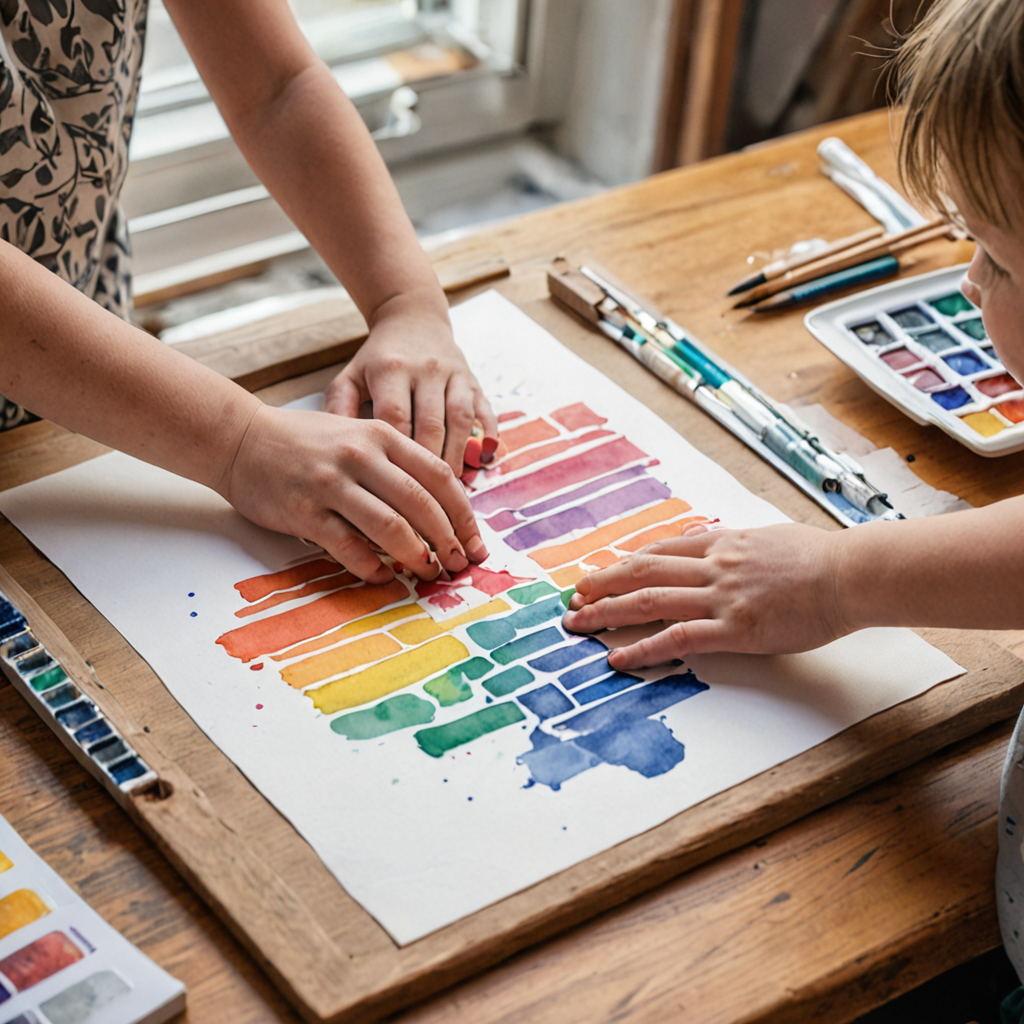
    Painting materials become relevant as children develop drawing skills and express interest in working with color more extensively. Watercolors offer an excellent introduction to painting because they’re relatively inexpensive, easy to clean up, and forgiving for beginners. A basic watercolor set of 12-24 colors in pan (cake) form works well for young students. Tube watercolors offer more intense colors and easier mixing but are less economical for beginners who might waste paint.

    Watercolor brushes vary enormously in quality and price. A few good-quality synthetic brushes (sizes 4, 8, and 12 round brushes are versatile starting points) perform far better than many cheap brushes. Good brushes hold more water, maintain their point or edge, and last through proper cleaning. While professional natural-hair brushes are expensive, quality synthetic brushes at moderate prices serve young artists well.

    Watercolor paper matters more than many beginners realize. Regular drawing paper buckles and warps when wet, frustrating young painters. Watercolor paper in 90 lb or 140 lb weight (thicker and more absorbent) handles water properly. Buying watercolor paper in pads rather than expensive individual sheets makes it more economical for practice and experimentation.

    Acrylic paints offer another accessible medium for young artists. Student-grade acrylics in basic colors (red, yellow, blue, white, black—students can mix other colors) provide versatility for painting on various surfaces. Acrylics dry quickly, require only water for cleanup, and work on paper, canvas, wood, and many other surfaces. A basic acrylic set of 6-8 colors runs $15-$30 and provides extensive painting possibilities.

    Painting supplies require additional tools like water containers, palettes (or disposable paper plates), and paper towels or rags. None of these need to be expensive—recycled containers and household items work perfectly well for young artists learning painting techniques.

    Specialized Materials and When They’re Needed

    As children develop skills and interests, specialized materials may become relevant. Charcoal and pastels offer drawing experiences different from graphite or colored pencil. Vine charcoal is soft and dusty, excellent for learning value and gesture drawing. Compressed charcoal is darker and more permanent. Pastels (both chalk and oil) offer intense color and painterly effects. These materials require fixative spray to prevent smudging, adding to the cost and complexity.

    Markers vary widely in quality and purpose. Basic washable markers work for young children’s exploratory art. Alcohol-based markers like Copic or Prismacolor offer professional-quality results but are expensive and really only appropriate for advanced students doing serious illustration work. For most young artists in group art classes or private instruction, basic marker sets suffice for projects requiring marker work.

    Canvas and stretched surfaces become relevant when students work seriously with acrylic or oil painting (though oil painting is rarely appropriate for young children due to complexity and chemical concerns). Pre-stretched canvases or canvas boards offer affordable painting surfaces. However, many young students are better served working on paper or illustration board until their painting skills justify investing in canvas.

    Sculptural materials like modeling clay, air-dry clay, or polymer clay expand three-dimensional exploration possibilities. These materials vary enormously in cost, permanence, and required tools. Our instructors introduce sculptural materials when appropriate for curriculum and ensure students understand how to work with chosen media effectively.

    What’s Included in Quality Art Programs

    One significant advantage of enrolling children in structured art education is that quality programs provide comprehensive materials, eliminating guesswork and initial investment uncertainty. At Muzart Music & Art School, our art programs in Etobicoke include art kits with all necessary materials for the year’s curriculum, ensuring students have appropriate, quality supplies without families needing to purchase anything separately.

    This material inclusion serves multiple purposes. It ensures all students work with consistent, appropriate-quality materials that perform reliably for teaching purposes. It eliminates economic barriers where some families could afford better supplies than others, creating unequal learning conditions. It removes the confusion and stress of parents trying to determine what to buy when they may have limited art supply knowledge. And it often costs less than purchasing equivalent materials separately because schools can buy supplies at better prices than individual consumers.

    The art kits provided in our programs are tailored to each student’s age, skill level, and the specific curriculum they’re following. Beginning students receive foundational materials appropriate for learning basic skills. More advanced students receive supplies that match the sophistication of their work. Students working on portfolio preparation receive professional-quality materials when appropriate for creating portfolio-worthy work.

    When art materials are provided as part of instruction, students also receive guidance on proper use, care, and maintenance of their supplies. Learning to clean brushes properly, store materials to prevent damage, and use supplies efficiently are part of arts education but often overlooked when children work independently at home with materials parents purchased without instruction guidance.

    Building a Home Art Studio on a Budget

    Many families want to support creativity at home between art lessons, providing materials for free exploration and practice beyond assigned projects. Building a functional home art space doesn’t require enormous investment if approached thoughtfully.

    Start with foundational materials that offer versatility: basic drawing supplies (pencils, erasers, drawing paper), a watercolor or acrylic set with brushes, colored pencils or markers, and basic tools like scissors and glue. These materials support the majority of projects young artists want to tackle independently. Starting with $75-$100 in basic, quality materials provides substantial creative possibilities without overwhelming clutter or expense.

    Organize supplies accessibly so children can find what they need without parent assistance. Clear containers, labeled bins, or simple shelving keeps materials visible and organized. When children can see and access their supplies easily, they’re more likely to use them. Supplies buried in closets or scattered chaotically rarely get used effectively.

    Invest incrementally rather than buying everything at once. As children show interest in specific media or techniques, add those materials thoughtfully. A child fascinated by watercolor after lessons might appreciate expanding watercolor supplies at home. A student passionate about cartooning might value better markers or pen-and-ink supplies. Following the child’s demonstrated interests ensures purchases support genuine enthusiasm rather than collecting supplies that sit unused.

    Accept that art-making is messy and prepare spaces accordingly. Washable tablecloths, art smocks or old shirts, and accessible cleanup supplies (wet wipes, paper towels) make art creation at home less stressful for parents worried about messes. Children who sense parental anxiety about mess often feel inhibited in their creativity, so creating designated art spaces where mess is acceptable removes this barrier.

    Quality Versus Quantity

    Many parents fall into the trap of buying large sets of supplies—100-piece marker sets, enormous colored pencil collections, or painting sets with dozens of colors—thinking more options mean better art education. In reality, young artists benefit more from smaller collections of quality materials than massive sets of cheap supplies.

    A 12-piece set of good-quality colored pencils that blend well and have rich pigment allows more creative possibility than a 96-piece set of pencils with weak pigment that barely show on paper. Similarly, a few good brushes that hold their shape outlast and outperform dozens of cheap brushes that shed bristles and lose their points immediately.

    Large supply sets also overwhelm young children who don’t yet have the experience to choose appropriately from dozens of options. Many professional artists work with relatively limited palettes, understanding that skill in using materials matters more than having every possible color or tool. The same principle applies to young artists developing their skills.

    When purchasing supplies, prioritize quality basics over quantity. Six good watercolor colors that can be mixed to create dozens of hues serve students better than 24 colors of poor-quality paint that don’t mix well and produce muddy results. This principle—quality over quantity—guides our material selections for the art kits we provide at Muzart Music & Art School.

    Specialty Items: Worth the Investment or Unnecessary?

    As children advance in their art education, they may express interest in specialty items they’ve seen other artists use. Evaluating whether these items are worth investing in requires considering the child’s commitment level, how extensively they’ll use the item, and whether alternatives might serve similar purposes more economically.

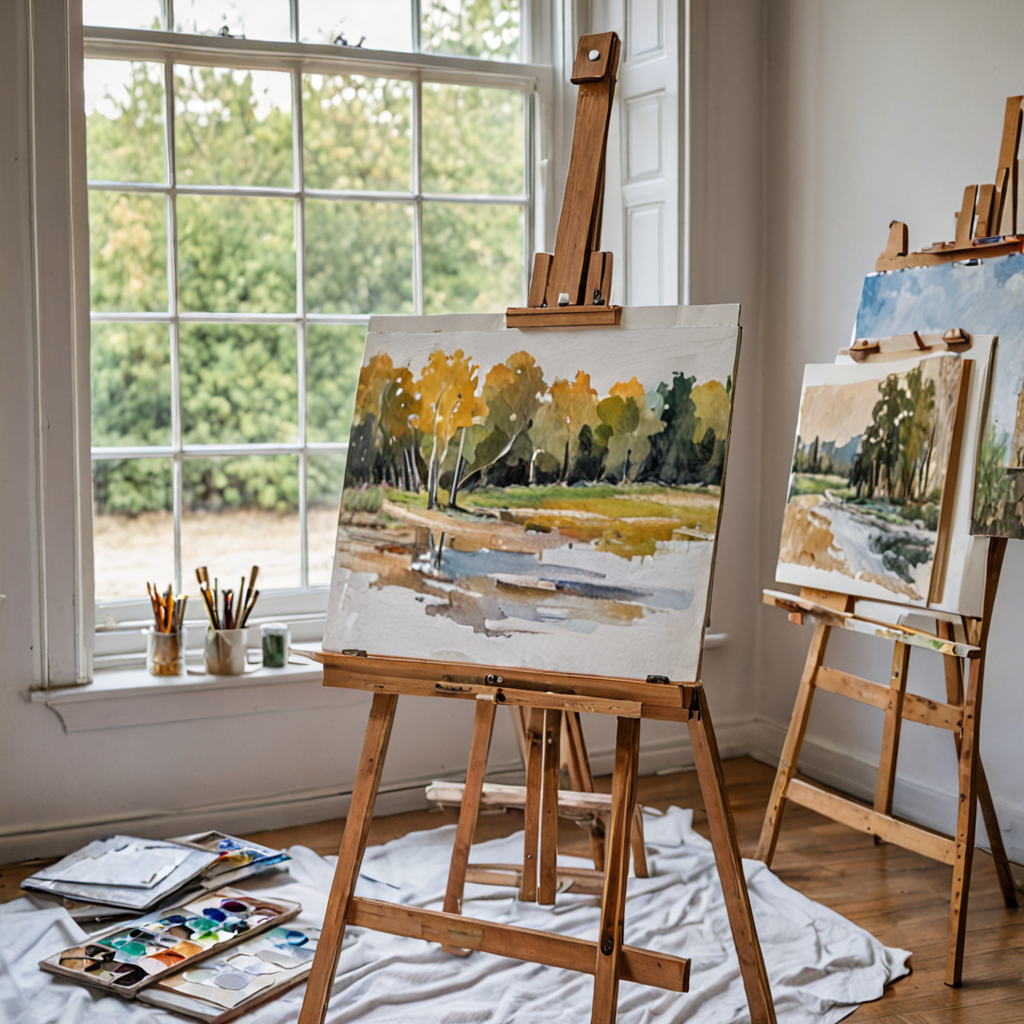
    Easels often top children’s wish lists because they look “professional,” but they’re not essential for most young artists. Working at a table or desk serves perfectly well for drawing, painting, and most art creation. If an easel seems valuable for your family, consider a simple tabletop easel (under $30) rather than expensive floor-standing models. Some children never use easels despite parental investment in them.

    Specialty papers for specific media—hot-press watercolor paper, bristol board, illustration board, toned paper—offer advantages for certain projects but aren’t necessary for most young artists’ work. When specialty papers become relevant for specific projects or techniques, purchasing small quantities as needed makes more sense than stocking a comprehensive paper collection that may not get used.

    Digital drawing tablets represent significant investments that require careful consideration. While digital art skills are valuable, young children benefit from developing traditional art skills first. Physical media teach about materials, color mixing, and technique in ways that digital tools don’t. For teenagers serious about digital art or students interested in animation or graphic design, quality drawing tablets might be worthwhile investments, but they’re generally not appropriate purchases for elementary-age children still building fundamental skills.

    Fixative sprays, varnishes, and finishing products become relevant for preserving and protecting finished work but aren’t needed for practice pieces or exploratory work. Understanding when artwork requires archival preservation versus when it’s part of skill development helps families avoid unnecessary specialty product purchases.

    Sustainable and Eco-Friendly Art Supply Options

    Many families increasingly consider environmental impact when purchasing supplies, and numerous eco-friendly art material options exist. Non-toxic, environmentally responsible options often cost slightly more than standard materials, but many families find the investment worthwhile.

    Water-based, non-toxic paints and markers provide safer alternatives to products containing harsh chemicals. Most student-grade art supplies are already non-toxic, but specifically seeking eco-friendly options ensures minimal environmental impact. Natural pigment paints, recycled paper products, and sustainably-sourced materials are increasingly available from major art supply manufacturers.

    Reusable and durable supplies reduce waste significantly. Quality brushes that last years with proper care, refillable paint palettes, and washable tools create less environmental impact than disposable alternatives. Teaching children to care for their materials so they last longer serves both economic and environmental goals.

    Recycled and repurposed materials offer creative possibilities while reducing waste. Cardboard, fabric scraps, old magazines for collage, and various household materials can become art supplies with creative thinking. Many art teachers incorporate recycled materials into curriculum, teaching both creative reuse and environmental responsibility.

    When to Upgrade and How to Know

    As children progress in their art education, they eventually outgrow beginner materials and benefit from upgrades that match their advancing skills. Knowing when to upgrade requires paying attention to the child’s work, instructor recommendations, and the limitations of current materials.

    Signs that upgrades might be appropriate include the child consistently producing careful, sophisticated work that shows genuine skill development; frustration with material limitations rather than lack of skill; instructor recommendations that specific materials would benefit the student’s work; or the student’s commitment to art suggesting long-term serious pursuit.

    Students working on portfolio preparation for specialized arts high schools typically benefit from professional-quality materials in their primary medium. A student whose portfolio emphasizes painting might need better paints and brushes, while one focusing on drawing might upgrade to professional-grade colored pencils or charcoal. Our portfolio preparation program ($70 trial, $310 monthly) includes guidance on material investments that will specifically benefit each student’s portfolio work.

    However, expensive materials don’t create better artists—skill and vision do. Some young artists create remarkable work with basic materials, while others produce mediocre work with professional supplies. Upgrades should support demonstrated ability and commitment rather than attempting to purchase improved results.

    Getting Started with Art Education

    If navigating art supply decisions feels overwhelming, enrolling in quality art instruction solves multiple problems simultaneously. At Muzart Music & Art School, our programs include comprehensive materials, expert instruction, and structured curriculum that develops skills systematically. Families don’t need to guess about appropriate supplies or teaching methods—we provide both.

    Our group art classes offer social learning and creative exploration with all materials included, allowing children to experience various media and techniques before families invest in home supplies. Private art lessons provide individualized instruction tailored to each student’s interests and goals, with materials matched to their specific curriculum and skill level.

    Ready to give your child quality art education without the confusion of supply shopping? Book a trial lesson and experience our program firsthand. You’ll discover what materials young artists actually need, see how quality instruction develops skills systematically, and understand how comprehensive material provision removes barriers to creative development.

    Request more information about our art programs and learn how Muzart Music & Art School supports young artists with both expert instruction and all necessary materials, letting families focus on encouragement and celebration rather than supply shopping stress.

    Frequently Asked Questions

    Are expensive art supplies really necessary for children’s art education, or is this just marketing?

    For most young artists developing fundamental skills, student-grade materials perform entirely adequately and represent far better value than professional supplies. The quality difference matters most for advanced students creating portfolio work or professional-level pieces where subtle material characteristics affect results. A beginning student can’t yet take advantage of the properties that make professional watercolors worth $15 per tube instead of $3—they’re still learning basic color mixing, brush control, and water management. That said, there’s a meaningful quality difference between student-grade and the cheapest children’s craft supplies. Student-grade materials perform predictably, have reasonable pigment quality, and don’t frustrate users with poor performance. At Muzart Music & Art School, we provide student-grade materials that offer the quality students need without unnecessary expense.

    What should I do with all the artwork my child creates? It feels wasteful to throw it away, but we can’t keep everything.

    This is a nearly universal parent dilemma. Consider establishing a systematic approach: immediately select a few special pieces each year to keep permanently—these go in a portfolio or memory box. Photograph remaining artwork before recycling it, creating a digital archive that preserves the work without physical storage. Display current favorites for a season, then rotate them out when new pieces deserve showcasing. Some artwork can be repurposed—turned into cards, wrapping paper, or gifts for relatives. Recycling most practice pieces and keeping only the most meaningful work isn’t disrespectful of your child’s effort; it’s realistic about space limitations and focusing preservation on truly significant pieces. Most children don’t feel attachment to every piece they create and understand that practice work serves its purpose and can then be recycled.

    My child wants expensive specialty supplies they saw another artist using. How do I know if it’s a worthwhile investment?

    Before purchasing expensive specialty items, investigate a few questions: Will this item get extensive use, or is it novelty appeal that will wear off quickly? Can your child already effectively use the materials they currently have, or would they benefit more from mastering current supplies? Does their instructor suggest this item would benefit their work, or is this a want rather than a need? Are there less expensive alternatives that serve similar purposes? For example, a child who wants an expensive easel might be equally satisfied with an inexpensive tabletop version. Sometimes letting children save their own money (birthdays, allowance) for desired specialty items helps them assess how much they really want it. If they’re willing to save for months, it matters to them; if they quickly lose interest in saving, they weren’t genuinely committed to having it.

    Is digital art education important, or should children focus on traditional media?

    For young children (elementary age), traditional media provide important foundational experiences that digital tools don’t fully replicate. Physical media teach about materials, color mixing, brush techniques, and the direct connection between hand movement and mark-making in ways that digital tools, with their undo buttons and preset brushes, don’t require. However, for older students (middle school and beyond) interested in graphic design, animation, or digital illustration, digital skills become increasingly relevant. The ideal approach combines strong traditional foundations with gradual introduction to digital tools as students mature. At Muzart Music & Art School, we emphasize traditional media that build fundamental skills, preparing students to eventually apply those skills in digital contexts if desired. Digital proficiency without traditional foundations often produces limited artistic development.

    How do I prevent art supply waste when my child starts enthusiastically but then loses interest?

    This scenario frustrates many parents who’ve invested in materials their child barely uses. To minimize waste, start small with basic supplies rather than comprehensive sets—a few quality items that offer versatility rather than everything all at once. Look for evidence of sustained interest (several weeks or months) before making larger material investments. Consider whether formal instruction might provide structure that sustains interest more effectively than unstructured home exploration. When children receive expert teaching and see their skills developing through instruction, their engagement often deepens beyond the initial enthusiasm that fades without structure. Our programs include all necessary materials, so if a child’s interest wanes, families haven’t separately invested in supplies that sit unused. Trial lessons let families assess genuine commitment before making material or program investments.

  • Piano Practice: Creating Effective Routines for Young Students

    Piano Practice: Creating Effective Routines for Young Students

    Piano Practice: Creating Effective Routines for Young Students

    The difference between students who progress steadily at piano and those who stagnate often has less to do with innate talent than with practice habits. Young pianists who develop consistent, focused practice routines advance dramatically faster than equally talented students who practice sporadically or ineffectively. However, creating these productive routines presents challenges for both children and parents—how do you structure practice time, maintain motivation, ensure quality over quantity, and balance piano practice with homework, activities, and childhood itself?

    At Muzart Music & Art School in Etobicoke near Cloverdale Mall, we’ve worked with thousands of piano students and families to develop practice strategies that actually work in real-life contexts. Our piano lessons in Etobicoke include guidance not just for the hour students spend with their instructor each week, but for the crucial practice time between lessons where real skill development happens. This guide shares proven approaches for creating practice routines that make consistent progress achievable and sustainable.

    Understanding Why Practice Routines Matter

    Young children thrive on structure and predictability. When piano practice happens at roughly the same time each day in a consistent routine, it transforms from a negotiation or battle into simply “what we do” after school or before dinner. This routinization reduces resistance significantly—children expend less mental energy deciding whether to practice and more energy actually practicing.

    Consistency matters more than duration, especially for beginning students. A child who practices 15 minutes daily, six days per week, will progress faster than one who practices an hour twice weekly. Regular, frequent practice allows the brain to consolidate learning between sessions, builds muscle memory effectively, maintains connection with material between lessons, and prevents the “relearning” that happens when too much time passes between practice sessions.

    The quality of practice time matters as much as quantity. Unfocused practice where a child plays through pieces repeatedly without addressing mistakes doesn’t produce meaningful improvement. Effective practice involves focused attention on specific challenges, deliberate repetition of difficult sections, application of instructor feedback, and systematic work toward clear goals. Teaching children how to practice effectively is as important as teaching them to play piano.

    Practice routines also build discipline and time management skills that transfer far beyond music. Children who learn to dedicate time to piano practice despite feeling unmotivated, to work through frustrating challenges, and to delay gratification by working toward long-term goals develop character traits that benefit every area of life. The structure and persistence required for consistent practice teach valuable life lessons alongside musical skills.

    Age-Appropriate Practice Duration and Frequency

    Practice expectations should align with children’s developmental capabilities and attention spans. Overly ambitious practice schedules create frustration and resistance, while insufficient practice prevents meaningful progress. Finding the appropriate balance requires considering the child’s age, experience level, and individual capacity for focused work.

    For very young beginners (ages 5-7), practice sessions should be short but frequent. These students typically benefit from 10-15 minutes of focused practice, 5-6 days per week. Their attention spans don’t support longer sessions, and attempting extended practice often degenerates into unfocused repetition or resistance. Multiple short sessions throughout the day sometimes work better than one longer session for this age group.

    Elementary-age students (ages 8-10) can handle slightly longer practice sessions as their attention spans develop. These students typically benefit from 20-30 minutes of practice, 5-6 days per week. The practice can be divided into segments if needed—perhaps 15 minutes in the morning before school and 15 minutes after dinner, rather than a continuous 30-minute block.

    Older elementary and middle school students (ages 11-14) who’ve been playing for several years can sustain longer, more intensive practice. These students typically need 30-45 minutes daily to continue progressing, particularly if they’re working on more complex repertoire or preparing for RCM examinations. At this level, students can work more independently with less parental supervision during practice.

    These durations represent starting points, not absolute rules. Individual children vary in focus capacity, and the same child’s optimal practice duration may fluctuate based on the difficulty of current repertoire, their interest level, and competing demands on their time. Our instructors at Muzart Music & Art School help families identify realistic, appropriate practice expectations for each student’s specific situation.

    Structuring Effective Practice Sessions

    Random practice that simply involves “playing through pieces” rarely produces optimal improvement. Structured practice that systematically addresses different skill areas and challenges produces far better results in the same time investment. Teaching children a consistent practice structure helps them use their time effectively even when practicing independently.

    A balanced practice session for young pianists typically includes several components. Technical exercises like scales, arpeggios, or finger exercises (5-10 minutes) warm up the hands and develop fundamental technique. Review pieces—previously learned songs played for maintenance and enjoyment (5-10 minutes)—build repertoire and confidence. Current repertoire work where students spend the majority of practice time on pieces they’re actively learning (15-25 minutes) represents the core of practice. Sight-reading—playing new, simple music to develop reading skills (5 minutes)—builds an essential skill for advancing pianists.

    This structure need not be rigid or identical every day, but including elements of each category ensures comprehensive skill development. Some practice sessions might emphasize technique, others sight-reading, depending on what the student most needs that day or what their instructor has prioritized.

    Breaking difficult passages into manageable segments is crucial for effective practice. When students encounter challenging sections, they should isolate those measures, practice them separately and slowly, gradually increase speed as accuracy improves, and then reintegrate the section into the broader piece. This targeted approach produces faster improvement than repeatedly playing through the entire piece, stumbling over the same difficult section each time.

    Slow practice is one of the most valuable—and most resisted—practice techniques. Children naturally want to play pieces at performance tempo, but slow, careful practice where every note is deliberate and accurate builds better technique and musical understanding than fast, sloppy playing. Teaching children to value slow practice requires instructor emphasis and parent reinforcement.

    Creating the Right Practice Environment

    The physical and psychological environment significantly influences practice effectiveness. Children practice better when their environment supports focus, comfort, and positive associations with piano rather than creating distractions or negative emotions.

    The practice space should be relatively quiet and free from obvious distractions. While complete silence isn’t necessary (and isn’t realistic in most homes), turning off televisions, putting away phones and tablets, and minimizing sibling interruptions during practice time helps students focus. Some families designate practice time as “quiet time” for the whole household, reducing resentment about practicing while siblings play loudly.

    Proper piano setup matters more than many families realize. Children should sit at the correct height where their forearms are roughly parallel to the floor when hands are on the keys, with feet flat on the floor or on a footstool if they don’t reach. Poor posture or incorrect positioning creates tension, makes playing more difficult, and can lead to injury over time. Adjustable piano benches or footstools are worthwhile investments for growing children.

    Lighting should be adequate for reading music without eye strain. Insufficient light forces children to lean forward, disrupting posture, and makes reading music unnecessarily difficult. A good piano lamp or ensuring the piano is positioned near natural light improves the practice experience noticeably.

    Music organization—keeping current repertoire, method books, and materials organized and easily accessible—prevents practice time from being wasted searching for music. A simple system like a folder for “current pieces” that stays at the piano reduces friction and keeps practice sessions focused on actual playing rather than logistics.

    The psychological atmosphere matters as much as physical setup. Practice should feel like a regular, accepted part of the daily routine rather than a punishment or battle. Families where piano practice is treated matter-of-factly, without excessive praise for completing practice or negative consequences for resistance, often find that children develop healthier, more sustainable practice habits.

    Motivation Strategies That Actually Work

    Maintaining motivation through the inevitable plateaus, frustrations, and competing interests that arise during years of piano study requires thoughtful strategies that go beyond simple rewards or consequences.

    Intrinsic motivation—practicing because the student enjoys it and values their musical development—is more sustainable than extrinsic motivation like rewards or threats. Building intrinsic motivation involves helping children connect with music emotionally by choosing pieces they love, emphasizing expression and musicality alongside technical accuracy, and providing opportunities to play for enjoyment (not just drilling difficult sections). Students who love the music they’re playing practice more willingly than those working solely on technically appropriate but emotionally unengaging repertoire.

    Goal-setting provides direction and purpose for practice. Goals might be short-term (master this tricky measure by tomorrow’s practice session) or longer-term (perform this piece at the spring recital). The key is making goals specific, achievable, and student-owned rather than parent-imposed. When children participate in setting their practice goals, they invest more energy in achieving them.

    Progress tracking helps children recognize improvement that might feel invisible day-to-day. Simple strategies like recording practice sessions periodically and comparing recordings weeks apart, marking difficult passages and celebrating when they become easy, or keeping practice logs that show consistent effort help students see that their work produces results. This visible progress reinforces motivation.

    Variety in practice content prevents boredom and keeps students engaged. While structure and routine are valuable, incorporating different activities—improvisation one day, duets with a parent another, composition exercises, or exploration of different musical styles—makes practice more interesting. Our instructors at Muzart Music & Art School incorporate diverse activities into assignments, ensuring students have varied practice content rather than purely repetitive drilling.

    Performance opportunities, whether formal recitals or informal playing for family, give practice purpose beyond abstract improvement. When students work toward sharing specific pieces with an audience, their practice gains focus and urgency. Even reluctant practicers often increase their effort when a performance deadline approaches, and the satisfaction of successful performance reinforces their motivation for future work.

    The Parent’s Role in Practice

    Parents significantly influence children’s practice habits and attitudes toward piano, but finding the right level and type of involvement challenges many families. Too much parental involvement can create tension and undermine student independence; too little leaves young children floundering without necessary support and structure.

    For young beginners, parent presence during practice is often necessary and beneficial. Very young children need help remembering practice instructions, staying focused on tasks, and reading practice assignments. Parents serve as home partners for the instructor, reinforcing proper technique and ensuring practice time is productive rather than the child simply playing random notes at the piano.

    As children mature and develop independent practice skills (typically by ages 9-11), parents should gradually transition from active participant to supportive supervisor. This might mean being in the next room rather than sitting beside the child, checking in at the beginning and end of practice rather than monitoring continuously, and asking questions about practice goals rather than directing every activity. This gradual independence transfer prepares students for the self-directed practice required for advanced playing.

    Avoid becoming the “practice police” who nags, threatens, or battles with children about practicing. This dynamic creates negative associations with piano and breeds resentment. Instead, position yourself as the supporter and facilitator who helps maintain the routine, celebrates progress, and problem-solves obstacles. Frame practice as the child’s responsibility that you help them fulfill rather than your responsibility to force upon them.

    Communication with the instructor about practice challenges helps everyone work together effectively. If practice routines aren’t working, if the child seems frustrated with assigned material, or if motivation is flagging, let the instructor know. Instructors can adjust assignments, suggest new motivation strategies, or address technical issues that might be creating practice frustration. The instructor-parent-student triangle works best when all three communicate openly.

    Modeling your own discipline and persistence in other areas shows children that sustained effort toward long-term goals is a life skill, not just a piano requirement. When children see parents working consistently toward fitness goals, professional development, or hobbies, they internalize that dedicated practice is how adults approach any skill worth developing.

    Troubleshooting Common Practice Problems

    Even with good routines and strategies, practice problems arise. Recognizing and addressing these challenges prevents them from derailing progress.

    When children resist practice despite a established routine, investigate underlying causes. Is the material too difficult, creating frustration? Too easy, causing boredom? Are there technical issues making playing physically uncomfortable? Is the child overwhelmed by competing demands on their time? Understanding the root cause allows targeted solutions rather than simply forcing compliance.

    Plateaus where progress seems to stall frustrate students and parents alike. These are normal in musical development—periods of consolidation before the next growth spurt. During plateaus, emphasize process over results, introduce new musical activities to maintain interest, ensure technical foundations are solid before advancing, and trust that continued consistent practice will eventually produce breakthroughs. Our instructors help students and families recognize that plateaus are part of learning, not signs of failure.

    Practice quality declining despite adequate time investment signals that practice habits need refinement. Students might be engaging in “mindless repetition” rather than focused practice, avoiding difficult sections rather than isolating and addressing them, or practicing too fast without adequate accuracy. Instructor guidance on effective practice techniques and parent monitoring of practice quality (not just duration) addresses these issues.

    Scheduling conflicts with activities, homework, or family commitments sometimes make consistent practice difficult. Rather than abandoning practice entirely during busy periods, adjust expectations realistically. Even 10 minutes daily during competition season or exam week maintains connection with the instrument and prevents major regression. Return to normal practice duration when schedules permit.

    Long-Term Sustainability

    Building piano skills is a multi-year journey requiring sustainable approaches that prevent burnout while maintaining progress. Short-term motivation tactics eventually exhaust their effectiveness; sustainable practice habits must be intrinsically rewarding and appropriately balanced with the rest of life.

    Taking breaks during school vacations or after major performance milestones prevents burnout while maintaining skills. A week or two away from the piano often refreshes students and renews enthusiasm. Complete breaks from practice (not just lessons) are appropriate occasionally, though very long breaks result in significant skill regression requiring relearning.

    Adjusting practice expectations based on life circumstances—busier schedules during some seasons, more available time during others—creates flexibility that prevents all-or-nothing thinking. Piano practice doesn’t need to be identical every week of the year to be effective. Students can practice more intensively when preparing for exams or recitals and maintain with lighter practice during demanding academic periods.

    Reconnecting with musical joy prevents piano from becoming purely a discipline or obligation. Regular opportunities to play music purely for enjoyment, explore pieces outside formal study, improvise or compose, and play with others remind students why they started piano in the first place. When piano becomes joyless obligation, reconsidering approach and priorities prevents complete abandonment of musical study.

    Support for Developing Strong Practice Habits

    At Muzart Music & Art School, we recognize that practice guidance is as important as lesson instruction. Our monthly program ($155 including all lesson books) includes comprehensive support for developing effective practice habits. Instructors provide clear, specific practice assignments, teach students how to practice (not just what to practice), and work with families to troubleshoot practice challenges.

    The $35 trial lesson provides opportunity to discuss not just whether piano is right for your child, but whether your family can realistically support the practice commitment required for progress. We’d rather have honest conversations upfront about practice expectations than set families up for frustration by underestimating the time investment needed.

    Our instructors understand that practice challenges are normal, not signs of failure or lack of talent. We work with students and families through motivation valleys, routine disruptions, and the inevitable frustrations of learning a complex instrument. The goal isn’t perfection but sustainable progress built on consistent, thoughtful practice.

    Ready to start building strong piano practice habits? Book a trial lesson to experience our teaching approach and discuss creating practice routines that work for your family’s specific situation. Strong practice habits developed early create foundations for lifelong musical enjoyment and achievement. Request more information about our piano program and discover how Muzart Music & Art School supports students in developing not just piano skills, but the practice discipline that makes continued growth possible.

    Frequently Asked Questions

    What should I do when my child refuses to practice despite having a routine established?

    First, investigate why they’re resisting rather than simply forcing compliance. Common underlying causes include material that’s too difficult (creating frustration), too easy (causing boredom), technical issues making playing uncomfortable, or feeling overwhelmed by other commitments. Talk with your child about what specifically makes practice unpleasant, then address those issues. Sometimes taking a break for a day or two and returning with adjusted expectations helps reset attitudes. Communicate with the instructor about ongoing resistance—they can adjust repertoire, suggest new motivation approaches, or identify technical issues requiring attention. Persistent resistance despite good-faith problem-solving might indicate piano isn’t the right activity for this particular child at this time, and that’s information worth having rather than forcing continued participation that breeds resentment.

    How can I help my child practice when I don’t play piano myself and can’t identify mistakes?

    You don’t need to be a pianist to support effective practice. Your role as a non-playing parent is to help maintain routines and schedules, ensure your child follows the instructor’s practice assignment, listen for whether the child is working on assigned material or just playing randomly, and provide encouragement and emotional support. Many parents find it helpful to attend lessons occasionally so they understand what the instructor is teaching and what to listen for. The instructor should provide clear practice instructions that both student and parent understand. You can also use recordings—ask your child to record their practice and listen together, discussing what sounds good and what might need more work, without needing technical expertise to recognize improvement or continued challenges.

    Is it better to practice the same amount every day, or can we do longer sessions fewer days per week?

    Daily practice (or at least 5-6 days per week) produces better results than longer sessions fewer days per week, even if total weekly time is equal. The brain consolidates learning during sleep between practice sessions, so daily practice provides more consolidation opportunities. Additionally, daily short sessions maintain connection with material, preventing the “relearning” that happens when several days pass between practice. Muscle memory also develops more effectively with frequent repetition. That said, if your family’s schedule genuinely makes daily practice impossible, practicing three times weekly is still more beneficial than not practicing at all. Just recognize that progress will be slower than with more frequent practice, and adjust expectations accordingly.

    My child practices the required time but doesn’t seem to improve. What’s wrong?

    Time alone doesn’t guarantee improvement—practice quality matters as much as duration. Your child might be engaging in “mindless repetition” where they play through pieces repeatedly without actually addressing mistakes or difficult sections. Effective practice requires focused attention on specific challenges, slow and careful repetition of difficult passages, and systematic work on problems identified by the instructor. Ask your child to explain what they’re working on during practice and how they’re addressing challenges. If they can’t articulate specific goals or strategies, they’re probably practicing ineffectively. The instructor should teach not just what to practice but how to practice. Discuss this concern with them so they can work with your child on effective practice techniques like isolating difficult measures, using slow practice, and focusing on specific technical challenges.

    Should piano practice take priority over homework and other activities, or vice versa?

    This depends on your family’s values and your child’s level of commitment to piano. For students casually exploring music, piano practice reasonably takes lower priority than homework and academic commitments. For students seriously pursuing music (particularly those preparing for examinations or performances), practice might warrant higher priority. Most families find that establishing “non-negotiable” practice days and times—perhaps 15 minutes after school before other activities, or 20 minutes after dinner before free time—allows piano to coexist with other commitments rather than constantly competing for time. On particularly demanding days with major homework projects or important activities, reduced practice (even just 10 minutes of scales) maintains connection without unrealistic expectations. Communicate with your child about priorities and model healthy balance rather than positioning activities in constant competition.

  • Teaching Children to See Like Artists: Observation Skills in Art Class

    Teaching Children to See Like Artists: Observation Skills in Art Class

    Teaching Children to See Like Artists: Observation Skills in Art Class

    One of the most fundamental yet overlooked skills in art education is the ability to truly see. Children naturally observe their world, but they rarely look with the careful, analytical attention that artistic observation requires. Learning to see like an artist—to notice shapes, values, proportions, relationships, and details that typically go unnoticed—transforms not only a child’s artistic ability but also their awareness of and engagement with the world around them. This shift from casual looking to intentional seeing forms the foundation of artistic skill development.

    At Muzart Music & Art School in Etobicoke near Cloverdale Mall, teaching observational skills is a cornerstone of our art education approach. We understand that children who learn to observe carefully don’t just create more accurate drawings—they develop visual literacy, problem-solving abilities, and attention to detail that benefit them academically and personally throughout their lives. This guide explores how art instructors teach children to see like artists and why this skill matters far beyond the art classroom.

    Understanding the Difference Between Looking and Seeing

    Children look at things constantly, but looking and seeing are remarkably different activities. Looking is passive—visual information enters the eyes without particular attention or analysis. Seeing is active—it involves conscious observation, analysis of what’s being viewed, and understanding of relationships, patterns, and details that casual looking misses.

    When children draw “from memory” rather than observation, they typically draw symbols rather than what they actually see. A child asked to draw a house creates a square with a triangle roof and rectangular windows—a symbolic representation rather than an accurate observation of any real house. Similarly, children draw faces with features in symbolic positions that don’t reflect actual human proportions. These symbol systems are developmentally normal for young children, but advancing as an artist requires moving beyond symbols to careful observation of reality.

    The shift from symbolic drawing to observational drawing is one of the most significant transitions in artistic development. It requires teaching children to quiet their preconceptions about what things “should” look like and instead observe what they actually see. This is challenging because our brains constantly filter and interpret visual information, filling in details from memory rather than from current observation. Artists must train themselves to bypass this filtering and draw what their eyes actually perceive rather than what their brain assumes is there.

    Art instructors use various techniques to help children make this transition, including focused observation exercises that build looking skills, strategies to override symbolic drawing habits, activities that reveal the difference between assumptions and reality, and practice translating three-dimensional observation to two-dimensional representation. Each technique addresses different aspects of the complex skill of artistic seeing.

    Contour Drawing: Learning to Follow with Your Eyes

    One of the most effective introductory exercises for teaching observational skills is contour drawing. In this exercise, students draw the outline or edge of an object while looking almost exclusively at the object rather than at their paper. The instruction is simple: let your eyes slowly follow the edge of the object, and let your hand follow what your eyes are seeing, keeping your gaze on the object rather than the drawing.

    The results of first contour drawings typically look distorted, disproportionate, and “wrong”—and that’s completely expected. The exercise isn’t about creating beautiful drawings; it’s about training the connection between eye and hand, forcing careful observation, and overriding the impulse to draw symbols rather than observed reality. Students discover that they’ve never actually looked carefully at the objects they draw constantly.

    Blind contour drawing (never looking at the paper) and modified contour drawing (occasionally glancing at the paper) both serve pedagogical purposes. Blind contour completely eliminates the temptation to correct or adjust based on assumptions, forcing pure observation. Modified contour allows slightly more accurate results while maintaining the observational focus. Both teach children to trust their eyes and draw what they see rather than what they think they should see.

    Students often find contour drawing frustrating initially because the results look “wrong” compared to their usual drawings. However, instructors help children recognize that contour drawings typically capture gesture, character, and essence more effectively than symbol-based drawings, even if proportions aren’t perfect. This realization helps students value observation over adherence to pre-learned symbol systems.

    Negative Space: Seeing What Isn’t There

    Negative space—the empty area around and between objects—provides another powerful tool for teaching observational skills. When children focus on drawing the “empty” spaces rather than the objects themselves, they often achieve dramatically more accurate results. This technique works because negative spaces don’t trigger symbolic drawing habits. Our brains don’t have pre-learned symbols for the weird shapes created by space between chair legs or around a plant’s leaves, so we’re forced to draw what we actually see.

    Teaching children to identify and draw negative space begins with simple demonstrations. An instructor might place a chair against a light background and help students trace the shapes created by the spaces within and around the chair legs, between the back supports, and surrounding the seat. These irregular, abstract shapes are drawn carefully, and suddenly an accurate representation of the chair emerges—created not by drawing the chair itself but by drawing the spaces around it.

    This approach proves particularly valuable for complex objects like hands, faces, and foliage where symbolic drawing often fails dramatically. By focusing on the spaces between fingers rather than the fingers themselves, students achieve much more accurate hand drawings. Similarly, drawing the shapes created by space between leaves often produces more convincing foliage than attempting to draw individual leaf shapes.

    Negative space exercises teach children that observation requires flexibility in how we conceptualize what we’re drawing. Artists don’t just draw objects—they draw relationships, spaces, shadows, and the abstract shapes created by all of these elements together. This broader, more sophisticated understanding of what “drawing” means expands children’s observational toolkit significantly.

    Proportional Relationships and Measurement

    Understanding and accurately representing proportional relationships is crucial for observational drawing. Children initially struggle with proportion because they tend to size elements based on importance rather than actual visual size. A child drawing their family might make themselves as large as adults because they feel equally important, not because they actually appear that size.

    Teaching proportional observation involves helping children develop measurement strategies. Basic measurement techniques include using a pencil held at arm’s length to compare sizes, dividing objects into sections to check relationships between parts, and identifying reference points or “landmarks” to guide proportional accuracy. These concrete measurement strategies give children tools for checking their observations against reality rather than relying on assumptions.

    The concept of relative proportion—how elements relate to each other rather than absolute size—is particularly important. When drawing a face, for example, students learn that eyes typically appear about halfway down the head (not near the top, as symbolic drawing often places them), that the space between eyes equals approximately one eye width, and that ears typically align with eyebrows at the top and nose base at the bottom. These proportional relationships apply regardless of the face’s absolute size, and understanding them dramatically improves observational accuracy.

    Our instructors at Muzart Music & Art School teach proportional observation systematically in both group art classes and private lessons, adapting the complexity of proportional concepts to each student’s developmental level. Young children work with simple comparisons (which is bigger?), while older students handle sophisticated measurement and proportional analysis that produces highly accurate observational drawings.

    Value and Shading: Seeing Light and Shadow

    Observing value—the relative lightness or darkness of colors—is another crucial observational skill that children must develop to create convincing drawings and paintings. Beginning students often ignore value entirely, drawing outlines and filling them with flat color. Learning to see and represent value transforms flat drawings into three-dimensional representations that appear to have form, depth, and believable light.

    Teaching value observation begins with helping children recognize that value exists everywhere. The same blue shirt appears darker in shadow and lighter in direct light. The same white paper looks gray in shadow and bright white where light hits directly. These value variations, not the outline, create the visual impression of three-dimensional form.

    Value scales and grayscale exercises help students develop sensitivity to subtle value differences. Creating a gradual scale from white to black through multiple gray values trains the eye to distinguish subtle differences that untrained observers miss. This visual sensitivity then transfers to observing real objects and recognizing the value patterns that describe their form.

    Squinting is a surprisingly useful technique that art instructors teach for observing value. When students squint at their subject, fine details blur away but major value patterns become more obvious. This simplification helps children see the “big picture” of light and shadow rather than getting lost in details prematurely. Many students discover that they can suddenly see value patterns they never noticed before simply by squinting while observing.

    Core shadows, cast shadows, highlights, and reflected light—the vocabulary of value and shading—give children concepts for analyzing what they see. Understanding that rounded objects show gradual value transitions while angular objects show sharper value changes helps students predict and represent form more accurately. This conceptual understanding supports and enhances pure observation.

    Color Observation and Mixing

    Color observation presents unique challenges because our brains are extraordinarily good at color constancy—perceiving colors as consistent even when lighting dramatically changes the actual wavelengths reaching our eyes. We “see” a banana as yellow in all lighting conditions, even when shadows make parts of it appear brown or green. Teaching children to see actual color rather than assumed color requires overcoming this powerful perceptual tendency.

    Color mixing exercises help children understand that the colors they see aren’t always the colors they expect. When students try to match a specific blue-gray shadow color, they discover it requires mixing unlikely combinations—perhaps blue, purple, and white with a tiny bit of yellow. This experimentation teaches children that reality is more complex and surprising than their assumptions.

    Local color versus observed color is a crucial distinction for developing artists. Local color is the color an object “is”—a green apple, blue shirt, red ball. Observed color is the color that actually appears in specific lighting and context—which might be quite different from the local color. The green apple might appear nearly black in deep shadow, yellow-green in bright light, or blue-green next to an orange object. Artists must learn to paint observed color rather than local color to create convincing representations.

    Teaching color observation involves exercises like color matching, where students mix paint to match specific colors they observe. This active engagement forces careful looking and teaches children that color is far more varied and subtle than they initially realize. Many students are surprised to discover how many different colors exist within what they initially perceived as “just blue” or “just green.”

    Drawing from Life versus Photographs

    While photographs can serve as useful reference material, drawing from life provides superior observational training for developing artists. Three-dimensional observation that photographs can’t capture includes depth, space, and how forms occupy and move through space. Live objects can be viewed from multiple angles, providing richer understanding of form. Lighting and color are more complex, nuanced, and informative when viewing actual objects rather than photographs. The direct, unmediated experience strengthens the eye-to-hand connection more effectively than photo references.

    Our instructors emphasize still life drawing, figure drawing (when age-appropriate), and outdoor sketching as essential practices in art education. While photographs have their place, students who regularly draw from life develop observational skills that transfer more effectively to all artistic contexts than students who rely primarily on photo references.

    The three-dimensional to two-dimensional translation that occurs when drawing from life is fundamentally what drawing is about. Artists must understand how to represent depth, form, and space on a flat surface—skills that photographs have already partially resolved. Drawing from life keeps this essential skill sharp and developing.

    Age-Appropriate Approaches to Observation

    Teaching observational skills requires adjusting complexity and expectations to match children’s developmental level. Very young students (ages 5-7) benefit from simple observation games, basic shape identification and recognition, and encouraging children to notice details without pressure for accurate representation. The goal at this age is building the habit of looking carefully rather than achieving accurate rendering.

    Elementary-age students (ages 8-10) can handle more structured observational exercises like basic contour drawing, simple proportional comparisons, beginning value work with simple shading, and focused observation assignments. Students this age begin transitioning from purely symbolic drawing toward observational accuracy while maintaining creative freedom and playfulness.

    Older students (ages 11+) can engage with sophisticated observational concepts including complex proportional analysis, refined value observation and rendering, color mixing based on observation, and intensive still life and life drawing. These students can understand and apply the full range of observational techniques that professional artists use.

    Regardless of age, observational skill development is gradual and requires consistent practice. Students don’t suddenly “get it” after one exercise; they steadily improve through repeated exposure to observational challenges, instructor feedback, and personal discovery of techniques that work for their individual perception and learning style.

    Beyond Technical Skill: Why Observation Matters

    Developing observational skills provides benefits far beyond improved drawing accuracy. Visual literacy—the ability to interpret and analyze visual information critically—becomes increasingly important in our image-saturated culture. Children who learn to observe carefully become more discerning consumers of visual media, better able to analyze what they see rather than accepting it uncritically.

    Attention to detail transfers from art to academics. Students trained in careful observation often show improved performance in subjects requiring attention to detail like reading comprehension, mathematics, and science. The habit of looking carefully, analyzing what’s observed, and checking assumptions against reality applies broadly across disciplines.

    Problem-solving skills develop through observational drawing because students must constantly troubleshoot why their drawing doesn’t match what they see, identify specific aspects that need correction, and develop strategies for achieving desired results. This analytical process—identify problem, diagnose cause, test solution, evaluate results—is fundamental to all problem-solving and critical thinking.

    The patience and persistence required for careful observation builds character traits that benefit children throughout life. Observational drawing can’t be rushed; it requires slowing down, maintaining focus, and working carefully toward accuracy. In our fast-paced, instant-gratification culture, these skills are increasingly valuable and increasingly rare.

    Supporting Observational Development at Home

    Parents can reinforce observational skills outside formal art instruction through simple activities and encouragement. Nature walks with sketchbooks encourage children to observe and record what they see—leaves, flowers, insects, clouds, and landscapes. These informal sketching sessions build observational habits without pressure for polished results.

    Museum and gallery visits expose children to how professional artists observe and represent the world. Discussing artwork (“How did the artist show depth?” “What do you notice about the colors in shadows?”) helps children analyze artistic choices and observational strategies. This analytical looking at art improves looking at life.

    Simple daily observation challenges keep skills sharp between art lessons: “Draw your breakfast before eating it,” “Sketch your hand in five different positions,” or “Draw the view from your window at different times of day.” These quick exercises build observational muscle memory and demonstrate that observation opportunities exist constantly in everyday life.

    Encouraging children to draw from life rather than photos whenever possible reinforces lessons learned in class. While photos are convenient, regular life drawing—even informal sketches of pets, family members, or household objects—builds stronger observational skills than photo-dependent practice.

    Building Observation Skills Through Consistent Instruction

    Developing strong observational skills requires consistent, expert instruction over time. At Muzart Music & Art School, our art programs systematically build these skills through age-appropriate exercises, projects, and challenges. Our instructors understand how to teach children to see—not just to draw, but to observe the world with an artist’s analytical, appreciative eye.

    Whether your child participates in our group art classes or receives private instruction, observational skill development is woven throughout curriculum at every level. We provide the tools, techniques, feedback, and practice opportunities children need to transform from casual observers to careful, skilled artistic see-ers.

    The materials and supplies needed for observational practice are included in our programs, ensuring students have appropriate tools for different observational exercises. From graphite pencils in varied hardnesses for value work to quality paper that handles repeated erasing during proportion correction, having proper materials supports effective skill development.

    Ready to help your child develop the powerful observational skills that transform both artistic ability and general visual literacy? Book a trial lesson to experience our approach to teaching children to see like artists. Whether your child is interested in developing fundamental skills, preparing for advanced art education, or simply becoming more observant and visually aware, our programs provide the expert instruction and consistent practice that make real skill development possible.

    Request more information about our art programs and discover how learning to see like an artist can benefit your child both inside and outside the art classroom. The skills we teach at Muzart Music & Art School create a foundation for lifelong artistic expression and visual understanding.

    Frequently Asked Questions

    At what age can children begin learning observational drawing skills?

    Children can begin developing basic observational skills as early as age 5-6, though the approach differs significantly from instruction for older students. Young children benefit from observation games and activities that build looking habits—finding shapes in clouds, noticing colors in nature, or playing “I spy” games that require detailed observation. Structured observational drawing typically begins around ages 7-8, when children have sufficient fine motor control and attention span for focused observation exercises. However, the most dramatic observational skill development typically occurs in the 9-14 age range when cognitive development allows children to understand and apply sophisticated observational concepts. Regardless of starting age, consistent practice and expert instruction produce steady improvement in observational abilities.

    Will learning to draw “correctly” through observation stifle my child’s creativity and imagination?

    This is a common concern, but the evidence suggests the opposite is true. Observational skills actually expand creative possibilities by giving children more tools to realize their imaginative visions. A child who can only draw stick figures and simple symbols is limited in expressing creative ideas that require depicting realistic forms, depth, or complex scenes. Strong observational skills free children to choose whether to draw realistically, stylistically, or abstractly based on artistic intent rather than technical limitation. At Muzart Music & Art School, we balance observational skill development with imaginative projects, ensuring children maintain creative freedom while expanding technical capabilities. The most successful young artists combine strong observation skills with vibrant imagination—each enhancing rather than limiting the other.

    How long does it typically take for children to show significant improvement in observational drawing?

    Most students show noticeable improvement in observational accuracy within 3-4 months of consistent weekly practice with quality instruction. The progression typically follows a pattern: initial drawings show significant proportion and accuracy issues, drawings after 2-3 months show improved proportion and spatial relationships, work after 6 months demonstrates confident observational accuracy in basic subjects, and development after a year or more reflects sophisticated observation of complex subjects including value, color, and subtle proportional relationships. Individual progress varies based on natural spatial reasoning abilities, age and developmental readiness, consistency of practice between lessons, and quality of instruction. Students who practice observational sketching regularly at home typically progress more rapidly than those who only draw during lessons.

    Can observation skills learned in art class transfer to improvement in other school subjects?

    Yes, research consistently demonstrates that visual observation skills developed through art education transfer beneficially to other academic areas. Students trained in careful observation often show improved reading comprehension due to better visual discrimination and attention to detail, stronger performance in geometry and spatial reasoning due to enhanced visual-spatial skills, better scientific observation and data collection abilities, and improved focus and concentration that benefit all subjects. The habit of looking carefully, noticing details, checking observations against assumptions, and working systematically toward accuracy applies far beyond art contexts. Many educators recognize that art education, particularly instruction emphasizing observation, supports broader academic development rather than being a peripheral “extra” unconnected to core learning. The cognitive skills developed through learning to see like an artist are fundamental thinking skills with broad application.

  • Voice Lessons for Shy Children: Building Confidence Through Music

    Voice Lessons for Shy Children: Building Confidence Through Music

    Voice Lessons for Shy Children: Building Confidence Through Music

    Shy children possess a unique kind of strength—they observe carefully, think deeply, and often feel emotions intensely. These qualities can make them exceptional musicians, particularly singers who need to connect emotionally with music. However, the idea of voice lessons can feel overwhelming to introverted or shy children who worry about being heard, judged, or put on the spot. The good news is that singing lessons, when approached thoughtfully, become one of the most effective tools for helping shy children develop confidence, self-expression, and comfort in their own voice—both literally and figuratively.

    At Muzart Music & Art School in Etobicoke near Cloverdale Mall, our instructors specialize in working with children across the full spectrum of personality types, including those who need extra encouragement to find their voice. We understand that voice lessons in Etobicoke aren’t just about developing vocal technique—they’re about creating a safe, supportive environment where every child can discover the joy and power of singing at their own pace.

    Understanding Shyness in the Context of Music Education

    Shyness in children manifests differently depending on the individual. Some shy children are simply quiet and reserved, observing from the sidelines until they feel comfortable. Others experience genuine anxiety about performance situations, worried about making mistakes or being the center of attention. Still others are selectively shy—confident in familiar environments but hesitant in new situations or around unfamiliar people.

    Understanding your child’s specific type of shyness helps instructors tailor their approach effectively. A child who’s shy due to perfectionism needs different support than one who’s naturally introverted, and both differ from a child experiencing social anxiety. The common thread is that all these children benefit from patient, individualized instruction that respects their comfort level while gently expanding their confidence boundaries.

    Voice lessons present unique challenges for shy children compared to instrumental music. Playing piano or guitar provides a physical instrument between the student and listener—a buffer that feels protective. Singing, however, is intensely personal. The voice comes directly from the body, and many shy children feel exceptionally vulnerable when singing. This vulnerability, while initially uncomfortable, ultimately becomes the pathway to profound personal growth when handled with care and understanding.

    Research consistently shows that music education builds confidence in shy children by providing structured opportunities for self-expression, creating achievement milestones that boost self-esteem, offering a non-verbal emotional outlet, and developing skills that transfer to other areas of life. Voice lessons amplify these benefits because singing integrates breath control, posture, and emotional expression—teaching children literal and figurative ways to find their voice.

    Creating a Safe Learning Environment

    The foundation of effective voice instruction for shy children is safety—emotional safety, psychological safety, and the freedom to make mistakes without judgment. At Muzart Music & Art School, we structure singing lessons to prioritize this safety from the very first session.

    Private lessons offer significant advantages for shy children, especially initially. One-on-one instruction eliminates peer comparison and observation, allowing children to experiment without worrying about classmates hearing their mistakes. The privacy gives shy students permission to be imperfect, try unfamiliar vocal techniques, and gradually build comfort with their singing voice before any public sharing occurs.

    Building rapport between student and instructor is crucial for shy children. Our instructors invest time in getting to know each student—their interests, favorite songs, comfort level, and what makes them nervous. This relationship-building isn’t wasted time; it’s essential groundwork that determines whether a shy child will open up musically. Many shy students need several lessons before they’re comfortable singing at full voice, and that’s perfectly acceptable.

    The physical environment matters more for shy children than many realize. A welcoming, non-intimidating lesson space with comfortable seating, appropriate lighting, and minimal distractions helps shy students relax. Some instructors find that shy children sing more freely when they’re not making direct eye contact initially—standing slightly to the side or focusing on music rather than maintaining constant eye contact can reduce pressure.

    Expectations must be calibrated carefully for shy students. Pushing too hard, too fast creates resistance and reinforces anxiety. Moving too slowly fails to build confidence through achievement. Skilled instructors find the sweet spot—gentle but consistent encouragement that expands comfort zones gradually without overwhelming the student. This requires constant attention to the student’s signals and willingness to adjust pacing as needed.

    Starting Small: Progressive Confidence Building

    Effective voice instruction for shy children follows a progressive approach that builds confidence through small, achievable steps. The journey begins with non-singing activities that prepare for vocal work without the pressure of “performing.” Breathing exercises teach diaphragmatic breathing—essential for singing but also calming for anxious children. Simple humming exercises introduce vocal production without the vulnerability of words. Vocal exploration through scales, sirens, and fun sounds helps children discover their voice’s capabilities playfully.

    These preliminary activities serve multiple purposes. They develop fundamental vocal skills, yes, but they also normalize making sounds in the instructor’s presence. Many shy children need this gradual acclimation before they’re comfortable actually singing songs. The activities feel less like “performance” and more like games or exercises, reducing pressure significantly.

    When introducing song work, instructors start strategically. Familiar songs that students already know reduce the cognitive load of learning melodies and lyrics, allowing them to focus on vocal production and comfort level. Songs the child loves increase motivation and emotional connection, making vulnerability feel worthwhile. Simple melodies with limited range prevent technical struggles that might embarrass shy students. Age-appropriate content ensures the child relates to what they’re singing.

    Many instructors find that shy children initially sing more comfortably when joining the instructor—singing together rather than solo. This shared singing provides support and reduces the feeling of being exposed. Gradually, the instructor can fade their volume, allowing the student to carry more of the melody independently while still providing a safety net if needed.

    The concept of “singing for yourself first, others later” helps shy children reframe the purpose of singing. Rather than viewing voice lessons as preparation for performance (which feels terrifying), students learn that singing is first and foremost a personal form of expression and enjoyment. Performance becomes an optional extension of this personal practice, not the primary goal. This shift in perspective reduces pressure significantly and allows shy children to explore their voice without the weight of eventual public expectation.

    Technical Skills That Support Confidence

    Interestingly, developing proper vocal technique actually helps shy children feel more confident. When students understand how their voice works and gain control over vocal production, singing feels less mysterious and unpredictable—both of which contribute to anxiety for shy children.

    Breath support and control are foundational vocal skills, but they offer secondary benefits for shy students. Learning diaphragmatic breathing provides a tangible tool for managing nervousness. The same breathing techniques used for vocal support also calm the nervous system, helping anxious children regulate their emotional state. Many students discover that focusing on breath gives them something concrete to think about rather than spiraling into anxiety about being heard.

    Posture and body awareness contribute similarly. Proper singing posture—standing or sitting tall with open chest and relaxed shoulders—projects confidence physically. Research shows that body position influences emotional state; adopting confident physical posture actually helps people feel more confident psychologically. For shy children, learning to “stand like a singer” provides a physical tool for accessing brave feelings even when they feel nervous.

    Vocal placement and resonance work teaches children how to produce clear, pleasant tone efficiently. When shy children discover they can create beautiful sounds without straining or pushing, their self-consciousness about their voice often decreases. Understanding that tone quality comes from technique rather than innate “talent” empowers students—they recognize improvement comes from practice and proper method, not from some mysterious gift they might not possess.

    Range development expands students’ vocal capabilities systematically. As shy children discover they can sing higher notes, lower notes, and navigate their entire range confidently, their sense of vocal competence grows. Each new note or passage mastered provides concrete evidence of progress, building self-efficacy that extends beyond singing into other areas of life.

    The Role of Choice and Control

    Giving shy children appropriate choices within their music lessons dramatically improves their engagement and comfort level. When students feel they have control over aspects of their learning, the experience becomes less threatening and more collaborative.

    Song selection offers meaningful opportunities for student input. Allowing children to choose songs they want to learn (within appropriate technical parameters) increases motivation and emotional investment. When shy students sing songs they love, the joy of the music itself can overcome nervousness. Some instructors maintain a “song menu” of age-appropriate pieces at various difficulty levels, allowing students to select from vetted options rather than facing completely open-ended choice (which can overwhelm some shy children).

    Pacing decisions can partially involve the student. Asking “Would you like to work more on this section, or are you ready to move forward?” gives shy children agency over their learning speed. Similarly, instructors might offer choices between activities: “Should we work on scales today, or would you prefer to focus on your new song?” These small choices help students feel like partners in the learning process rather than passive recipients of instruction.

    Performance expectations absolutely require student input. Some shy children surprise everyone by wanting to participate in recitals despite their general reticence—the structure and preparation make it feel safe. Others need much more time before any public sharing feels acceptable. Instructors should never pressure shy students into performances before they’re ready, but should periodically offer opportunities and let students decide when they feel prepared to accept them.

    Addressing Performance Anxiety Specifically

    Even as shy children grow comfortable singing in lessons, performance situations introduce a different level of challenge. Many students who sing beautifully in private lessons freeze or struggle when asked to perform for others. This is normal, and working through it systematically helps children develop resilience.

    Graduated exposure to audiences helps students build performance comfort progressively. The hierarchy might look like: singing for the instructor only (private lessons), recording oneself and listening back, singing for one trusted family member, singing for a small group of family members, participating in a small studio class or group lesson, and eventually performing in a recital setting if desired. Each step provides experience with a slightly larger audience, allowing students to develop coping strategies before facing more intimidating situations.

    Performance anxiety management becomes an explicit part of instruction for shy students. Teaching children about the physical symptoms of nervousness helps them understand that feeling nervous is normal and doesn’t mean something’s wrong. Techniques like visualization, positive self-talk, and pre-performance routines give students tools for managing anxiety rather than being controlled by it.

    Many instructors find that focusing shy students on specific technical goals during performances reduces anxiety. Rather than thinking “everyone is watching me,” students concentrate on remembering to breathe deeply, maintain good posture, or watch the instructor for cues. This task focus directs attention away from self-consciousness and toward concrete, controllable elements of performance.

    Reframing mistakes as learning opportunities is crucial for perfectionist shy children who fear error. When instructors respond to mistakes calmly, point out what went well alongside what to improve, and share stories of professional musicians’ mistakes, students gradually internalize that errors are acceptable and part of growth. This psychological safety around imperfection allows shy children to take risks necessary for development.

    Family Support for Shy Young Singers

    Parents play a crucial role in supporting shy children through voice lessons. The home environment and family attitudes toward music, mistakes, and confidence significantly influence how much benefit children derive from their vocal instruction.

    Encouragement must be calibrated carefully for shy children. Too much attention or effusive praise can actually increase pressure and make some shy children more self-conscious. Many shy students prefer quiet, private affirmation rather than public celebration. Phrases like “I noticed you were singing in your room—it sounded beautiful” often land better than “Sing that song for Grandma!” which feels like forced performance.

    Avoiding comparison is essential, whether comparing the shy child to siblings, classmates, or idealized standards of singing. Shy children are often already comparing themselves unfavorably to others; family members don’t need to add to this burden. Instead, focus on individual progress: “You’re reaching those high notes so much more easily than last month” rather than “You sing as well as your sister did at your age.”

    Respecting boundaries around home practice helps shy children maintain control over their vocal expression. If a child prefers to practice privately rather than being overheard by family members, that’s a reasonable boundary to respect. Many shy students need their bedroom or practice space to feel completely private before they’re comfortable singing freely. As confidence grows, they often become more willing to be overheard, but forcing this before they’re ready creates resistance.

    Modeling healthy attitudes toward mistakes and imperfection helps children develop similar resilience. When parents share stories of their own mistakes or errors without excessive self-criticism, children learn that imperfection doesn’t equal failure. For shy, perfectionist children, seeing adults handle errors with grace and humor provides a powerful template for their own self-talk.

    Long-Term Benefits Beyond Vocal Skill

    The confidence that shy children develop through voice lessons extends far beyond musical contexts. Students consistently report that vocal training influences their comfort level in numerous life situations, including speaking up in class and participating in discussions, advocating for themselves with peers and adults, trying new activities despite feeling nervous, and expressing emotions and needs clearly.

    The parallels between finding your literal voice through singing and finding your metaphorical voice in life are powerful. As children discover they can produce beautiful sounds, project their voice confidently, and share their singing with others despite fear, they internalize the message that their voice matters and deserves to be heard. This fundamental shift in self-perception influences how shy children move through the world.

    The structured, predictable nature of music lessons also helps shy children develop trust that extends to other relationships and situations. When instructors consistently provide patient, judgment-free support week after week, students internalize that some adults are reliably safe and supportive. This experience builds template for healthy teacher-student, mentor-mentee, and eventually professional relationships.

    Additionally, the achievement of concrete milestones—learning new songs, expanding vocal range, perhaps eventually performing—provides shy children with evidence that they can do hard things despite feeling anxious. This builds genuine self-confidence based on real accomplishment rather than empty praise. Students learn to distinguish between feeling nervous and being incapable—a crucial life skill for anyone dealing with anxiety.

    Starting the Journey

    If you have a shy child who loves music but seems hesitant about voice lessons, the $35 trial lesson at Muzart Music & Art School provides a low-pressure opportunity to explore. The trial allows your child to meet an instructor, experience the lesson environment, and see whether singing instruction feels approachable and enjoyable. Many parents find that their shy children, once they experience the supportive, patient instruction style, become enthusiastic about continuing lessons.

    Our instructors understand that shy children need extra time, patience, and individualized approaches. We’re never in a hurry to push students into performances or situations before they’re ready. The monthly program ($155 including all lesson books) provides consistent, ongoing support that allows shy students to progress at their own pace, building confidence gradually through countless small successes rather than forcing dramatic breakthroughs that might backfire.

    For shy children, the journey matters more than rapid progress. We celebrate small victories—the first time a student sings at full volume, the day they choose a song independently, the moment they volunteer to practice a section without prompting. These incremental developments represent profound growth for children working through shyness, and our instructors recognize and honor this growth appropriately.

    Ready to help your shy child discover the confidence and joy of singing? Book a trial lesson and discuss your child’s specific personality and needs with our instructors. We’ll work together to create an approach that feels safe, supportive, and genuinely helpful for your child’s unique journey. Request more information about our voice lesson program and discover how singing can become a source of confidence and self-expression for even the shyest children.

    Frequently Asked Questions

    Will voice lessons make my shy child more outgoing, or could they backfire and increase anxiety?

    When handled appropriately, voice lessons consistently help shy children build confidence without increasing anxiety. The key is working with instructors who understand how to pace lessons for shy students—never pushing too hard, respecting comfort levels, and building skills gradually. At Muzart Music & Art School, our instructors specialize in reading students’ signals and adjusting approach accordingly. Voice lessons won’t transform an introverted child into an extrovert (nor should that be the goal), but they do help shy children become more comfortable with self-expression, speaking up when needed, and handling situations that require visibility. The gradual, supportive nature of quality instruction builds confidence through achievement rather than forcing children into overwhelming situations that might indeed backfire.

    How long does it typically take for a shy child to feel comfortable singing in lessons?

    This timeline varies significantly based on the individual child and their specific type of shyness. Some shy children feel relatively comfortable by their third or fourth lesson, once they’ve built rapport with the instructor and understand the lesson routine. Others need several months of gentle encouragement before they’re fully comfortable singing at full voice without self-consciousness. Most shy students show noticeable progress within 2-3 months of consistent weekly lessons. What matters more than speed is steady forward movement—small signs that the child is gradually opening up and becoming more comfortable. Our instructors track this progress carefully and adjust pacing to match each student’s readiness, never rushing the process but providing appropriate challenges that build confidence systematically.

    Should my shy child start with private lessons, or would group classes help them overcome shyness faster?

    For most shy children, private lessons are the better starting point. Group settings can overwhelm shy students initially, increasing anxiety rather than building confidence. Private instruction allows children to build skills, comfort with singing, and trust with an instructor without the added pressure of peer observation or comparison. Once a shy child has developed solid basic skills and comfortable self-expression in private lessons (typically after 6-12 months), small group classes or ensemble opportunities can provide valuable experience singing with others without the intimidation factor that would exist for complete beginners. This progressive approach—private first, selective group experiences later—tends to work best for genuinely shy children rather than immediately immersing them in group settings.

    What if my child is interested in singing but refuses to sing in front of anyone, even privately?

    This level of reluctance requires an especially patient, gradual approach but is absolutely workable. Many instructors begin with shy children by focusing entirely on non-singing activities for the first few lessons—breathing exercises, music theory, listening to recordings, discussing favorite songs. These activities build rapport and comfort without requiring the child to sing at all. Gradually, non-threatening vocal activities get introduced—humming while looking at music, singing along very quietly with a recording while the instructor isn’t watching directly, or singing together with the instructor so loudly that the child’s voice isn’t distinguishable. The key is removing all pressure and building comfort so gradually that the child barely notices they’ve started singing. This approach requires more time than typical voice instruction, but it successfully helps even the most reluctant children eventually find their voice.

    At what age should I consider voice lessons for my shy child?

    Voice lessons can benefit shy children as early as age 5-6, though the approach differs significantly from lessons for older students. Young children’s lessons focus heavily on playfulness, exploration, and building comfort with vocalization through games and creative activities. For shy younger children, this playful approach often feels less intimidating than traditional instruction. Older shy children (ages 8-12) can handle more structured technical instruction but still need the patient, supportive environment that allows them to build confidence gradually. There’s no “too late” for beginning voice lessons—shy teenagers and even adults successfully learn to sing and build confidence through vocal instruction. The ideal age depends less on specific years and more on the child showing genuine interest in singing, which provides internal motivation that helps overcome shyness-related hesitation.

  • Portfolio Preparation: Starting Early for High School Arts Programs

    Portfolio Preparation: Starting Early for High School Arts Programs

    Portfolio Preparation: Starting Early for High School Arts Programs

    The journey toward specialized high school arts programs begins much earlier than many parents realize. Whether your child dreams of attending arts-focused high schools, specialized visual arts programs, or eventually pursuing post-secondary arts education, portfolio preparation is a gradual process that benefits enormously from early planning and consistent development. Starting portfolio work in middle school or even earlier provides students with the time, guidance, and breadth of experience needed to create truly compelling submissions.

    At Muzart Music & Art School in Etobicoke near Cloverdale Mall, we’ve guided countless students through the portfolio preparation process, helping them gain admission to competitive arts programs across the Toronto area. The families who achieve the best results are those who understand that portfolio development isn’t a last-minute cramming exercise—it’s a multi-year journey of skill building, artistic exploration, and strategic piece creation that showcases a student’s full potential.

    Understanding Portfolio Requirements for High School Programs

    High school arts programs seek evidence of artistic potential, not necessarily polished professional work. Admissions committees understand they’re evaluating teenagers, and they’re looking for creativity, willingness to experiment, technical foundation, personal voice and expression, and growth trajectory demonstrated across multiple pieces.

    Different programs emphasize different portfolio elements. Some focus heavily on observational drawing from life, while others value creativity and conceptual thinking. Research specific programs your child might apply to—schools like Etobicoke School of the Arts, Rosedale Heights School of the Arts, or Claude Watson School for the Arts each have distinct preferences and requirements regarding the number of pieces required (typically 8-15), specific skill demonstrations (such as self-portraits or observational drawing), diversity of media and approaches, and artist statements or written components.

    Understanding these requirements early allows students to build portfolios strategically rather than scrambling to create required pieces at the last minute. When students have two or three years to prepare, they can develop skills gradually, create multiple pieces for each requirement, and select their strongest work rather than submitting the only piece they managed to create for each category.

    The portfolio submission process itself varies by program. Some require physical portfolios delivered in person, others accept digital submissions through online portals, and many include in-person portfolio interviews or artistic assessments on the day of audition. Preparing for these various formats requires time and planning—another reason early preparation matters so much.

    The Ideal Timeline: When to Start Portfolio Preparation

    For students targeting specialized high school arts programs, beginning structured portfolio preparation in grades 6-7 is ideal. This timeline allows for two to three years of focused development before application deadlines in grade 8. During this period, students can develop fundamental technical skills through private art instruction, explore various media and artistic approaches, create multiple pieces for each portfolio category, and revise and refine work based on instructor feedback.

    Starting in grades 6-7 doesn’t mean students need to create final portfolio pieces immediately. Instead, this time builds the skills and experience that will later produce portfolio-worthy work. Students develop observational drawing abilities, color theory understanding, composition skills, and familiarity with diverse media—the foundations that strong portfolios demonstrate.

    For students who start earlier through regular art classes in Etobicoke, the transition to focused portfolio preparation in grades 6-7 feels natural rather than jarring. They already have established art habits, foundational skills, and confidence in their abilities, allowing portfolio work to build on existing strengths rather than starting from scratch.

    Even students who discover their interest in arts programs later can succeed with intensive preparation, but they’ll face more pressure and have fewer opportunities to experiment and develop gradually. The earlier the start, the more relaxed and thorough the preparation process can be.

    Building Technical Skills That Portfolios Showcase

    Strong portfolios demonstrate mastery of fundamental artistic skills. Observational drawing—the ability to accurately render what you see—forms the backbone of most portfolio requirements. Students need experience drawing from life (not photographs), understanding proportions and spatial relationships, capturing light and shadow effectively, and working in various drawing media including pencil, charcoal, and ink.

    Color theory knowledge and application is another critical portfolio element. Programs want to see students can mix colors to achieve specific effects, understand complementary and analogous color relationships, use color to create mood and emphasis, and work confidently in both warm and cool palettes. These skills develop through consistent practice with painting and mixed media projects over extended periods.

    Composition and design principles—how elements are arranged within a piece—separate competent from exceptional portfolios. Students need to understand creating focal points and visual hierarchy, balancing elements within the frame, using negative space effectively, and leading the viewer’s eye through the piece. These sophisticated concepts take time to internalize and apply consistently.

    At Muzart Music & Art School, our portfolio preparation program ($70 trial lesson, $310 monthly) provides intensive, focused instruction in these technical areas. Our instructors identify skill gaps and work systematically to address them, ensuring students enter the portfolio creation phase with solid foundations that allow their creativity to shine through.

    Creating a Diverse and Compelling Body of Work

    Portfolios need to demonstrate versatility—the ability to work successfully across different media, subjects, and approaches. A strong portfolio typically includes observational drawings from life, self-portraits showing understanding of proportion and likeness, still life compositions demonstrating lighting and texture, creative conceptual pieces showing originality, and work in multiple media (drawing, painting, mixed media, etc.).

    The diversity requirement means students benefit from exploring various artistic directions throughout their preparation period. Some pieces will resonate more strongly than others—this is expected and valuable. Creating 20-30 pieces over two years allows students to select the best 10-15 for portfolio submission, ensuring only their strongest work represents them.

    Thematic coherence can strengthen portfolios when handled skillfully. Some students develop a signature style or recurring subject matter that ties their portfolio together, demonstrating sustained interest and deep exploration. However, this should emerge naturally from the student’s genuine interests rather than being artificially imposed. Forced themes often feel inauthentic—precisely what admissions committees are trained to detect.

    Encouraging artistic risk-taking during the preparation phase is crucial. Not every experimental piece will succeed, but attempting challenging concepts and unfamiliar techniques expands students’ capabilities and occasionally produces exceptional portfolio pieces. The safety of having time to experiment—knowing that failed experiments won’t destroy portfolio chances—allows students to grow as artists.

    The Role of Private Instruction in Portfolio Development

    While talented students can build portfolios independently, private instruction dramatically improves both the quality of work and the efficiency of skill development. Private art lessons offer personalized feedback specific to the student’s portfolio needs, direct instruction in technical skills, honest assessment of portfolio readiness, and strategic guidance on piece selection and portfolio balance.

    Group classes provide valuable experience and certain skills, but portfolio preparation requires individualized attention that addresses each student’s unique strengths and weaknesses. An instructor working one-on-one can identify technical issues immediately, demonstrate corrective techniques, and ensure the student understands and can replicate improvements independently.

    Private instruction also accelerates skill development significantly. Rather than working through standardized curriculum, lessons can focus intensively on whatever skills most need development—perhaps observational drawing for one student, color mixing for another, or compositional strength for a third. This targeted approach makes much more efficient use of limited preparation time.

    Beyond technical instruction, experienced portfolio preparation instructors understand what admissions committees seek. They’ve guided many students through successful applications and can provide realistic assessments of portfolio strength, suggest strategic additions or modifications, and help students avoid common pitfalls that weaken otherwise strong submissions.

    Strategic Planning: Mapping the Path to Submission

    Effective portfolio preparation requires planning that works backward from application deadlines. Most high school arts program applications are due in November or December of grade 8, with auditions and portfolio reviews in January and February. Working backward from these dates, students should complete final portfolio pieces by October of grade 8, allowing time for photography/digitization and application assembly, complete draft portfolio review and revisions by June of grade 8, and dedicate grade 7 to intensive skill building and piece creation.

    This timeline assumes students begin focused preparation in grade 6 or early grade 7. Families who start later need to compress this schedule, which creates more pressure but remains feasible with dedicated effort and quality instruction.

    Regular portfolio reviews throughout the preparation process keep students on track. At Muzart Music & Art School, we conduct portfolio assessments every few months during the preparation period, evaluating current pieces against program requirements, identifying skill areas needing development, determining which pieces are portfolio-ready, and planning upcoming projects to fill gaps. These assessments ensure students aren’t surprised by portfolio weaknesses late in the process when correcting them becomes difficult or impossible.

    Documentation of artwork should happen continuously throughout the preparation period. High-quality photographs or scans of each piece preserve the work even if originals are damaged, provide options if physical portfolio submission isn’t required, and allow easy sharing with potential instructors or program advisors. Many families wish they’d documented earlier work that demonstrated significant growth but no longer have usable images.

    Balancing Portfolio Work with Regular Art Education

    Students shouldn’t abandon regular art exploration in favor of pure portfolio focus. Continuing with group art classes or broader creative projects provides mental breaks from intensive portfolio work, exposes students to new techniques and ideas that might enhance portfolios, maintains the joy of creating art for its own sake, and prevents burnout from excessive focus on portfolio requirements.

    The ideal balance for many students involves regular art instruction year-round (whether group or private lessons) plus intensive portfolio-focused sessions in grade 7 and grade 8. This approach maintains skill development momentum while adding strategic portfolio-building work when deadlines approach.

    Some families worry that regular group classes “waste time” that could go toward portfolio pieces, but this thinking is shortsighted. Group classes often inspire creative approaches students wouldn’t discover in focused portfolio work. Many successful portfolio pieces originated as group class projects that students later refined for portfolio inclusion. The relaxed, exploratory nature of group classes can actually produce more authentic, creative work than pieces created under portfolio pressure.

    Our instructors help families find the right balance based on each student’s timeline, current skill level, and specific program goals. Some students thrive with majority portfolio-focused instruction, while others produce better work when portfolio preparation is one component of broader artistic education.

    Beyond Technique: Developing Artistic Voice

    Technical skill alone doesn’t create compelling portfolios. Admissions committees also seek evidence of emerging artistic voice—the unique perspective, interests, and creative sensibility that distinguish one student from another. This is perhaps the least teachable aspect of portfolio development, but it can be nurtured and encouraged.

    Artistic voice develops through exploring personal interests in artwork, experimenting with different styles and approaches, reflecting on what subjects and themes feel meaningful, and gradually recognizing patterns in one’s own creative choices. Students who create art about subjects they genuinely care about produce more compelling work than those who select subjects purely for technical demonstration.

    Encouraging this development requires trusting students’ creative instincts while providing technical support to realize their visions. If a student wants to create a series about environmental concerns, family relationships, cultural identity, or any other meaningful topic, skilled instruction helps them execute this vision successfully rather than redirecting them toward more conventional portfolio subject matter.

    The balance between demonstrating required skills and expressing personal vision is delicate. Strong portfolios accomplish both—showing technical competence through skillful execution while revealing the student’s unique perspective and creative interests. This balance develops over time as students gain both technical ability and confidence in their artistic choices.

    Making the Investment in Portfolio Preparation

    Portfolio preparation is an investment of time, effort, and financial resources, but it’s an investment that can dramatically expand educational opportunities. Admission to specialized arts high schools provides intensive artistic training, connections with other talented students, advanced facilities and equipment, and preparation for post-secondary arts education. For students passionate about art, these opportunities are invaluable.

    At Muzart Music & Art School, our portfolio preparation program is designed to provide maximum value through expert instruction focused specifically on portfolio requirements. Our $70 trial lesson for portfolio preparation allows you to assess whether intensive portfolio work is right for your child and understand what the program involves. The monthly investment of $310 provides consistent, focused instruction throughout the critical preparation period, with experienced instructors who understand exactly what programs are seeking and how to help students showcase their strengths effectively.

    Many families find that starting with regular art lessons and transitioning to portfolio-specific preparation as deadlines approach works well. This path builds foundational skills while maintaining flexibility about whether intensive portfolio work will eventually be necessary. Students who decide against specialized arts programs still benefit enormously from the skills, confidence, and creative development that art education provides.

    Ready to explore portfolio preparation for your child? Book a trial lesson to discuss your child’s artistic goals, timeline, and the specific requirements of programs you’re considering. Early consultation allows us to create a strategic plan tailored to your child’s needs, maximizing the time available for skill development and portfolio creation.

    Starting early makes the portfolio preparation journey less stressful and more successful. Rather than last-minute cramming, your child can develop skills gradually, explore creative directions thoroughly, and enter the application process confident in both their technical abilities and artistic voice. Request more information about our portfolio preparation program and discover how Muzart Music & Art School can support your child’s path to specialized arts education.

    Frequently Asked Questions

    When is the absolute latest we can start portfolio preparation for grade 9 arts program applications?

    While earlier is always better, students can still create competitive portfolios starting in grade 7, particularly if they have some prior art experience. Starting in early grade 7 provides approximately 18 months before application deadlines—enough time to develop fundamental skills and create required pieces, though with less flexibility for experimentation than a two- or three-year timeline would allow. Starting later than grade 7 is possible but requires intensive commitment and realistic expectations about which programs may be achievable. Our instructors at Muzart Music & Art School can assess your child’s current skill level and provide honest guidance about what’s feasible given the remaining timeline.

    Does my child need to already be “good at art” to start portfolio preparation?

    No—portfolio preparation is about developing skills, not showcasing existing mastery. Programs evaluate portfolios for potential and growth trajectory, not professional-level execution. What matters most is willingness to practice consistently, openness to feedback and instruction, genuine interest in creating art, and commitment to the preparation process. Students with limited prior training but strong motivation often create excellent portfolios because they approach skill development seriously. The trial lesson in our portfolio preparation program ($70) helps us assess where your child currently stands and what development path makes sense for their specific situation and timeline.

    Can students include digital art or photography in portfolios, or must everything be traditional media?

    This varies significantly by program. Many specialized arts high schools focus primarily on traditional media—drawing, painting, printmaking, sculpture—and want portfolios demonstrating foundational skills in these areas. However, some programs accept or even encourage digital work, and photography is sometimes acceptable as part of portfolio diversity. Research specific programs your child is targeting to understand their requirements and preferences. Generally, it’s safest to build portfolios primarily around traditional media unless programs explicitly welcome digital work. Our portfolio preparation instructors stay current on various program requirements throughout Toronto and can guide media selection based on your child’s target schools.

    How much does portfolio preparation typically cost, and is it worth the investment?

    Portfolio preparation costs vary based on program type and duration. At Muzart Music & Art School, our specialized portfolio preparation program starts at $310 monthly with a $70 trial lesson. Most students need 12-24 months of focused preparation depending on their starting point and target programs. While this represents a significant investment, admission to specialized arts high schools provides four years of advanced instruction, superior facilities, and peer groups that would be difficult or impossible to access otherwise. Many families find the investment comparable to other specialized education or enrichment activities but with potentially life-changing educational outcomes. The value depends on your child’s commitment level and career aspirations—for students passionate about art, the investment often proves invaluable.

  • Drum Lessons: Overcoming the Noise Challenge at Home

    Drum Lessons: Overcoming the Noise Challenge at Home

    Drum Lessons: Overcoming the Noise Challenge at Home

    One of the most common concerns parents raise when considering drum lessons for their children is the noise. It’s a legitimate worry—drums are inherently loud instruments, and not every living situation accommodates the sound of a full drum kit being played by an enthusiastic beginner. However, the volume challenge shouldn’t prevent your child from experiencing the incredible benefits of learning drums, including improved coordination, rhythm skills, confidence, and focus.

    At Muzart Music & Art School, located in Etobicoke near Cloverdale Mall, we understand that noise concerns are often the deciding factor for parents considering drum lessons in Etobicoke. The good news is that modern solutions make it entirely possible for children to learn and practice drums without disturbing neighbors or household members. This guide explores practical strategies for managing drum practice at home while still allowing your child to develop proper technique and enjoy their musical journey.

    Understanding the Noise Reality

    Before diving into solutions, it’s important to understand what makes drums loud and why practice matters. Drums produce sound through direct striking of surfaces—drum heads, cymbals, and other percussion elements. Unlike instruments where volume can be easily adjusted (like turning down an amplifier), acoustic drums generate sound mechanically, and that sound travels through walls, floors, and ceilings.

    Children learning drums need regular practice to develop proper technique, timing, and coordination. The music education experts at our school recommend daily practice sessions, even if they’re short. This creates a challenge: how do you balance the need for consistent practice with the reality of apartment living, attached homes, or simply not wanting drums to dominate your household soundscape?

    The volume concern often stems from misconceptions about what drum practice must involve. Many parents picture only full acoustic kits being played at maximum volume, but modern practice solutions offer a wide spectrum of options that maintain learning quality while dramatically reducing noise output.

    Electronic Drum Kits: The Modern Solution

    Electronic drum kits have revolutionized home practice for drummers of all ages. These instruments use rubber or mesh pads that trigger digital sounds through headphones or an amplifier, giving your child the authentic experience of playing drums while keeping the noise contained.

    For children taking drum lessons, electronic kits offer several advantages beyond noise reduction. They allow practice at any hour without disturbing others, include metronomes and backing tracks to improve timing, offer recording capabilities to track progress, and provide volume control so parents can monitor practice without the overwhelming noise of acoustic drums.

    When selecting an electronic drum kit for a child, consider the pad sensitivity and responsiveness, the inclusion of all necessary components (kick pedal, hi-hat, cymbals), adjustability for growing children, and the quality of the sound module and available sounds. Entry-level electronic kits suitable for beginners typically range from $400 to $800, while mid-range options with mesh heads and better feel run $800 to $1,500.

    While electronic kits are an investment, they’re comparable to quality acoustic kits when you factor in the added practice flexibility. Many families find that the ability to practice without restrictions makes the investment worthwhile. Parents often report that their children practice more consistently with electronic kits simply because they can play whenever inspiration strikes, rather than being limited to specific “acceptable noise” windows.

    Practice Pads and Silent Practice Tools

    For families with budget constraints or limited space, practice pads offer an excellent solution for developing fundamental drum techniques. These portable, quiet tools allow children to work on rudiments, stick control, and hand coordination without the volume or space requirements of a full kit.

    Practice pads come in various forms, from single-pad options that cost $20-$50 to multi-pad practice stations that simulate a full drum kit layout for $100-$300. The beauty of practice pads is their versatility—they can be used on a table, lap, or stand, making them perfect for apartments, small rooms, or even travel.

    Our instructors at Muzart Music & Art School often recommend that students use practice pads for specific skill development even when they have access to full kits. The reduced sensory input helps young drummers focus entirely on technique, hand positioning, and stick control without the distraction of different drum sounds. For the portion of practice focused on building fundamental skills—which represents a significant part of early drum education—practice pads are genuinely sufficient and sometimes superior to full kits.

    Silent bass drum pedal practice pads deserve special mention, as the kick drum is often the most problematic element for noise in apartments or shared-wall housing. These pads allow children to develop proper foot technique without the floor-vibrating thump of a standard bass drum, addressing one of the most common neighbor complaint triggers.

    Acoustic Drum Solutions

    If your child will practice on acoustic drums at home, several modifications can dramatically reduce volume while maintaining the playing experience. Drum mutes and dampening systems include mesh head replacements that look and feel like regular drum heads but produce 80% less volume, rubber mute pads that sit on top of drum heads to reduce sound, and low-volume cymbal alternatives made from special alloys or with cut-out patterns.

    These solutions allow children to practice on acoustic kits—which many instructors prefer for developing proper technique—while keeping noise at manageable levels. The tactile feedback remains authentic, but the volume becomes neighborhood-friendly. Some families use these dampening solutions during weekday practice and remove them for weekend sessions when noise is less of a concern, giving children experience with both dampened and full-volume playing.

    Room modifications can also help contain drum noise. Adding carpet or thick rugs under the drum kit reduces floor vibration transmission, which is especially important for apartment dwellers. Acoustic foam panels on walls absorb sound reflection, though complete soundproofing requires professional installation and significant investment. Even simple measures like keeping the kit away from shared walls and closing doors during practice sessions make a noticeable difference.

    Creating a Practice Schedule That Works

    Beyond equipment solutions, thoughtful scheduling minimizes neighborhood conflicts while ensuring your child gets adequate practice time. Consider your living situation: apartment dwellers need more restrictive schedules than detached home owners, but even in houses, overly late or early sessions can create family tension.

    Communicate with neighbors in shared-wall housing. A brief conversation explaining that your child is learning drums, sharing your planned practice times, and asking about their schedules shows respect and often results in neighbors being far more accommodating. Most people don’t mind predictable noise during reasonable hours—it’s unexpected, random noise that causes the most irritation.

    Structure practice sessions strategically. Starting students typically benefit from 15-30 minute practice sessions rather than longer marathons, which means even with acoustic drums, the noise exposure for others is limited. Many families establish “drum hours” such as 4:00-5:30 PM on weekdays and 10:00 AM-6:00 PM on weekends, giving the child clear practice windows while respecting household and neighborhood quiet times.

    For students enrolled in our drum lesson program in Etobicoke, we help families develop realistic practice plans that work with their specific situations. Our $35 trial lesson includes consultation on home practice solutions, and our $155 monthly program (which includes all lesson books) provides ongoing support for making practice effective and sustainable.

    Combining Solutions for Maximum Effectiveness

    Many successful drum students use a hybrid approach, combining multiple noise-reduction strategies based on time of day, practice focus, and household circumstances. A typical hybrid setup might include an electronic kit for evening and weekend practice, practice pads for rudiments and technical work any time, and dampened acoustic kit access at the school or during designated home practice windows.

    This approach provides children with diverse practice experiences while maintaining household peace. They develop stick control on practice pads, work on full coordination on electronic kits, and experience acoustic drum tone during lessons at our school. The variety actually benefits learning, as each practice format emphasizes different aspects of drumming.

    Consider what your child will practice at different times. Late evening sessions might focus on reading music, learning rhythm patterns on a practice pad, or studying drum notation—all activities that require minimal noise. Weekend morning sessions might involve full kit practice with dampening modifications. This strategic approach to practice content based on noise constraints teaches children time management and adaptability while keeping drum education progressing smoothly.

    The Long-Term Perspective

    Remember that home practice solutions aren’t necessarily permanent arrangements. Many families start with practice pads or electronic kits during the early learning stages, then transition to acoustic drums as children grow older, the family’s living situation changes, or the student’s commitment to drumming becomes clear. Starting with quieter solutions reduces risk if your child loses interest while still providing authentic learning experiences.

    Additionally, children don’t practice drums at home exclusively. Lessons at our Etobicoke location provide regular acoustic drum experience on quality instruments in a sound-appropriate environment. Many students also find practice opportunities through school music programs, community centers, or even jam sessions with friends who have more acoustic-drum-friendly living situations.

    The noise challenge, while real, shouldn’t prevent your child from experiencing the unique benefits of drum education. The coordination, rhythm, confidence, and discipline developed through drumming transfer to many other areas of life. With modern solutions and thoughtful planning, drum practice can fit into virtually any living situation without creating conflict or stress.

    Moving Forward with Drum Lessons

    If noise concerns have been holding you back from enrolling your child in drum lessons, it’s worth reconsidering with these solutions in mind. At Muzart Music & Art School, we work with families in all types of living situations to find practice approaches that work. Our instructors provide guidance on equipment selection, practice scheduling, and technique development that works with your specific circumstances.

    The $35 trial lesson is an excellent starting point for exploring whether drums are right for your child and your household. During the trial, you’ll have the opportunity to discuss home practice solutions, see your child’s interest and aptitude for drumming, and understand what regular lessons would involve. Many parents find that once they see their child’s enthusiasm and understand the available practice options, the noise concern becomes entirely manageable.

    Our monthly program at $155 (with all lesson books included) provides consistent instruction that helps your child progress while minimizing wasted practice time. Effective practice is often more important than lengthy practice, and our instructors teach students how to practice efficiently—making every minute count, whether they’re on an electronic kit, practice pad, or full acoustic drum set.

    Ready to explore drum lessons without the noise worries? Request more information about our drum program and discuss your specific situation with our team. We’re experienced in helping families navigate the practical aspects of drum education while ensuring children receive high-quality instruction that develops their musical potential.

    Frequently Asked Questions

    Can my child really learn drums properly on an electronic kit or practice pad?

    Yes, absolutely. Electronic kits provide authentic playing experience with velocity-sensitive pads that respond to different striking forces, just like acoustic drums. Practice pads are excellent for developing fundamental techniques—stick control, rudiments, and hand coordination—which form the foundation of drumming. Many professional drummers practice regularly on electronic kits and pads. At Muzart Music & Art School, we ensure students get acoustic drum experience during lessons, while home practice on quieter alternatives supports skill development without compromising learning quality. The combination of lesson-time acoustic practice and home practice on electronic or dampened instruments provides comprehensive drum education.

    What’s the minimum I need to spend on equipment for quiet home practice?

    Basic practice pads start around $20-$30 and provide genuine skill development for beginners. For more complete practice, entry-level electronic drum kits range from $400-$600 and include everything needed for full drum kit experience at controlled volume. If you prefer acoustic drums with volume reduction, mesh head replacements and mute pads run $200-$400 for a complete kit conversion. During your trial lesson at our Etobicoke location, our instructors can recommend specific equipment based on your budget, space, and living situation, helping you make cost-effective choices that support your child’s learning.

    Will neighbors in my apartment building complain even with an electronic kit?

    Electronic kits dramatically reduce airborne noise, but they don’t eliminate all sound—the physical striking of pads and especially the bass drum pedal can transmit vibration through floors. To minimize this, place the electronic kit on a thick rug or drum platform designed to absorb impact, use a mesh bass drum pad rather than a rigid pedal board, and consider positioning the kit away from shared walls. Most apartment dwellers find that these measures, combined with practicing during reasonable hours (like 4-7 PM on weekdays), prevent complaints. Our instructors can provide specific setup recommendations based on your living situation during your consultation.

    How much practice does a beginning drum student actually need?

    Beginning drum students benefit most from consistent, focused practice sessions rather than lengthy ones. We typically recommend 15-30 minutes daily for young students, which is highly manageable even with noise constraints. As students progress, practice time gradually increases to 30-45 minutes daily. The key is regularity—practicing most days of the week builds skills more effectively than occasional longer sessions. With modern practice solutions like electronic kits and practice pads, students can practice consistently without noise becoming an obstacle. Our monthly program ($155 with books included) provides structured lesson plans that make practice time efficient and purposeful, ensuring your child develops properly without excessive time requirements.