Category: Articles

  • Singing Lessons in Mississauga: What Parents Should Look For

    Singing Lessons in Mississauga: What Parents Should Look For

    Singing Lessons in Mississauga: What Parents Should Look For

    Finding the right vocal teacher for your child in Mississauga can feel surprisingly hard — most listings tell you a school offers singing lessons, but almost none tell you what actually separates a good vocal program from a mediocre one. Below, we walk through exactly what to evaluate when choosing a singing teacher, from vocal health to lesson structure to the questions that reveal whether a teacher really works with young voices. Here’s what matters most before you book that first trial.

    Why the Right Vocal Teacher Matters More for Young Singers

    Voice is the one instrument a child carries inside their own body, which makes the teacher’s judgment far more consequential than with, say, piano or guitar. A young singer who is pushed too hard, taught to “belt” before the voice is ready, or drilled on repertoire that sits in the wrong part of their range can develop habits that take years to unwind. A strong teacher protects the instrument while building it.

    At Muzart Music and Art School, our singing lessons are private only — never group — and that distinction matters enormously for voice. A child’s vocal range, breath capacity, and confidence are deeply individual, and a teacher splitting attention across a room of students simply cannot hear the small signs of strain or the small wins that deserve reinforcement. Private instruction means the teacher is listening to one voice and shaping the lesson around it in real time.

    For families weighing options across the western GTA, our singing lessons in Mississauga are built around this private, voice-first approach. A $35 trial lesson is the simplest way to see how a teacher actually works with your child before committing to anything longer.

    Vocal Health: The Non-Negotiable You Can’t See on a Website

    The single most important thing a vocal teacher does is also the hardest for a parent to evaluate from the outside: protecting the voice. Children’s and teens’ voices are still developing, and a careless approach can cause real, lasting damage.

    When you sit in on a trial lesson, listen for whether the teacher warms the voice up gradually, talks about breath support rather than just volume, and stops to adjust when a note sounds forced. A good teacher will happily explain why they’re choosing a particular exercise. Watch out for any teacher who treats louder as better, or who hands a young child adult repertoire that sits well outside a comfortable range.

    In our experience, the families who are happiest a year into lessons are the ones who asked about vocal health up front — even when they weren’t quite sure what to listen for. The question itself signals to a teacher that you care about the long game, not just a polished performance for the next recital.

    What a Quality Singing Lesson Actually Includes

    A well-structured vocal lesson is more than singing songs. It typically moves through a few distinct stages: a gentle physical and vocal warm-up, focused technical work (breath, pitch, tone, diction), repertoire that’s genuinely matched to the student’s current range and interests, and time to build musicianship — reading, rhythm, and ear training that make the singer independent over time.

    For children especially, the best lessons feel like play while quietly building real skill. A teacher who can keep a seven-year-old engaged and teach genuine breath control is doing something far more sophisticated than it looks. For teens, the balance shifts toward repertoire they care about and the technical control to perform it well.

    Muzart’s monthly singing program runs $155 with all materials included, and lessons are tailored to the individual student rather than pushed through a fixed curriculum. If you’d like to talk through what a program might look like for your child specifically, you can always request more information before committing.

    Questions That Reveal a Good Vocal Teacher

    When you’re evaluating teachers, a few questions cut through the marketing language quickly:

    • “How do you protect a young or changing voice?” A strong answer involves range awareness, gradual warm-ups, and rest — not just “we’re careful.”
    • “How do you choose repertoire for my child?” You want to hear that song choice follows the student’s voice and interests, not a one-size-fits-all songbook.
    • “How do you build music reading and ear training, not just performance?” This separates teachers who build independent musicians from those who only prepare the next showpiece.
    • “What does progress look like in the first few months?” A good teacher will set honest, concrete expectations rather than promising a transformation.

    The answers tell you almost everything. A teacher who lights up at these questions is one who thinks carefully about voice. A teacher who brushes them off is telling you something too.

    Choosing the Right Fit for Your Family

    Beyond technique, the relationship matters. Singing is vulnerable — more so than most instruments — and a child needs to feel safe being imperfect in front of their teacher. The trial lesson is where you find out whether that chemistry exists. Watch how your child responds: are they relaxed, willing to try, laughing a little? Or tense and shut down?

    Location and scheduling matter too, especially for families balancing school, sports, and siblings. A consistent weekly time with a teacher your child looks forward to seeing is worth far more than a marginally cheaper lesson that becomes a weekly battle to attend.

    If you’re comparing vocal programs across Mississauga, the most reliable way to decide is simply to try one. You can book a trial lesson and see for yourself how your child responds to the teacher, the space, and the approach.

    Frequently Asked Questions

    At what age can my child start singing lessons in Mississauga?

    Many children are ready for formal singing lessons around age six or seven, when they can follow direction and sustain focus for a short lesson. Younger children often benefit more from general music exposure first. That said, readiness varies by child — a trial lesson is the best way to gauge whether your child is ready to begin. Our singing lessons in Mississauga are tailored to each student’s stage of development.

    Are singing lessons at Muzart private or group?

    All of our music lessons, including voice, are private. For singing in particular, private instruction is essential — every voice is different, and a teacher needs to hear and respond to one student at a time to protect and develop the instrument safely. Group settings simply can’t offer that individual attention.

    How much do singing lessons cost?

    A trial singing lesson is $35, and the monthly program is $155 with all materials included. The trial is the lowest-pressure way to experience the teaching approach before committing to a regular schedule.

    What should my child bring to a first singing lesson?

    Very little — just water and a willingness to try. A good teacher provides the structure and materials. If your child has a song they love, mentioning it can help the teacher gauge range and interest, but it isn’t required. The first lesson is largely about the teacher getting to know your child’s voice.

    How do I know if a vocal teacher is right for my child?

    The trial lesson tells you most of what you need. Watch whether your child feels comfortable, whether the teacher attends to vocal health, and whether progress expectations are honest and concrete. If you’d like guidance on what to look for, reach out to us and we’re happy to talk it through.


    Choosing a vocal teacher is really about trusting someone with your child’s voice and confidence. The right fit protects both. If you’d like to see how our approach works in practice, book a trial singing lesson and experience it firsthand.
  • Mixed Media Art for Etobicoke Kids: Why Variety Builds Skill

    Mixed Media Art for Etobicoke Kids: Why Variety Builds Skill

    Mixed Media Art for Etobicoke Kids: Why Variety Builds Skill

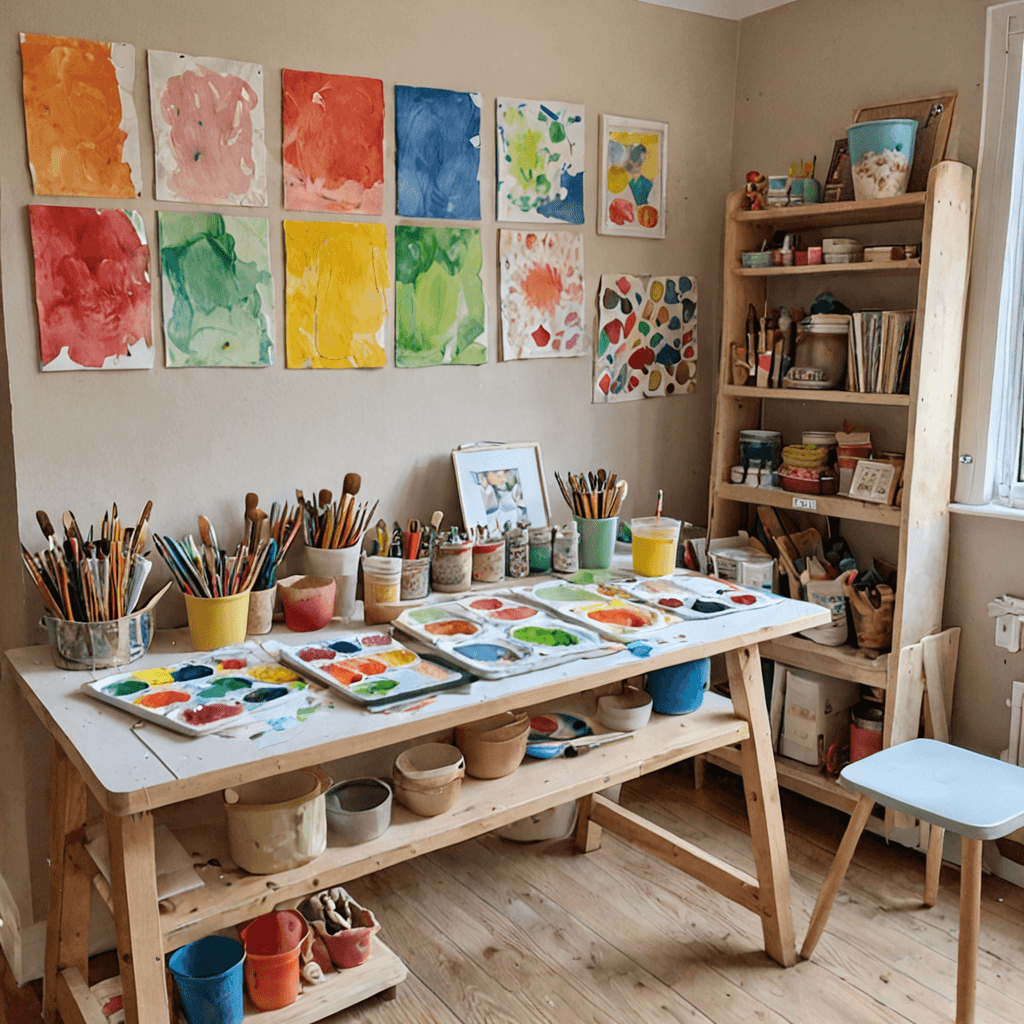
    When parents picture children’s art classes, they often imagine a single activity — drawing, or painting, or maybe clay. But the most effective early art education isn’t built around one medium; it’s built around variety. Mixed media programs, where children move between drawing, painting, collage, sculpture, and printmaking, develop young artists in ways that sticking to one material can’t. Below, we explain what mixed media actually means for a child, why the variety is the point rather than a distraction, and what to look for in a quality program for your Etobicoke child.

    What “Mixed Media” Actually Means for Kids

    Mixed media simply means working with more than one material or technique — sometimes within a single piece, sometimes across different projects over a term. For children, that might look like a collage that combines painted paper, drawing, and pasted textures; a sculpture built from found objects; printmaking with simple stamps and rollers; or a painting that layers watercolour, oil pastel, and ink.

    The idea isn’t to overwhelm a child with materials. It’s to let them discover that art isn’t one fixed thing with one right tool — it’s an enormous range of ways to make and express. For a young child, that discovery is genuinely formative.

    Why Variety Builds Better Young Artists

    Here’s the core argument, and it runs counter to the instinct that children should “master one thing first.”

    Different materials develop different skills. Drawing builds observation and line control. Painting develops colour understanding and brush control. Sculpture builds spatial and three-dimensional thinking. Collage develops composition and an eye for arrangement. Printmaking teaches process and repetition. A child who only ever draws develops a narrow set of skills; a child who works across media develops a broad, transferable foundation.

    Variety also keeps children engaged. Young attention spans thrive on novelty, and a child who might lose interest doing the same activity every week stays excited when each session brings something new to explore. Engagement isn’t a frivolous goal here — an engaged child practises more, experiments more, and builds confidence faster.

    And critically, variety helps children discover what they love. A child who has only ever drawn might assume they’re “not good at art” because drawing doesn’t click for them — when in fact they might come alive with clay or paint. Exposing children to a range of media lets each child find the materials that resonate, which is often what turns a reluctant participant into a genuinely enthusiastic young artist. In our experience teaching children, the variety is frequently what reveals a child’s real strengths — strengths that a single-medium class would have left undiscovered.

    Variety Builds Toward Real Foundations

    Some parents worry that moving between media means children never develop depth. In practice, the opposite tends to be true in the early years. A broad foundation across materials gives children a richer visual vocabulary and stronger fundamentals — composition, colour, form, observation — that carry into any medium they later specialize in.

    The depth comes later, and it comes more readily to a child with a wide foundation. A teen who eventually focuses on, say, drawing for a portfolio preparation program brings far more to that focus if their early years included paint, sculpture, and collage. Early breadth and later depth aren’t in tension — breadth is what makes depth possible.

    What a Quality Children’s Program Looks Like

    Not all children’s art classes are equal, and a few markers separate a strong program from glorified craft time.

    A quality program is taught by real art instructors, not just supervised activity, so children receive actual guidance on technique and composition rather than just being handed materials. It’s age-appropriate, meeting young children where they are developmentally while still teaching genuine skills. It balances structure with freedom — enough guidance that children learn, enough openness that they create their own work rather than copying a template. And it groups children thoughtfully so the instruction fits the age range in the room.

    For children specifically, a group setting is part of the value: kids learn from watching peers, draw energy from a shared creative space, and develop socially alongside artistically. Our art classes in Etobicoke are designed around exactly this kind of guided, varied, genuinely instructional experience, and our group art classes for children give young artists that shared creative environment near Cloverdale Mall.

    Starting Your Child in Art

    The best way to know whether a program fits your child is to let them try it. A trial lesson at Muzart Music and Art School is $35, and it’s a low-pressure way for your child to experience a real class, work with a few different materials, and for you to see how they respond before committing. Ongoing group art classes for children start at $155 monthly with all materials included, so there are no surprise supply costs as your child explores new media. You can request more information for the details that fit your child’s age, or book a trial lesson to get them started.

    What matters most at this age isn’t producing gallery-ready pieces — it’s building a foundation, discovering what they love, and keeping the door to creativity wide open. A varied, well-taught program does all three.

    Frequently Asked Questions

    What is mixed media art for children?

    It means working with more than one material or technique — drawing, painting, collage, sculpture, printmaking — either within a single piece or across different projects. For children, it’s about discovering the full range of ways to make art rather than being limited to one medium.

    Isn’t it better for my child to master one medium first?

    In the early years, breadth usually serves children better than narrow focus. Different materials build different skills — observation, colour, spatial thinking, composition — and a broad foundation makes later specialization easier and richer. Depth comes later, and comes more readily to a child with wide early experience.

    What age should my child start art classes?

    Quality programs are designed to meet young children where they are developmentally while still teaching real skills. Children can begin benefiting from guided, age-appropriate art instruction quite young — the key is a program structured for their age group rather than one-size-fits-all.

    Are group art classes good for kids, or is private better?

    For most children, a group setting adds real value — kids learn from watching peers, enjoy a shared creative environment, and develop socially alongside artistically. Private lessons suit children with specific goals or who need individualized pacing. Many families start in group classes and add private instruction later if a particular focus emerges.

    How do I know if a children’s art program is high quality?

    Look for real art instructors providing genuine technique guidance (not just supervised craft time), age-appropriate instruction, a balance of structure and creative freedom, and thoughtful age grouping. The best way to assess fit is to have your child try a class and see how they respond.


    A varied, well-taught art program does more than fill an afternoon — it builds foundations and helps your child discover what they love. If you’d like your child to experience one, request more information or book a trial lesson to get started.

  • Piano Lessons in Etobicoke vs Online: What Works for Kids

    Piano Lessons in Etobicoke vs Online: What Works for Kids

    Piano Lessons in Etobicoke vs Online: What Works for Kids

    Online piano lessons exploded in availability over the past few years, and for busy Etobicoke families the appeal is obvious — no commute, flexible scheduling, often a lower price. But “convenient” and “effective” aren’t the same thing, especially for children. Below, we lay out where online lessons genuinely work, where they quietly fall short for young learners, and the hidden variables that determine which format will actually serve your child best. The honest answer isn’t that one is universally better — it’s that they’re better for different children and different stages.

    The Real Trade-Off Isn’t Convenience vs Quality

    Let’s start by being fair to online lessons, because they aren’t a scam or a downgrade by default. For a self-motivated teenager or an adult learner, online piano lessons can work well. Older students can follow verbal instruction, position their own hands correctly, manage their own practice, and articulate what they’re struggling with. For these learners, the convenience is a real win with little cost.

    The picture changes for young children, and it changes for specific, concrete reasons — not vague ones. The difference isn’t about screen quality or internet speed. It’s about the things a teacher does in the room that a camera can’t replicate, especially in the early years when physical habits are being formed.

    What an In-Person Teacher Catches That a Screen Can’t

    The single biggest advantage of in-person lessons for young children is the teacher’s ability to see and adjust the body directly. Piano is physical: hand shape, wrist height, finger curvature, posture, and the weight transferred into each key all matter enormously, and all of them are hard to assess accurately through a webcam.

    In a room, a teacher notices a collapsing wrist or a flattening finger instantly and can gently reposition the child’s hand. Over a screen, those details are often invisible — the camera angle hides the hands, the child’s framing drifts, and small problems compound for weeks before anyone catches them. With young children, who can’t reliably self-diagnose or describe what their hands are doing, this is a serious limitation.

    There’s a hidden variable here that deserves naming directly. In our experience teaching beginners, the most damaging technique problems develop quietly at home — and they’re often masked when a child practises on a light, unweighted keyboard. On a keyboard with no key resistance, a child barely has to do anything to make a sound, so weak finger and hand muscles never get challenged and the gaps stay invisible. We typically see this surface around the six-month mark: the student suddenly can’t manage staccato, dynamics, or faster passages on a real piano because the muscles were never built. An in-person teacher catches the developing problem early because they can feel and see what’s happening; an online setup, especially paired with an unweighted home keyboard, can let it run undetected for months. The format and the home instrument are linked variables, and for young children both lean toward in-person.

    Attention, Engagement, and the Younger Child

    Beyond technique, there’s the simple matter of attention. Young children are physically present in a way screens struggle to hold. In a studio, a teacher can read a child’s focus, redirect a wandering mind, use the physical instrument hands-on, and maintain the kind of engaged back-and-forth that keeps a six- or eight-year-old learning. Online, attention frays faster, distractions at home multiply, and the teacher loses many of the tools they’d use to re-engage a child in person.

    This doesn’t mean every child needs in-person lessons forever. It means that for the foundational years — when habits, technique, and a love of the instrument are all being established — the in-person setting gives young children meaningful advantages. Our piano lessons in Etobicoke are built around that hands-on, in-room teaching precisely because it’s what serves children best during the years that matter most for technique.

    When Online Lessons Make Sense

    To be balanced: there are situations where online lessons are a reasonable choice. A motivated teen with solid fundamentals already in place can often continue well online. An adult learner who can self-manage may prefer the convenience. A family in a genuinely remote area, or one juggling impossible logistics, may find online lessons far better than no lessons at all. And online can work as a supplement — an occasional remote lesson when in-person isn’t possible that week.

    The key is to be honest about which category your child falls into. A self-directed fifteen-year-old and a wiggly seven-year-old beginner are completely different cases, and the format that suits one may shortchange the other.

    The Setup That Actually Works

    If you do choose in-person lessons for your young child, pair them with the right instrument at home — a weighted digital piano or an acoustic piano, not a light unweighted keyboard — so practice and lessons train the same muscles. And if you’re leaning toward online for an older, more independent learner, the same instrument advice applies even more strongly, because there’s no teacher in the room to catch a developing problem.

    Whichever direction you’re considering, the easiest way to decide is to experience an in-person lesson first and compare. A trial lesson at Muzart Music and Art School is $35, and it lets you see how your child responds to hands-on teaching before committing to any format. Ongoing private piano lessons run $155 monthly with all materials included. You can book a trial lesson or request more information to talk through what’s right for your child’s age and stage.

    Frequently Asked Questions

    Are online piano lessons effective for young children?

    They can work in a pinch, but for young beginners in-person lessons offer real advantages, because a teacher in the room can see and adjust hand shape, wrist position, and posture directly — things that are hard to assess through a webcam. Online lessons tend to suit self-directed teens and adults far better than young children forming their first habits.

    What’s the main downside of online lessons for kids?

    The teacher can’t physically see or correct the body as well, and developing technique problems can go undetected for weeks — especially if the child practises on a light, unweighted keyboard at home that masks weak technique. Young children also tend to lose focus more easily over a screen.

    Is in-person worth the extra commute and cost?

    For young children in their foundational years, the hands-on correction and engagement usually justify it, because that’s when technique and habits are set. For independent older students, the calculus can tip toward online convenience. It depends on the child’s age and self-direction.

    Can we combine online and in-person lessons?

    Yes — online can work well as an occasional supplement when in-person isn’t possible. Many families use in-person as the primary format and lean on online only for the weeks when getting to the studio isn’t feasible.

    What instrument should we have at home for either format?

    A weighted digital piano or an acoustic piano. Avoid light, unweighted keyboards, which don’t build proper finger and hand strength and can hide developing technique problems — a risk that’s even greater with online lessons, where no teacher is in the room to catch it.


    The right format depends on your child, not on which option is trendiest. If you’d like to see how your child responds to hands-on teaching before deciding, book a trial lesson and compare for yourself.

  • OCAD vs Sheridan: Which Portfolio Strategy Gets Your Teen In

    OCAD vs Sheridan: Which Portfolio Strategy Gets Your Teen In

    OCAD vs Sheridan: Which Portfolio Strategy Gets Your Teen In

    If your teen is applying to study art or design in Ontario, OCAD University and Sheridan College are almost certainly on the shortlist — and they reward very different kinds of portfolios. Applying to both with one generic body of work is one of the most common mistakes we see, because what impresses one can underwhelm the other. Below, we break down how the two schools think differently about portfolios, what that means for the pieces your teen should be building, and how to prepare strategically for each rather than hoping a single portfolio fits all.

    Two Schools, Two Philosophies

    The first thing to understand is that OCAD and Sheridan are not competing versions of the same thing. They have genuinely different orientations, and their admissions portfolios reflect that.

    OCAD University is an art and design university with a strong fine-art and conceptual foundation. Across many of its programs, reviewers are interested in how a student thinks — the ideas behind the work, the willingness to experiment, evidence of a developing personal voice, and process as much as polish. A sketchbook or process work that shows how an idea evolved can carry real weight.

    Sheridan is renowned for its industry-focused, craft-intensive programs, particularly in areas like animation and illustration where it has a formidable reputation. Portfolios there often need to demonstrate strong technical fundamentals — drawing skill, observation, life drawing, structure — because the programs are training students toward demanding professional standards from day one.

    That’s the headline difference: OCAD frequently leans toward conceptual range and ideas, Sheridan toward technical craft and fundamentals. Neither is “harder” or “better” — they’re looking for different evidence. Because both schools set and periodically update their own specific requirements, deadlines, and submission formats, always confirm the current details directly on each school’s official admissions pages before finalizing anything. What follows is strategy, not a substitute for their published requirements.

    What This Means for Your Teen’s Pieces

    The strategic implication is that a strong application to both schools usually isn’t one portfolio — it’s a core body of work with school-specific emphasis.

    For an OCAD-leaning portfolio, that often means including pieces that show range and conceptual thinking: work in different media, evidence of ideas being explored and developed, and pieces that reveal a point of view rather than just technical competence. Process material can be an asset rather than filler.

    For a Sheridan-leaning portfolio, especially for its highly competitive craft programs, the emphasis usually shifts toward demonstrable skill: confident observational drawing, life drawing, an understanding of form and structure, and pieces that prove the fundamentals are solid. The bar for technical execution tends to be high.

    The smart approach is to build a strong, versatile core of work over many months, then tailor the selection and framing for each school. A teen who understands why they’re including each piece — and what each school is looking to see — presents far more convincingly than one submitting an identical stack to every program.

    Why Strategy Beats Volume

    Parents and teens often assume more pieces means a stronger portfolio. In practice, a focused selection of strong, intentional work almost always outperforms a large pile of uneven pieces. Reviewers can tell when a portfolio is curated versus when it’s everything the student has ever made.

    This is where preparation guided by someone who understands portfolio review earns its keep. The skills involved — selecting the right pieces, identifying gaps, strengthening weak work, sequencing the portfolio, and articulating the thinking behind it — are learnable, but they’re hard to navigate alone the year applications are due. Our portfolio preparation program is built around exactly this kind of strategic, school-aware preparation, and our portfolio preparation in Etobicoke gives local families a place to do that work in person, with feedback, over the months it actually takes.

    In our experience preparing teens for art school applications, the students who start early and treat the portfolio as a developing project — rather than a last-minute scramble — consistently submit stronger, more coherent work. The pieces have time to mature, weak work gets replaced, and the final selection is deliberate.

    Timing Your Teen’s Preparation

    The single biggest lever on portfolio quality is time. A portfolio built over a school year has room for revision, growth, and replacement of weaker pieces; a portfolio assembled in the final weeks before a deadline rarely does. Both OCAD and Sheridan applications come with their own timelines and submission windows, so the practical advice is to confirm those dates early and work backward, leaving generous runway for the work itself.

    For a teen serious about both schools, beginning in the year before applications are due is ideal. That runway is what allows a single strong core of work to be shaped intelligently for two different audiences.

    Getting Expert Eyes on the Work

    The most useful thing a teen can have during portfolio preparation is honest, informed feedback — someone who has seen what strong portfolios look like and can tell them what’s working and what isn’t while there’s still time to change it. A portfolio prep trial lesson at Muzart Music and Art School is $70, and it’s a low-pressure way to get an experienced assessment of where your teen’s work currently stands and what a realistic plan to application day looks like.

    Ongoing portfolio preparation runs $310 monthly for one-hour lessons with all materials included, giving your teen consistent, individualized guidance through the full arc of building their submission. You can book a trial lesson or request more information to talk through your teen’s goals and timeline.

    Frequently Asked Questions

    Can my teen use the same portfolio for OCAD and Sheridan?

    They can use the same core body of work, but the selection and emphasis should usually be tailored to each. OCAD reviewers often value conceptual range and process, while Sheridan’s craft-intensive programs tend to weight technical fundamentals heavily. A single, untailored portfolio risks underwhelming one school. Always check each school’s current published requirements.

    Is OCAD or Sheridan harder to get into?

    Neither is universally “harder” — it depends on the specific program and what they’re evaluating. Some of Sheridan’s craft programs are extremely competitive on technical skill, while OCAD programs assess a different mix of qualities. The better question is which fits your teen’s strengths and goals.

    How many pieces should be in the portfolio?

    There’s no single answer, and each school sets its own requirements, so confirm those first. As a principle, a focused selection of strong, intentional pieces outperforms a large pile of uneven work. Quality and coherence matter more than volume.

    When should my teen start preparing?

    Ideally in the year before applications are due. The biggest driver of portfolio quality is time — runway to develop, revise, and replace weaker pieces. Starting early is the most reliable way to submit strong, coherent work to both schools.

    Do you help with school-specific portfolio requirements?

    Yes — portfolio preparation at Muzart is built around understanding what different schools look for and shaping a student’s work accordingly. We always work alongside each school’s current official requirements, which we encourage families to confirm directly, since they’re updated periodically.


    Applying to both OCAD and Sheridan well means preparing strategically, not generically. If your teen is aiming for either or both, book a portfolio prep trial lesson and we’ll assess where their work stands and map a realistic plan to application day.

  • Voice Lessons for Etobicoke Teens: Protecting a Changing Voice

    Voice Lessons for Etobicoke Teens: Protecting a Changing Voice

    Voice Lessons for Etobicoke Teens: Protecting a Changing Voice

    The teen years are the single most delicate window in a singer’s development, and most parents don’t realize how much is happening physically until something goes wrong — a strained throat after choir, a voice that cracks unpredictably, a teen who suddenly hates how they sound. Below, we explain what actually changes in an adolescent voice, why this is exactly the time to have trained guidance rather than the time to wait, and what good teen voice instruction looks like. The goal isn’t just better singing — it’s a healthy instrument that lasts into adulthood.

    What’s Actually Happening to a Teenage Voice

    During adolescence, the larynx grows, the vocal folds lengthen and thicken, and the entire resonating system of the throat and chest changes shape. This is most dramatic in voices that deepen significantly, but every adolescent voice goes through some version of this transition. The instrument your teen had at twelve is not the instrument they have at fifteen.

    The practical result is instability: notes that were easy become hard, range shifts unpredictably, and the voice can feel unreliable from one week to the next. This is completely normal. The risk is not the change itself — it’s how a teen responds to it. Many adolescents instinctively push and strain to force the voice back to where it used to be, and that pushing is exactly what causes harm.

    This is why the teen years are not the time to coast. They’re the time when informed guidance protects the instrument through a vulnerable phase.

    Vocal Health Comes Before Vocal Tricks

    The most important thing a teenager can learn in voice lessons isn’t a high note or an impressive run — it’s how to use the voice without hurting it. Good teen instruction is built on healthy fundamentals: breath support so the throat isn’t doing work the diaphragm should do, relaxed phonation instead of squeezing, proper warm-ups before singing and cool-downs after, and the judgment to know when to stop rather than push through pain or fatigue.

    In our experience teaching adolescents, the students who struggle most are usually the ones singing hard in multiple settings — school choir, a band, musical theatre, singing along to demanding songs at full volume — with no training in how to do any of it safely. Volume and ambition without technique is the recipe for strain. A trained teacher teaches the teen to meet all those demands without grinding down the instrument.

    These habits matter far beyond the teen years. A singer who learns healthy technique at fifteen carries a protected, capable voice into their twenties and beyond. A singer who spends those years straining often arrives at adulthood with limitations that were avoidable. Our singing lessons in Etobicoke put vocal health first for exactly this reason — technique that protects the instrument is the foundation everything else is built on.

    Working With the Change, Not Against It

    A skilled teacher doesn’t fight an adolescent voice — they adapt to it. That means adjusting repertoire to suit the voice’s current comfortable range rather than forcing songs that sit in an unstable register, and choosing material that builds confidence instead of exposing every crack.

    It also means reframing the awkwardness. Many teens become self-conscious and discouraged when their voice stops cooperating, and some quit singing entirely during this window — which is a genuine loss, because they abandon the instrument right before it settles into its adult form. A good teacher normalizes the messiness, keeps the teen engaged through it, and gets them to the other side with both their voice and their confidence intact.

    Private instruction matters here specifically because the transition is so individual. No two teen voices change on the same timeline or in the same way, and a one-to-one setting lets the teacher respond to exactly what this teen’s voice is doing this month — something a group setting simply can’t offer at this stage.

    For Teens With Bigger Goals

    For teens aiming higher — musical theatre, an arts-focused high school, a serious choir, or eventually a post-secondary music program — the teen years are foundational rather than optional. The technique built now is what makes advanced work possible later.

    This is especially true for students considering arts high school auditions, where vocal performance is often central. Many auditioners for specialized arts programs are singers, and the difference between a strained, pushed audition and a controlled, healthy one is usually months of proper preparation. If your teen has those ambitions, starting voice training early — and protecting the voice through the change — is one of the best investments you can make in their options down the road.

    Getting Started Without Pressure

    Starting voice lessons as a teen doesn’t require any commitment or prior experience — it starts with a single conversation and a chance for your teen to sing in a supportive setting. A trial lesson at Muzart Music and Art School is $35, and it lets your teen meet a teacher, sing a little, and feel out whether the fit is right with no pressure attached.

    Ongoing private voice lessons run $155 monthly with all materials included. For a teenager navigating a changing voice, that consistent weekly check-in is genuinely protective — it means someone trained is monitoring how they’re using the instrument week to week, catching strain habits before they become entrenched. You can book a trial lesson whenever you’re ready, or request more information if you’d like to ask questions first.

    Frequently Asked Questions

    Is it safe for teenagers to take voice lessons while their voice is changing?

    Not only safe — it’s the ideal time. The risk during the voice change comes from untrained singing, where teens push and strain to force notes. A trained teacher teaches healthy technique that protects the voice through the transition, which is far safer than singing hard with no guidance in choir, band, or on their own.

    My teen’s voice cracks and feels unreliable. Should we wait until it settles?

    Waiting often means months of unsupervised straining during the most vulnerable phase. It’s generally better to have guidance through the change than to wait it out, because the habits formed during this window — good or bad — tend to stick. A teacher helps your teen navigate the instability safely rather than fighting it alone.

    What’s the difference between teen voice lessons and adult lessons?

    The core difference is that a teen’s instrument is still physically changing, so the teacher adapts repertoire and technique to a moving target, prioritizing vocal health and range protection over pushing for advanced material. The focus is on building a healthy foundation that the adult voice will be built on.

    Can voice lessons help with arts high school auditions?

    Yes. Vocal performance is central to many arts high school auditions, and proper preparation makes a real difference between a strained audition and a controlled, confident one. Teens with those goals benefit from starting early and building healthy technique well before audition season.

    How often should a teenager have voice lessons?

    Weekly lessons are the standard and, during the voice change especially, that regular cadence is protective — it gives a trained teacher a consistent opportunity to monitor how the teen is using their voice and to correct strain habits before they take hold.


    The teen years decide a lot about the voice your child carries into adulthood. If you’d like your teen to come through that change with a healthy, capable instrument, book a trial lesson and let an experienced teacher guide them through it.

  • RCM Exam Fees 2026: What Parents Should Budget For

    RCM Exam Fees 2026: What Parents Should Budget For

    RCM Exam Fees 2026: What Parents Should Budget For

    If your child is preparing for a Royal Conservatory of Music examination, one of your first practical questions is almost certainly about cost — and it’s harder to answer than it should be, because the total is rarely a single number. Below, we break down every category of expense that goes into an RCM exam year so you can budget realistically, avoid surprises, and understand what you’re actually paying for. Where exact dollar figures are involved, we’ll point you to the official source, because fees are set by the Conservatory and updated periodically.

    Why “How Much Is the RCM Exam?” Has No Simple Answer

    Parents often expect a single exam fee, the way you’d pay for a swimming badge or a school trip. The reality is that an RCM examination year is made up of several separate costs, some required and some optional, and they don’t all arrive at the same time.

    Broadly, the costs fall into these categories: the practical exam fee itself, the theory or co-requisite exam fee (at the levels where one is required), repertoire and study materials, and a few situational costs like late registration or rescheduling. Add the cost of the lessons that prepare your child, and you have the full picture.

    Because the Conservatory sets and periodically adjusts the official exam fees, we strongly recommend confirming the current amounts directly on the Royal Conservatory’s website before you budget. What we can do here is explain each category clearly so you know exactly what to look up and what to expect.

    The Practical Exam Fee

    This is the core cost most parents are thinking of: the fee to register your child for their graded practical examination, where they perform repertoire, technical requirements, ear tests, and sight reading for an examiner.

    The key thing to understand is that this fee increases as the level rises. An early-level practical exam costs considerably less than an advanced one, so a family whose child is climbing the levels year over year should expect this line item to grow over time. When you check the official fee schedule, look specifically at your child’s level for the current session rather than assuming a flat rate across all grades.

    Registration also happens within set windows each session, which matters for budgeting timing — you’ll typically be paying this fee weeks or months before the exam itself.

    The Theory (Co-Requisite) Exam Fees

    Here’s a cost that catches many families off guard. Starting at certain levels, the Conservatory requires students to complete theory and other co-requisite examinations in order to receive their practical certificate. These theory exams carry their own separate fees, distinct from the practical exam.

    This means that as your child advances, a single “exam year” may actually involve paying for both a practical exam andone or more written co-requisite exams. Because the specific co-requisites and the levels at which they kick in are set by the Conservatory and do occasionally change, this is another area to verify on the official site rather than rely on what was true a few years ago. If your child is working toward the levels where theory becomes mandatory, building strong theory habits early pays off — something we fold into Etobicoke RCM exam prep well before the requirement arrives.

    Books, Repertoire, and Materials

    Beyond the exam fees themselves, every level requires specific materials: the repertoire book for the grade, technical requirement books, ear training and sight reading resources, and often a theory workbook. These are purchased separately and refresh as your child moves up a level.

    For families enrolled with us, this is one area where the math is simpler: our music lessons include all materials at no extra charge — private lessons run $155 monthly with materials included. That doesn’t cover the Conservatory’s own exam registration fees, which are paid directly to the RCM, but it does remove the recurring cost of method books and supplementary materials from your planning.

    The Costs Parents Forget

    A few situational expenses tend to surprise families, so they’re worth flagging:

    Late registration fees. If you miss the standard registration window, the Conservatory typically charges an additional late fee. Marking the registration deadlines in your calendar is the easiest money you’ll ever save.

    Rescheduling or withdrawal. Plans change, children get sick, and the Conservatory has its own policies on rescheduling and refunds. Read these before you register so you understand what’s recoverable if something comes up.

    The preparation itself. This is the largest ongoing investment and the one that actually determines whether the exam fee is money well spent. An exam fee paid for an underprepared student is the most expensive outcome of all. Consistent weekly piano lessons in Etobicoke — or lessons on whichever instrument your child is examined in — are what convert the registration fee into a strong result.

    How to Budget for a Full RCM Year

    Putting it together, a realistic budget for an RCM exam year includes: ongoing lesson fees across the year, the practical exam registration fee for your child’s level, any required theory or co-requisite exam fees, and the materials for the level (covered for our students). Build in a small buffer for the situational costs above, and confirm every Conservatory figure against the official current schedule.

    The reassuring part is that none of this is hidden once you know the categories. Families who plan around these line items at the start of the year are rarely surprised by the total. Families who treat the exam as a single fee almost always are.

    If your child is just beginning their RCM journey, the smartest first step is a trial lesson — $35 at Muzart Music and Art School — where we can assess their current level and map out a realistic timeline and cost path before any exam registration is on the table. You can book a trial lesson or request more information to talk through your child’s specific situation.

    Frequently Asked Questions

    How much does an RCM exam cost in 2026?

    There is no single fee — the total depends on your child’s level, whether a theory co-requisite is required, and materials. Practical exam fees rise with each level, and theory exams carry separate fees. For exact current amounts, check the Royal Conservatory’s official fee schedule, as the Conservatory sets and periodically updates these figures.

    At what level does RCM theory become required?

    The Conservatory requires theory and other co-requisite exams starting at certain levels in order to earn the practical certificate. Because the specific requirements and levels are set by the RCM and can change, confirm the current co-requisite rules on the official site for your child’s grade.

    Are exam fees included in my lesson cost?

    No. Exam registration fees are paid directly to the Royal Conservatory and are separate from lesson fees. At Muzart, lesson materials and method books are included in the monthly tuition, but the Conservatory’s own exam fees are always paid to the RCM.

    What happens if I miss the registration deadline?

    The Conservatory typically applies a late registration fee, and in some cases late registration may not be available at all for a given session. Noting the deadlines well in advance is the simplest way to avoid both the fee and the stress.

    Is the RCM exam worth the cost?

    For students who are well prepared, graded exams provide structured goals, objective feedback, and recognized credentials. The value comes from the preparation, not the registration — which is why consistent lessons leading into the exam matter far more to the outcome than the fee itself.


    Budgeting for an RCM year is much easier once you can see all the pieces. If you’d like help mapping your child’s level, timeline, and realistic cost path, book a trial lesson and we’ll walk through it with you — and always confirm the Conservatory’s current fees directly with the RCM.