
Developing Fine Motor Skills Through Art: More Than Just Drawing
Table of Contents
When parents think about the benefits of art education, they often focus on creativity, self-expression, and aesthetic appreciation. While these are certainly important outcomes, art classes provide something equally valuable but less immediately obvious: systematic development of fine motor skills that impact virtually every aspect of a child’s daily life. At Muzart Music and Art School, located in Etobicoke near Cloverdale Mall, we witness how children who engage regularly in art activities develop the precise hand and finger control that supports everything from handwriting to tying shoes to using utensils effectively.
Fine motor skills—the ability to make small, precise movements with the hands and fingers—are fundamental to children’s independence and academic success. These skills don’t develop automatically; they require consistent practice with varied activities that challenge and refine hand-eye coordination, finger strength, grip control, and bilateral coordination. Art education provides this practice in engaging, purposeful ways that feel like play but systematically build the motor competencies children need for academic work and daily living.
Understanding Fine Motor Development Through Art
Fine motor development follows a predictable sequence in childhood, and art activities can support each stage of this progression. Young children begin with large movements using the whole arm, gradually developing the ability to make smaller, more controlled movements from the wrist, then the fingers, and finally achieving the precise pincer grasp and finger isolation needed for detailed work like writing or buttoning small buttons.
Art naturally scaffolds this developmental progression. Toddlers and preschoolers begin by making large marks with chunky crayons or painting with thick brushes, using gross motor movements from the shoulder. As children develop, art activities introduce increasingly refined tools and tasks—thinner markers, regular-sized pencils, delicate brushes, and projects requiring more precise control. This gradual increase in motor demands matches children’s developmental readiness while gently pushing them toward the next level of skill.
At our art lessons in Etobicoke, instructors are trained to recognize each child’s current motor skill level and provide projects that challenge them appropriately. A child with emerging fine motor control might work on broad brush strokes and simple shapes, while a peer with more developed skills tackles detailed colored pencil work or intricate cut-paper designs. This individualized approach ensures every child receives the motor practice they need at the right developmental moment.
The beauty of developing fine motor skills through art rather than purely remedial exercises is that art provides meaningful context and intrinsic motivation. Children aren’t just making circles to practice wrist rotation—they’re drawing the sun, painting a flower, or creating a design they’re proud of. This purposeful practice leads to more engaged effort and thus more effective motor learning than decontextualized skill drills.
Grip Development and Writing Readiness
One of the most direct ways art education supports academic success is through developing proper pencil grip—a foundational skill for handwriting that many children struggle to master. In group art classes and private art lessons, children constantly practice gripping various tools, naturally developing the hand strength and finger positioning needed for comfortable, efficient writing.
The progression through different art tools builds grip capacity systematically. Fat crayons or markers encourage young children to use their whole hand initially, building hand strength. As children transition to regular-width markers, narrower crayons, and eventually pencils, they naturally develop the tripod grip (thumb, index, and middle finger controlling the tool) that’s ideal for writing. Unlike direct grip instruction, which often feels forced and uncomfortable, the varied gripping required by different art materials allows children to discover comfortable, functional grips through experimentation.
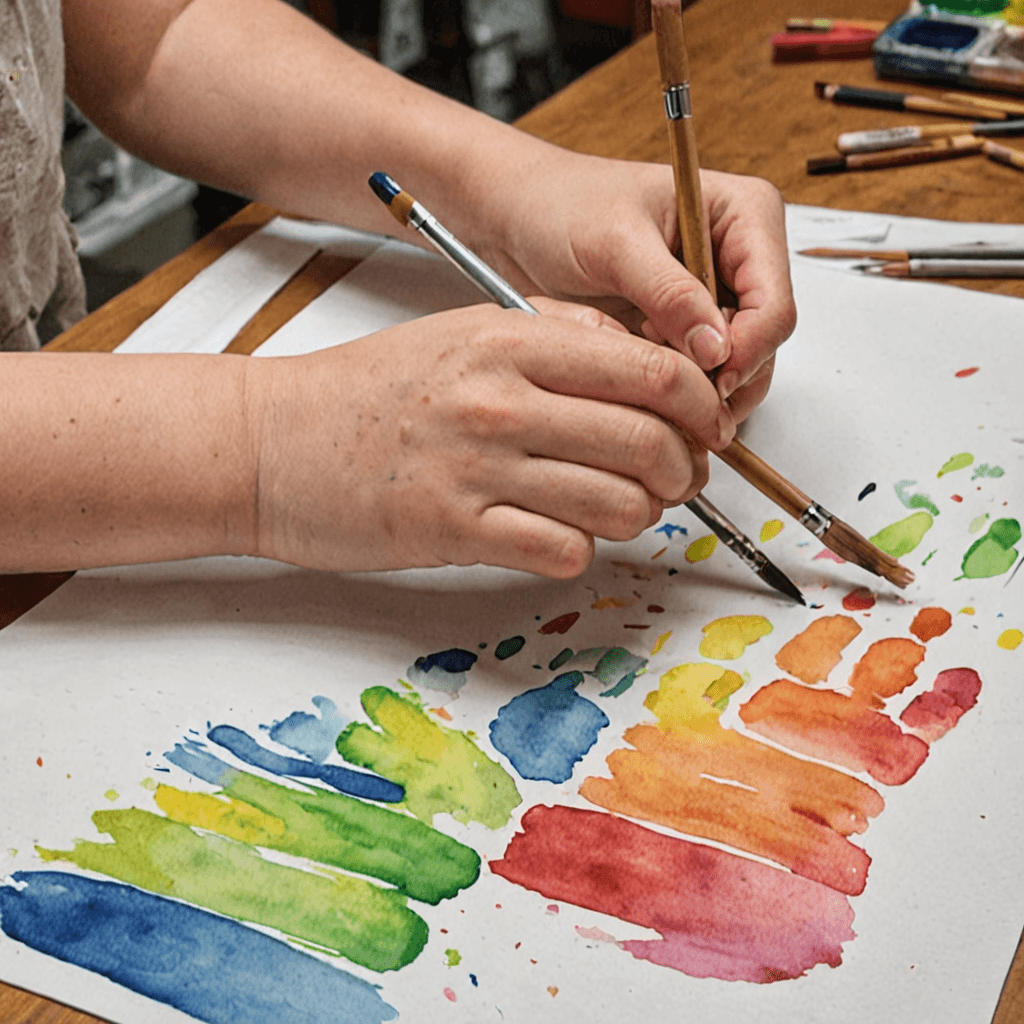
Brush handling in painting activities provides particularly valuable grip development. Holding a paintbrush requires similar finger positioning to holding a pencil but often feels more natural to young children. The vertical orientation of brush-holding (necessary to prevent drips) encourages proper wrist position. Children who paint regularly often develop better writing posture and grip than peers who haven’t had extensive brush experience because the painting context makes proper positioning feel necessary rather than arbitrary.
The sustained grip required for art projects also builds hand and finger strength essential for comfortable writing. Coloring in a large area, working on a project for 30-45 minutes, or repeatedly making specific strokes all strengthen the small muscles of the hand. Children who participate in regular art activities develop the endurance needed to write longer assignments without hand fatigue—a common challenge for students with underdeveloped fine motor skills.
Hand-Eye Coordination Enhancement
Art creation requires constant coordination between what the eyes see and what the hands do, making it one of the most effective activities for developing this crucial skill. When a child tries to draw what they observe, paint within boundaries, or place collage elements in specific locations, they’re practicing the precise hand-eye coordination needed for countless academic and daily tasks—from writing on lined paper to catching a ball to navigating a computer mouse.
Drawing from observation particularly strengthens hand-eye coordination. When children attempt to reproduce an object, image, or scene they’re looking at, they must constantly check their visual reference, translate what they see into hand movements, execute those movements, compare the result to their reference, and adjust. This feedback loop between visual input and motor output is exactly how hand-eye coordination develops and refines over time.
Tracing activities, while sometimes dismissed as uncreative, serve valuable motor development purposes, especially for younger children or those with coordination challenges. Tracing requires children to guide their hand precisely along a path while watching both the line they’re following and the mark they’re making—excellent practice for the coordination needed in writing. As children master tracing, they develop the visual-motor integration needed for more complex drawing and eventually for writing letters and numbers accurately.
Activities like cutting along lines, gluing specific shapes in particular locations, or painting within boundaries all require precise hand-eye coordination. These tasks aren’t just about following rules—they’re genuine motor challenges that develop the brain’s ability to translate visual information into accurate, controlled hand movements. Children who struggle with “staying in the lines” benefit from repeated practice in contexts where the outcome matters to them, which art naturally provides.
Bilateral Coordination and Hand Dominance
Many art activities require children to use both hands in coordinated but different ways—what’s called bilateral coordination. One hand might hold paper steady while the other cuts, or one hand might hold a painting while the other makes brush strokes. This differentiated use of the two hands is essential for countless daily tasks and academic activities, from tying shoes to writing (one hand moves the pencil, the other stabilizes the paper).
Art education provides natural, frequent practice in bilateral coordination. When children work on collage projects, one hand holds the paper or object being glued while the other applies glue and positions pieces. During painting, one hand often stabilizes the paper or holds a palette while the other makes brush strokes. Drawing activities may involve one hand holding a ruler or template while the other draws along it. All these activities strengthen the brain’s ability to coordinate different, complementary movements between the hands.
Working with different art materials also helps children solidify their hand dominance—establishing which hand will be their primary tool-using hand. While handedness has a genetic component, it’s also influenced by practice and opportunity. Art activities provide extensive practice using tools, allowing children to naturally discover which hand feels more comfortable and capable for detailed work. Establishing clear hand dominance by age 5-6 supports better development of skilled movements in that hand, which supports handwriting development.
For children who show mixed or inconsistent hand dominance, art activities provide low-pressure opportunities to explore tool use with both hands and eventually settle into consistent dominance. Art instructors at Muzart Music and Art School observe hand preference during activities and can share observations with parents if a child seems to have unclear dominance beyond the typical age for establishing it, as unclear dominance can sometimes impact handwriting development.
Finger Strength and Dexterity Development
Individual finger strength and the ability to move fingers independently (finger isolation) are crucial fine motor skills that art education develops systematically. Many art activities specifically target these skills in ways that children find engaging and purposeful, making the strength and dexterity building feel like creative expression rather than exercise.
Clay and playdough work provides exceptional finger strengthening. Squeezing, rolling, pinching, and shaping modeling materials builds the intrinsic hand muscles needed for sustained pencil control. The resistance these materials provide creates just the right amount of challenge to strengthen without straining developing hands. Children who work regularly with three-dimensional materials often develop better handwriting stamina and control than peers without this experience.
Tearing paper activities build finger strength and coordination in ways that differ from cutting. When children tear paper to create collage pieces or textured effects, they must use their thumb and fingers in opposition, applying and adjusting force carefully. This pincer movement strengthens the same muscles used in pencil grip while also developing the feedback sensitivity children need to adjust pressure appropriately—essential for writing without pressing too hard or too lightly.
Using small tools like detail brushes, fine-tipped markers, or precise cutting implements requires and develops finger isolation—the ability to move one or two fingers while keeping others relatively still. This skill is essential for efficient handwriting, where unnecessary finger movement wastes energy and reduces writing speed and neatness. Art activities that involve detailed work, whether drawing small elements or cutting intricate shapes, provide excellent practice in finger isolation.
Crossing the Midline and Spatial Awareness
Crossing the midline—the ability to reach across the body’s center with an arm or hand—is a motor skill that supports reading (eyes tracking from left to right across the page), writing (hand moving across the paper), and many daily activities. Art naturally encourages midline crossing as children work across a full sheet of paper or canvas, paint or draw at an easel, or reach for materials placed around their work space.
Large-scale art projects particularly encourage midline crossing and develop spatial awareness. When children paint on large paper or work at an easel, they must reach across their body to access all areas of their work surface. This repeated crossing of the midline strengthens the brain’s integration between its two hemispheres, supporting the coordinated processing needed for complex academic tasks like reading comprehension and mathematical reasoning.
Spatial concepts developed through art—understanding position, direction, size relationships, and spatial organization—also support fine motor execution. When children learn to position elements on a page, judge distances between objects, or create balanced compositions, they’re developing spatial awareness that helps with handwriting (spacing between letters and words, positioning text on a page) and mathematics (understanding geometric relationships, interpreting graphs and diagrams).
The relationship between large motor movements and fine motor control is important to understand. Children need a stable foundation of gross motor skills before fine motor skills can fully develop. Art activities that involve large movements—painting at easels, creating large chalk drawings, working on big craft projects—build the core and shoulder stability that ultimately supports controlled hand and finger movements. Art education that includes varied scales of work supports motor development more comprehensively than only small-scale activities.
Art Materials as Graded Motor Challenges
Different art materials provide different levels of motor challenge, allowing art instruction to systematically progress children’s fine motor abilities. Understanding this progression helps explain why quality art programs use diverse materials rather than only drawing supplies, and why the materials introduced evolve as children develop.
Painting with brushes represents a mid-level motor challenge. Brushes are easy to grip but require wrist flexibility, controlled pressure, and sustained hand posture. Watercolors require additional motor precision compared to tempera paints because they’re less forgiving—children must control water amounts and develop lighter touch. This progression from easier to more challenging painting media naturally advances motor skills.
Drawing tools progress from easy to challenging as well: fat crayons, then regular crayons, markers, colored pencils, regular pencils, and finally fine-detail pens. Each step in this progression requires slightly more refined finger control, lighter touch, or more precise grip. Art programs that thoughtfully introduce materials in developmental sequence support optimal motor skill growth.
Three-dimensional materials like clay, wire, beads, and fabric scraps each offer unique motor challenges. Working with clay develops hand strength and bilateral coordination. Threading beads strengthens pincer grip and hand-eye coordination. Manipulating fabric or felt pieces develops the gentle touch needed for controlling delicate materials. The variety of textures and resistance levels in art materials provides comprehensive motor challenge that builds diverse movement capabilities.
Cutting activities deserve special mention as they progress through stages of increasing motor difficulty. Children begin by tearing paper, then progress to snipping edges with scissors, cutting straight lines, cutting curves, and finally cutting complex shapes or cutting while turning paper rather than scissors. This systematic progression, when guided by an experienced art instructor, builds cutting skill without frustration. Group art classes provide opportunities for children to observe peers at various skill levels, learning cutting techniques through observation as well as direct instruction.
Supporting Fine Motor Development at Home
Parents can extend and reinforce the fine motor benefits of art lessons through simple home activities. Stock art supplies appropriate for your child’s age and skill level—not just coloring books and markers, but varied materials like clay, safety scissors, glue sticks, different types of paper, and basic paints. Having materials readily available encourages spontaneous creative play that builds motor skills.
Create a dedicated art space where children can work without worry about mess, or establish clear expectations and protections for working at the dining table. When children know they can freely use art materials without excessive restrictions, they’re more likely to engage in the extended creative sessions that build motor skills effectively. The art kits included in our program provide comprehensive materials so children have professional-quality supplies for home practice between lessons.
Resist the urge to jump in and “help” when your child struggles with motor-challenging tasks like cutting, unless they’re genuinely frustrated or request assistance. The struggle itself is the motor learning—each attempt builds skill even if the immediate result isn’t perfect. Comments like “I see you’re working hard on cutting that curve” acknowledge effort without fixing the problem, allowing children to persist in the productive struggle that develops competence.
Model a growth mindset about motor skills, just as you would about academic subjects. Comments like “your cutting is getting more controlled with practice” or “I noticed how carefully you held your brush today” emphasize the connection between effort and improvement. When children understand that motor skills develop with practice rather than being fixed abilities, they’re more willing to attempt challenging tasks and persist through difficulty.
Recognizing When Additional Support May Be Needed
While art education supports typical fine motor development beautifully, some children have motor challenges that require additional intervention beyond art class. If your child shows significant difficulty with age-appropriate motor tasks—struggles much more than same-age peers with gripping pencils, has persistent trouble with cutting, shows unusual fatigue during handwriting, or seems clumsy with small objects—consult with your pediatrician about whether occupational therapy evaluation would be appropriate.
Art instructors sometimes notice motor challenges before parents or teachers do because art activities reveal fine motor abilities clearly. If an instructor mentions concerns about your child’s motor skills, take these observations seriously. They’re not criticisms but professional observations that might indicate your child would benefit from additional support. Early intervention for motor difficulties makes significant difference in long-term outcomes.
For children with identified motor challenges, art education can be valuable part of a comprehensive support plan that might also include occupational therapy. The engaging, purposeful nature of art activities often motivates children with motor difficulties to practice movements they might resist in therapy contexts. Coordination between art instructors and occupational therapists can create consistent, supportive approach to motor development.
The Long-Term Impact of Strong Fine Motor Skills
The fine motor skills developed through art education provide benefits that extend throughout childhood and into adolescence. Children with well-developed fine motor skills often show better handwriting, which supports academic success not just in early grades but through high school when note-taking demands increase. Strong fine motor control also supports performance in subjects like geometry, science (laboratory work), and technology (keyboard skills, device manipulation).
Beyond academics, fine motor skills impact independence and self-esteem. Children who can efficiently button clothing, tie shoes, use utensils, and manipulate small objects feel more competent and independent. These daily living skills contribute significantly to children’s sense of capability and their willingness to attempt new challenges.
Fine motor skills also matter for career readiness in many fields. From healthcare to trades to technology, numerous careers require precise hand control and coordination. While we can’t predict which specific skills children will need in their future careers, developing strong, versatile fine motor abilities creates a foundation for learning whatever manipulative skills their chosen field requires.
Getting Started with Art Education
If you’re interested in providing your child with comprehensive fine motor development through engaging art education, starting is simple. Our art lessons in Etobicoke welcome children at all skill levels and developmental stages. Whether you’re interested in group art classes for the social benefits or private art lessons for individualized attention, both formats provide systematic fine motor development through engaging artistic activities.
Art education represents an investment in your child’s overall development, providing motor, cognitive, and creative benefits that support success in school and life. The systematic skill-building that happens through art activities creates a foundation for handwriting, academic work, and countless daily activities that require precision and control. Whether your child shows particular artistic talent or is simply exploring creative expression, the motor benefits of art education will serve them well.
Book a trial lesson to experience how art education at Muzart Music and Art School supports children’s development in multiple domains. Request more information about our programs, or contact us with questions about how art classes can support your child’s fine motor development. We’re here to help your child develop the physical skills that support independence, academic success, and creative expression.
Frequently Asked Questions
At what age should children start art classes for fine motor development?
Children can benefit from art activities as early as age 3-4, though the specific activities and expectations differ significantly across age groups. Very young children (3-4) benefit from large-scale, process-oriented art that builds basic motor control without pressure for realistic results. Children aged 5-7 are developmentally ready for more structured art instruction that systematically builds fine motor skills while teaching basic artistic concepts. By ages 8 and up, children have sufficient motor control to work on more detailed projects and can handle diverse art materials with increasing sophistication. The key is matching the art activities to the child’s current developmental stage rather than pushing for results beyond their motor capability. Starting children in age-appropriate art instruction early establishes positive associations with art while systematically building motor skills.
Can art classes help children who struggle with handwriting?
Yes, art classes can significantly support children who have handwriting difficulties, though art shouldn’t be considered a replacement for direct handwriting instruction or occupational therapy if needed. The grip strengthening, hand-eye coordination, finger isolation, and sustained grip practice that happen naturally during art activities all directly support handwriting skills. Many children find art more enjoyable than handwriting practice, which means they’ll engage in longer practice sessions that build motor skills more effectively. However, it’s important to note that handwriting also involves specific letter formation patterns and movement sequences that need direct instruction. Art education builds the underlying motor capacity that makes handwriting easier, but children still need appropriate handwriting instruction and practice to develop good writing technique.
What’s the best type of art activity for developing fine motor skills?
Rather than a single “best” activity, comprehensive fine motor development requires varied experiences with different materials and tasks. Drawing and coloring build pencil control. Painting develops wrist flexibility and sustained grip. Cutting strengthens bilateral coordination and finger strength. Clay work builds hand strength and three-dimensional manipulation skills. Beading develops pincer grip and hand-eye coordination. A quality art program provides this variety rather than focusing exclusively on one medium. The benefit comes from the diversity of motor challenges, as different activities strengthen different aspects of fine motor ability. At Muzart Music and Art School, our curriculum includes multiple media and techniques each semester, ensuring children develop well-rounded motor capabilities through comprehensive art experiences.
How long does it take to see improvements in fine motor skills from art classes?
Improvement timelines vary based on the child’s starting point and frequency of practice. Parents often notice increased grip strength and better control with drawing/writing tools within 6-8 weeks of regular art classes (weekly lessons with some home practice). More substantial improvements in complex skills like cutting intricate shapes or controlling delicate brush work typically develop over 3-6 months of consistent practice. The cumulative benefits continue building over years of art education—children who study art consistently for multiple years develop significantly stronger, more versatile fine motor skills compared to peers without this extended practice. The key is consistency; regular weekly engagement produces better results than sporadic intensive periods. Children enrolled in our program receive comprehensive art kits for the year, facilitating regular home practice that accelerates motor development.
Should I be concerned if my child’s art doesn’t look realistic?
Absolutely not—artistic representation follows developmental stages that are separate from fine motor skill development. Young children (ages 5-7) typically create symbolic or schematic art (stick figures, houses with basic shapes) regardless of their fine motor abilities. Realistic representation generally doesn’t emerge until ages 9-12, and even then, some children develop this ability later. The motor benefits of art come from the process of creating—the physical act of drawing, painting, cutting, and manipulating materials—not from whether the final product looks “realistic.” In fact, emphasis on realistic results can inhibit the free exploration that best supports motor development. Quality art instruction appropriate to each age focuses on building skills systematically while encouraging personal expression rather than pushing for premature realism. Children with strong fine motor control will show that control through neat lines, confident strokes, and good spatial organization even if their style remains abstract or stylized.