
Drum Lessons in Mississauga: How to Find the Right Teacher
Table of Contents
Drum lessons live or die on the teacher more than almost any other instrument. A skilled drum teacher can make a hesitant nine-year-old fall in love with the kit in a single lesson; a poorly matched teacher can quietly drain a naturally rhythmic child’s enthusiasm in three months. This guide walks through what actually distinguishes a quality drum teacher, what to look for during a trial lesson, and what Mississauga families should consider when choosing where their child will study.
Here’s what experienced parents of drummers learn to pay attention to.
Why Drum Teacher Fit Matters Even More Than Other Instruments
Drums are physically louder, more demanding of coordination, and more dependent on rhythmic feel than most instruments. That means a drum teacher has to manage things piano and guitar teachers never deal with: keeping a young student engaged when their limbs aren’t yet doing what their brain is asking, calibrating volume so the child can hear the teacher’s instructions, and building a feel for groove that can’t really be diagrammed.
At Muzart Music and Art School, we find that drum students who stick with the instrument for years almost always have the same answer when asked why: their teacher. Not “the school.” Not “the kit.” The specific teacher who managed to make the early frustrating months — when the hands keep wanting to do what the feet are doing — feel like the gateway to something cooler rather than evidence the student wasn’t cut out for drumming.
That early phase is the make-or-break window for drum students. The right teacher carries a beginner through it. The wrong one watches them quit.
What to Listen For in a Drum Lesson Demo
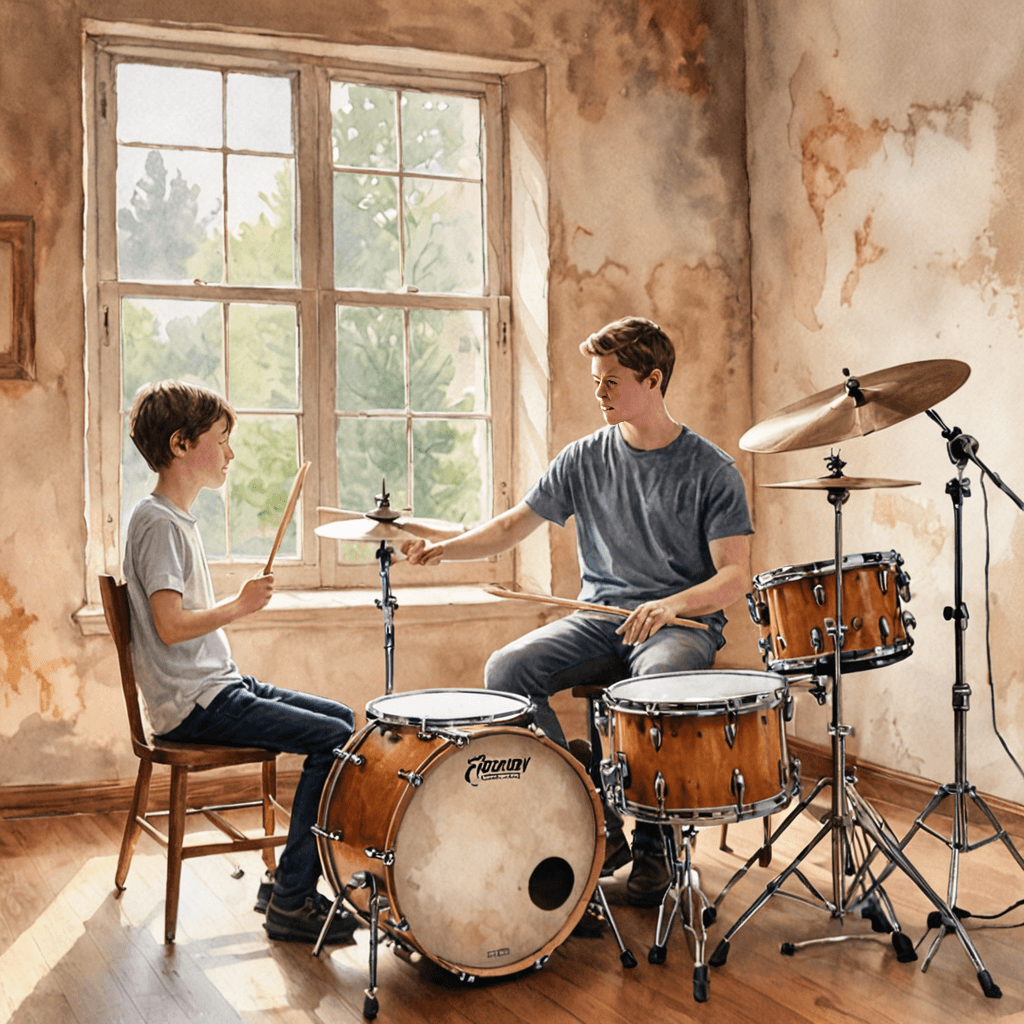
A good drum teacher demonstrates more than they explain. In a trial lesson, you should be watching for several specific things.
Watch how the teacher introduces the kit. Do they let your child sit at the throne and explore? Do they explain the parts in plain language? Do they start with something the child can actually do — a simple eighth-note pattern on the snare, a basic kick-snare pattern — and build from there? Or do they launch into theory and notation before the student has hit anything?
Watch the teacher’s tempo. A skilled drum teacher demonstrates patterns slowly and precisely first, then gradually speeds up. They don’t show off. They don’t play complex fills that overwhelm the student. The whole point of a beginner drum demo is to make the child feel like the kit is within reach.
Watch the corrections. When the student gets something wrong, does the teacher pause, explain what went off, and demonstrate the fix? Or do they let errors slide and move on too quickly? Drumming builds entirely on top of the foundation laid in the first few months. Teachers who correct early errors gently but firmly are building a player. Teachers who don’t are building habits that will need to be undone later.
Watch the child. Are they leaning in or pulling back? Are they smiling? Are they trying things on their own when the teacher pauses? The thirty-minute trial is, more than anything, an emotional read.
Acoustic Kit vs Electronic Kit for a Beginner Drummer
The most common question parents ask before booking a first drum lesson is whether their child should practice on an acoustic kit or an electronic kit at home. The answer involves real trade-offs.
Acoustic kits are how drums actually sound and feel. The dynamic range, the rebound off the heads, the way different cymbals respond to different strokes — none of these translate perfectly to electronic kits. A student who only ever practices on an electronic kit is missing real elements of what playing the instrument means.
But acoustic kits are loud, expensive, and difficult to live with in a typical family home. The volume issue is real. Neighbours, family members, and the student’s own ears all have legitimate stakes in the noise level.
For most Mississauga families starting out, the practical compromise is a quality electronic kit at home with weekly lessons at the studio on a properly set up acoustic kit. The student gets daily practice time at home without the household war over volume, and weekly lessons on the acoustic kit teach them what real drumming sounds and feels like. A small mesh-head electronic kit in the $700-1,200 range is enough to get started; cheap rubber-pad kits under $400 tend to teach bad habits because they don’t respond like real drums.
A practice pad is also a meaningful starter investment, and a $40 practice pad with a metronome covers a surprising amount of foundational stick technique without requiring a kit at all.
How Drums Fit in a Mississauga Family’s Week
Our single studio is in Etobicoke near Cloverdale Mall, and Mississauga families regularly make the drive for weekly drum lessons. The drive from most Mississauga neighbourhoods runs fifteen to twenty-five minutes — Port Credit and Cooksville closer to the lower end, Streetsville and Meadowvale further out.
The families who travel for drums tell us they prioritize getting their child onto a properly set up acoustic kit each week with a teacher who can actually play. Home practice on an electronic kit fills in the daily reps; the weekly studio session is where real technique gets built, corrected, and extended. For families based in Mississauga, our drum lessons in Mississauga page covers programs, scheduling, and frequently asked questions specific to families travelling in for the studio session.
More information about our full drum program — teaching approach, curriculum structure, and the range of styles we cover — is available on our drum lessons in Etobicoke page.
Investment, Schedule, and Trial Lessons
A trial drum lesson at Muzart is $35 — a single one-time fee that gets the student onto an acoustic kit with a teacher for thirty minutes. Ongoing private drum lessons run $155 per month with all materials included. Lesson times are weekly, same day and same time each week. After-school and evening slots are available throughout the year; weekend slots are limited and fill earliest in the school year.
The trial is the most important step for drum families specifically. Drum teacher-student fit is more visible in a single lesson than almost any other instrument — by the end of thirty minutes you’ll have a clear read on whether your child wants to come back. We strongly recommend booking trials at multiple schools and comparing what you actually see.
What About Older Beginners? And Adults?
Two patterns we see often.
Older children and teens starting drums fresh sometimes make rapid early progress, because the foot-hand coordination drumming requires is genuinely easier for a thirteen-year-old than a seven-year-old. The smaller child will catch up over time, but parents of older first-time drummers should know their child is not behind.
Adult drum students are a substantial part of our program. Adults bring focus, patience, and clarity about what music they want to play — and often have practical reasons (a quieter household, a basement kit, more disposable income for proper gear) that make consistent practice easier than for school-aged students. Adult lessons follow the same weekly private format and pricing as student lessons.
How to Book a Trial Drum Lesson
You can book a trial drum lesson at Muzart directly through our online scheduling. The trial gets your child onto an acoustic kit with one of our drum teachers for thirty minutes — long enough to read teacher fit, hear the kit, and watch how the lesson flows.
If you’d prefer to ask questions about teachers, schedule, or our approach before booking, you can request more information and we’ll follow up directly.
Frequently Asked Questions
What age should my child start drum lessons?
Most children are ready for formal drum lessons between ages seven and nine, when their coordination has developed enough to manage limb independence and they can sit at a kit comfortably. Some younger children with strong rhythmic instincts can start at six on a small kit; the trial lesson is the most reliable way to assess readiness.
How long does it take to drive from Mississauga to Muzart in Etobicoke?
Most Mississauga neighbourhoods are fifteen to twenty-five minutes from our Etobicoke studio near Cloverdale Mall. Drive time varies by starting point and traffic; Port Credit and Cooksville families are typically on the shorter end of that range.
Do I need to buy a drum kit before starting lessons?
No. Many families start with just a practice pad and a pair of sticks for home, and use the studio kit for weekly lessons. After the first few months, most families add a quality electronic kit at home for daily practice. We can advise on kit selection once your child has had a few lessons.
How much do drum lessons cost?
Private drum lessons at Muzart are $155 per month with all materials included. A one-time trial lesson is $35. There are no registration fees or hidden costs.
Are drum lessons noisy in the studio? Do you have soundproofing?
Our drum lesson rooms are properly set up for drum instruction, with appropriate acoustic treatment so lessons don’t interfere with other students or families in the building. Drums are still drums — they make sound — but the studio environment is designed for it in a way home environments rarely are.
Can adults take drum lessons too?
Yes. Adult drum instruction is a growing part of our program, including complete beginners, returning players, and adults working toward specific styles. Adult lessons follow the same weekly private format and pricing as student lessons.