
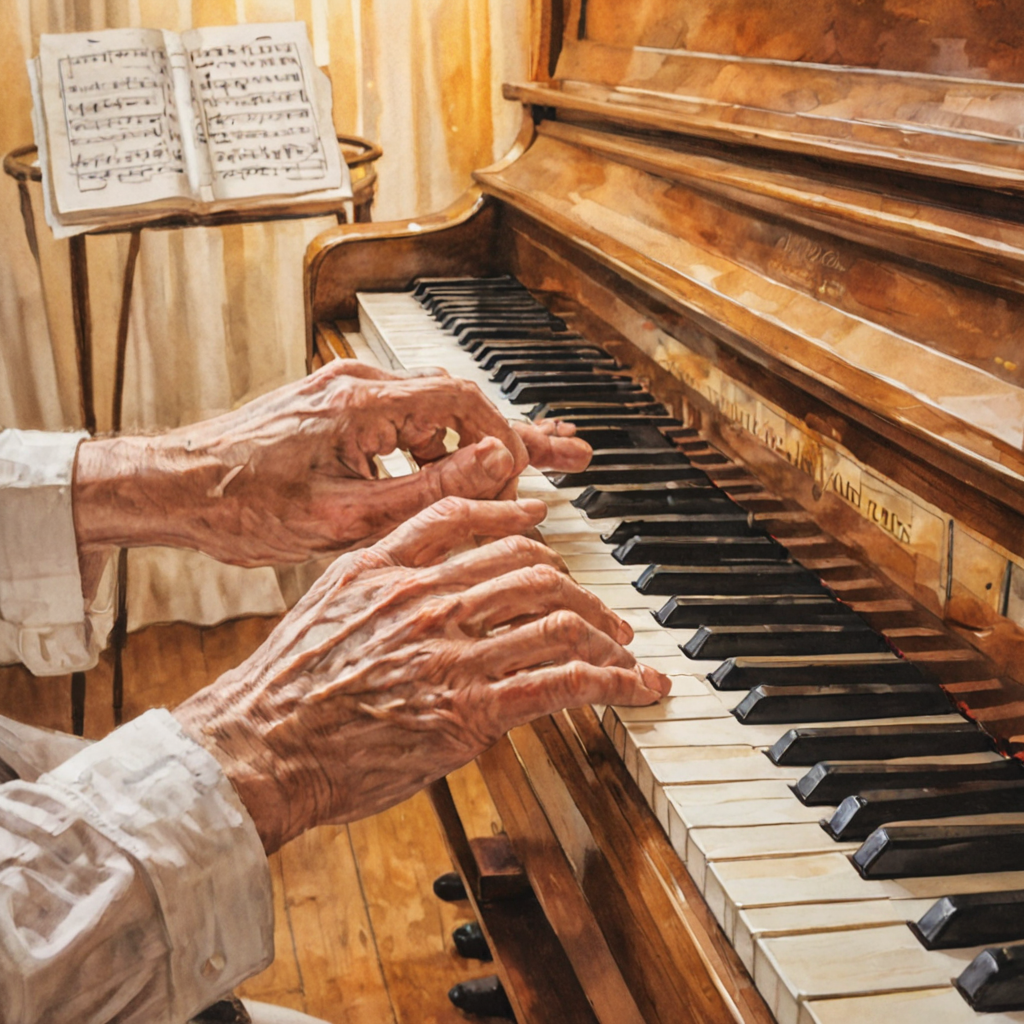
Returning to Piano as an Adult: How to Pick Up Where You Left Off
Table of Contents
You took piano lessons as a kid. Maybe you made it through a few years of RCM levels. Maybe you played in recitals, dreaded scale exercises, and eventually stopped — because of sports, schoolwork, teenage social life, or simply losing interest. Now, years or decades later, you find yourself thinking about the piano again.
That pull is more common than you might realize. Adults who played piano as children represent one of the largest groups of potential music students, and many of them share the same hesitation: can I actually go back? Will I remember anything? Have I lost too much time?
The answers are yes, probably more than you think, and absolutely not. Returning to piano as an adult is not starting over — it is picking up a thread that was set down, not severed. And at Muzart Music and Art School in Etobicoke, near Cloverdale Mall, we see returning adult players rediscover their skills faster and more joyfully than they ever imagined.
Why Your Old Skills Are Still There
Here is the good news that most returning players do not expect: muscle memory is remarkably persistent. The neural pathways you built as a child — finger patterns for scales, hand positions for common chords, the physical sensation of reading notation — do not disappear just because you stopped reinforcing them.
When you sit down at a piano for the first time in fifteen or twenty years, you will likely feel awkward and rusty. Your fingers will stumble, and pieces that once felt easy will resist you. But this rustiness is superficial. Underneath it, the foundational wiring is still there, waiting to be reactivated.
Research on motor skill retention confirms what returning piano students experience anecdotally: skills learned through sustained practice in childhood can be recovered in a fraction of the time it took to learn them originally. A scale passage that took you months to master at age eight might come back in days or weeks at age thirty-eight. Your brain is not building these pathways from scratch — it is clearing the dust off pathways that already exist.
This means that your starting point as a returning player is fundamentally different from a complete beginner’s. You are not learning the basics for the first time. You are re-establishing a relationship with an instrument your body already knows.
Assessing Where You Actually Are
One of the trickiest parts of returning to piano is figuring out your current level. You might remember being a strong player, but memory is not always reliable — especially when it comes to skills measured years ago. Some returning adults overestimate where they left off, which leads to frustration when advanced pieces feel impossible. Others underestimate themselves, assuming they have lost everything, only to discover they can still sight-read more competently than they expected.
The most effective approach is a structured assessment with an experienced instructor. During a trial lesson at Muzart — which costs $35 — your teacher will evaluate your current technical ability, your reading skills, your ear development, and your overall comfort at the keyboard. This is not a test. It is a diagnostic conversation that helps both you and your instructor understand exactly where you are so your lessons start at the right level.
This assessment matters because starting at the wrong level is one of the main reasons returning players get discouraged. If the material is too easy, you will be bored. If it is too advanced, you will feel like a failure. A good instructor calibrates from the first lesson, and that calibration is far more accurate when it is done in person rather than based on self-reporting.
If you played through RCM levels as a child, your instructor may suggest reviewing theory fundamentals while working on repertoire that challenges your technique without overwhelming it. If you were a casual player who learned by ear or from a parent, the approach will be different — building more formal skills onto your existing intuitive foundation.
What Feels Different About Playing Piano as an Adult
Returning to piano after a long break is not the same as picking up from where you left off as if no time has passed. Several things will feel different, and understanding these differences in advance prevents unnecessary frustration.
Your hands may feel different. Adult hands are larger and stronger than children’s, which actually helps with reach and chord voicings. But they may also be stiffer, especially if you work at a desk or have not been doing much with fine motor skills. The first few weeks of playing will involve retraining your hands as much as retraining your brain. Simple stretching and warm-up exercises make an enormous difference here, and your instructor will incorporate these into your lessons.
Your musical taste has evolved. The pieces you played as a child — simplified classical arrangements, method book songs, examination repertoire — may no longer interest you. As an adult, you have developed musical preferences shaped by decades of listening, and your returning journey should reflect those preferences. This is one of the great advantages of coming back as an adult: you get to choose what you play, and that choice fuels motivation in a way that assigned repertoire never could.
Your relationship with practice has changed. As a child, practice was something imposed on you. As an adult, it is something you choose, which means it needs to fit into a life that is probably much busier than your childhood was. Effective practice as a returning adult is about quality, not quantity — focused 20-minute sessions are more productive than sporadic hour-long marathons. Your instructor at our piano program in Etobicoke can help you design a practice routine that produces results within realistic time constraints.
Your emotional connection to music is deeper. This might be the most significant difference of all. Children play piano with technical focus and developing emotional awareness. Adults play with a lifetime of emotional experience that infuses their playing with meaning that young students cannot yet access. A melancholy nocturne, a triumphant sonata, a gentle lullaby — these pieces resonate differently when you have lived through the emotions they express.
Common Mistakes Returning Players Make
Even with the advantages of prior experience, returning players can fall into traps that slow their progress unnecessarily.
Trying to play at your old level immediately is the most common mistake. If you were playing RCM Level 6 repertoire when you stopped at age fourteen, sitting down at thirty-five and attempting the same pieces will likely produce frustration rather than satisfaction. Step back a few levels, rebuild your foundation, and you will find that the climb back up is faster than you expect — and more enjoyable, because you are building on a solid base rather than struggling with material your current technique cannot support.
Skipping technique work is another common pitfall. Many returning players want to dive straight into pieces they love, bypassing scales, arpeggios, and technical exercises. This is understandable — technique work is rarely exciting. But it is the scaffolding that supports everything else. Your instructor will find ways to integrate technique into repertoire so that the fundamentals are strengthened without boring you into quitting again.
Comparing yourself to your childhood self or to other adults is a subtle but powerful discouragement. Your piano journey as an adult is yours alone. The pace at which you progress, the goals you set, and the music you choose are all personal decisions. Progress is progress, regardless of whether it matches some imagined timeline.
Going it alone — trying to return to piano without professional guidance — is perhaps the biggest strategic mistake. You might be able to muddle through on your own, but an experienced instructor accelerates the process dramatically by identifying what is still strong, what needs rebuilding, and what approach will get you playing music you love in the shortest time possible.
Choosing the Right Path for Your Return
Returning adult players generally fall into one of three categories, and understanding which one describes you helps determine the right instructional approach.
If you want to resume formal study, including potentially pursuing RCM examinations you never completed as a child, a structured curriculum that builds systematically through technique, theory, and repertoire is the best fit. Many adults find that completing the RCM levels they left unfinished is deeply satisfying — a kind of closure on unfinished business from childhood.
If you want to play for personal enjoyment, a more flexible approach works well. Your instructor selects repertoire based on your preferences, builds technique through the pieces themselves, and creates a lesson plan that prioritizes the music you want to play while ensuring your skills continue to develop. This path offers maximum enjoyment with genuine musical growth.
If you are not sure what you want yet, that is completely fine. A trial lesson helps clarify your goals. Many returning players discover that their interests evolve as their skills return — someone who starts wanting to play pop songs may develop a renewed interest in classical repertoire, or vice versa. The right instructor adapts the plan as your goals become clearer.
Our music lessons accommodate all three paths, and the $35 trial lesson is the ideal way to explore which one feels right for you. Book your trial at our Etobicoke studio near Cloverdale Mall and experience the moment when your hands remember what your mind thought they had forgotten.
If you have questions before booking, request more information — we are happy to discuss what returning to piano looks like at Muzart and help you decide if this is the right time to come back.
Frequently Asked Questions
How long will it take to get back to my previous level?
This depends on how long you played as a child, how long ago you stopped, and how consistently you practise now. Most returning players find they recover foundational skills within two to three months of regular lessons and practice. Reaching your previous peak level may take six months to a year, but the journey back is faster than the original learning process because you are rebuilding rather than building from scratch.
Do I need to start from the very beginning again?
Almost certainly not. Returning players retain more than they realize, and a good instructor will assess your current level during your first lesson and start you at the appropriate point. You may need to review some fundamentals, but you will not be starting from zero.
Should I buy a piano before starting lessons again?
Having access to a keyboard at home significantly helps your progress, but you do not need to invest in an expensive instrument before your first lesson. A mid-range digital piano with weighted keys is sufficient for most returning players. Your instructor can recommend specific models based on your budget and goals.
What if I stopped piano because I hated it as a kid?
Many adults who disliked piano lessons as children discover they love it as adults. The difference is agency — you are choosing this, not having it imposed on you. You pick the music, you set the pace, and you practice because you want to, not because someone is making you. That shift in motivation transforms the entire experience.
Will my monthly costs include books and materials?
At Muzart, the monthly program of $155 includes all materials — no additional costs for sheet music, method books, or supplies. This makes budgeting straightforward and ensures you have everything you need to progress without hunting for resources on your own.