
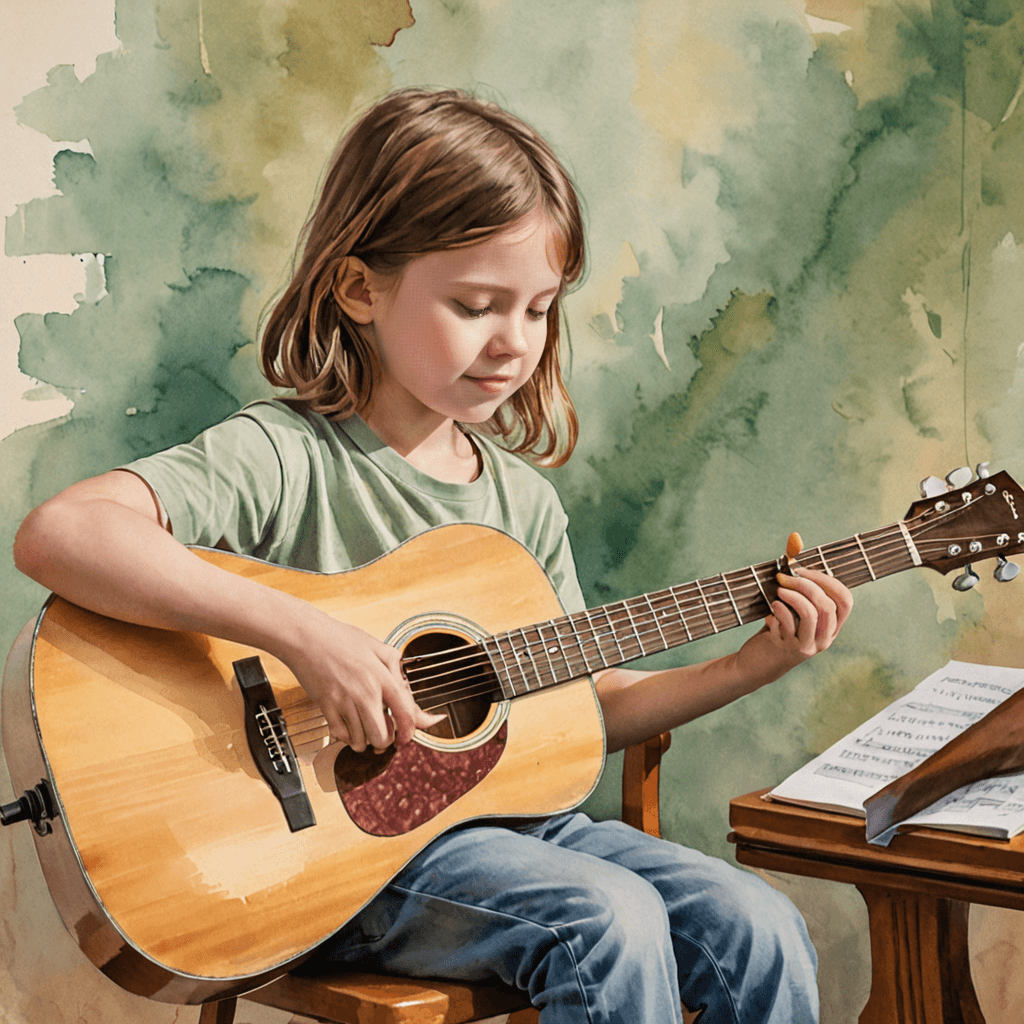
Guitar for Beginners in Toronto: First Steps for Young Musicians
Table of Contents
Starting guitar lessons represents an exciting milestone in a child’s musical journey. For families in Toronto, Etobicoke, and Mississauga, understanding what to expect during those crucial first lessons and months helps set realistic expectations and supports long-term success. At Muzart Music & Art School, located in Etobicoke near Cloverdale Mall, we guide beginning guitarists through the foundational stages that establish technique, build confidence, and foster genuine love for the instrument through our guitar lessons in Etobicoke.
The guitar’s popularity among young musicians stems partly from its versatility and cultural presence. Children hear guitars in virtually every musical genre, from pop and rock to classical and folk. This familiarity makes the instrument feel accessible and relevant, increasing motivation during the challenging early learning stages. However, this same familiarity can create unrealistic expectations about how quickly students will play recognizable songs or develop fluency.
Beginning guitar instruction focuses on building proper foundations rather than immediate performance ability. While this patient, methodical approach might feel slow initially, it prevents the bad habits and technical limitations that plague self-taught guitarists. Professional instruction from the start establishes correct hand position, efficient finger movement, and musical understanding that accelerates long-term progress far beyond what rushed early advancement could achieve.
What Happens in the First Guitar Lesson
The initial guitar lesson establishes the foundation for everything that follows. Understanding what this first session covers helps families arrive prepared and ready to engage productively with the learning process.
Instrument familiarization begins every beginner’s first lesson. The instructor introduces guitar anatomy—body, neck, fretboard, strings, tuning pegs—using proper terminology that students will hear throughout their musical education. This vocabulary might seem technical initially, but it enables clear communication about technique and music. Young students learn that guitars have six strings numbered from thinnest to thickest, that frets are the metal strips on the neck, and that proper positioning affects both sound quality and playing comfort.
Proper holding position receives significant attention during first lessons. Many beginning guitarists hold their instruments incorrectly, creating tension and limiting technical development. Instructors demonstrate how to position the guitar against the body, where to place the right arm, how to angle the neck, and how to support the instrument without gripping it tensely. For children, finding the right guitar size and position matters enormously—a guitar that’s too large creates immediate physical challenges that undermine learning.
Left hand positioning and finger placement introduce the physical coordination that guitar playing requires. Students learn how to curve fingers, place fingertips perpendicular to strings, and generate clear tones by pressing firmly behind frets. This seemingly simple action challenges many beginners who initially struggle to press hard enough, position fingers accurately, or avoid muting adjacent strings. The instructor provides immediate feedback and correction, preventing bad habits from forming.
Right hand technique varies depending on whether students will primarily use picks or fingers. Most beginning students start with picks (also called plectrums), learning proper grip and basic strumming motions. The instructor demonstrates how to hold the pick firmly but not rigidly, how to angle it against strings, and how to generate clean, even strums. This coordination between right and left hands—one fretting notes while the other produces sound—represents guitar playing’s fundamental challenge.
Simple exercises introduce students to making actual sounds on the instrument. Rather than jumping immediately to songs, first lessons typically include basic exercises like playing individual strings, simple finger patterns, or elementary strumming patterns. These exercises might seem unmusical, but they build the physical foundations that later support actual music making. The $35 trial lesson provides this complete introductory experience, allowing students and families to understand what guitar instruction involves before committing to ongoing study.
Tuning basics appear in first lessons, though young beginners typically won’t tune their own guitars immediately. Instructors explain why tuning matters and demonstrate the process, beginning to train students’ ears to recognize when their guitar sounds correct. Electronic tuners make this process straightforward, and students gradually develop the ear and fine motor control needed to tune independently.
Essential Equipment for Beginning Guitarists
Understanding what equipment beginning guitarists actually need prevents both under-preparation and excessive initial investment. The guitar market offers countless products, but beginners require surprisingly few items to start successfully.
The guitar itself represents the primary investment. For children and young teenagers, proper sizing matters enormously. Full-size guitars overwhelm many young students, making fretting difficult and holding positions uncomfortable. Three-quarter size guitars work well for most children ages 8-12, while smaller fractional sizes suit younger students. The instructor can provide specific sizing guidance during the trial lesson, ensuring families purchase or rent an appropriately sized instrument.
Acoustic versus electric guitar represents a common decision point for beginners. Both have advantages. Acoustic guitars require no amplification, making them simpler and more portable. They’re often recommended for beginners because they build finger strength more quickly—the higher string action (distance between strings and fretboard) requires firmer pressing. Electric guitars have lighter string action, making fretting physically easier, but they require amplifiers and cables. Many instructors at our Etobicoke music lessons studio work with both types, allowing families to choose based on the child’s musical interests and physical capabilities.
Budget considerations often guide initial guitar purchases. Families needn’t invest in expensive instruments for beginners, but extremely cheap guitars can actually impede learning. Poor intonation, rough fretwork, and high action make these ultra-budget instruments difficult even for experienced players. A quality beginner guitar typically costs $150-300 for acoustics or $200-400 for electric guitar starter packages including amp and cable. Many Toronto music stores offer these starter packages designed specifically for beginning students.
Guitar picks in various thicknesses allow students to experiment and find what feels comfortable. Beginning students typically use medium thickness picks that provide good control without requiring excessive grip strength. Buying a variety pack costs just a few dollars and lets students discover their preferences as technique develops.
A tuner—either clip-on or smartphone app—proves essential for home practice. Guitars go out of tune regularly, especially new instruments and those in homes with temperature fluctuations. Students can’t develop accurate pitch sense or finger positions when practicing on out-of-tune instruments. Clip-on tuners cost $15-30 and work reliably for beginners.
A guitar case or gig bag protects the instrument when transporting to lessons and when stored at home. Even students who primarily keep guitars in one location benefit from cases that protect against accidental damage. Basic gig bags cost $20-40, while hard cases provide more protection at higher cost.
A music stand helps students maintain proper posture while reading music or chord charts. While not absolutely essential initially, stands prevent the neck strain that comes from looking down at books on stands or floors. Simple folding music stands cost $15-25 and serve students throughout their musical education.
Optional accessories include string winders for easier string changes (though beginners won’t change strings frequently), extra strings for when breakage occurs, and fingernail clippers to maintain short nails on the fretting hand. These items can be added gradually as needs arise.
The $155 monthly program at our Etobicoke studio includes all necessary method books and materials, meaning families only need to provide the guitar itself and basic accessories. This inclusive approach removes uncertainty about what instructional materials to purchase.
Common First-Month Challenges and Solutions
Nearly all beginning guitarists encounter predictable challenges during their first weeks of study. Recognizing these as normal learning phases rather than personal inadequacies helps students persist through initial difficulties.
Finger pain and soreness affect every beginning guitarist. The fingertips of the fretting hand must develop calluses to press metal strings comfortably. This process takes several weeks of regular practice, and initial sessions often leave fingertips sore and indented. Students should practice until fingers become uncomfortable but not painful, then rest. Short, frequent practice sessions build calluses more effectively than infrequent long sessions. Assuring students that this discomfort is temporary and universal helps them persist through this unavoidable phase.
Difficulty forming clear notes frustrates many beginners. Pressing strings firmly enough, positioning fingers accurately, and avoiding muting adjacent strings all require coordination that develops with practice. Students often produce buzzing sounds, muted notes, or unintentional string combinations initially. This is completely normal. The instructor provides specific feedback about finger position and pressure, and improvement occurs rapidly with consistent practice and correction.
Chord transitions challenge beginners significantly. While individual chord shapes become manageable fairly quickly, moving between chords smoothly requires muscle memory that develops over weeks and months. Beginning students should expect choppy, slow chord changes initially. Practicing specific transitions repeatedly—perhaps just moving between two chords dozens of times—builds the finger memory that eventually enables fluid playing.
Rhythm and strumming patterns prove surprisingly difficult for many students. The right hand must maintain steady, even rhythm while the left hand forms chords, requiring coordination that feels awkward initially. Students often speed up during easy sections and slow down during difficult ones, or struggle to maintain consistent strumming patterns. Practicing with metronomes helps develop internal rhythm, though this steady mechanical beat feels foreign at first.
Reading guitar tablature and chord charts introduces new notation systems. While simpler than traditional music notation, tablature still requires learning to connect written symbols to finger positions. Students must decode which string and fret the notation indicates, process this information, and execute the corresponding finger movement. This translation process feels slow and confusing initially but becomes increasingly automatic with practice.
Hand and wrist fatigue occur regularly in beginning students. The unfamiliar positions and sustained muscle engagement tire hands quickly. Students should take breaks during practice when fatigue appears, stretching fingers and wrists gently. Building stamina takes time, and pushing through significant fatigue risks injury or reinforces tense playing positions.
Motivation fluctuates during the first months as initial excitement meets the reality of disciplined practice. The gap between what students want to play and what they can currently play feels enormous. Reminding students that every guitarist, including their favorite performers, started exactly where they are now provides perspective. The instructor carefully balances skill-building exercises with accessible song fragments that provide musical satisfaction alongside technical development.
Establishing Effective Practice Routines
Success in guitar lessons depends heavily on what happens between weekly sessions. Establishing productive practice habits from the very beginning sets students up for sustained progress and achievement.
Practice frequency matters more than duration for beginning students. Daily practice sessions of 15-20 minutes prove far more effective than twice-weekly hour-long sessions, even though total time is similar. The daily repetition builds muscle memory and reinforces learning before it fades. Young students’ attention spans rarely sustain focused practice beyond 20-30 minutes anyway, making shorter daily sessions both more effective and more realistic.
Structured practice sessions accomplish more than aimless playing. Beginning students should approach practice with clear goals drawn from their lesson assignments. Perhaps the goal is playing a specific chord cleanly, executing a particular strumming pattern, or transitioning smoothly between two chords. This focused approach builds specific skills systematically rather than hoping random practice somehow generates improvement.
Warm-up exercises should begin every practice session. Just as athletes warm up before training, musicians benefit from preparing hands and fingers before demanding technical work. Simple exercises like finger stretches, playing individual strings, or slowly forming and releasing chord shapes prepare the body for practice and reduce injury risk.
Difficult sections deserve isolated attention. Rather than playing through entire songs repeatedly, students should identify challenging measures or transitions and practice those specifically. Playing a problematic chord transition twenty times in isolation builds competence far more effectively than playing the entire song three times and stumbling over that transition each time.
Recording practice sessions helps students hear their own playing objectively. Most students can’t accurately assess their playing while executing it—attention focuses on what they’re trying to do rather than what they’re actually producing. Recording practice and listening afterward reveals rhythmic inconsistencies, unclear notes, or technical issues that weren’t apparent during playing. Smartphones make this recording process simple and free.
Practice space should minimize distractions and include necessary materials. Students practice most effectively in quiet spaces where they can concentrate without competing stimulation. Having the guitar, music stand, tuner, metronome, method books, and assignment notes all in one designated area prevents wasted time gathering materials and creates an environment that supports focused practice.
Parents of young students should initially supervise practice to ensure focused engagement. While students gradually develop independent practice skills, beginners often need guidance staying on task, following assignment instructions, and maintaining practice duration. Parental presence signals that practice matters and provides accountability that helps students persist through initial challenges.
The First Song Milestone
Playing a complete song—even a simple one—represents a significant achievement for beginning guitarists. Understanding what this milestone entails and when to expect it helps manage expectations realistically.
Timeline expectations should account for individual variation. Some students play simple songs within their first month of lessons, while others need two or three months to develop the necessary coordination and skill. Factors affecting this timeline include age, natural finger dexterity, practice consistency, and previous musical experience. There’s no “correct” timeline—the goal is steady progress at an appropriate pace, not reaching arbitrary milestones by specific deadlines.
First songs typically use very few chords—often just two or three. Simple folk songs, nursery rhymes, or elementary pop tunes allow students to practice chord transitions and strumming while producing recognizable music. These songs might seem overly simple, but they provide the musical satisfaction that motivates continued practice while building essential technical foundations.
Simplified arrangements make challenging songs accessible to beginners. Many popular songs use complex chords, rapid transitions, or advanced techniques beyond beginning students’ current abilities. Instructors often create simplified versions using basic chords in easier keys, allowing students to play recognizable versions of songs they love even early in their studies. This adaptation provides motivation and satisfaction while maintaining appropriate challenge levels.
Rhythmic simplicity usually precedes complex strumming patterns. First songs often use basic down-strumming or simple alternating patterns rather than the syncopated, varied strumming heard in recordings. Students master the chord progression and basic rhythm before adding strumming complexity, building skills incrementally rather than attempting everything simultaneously.
Singing while playing represents an additional challenge many students eventually want to tackle. However, this coordination between voice and hands typically waits until chord changes become relatively automatic. Beginning students should focus on instrumental playing initially, adding vocals later once guitar playing requires less conscious attention.
Performance pressure should remain minimal during early playing experiences. The goal is developing competence and confidence, not performance-ready execution. Playing for family members or the instructor in casual settings builds comfort with an audience without the pressure that can undermine learning. Our guitar lessons in Etobicoke emphasize this supportive, pressure-free environment that allows students to develop at their natural pace.
Building Musical Understanding Alongside Technique
Guitar lessons teach far more than finger positions and strumming patterns. Comprehensive instruction develops musical understanding that enables students to grow beyond rote memorization into genuine musicianship.
Music theory fundamentals integrate into lessons from the beginning. Students learn note names, understand chord construction basics, and begin recognizing patterns in music. This theoretical understanding helps students see connections between different songs, predict chord progressions, and eventually compose or improvise their own music. Even young students can grasp basic theory concepts when presented through practical application on their instruments.
Ear training develops alongside reading skills. Students learn to recognize intervals, match pitches with their voice, and eventually play simple melodies by ear. This aural skill development creates well-rounded musicians who can learn from recordings, play with other musicians, and understand music through listening as well as reading.
Rhythm literacy proves as important as pitch knowledge. Students learn to count beats, recognize note durations, understand time signatures, and maintain steady tempo. These rhythmic skills transfer beyond guitar to any musical pursuit and even to non-musical activities requiring timing and coordination.
Genre awareness expands students’ musical horizons. Exposure to classical guitar, folk, rock, jazz, and other styles helps students discover what excites them musically while appreciating the instrument’s versatility. This exploration prevents students from limiting themselves to a single style and provides context for understanding different technical approaches.
Listening assignments complement practical playing. Instructors may suggest specific recordings for students to hear how professional guitarists approach techniques being studied. This listening develops critical ears and provides models of skilled playing that inspire students toward continued improvement.
Music history in age-appropriate doses provides context for why certain styles developed and how the guitar’s role has evolved. Understanding the instrument’s rich history can deepen students’ connection to their studies and appreciation for the tradition they’re joining.
Frequently Asked Questions
At what age can children start guitar lessons?
Most children can begin guitar lessons successfully around age 7-8, though individual readiness varies based on hand size, finger strength, and attention span. The physical demands of pressing metal strings firmly against a fretboard require finger strength that younger children often lack. Additionally, the coordination between hands and the focus required for 30-minute lessons typically develop around early elementary school age. Some children may be ready slightly earlier with appropriately sized instruments and age-appropriate instruction approaches. During the $35 trial lesson at our Etobicoke studio, instructors assess individual readiness, examine hand size relative to available guitar sizes, and provide honest guidance about whether starting now or waiting several months would better serve the child’s success and enjoyment. Starting too early can create frustration and discourage musical interest, while waiting until readiness appears sets students up for positive experiences from the beginning. Children showing strong interest in music and guitars might be ready earlier than general guidelines suggest, making individual assessment valuable.
Should beginners start with acoustic or electric guitar?
Both acoustic and electric guitars work for beginners, and the better choice depends on the student’s musical interests, physical capabilities, and practical considerations. Acoustic guitars offer simplicity—no amplifier needed, more portable, often less expensive initially. They build finger strength effectively because the strings typically sit higher from the fretboard, requiring firmer pressing. However, this same characteristic can challenge younger or smaller students who struggle generating enough pressure for clear notes. Electric guitars have lighter string action, making fretting physically easier, which benefits students with smaller hands or less finger strength. They require amplifiers and cables, adding cost and complexity, but they’re essential for students passionate about rock, metal, or other genres where electric guitar is central. Many instructors, including those in our music lessons program, work equally well with both types. The trial lesson allows discussion of which type might suit your child’s interests and physical development best, ensuring the instrument choice supports rather than hinders early learning.
How much should families expect to practice between weekly lessons?
Beginning guitar students should practice 15-20 minutes daily, six days per week for optimal progress. This frequency and duration builds muscle memory, reinforces learning, and develops the finger strength and calluses necessary for comfortable playing. While this might seem modest, consistency matters far more than duration—daily 15-minute sessions accomplish more than twice-weekly hour-long practices even though total time is similar. The daily repetition prevents skills from fading between practice sessions and builds automaticity in finger movements. Younger students (ages 7-9) might practice effectively for just 10-15 minutes, while older students and those advancing quickly often extend practice to 30 minutes or more as their engagement and stamina grow. Quality matters more than quantity—focused, deliberate practice on assigned material proves more valuable than distracted playing around. Missing occasional practice sessions doesn’t derail progress, but regular inconsistency definitely slows advancement. The $155 monthly program includes practice assignments scaled appropriately to each student’s level and available time, ensuring expectations remain realistic while supporting steady progress.
What if my child’s hands seem too small for guitar?
Hand size concerns are common among parents of young beginners, but appropriately sized guitars accommodate most children ready for lessons. Guitars come in various sizes—full-size (4/4), three-quarter size (3/4), half-size (1/2), and quarter-size (1/4)—designed for different body proportions. Most children ages 8-12 play three-quarter size guitars comfortably, while younger students use smaller fractional sizes. The key is matching guitar size to the student’s body, particularly arm length and hand span. During the trial lesson, instructors assess whether the student’s hands can comfortably form basic chord shapes and reach necessary frets on appropriately sized instruments. Very occasionally, children interested in guitar should wait several months for additional growth, but this situation is relatively rare with proper instrument sizing. Many students with “small hands” actually struggle more with finger strength than size—the muscles need time to develop pressing strength regardless of hand dimensions. As students grow, they graduate to larger guitars, often upgrading every few years until reaching full-size instruments in middle or high school. Local music stores in the Toronto area stock various sizes and often offer rental programs that allow upgrading as children grow without repeated purchase investments.
Can students learn guitar if they have no prior musical experience?
Absolutely. Guitar lessons are entirely appropriate and often ideal for students with no previous musical training. Unlike instruments requiring simultaneous music reading and complex physical technique, guitar allows students to begin making music relatively quickly while gradually developing music literacy. Many successful guitarists start as complete musical beginners, and comprehensive instruction teaches everything needed—from note names and rhythm concepts to chord progressions and strumming patterns. The guitar’s fretted nature makes finding notes more straightforward than on instruments where pitch depends entirely on player positioning. Students learn to read both traditional notation and guitar tablature, which shows exactly where to place fingers rather than requiring translation from abstract notation to instrument. The physical nature of guitar—seeing finger positions, hearing immediate results—provides concrete feedback that helps beginners understand musical concepts. In some ways, starting guitar without previous training allows students to develop technique correctly from the beginning without unlearning habits from other instruments. The trial lesson works perfectly for complete beginners, providing gentle introduction to the instrument and music-making without assuming any prior knowledge or experience. Instructors at our Etobicoke studio regularly teach students taking their very first music lessons, with instruction designed specifically for beginners rather than assuming existing musical literacy.
How long before students can play recognizable songs?
Most beginning students play simple, recognizable songs within their first 2-3 months of consistent lessons and practice, though this timeline varies based on individual factors including age, practice consistency, and natural aptitude. The first songs typically use just 2-3 basic chords and simple strumming patterns—often folk songs, basic pop tunes, or simplified versions of popular music. These arrangements might not sound exactly like recordings, but they’re clearly recognizable and provide genuine musical satisfaction. Students passionate about specific songs can often learn simplified versions of their favorites relatively early, though complex songs require more advanced skills developed over months or years. Setting realistic expectations helps maintain motivation—every guitarist, including today’s famous performers, started by mastering simple songs before advancing to complex repertoire. The progression from first basic songs to more challenging pieces occurs steadily with regular practice and instruction. Within six months to a year, most students play a variety of songs with increasing complexity, comfort, and musicality. The specific timeline matters less than experiencing steady progress and enjoying the journey of musical development. Our instructors carefully balance skill-building exercises with accessible songs that provide motivation and satisfaction, ensuring students experience the joy of making music while developing the technical foundations for continued growth.
Beginning a Lifelong Musical Journey
Starting guitar lessons represents the beginning of what can become a lifelong relationship with music. The skills, discipline, and creative expression developed through guitar study extend far beyond the instrument itself, shaping how students approach challenges, express themselves, and engage with the world around them.
At Muzart Music & Art School, our Etobicoke location near Cloverdale Mall provides comprehensive guitar instructionfor beginning students throughout Toronto, Etobicoke, and Mississauga. The $35 trial lesson introduces your child to the guitar, allows assessment of readiness and interest, and demonstrates our teaching approach before any long-term commitment. This small investment provides clarity about whether guitar study matches your child’s interests and your family’s capacity to support home practice.
Our $155 monthly program includes all necessary method books and materials, removing uncertainty about what to purchase and ensuring every student has appropriate resources for their level. Consistent weekly instruction builds skills systematically while regular feedback prevents bad habits from forming and reinforces correct technique.
The instructor-student relationship proves crucial in music education. Working with the same instructor throughout early development ensures continuity, allows the instructor to understand the student’s learning style deeply, and creates the trust necessary for pushing through challenging phases. The trial lesson lets you experience this relationship firsthand and determine whether our approach matches your child’s needs and personality.
December represents an excellent time to begin guitar lessons before the January enrollment surge. Starting now allows students to develop initial comfort with the instrument during the holiday period when schedules often offer more flexibility. When school routines resume in January, guitar lessons become part of the established weekly structure rather than a new addition to already-full schedules.
Don’t let another week pass while considering guitar lessons for your child. Book a trial lesson today to begin this musical journey, or request more information about our guitar program for beginners. The skills your child develops through dedicated guitar study—discipline, creativity, problem-solving, emotional expression—benefit them throughout life in ways that extend far beyond musical performance.
Guitar playing opens doors to creative expression, social connection through music, and lifelong enjoyment. Begin this journey at our Etobicoke studio, where professional instruction, patient guidance, and genuine care for each student’s development create the foundation for musical success and personal growth that lasts well beyond childhood.