
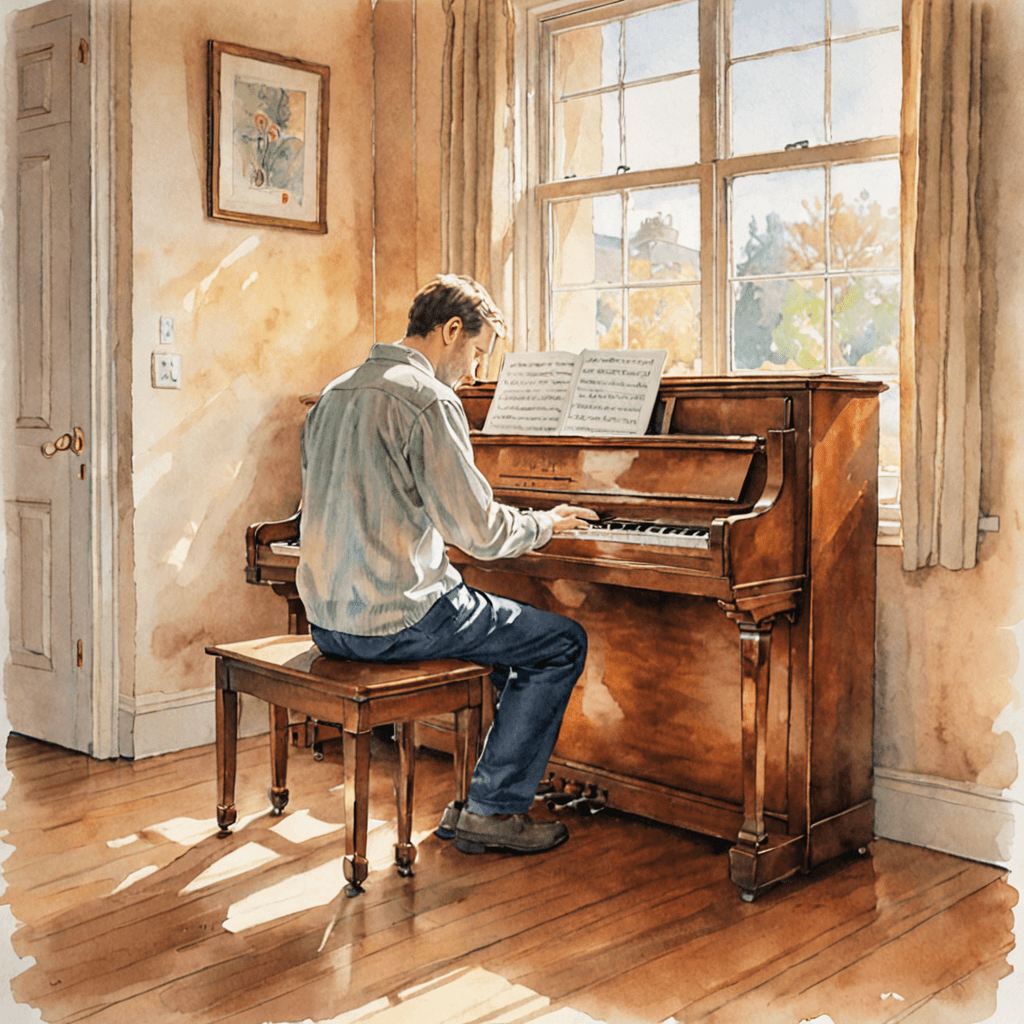
Adult Piano Lessons in Toronto: What to Look For in a Teacher (And What to Avoid)
Table of Contents
Most adults searching for piano lessons in Toronto start with the same quiet worry: will I be the oldest person there, will my teacher treat me like a kid, and will I actually make progress, or just spend a year not getting anywhere? The honest truth is that adult piano lessons can work beautifully — but only when the teacher genuinely understands how adult learners think, practise, and stall. Below is what to look for when you’re choosing a piano teacher in Toronto as an adult, what to avoid, and exactly what to notice in your first trial lesson.
The Adult Learning Difference: Why Teacher Choice Matters
Children who take piano lessons have several built-in advantages adults don’t. They have hours of unstructured practice time, they pick up motor skills faster, and they don’t carry decades of self-criticism into the lesson room. Adults bring different strengths — clearer goals, deeper musicality, the ability to articulate exactly what they want to learn — but they also bring expectations that can sabotage progress if the teacher doesn’t know how to work with them.
A teacher who’s excellent with eight-year-olds isn’t automatically good with a forty-two-year-old finance professional who wants to learn jazz standards. The pacing, language, and feedback style all need to shift. When you’re researching adult piano lessons in Toronto, the single most important question is: does this teacher actually understand adult learners, or are they just teaching a slightly slower version of their kids’ curriculum?
What to Look For in an Adult Piano Teacher
Comfort teaching the full adult age range. A great adult piano teacher works equally well with university students learning their first chord progressions and retirees returning after a forty-year break. If a teacher’s roster is mostly under-eighteen, ask how often they teach adults and how they adapt their approach.
Curriculum flexibility. Some adults want to play Chopin. Others want to learn the chord progression from a Coldplay song. Most want a mix. A good teacher can teach both, and won’t insist that classical is “the right way to learn” before letting you touch a pop song. The best teachers structure lessons so the technique you’re learning in your scale work directly supports the song you actually want to play.
Honesty about timelines. Avoid teachers who promise quick mastery, and equally avoid teachers who suggest that “real” piano takes decades and any pop arrangement is somehow lesser. Adult learners deserve honest timelines: with thirty minutes of practice four days a week, you’ll be playing simple arrangements of songs you love within three to four months. That kind of specificity tells you the teacher has taught a lot of adults.
Comfortable with whatever instrument you have. You don’t need to buy an acoustic grand piano to start. A weighted-key digital keyboard is fine — sometimes preferable for apartment dwellers in downtown Toronto. A teacher who insists you must invest in a specific instrument before your first lesson is selling you something other than music education.
Clear communication about practice expectations. Adults stall most often when they don’t know what to practise between lessons. Look for teachers who send you home with a written practice plan, not just a verbal “work on what we did today.”
What to Avoid: Red Flags That Should Stop You Cold
Talking down to adult students. If the trial lesson feels like a children’s piano class with the volume turned down, leave. Adults need to be addressed as adults — with the same vocabulary, the same humour, and the same respect a teacher would show a colleague.
Rigid curriculum. Teachers who only teach classical, or only teach pop, or who refuse to deviate from a specific method book are usually teaching themselves rather than teaching you. Adult learners need a teacher who can read their goals and adapt.
No trial lesson option. Any teacher confident in their work should be willing to do a short trial lesson. A teacher who insists on a multi-month commitment before letting you assess fit is asking you to take a substantial financial and emotional risk on faith.
Vague pricing. “We’ll figure out the cost later” is a red flag. Pricing should be clear up front, materials should be specified, and you should know exactly what your monthly commitment includes. At Muzart Music and Art School, for example, a trial lesson is $35 and the monthly program is $155 with all materials included — which makes the conversation simple from day one.
No path to private lessons. Adults overwhelmingly progress faster in private one-on-one lessons. If a Toronto music school only offers group instruction for adult piano students, you’re going to get a fraction of the attention you need. All music lessons at Muzart are private for exactly this reason, and we’d encourage you to make one-on-one instruction non-negotiable when comparing schools.
No way to ask questions between lessons. Adult learners practise differently from kids. They run into the same passage three times and want to know why. A teacher who’s unreachable between lessons creates avoidable frustration.
Your Trial Lesson: What to Notice in the First 30 Minutes
A trial lesson is not just a teaching demo. It’s a fit interview, and the questions a teacher asks you are more revealing than the music they play. Pay attention to:
The questions they ask. A good adult piano teacher will ask what you want to play, why now, how much time you can realistically practise, what your past musical experience is (including instruments you played and quit), and what kinds of music move you most. A weak teacher launches into a lesson plan without ever asking who you are.
How they respond to your goals. If you say “I want to learn to accompany myself singing in the kitchen,” and the teacher’s first move is to assign Hanon exercises, that’s a mismatch. If they say “great — let’s build the four-chord vocabulary that covers eighty percent of pop songs while we work on your foundation,” that’s the right energy.
Whether they let you play. Trial lessons where you barely touch the keys are warning signs. You should leave a trial lesson knowing what playing piano with this teacher actually feels like.
How they handle your mistakes. This is the most important moment. Watch for a teacher who responds to a missed note with calm, specific, technical feedback — “your fourth finger collapsed there, let’s try that hand position again.” Avoid one who responds with empty reassurance (“you’re doing great!”) or visible impatience.
West Toronto, Etobicoke, and the Practical Side of Lesson Location
A note for adult learners based in west Toronto: the boundary between west-end neighbourhoods like High Park, the Junction, and Bloor West Village and Etobicoke is essentially invisible in commute time. Many adult students who initially search “piano lessons in Toronto” end up choosing a studio in Etobicoke because parking is easier, traffic is lighter, and the lesson day feels less stressful overall. If you live anywhere in west or southwest Toronto, our piano lessons in Etobicoke studio near Cloverdale Mall is worth considering — and adult students travelling from further west can also explore our piano lessons in Mississauga location. Both are private, both serve a substantial adult student population, and both offer the same trial-lesson approach.
A Word on Goals: RCM, Recitals, or Just Playing for Joy
One question that often surprises adult learners is whether they should pursue Royal Conservatory exams. The honest answer: only if you want to. The RCM is a wonderful framework for structured learning and a real credential, but the vast majority of adults taking piano lessons just want to play music they love, and that’s a completely legitimate goal. Some of our adult students do choose to work toward RCM examination preparation in Etobicoke — usually because they value the discipline and milestones — but it’s an option, not an obligation. Your teacher should ask what you want, not assume.
Frequently Asked Questions
How long should an adult piano lesson be?
Most adult learners benefit more from 60-minute lessons than 30-minute lessons, even though the cost is higher. Adults take longer to warm up, often arrive with questions accumulated from the week’s practice, and need time to absorb concepts that children pick up quickly through repetition. A 30-minute lesson can feel rushed before it’s properly begun. If your schedule only permits 30 minutes, that’s still meaningful — but if you can make a full hour work, you’ll progress noticeably faster.
Is it really too late to start piano as an adult?
No. Adults can absolutely become skilled, expressive pianists — but the path looks different from a child’s. You’ll plateau and break through, plateau again, and break through again, and the cycle never really ends. Adults who succeed share one trait: they treat slow progress as the norm, not as evidence of failure. A teacher who reinforces this — rather than promising fast results — is the one to choose.
Should I take group or private piano lessons as an adult?
Private. Group music lessons might seem like a more social option, but adults need individualized feedback and pacing that group classes can’t provide — and at Muzart, all music lessons are private for this reason. The trade-off in cost is more than recovered in progress rate. A good private teacher can do in twelve weeks what a group setting might stretch into a year.
Do I need a real acoustic piano before starting?
No. A weighted-key 88-key digital piano is completely sufficient for the first one to three years of learning. Brands like Yamaha, Roland, Casio, and Kawai all make excellent digital instruments in the $800 to $1,500 range. The single most important feature is “weighted hammer action” — anything else can be added later.
How often should I practise as an adult learner?
Four shorter sessions per week (20 to 30 minutes each) consistently outperform one long weekend session. The piano-learning brain consolidates skills during sleep, so spreading practice across multiple days is significantly more effective than cramming. If you can only manage three sessions, three is still good. Two is the absolute minimum where meaningful progress remains possible.
What if I tried piano as a child and quit — does that history hurt me?
It can, but only if you let it. Many adult students come back to piano carrying a quiet sense of failure from childhood lessons that didn’t work out. A good teacher will help you reframe that earlier experience — most childhood quitting reflects a teaching mismatch, not a lack of ability. Adults often discover, lessons in, that the version of piano they’re being taught now is something they would have loved at ten if they’d had access to it.
Ready to Book a Trial Lesson?
Choosing a piano teacher matters more for adults than for almost any other age group — because the wrong fit doesn’t just slow your progress, it can make you quit something you’d otherwise love for the rest of your life. If you’re considering adult piano lessons in Toronto, the easiest first step is to book a trial lesson and assess the fit before committing. If you’re not quite ready to book and would prefer to ask questions first, you can request more information and we’ll get back to you within one business day.