
Art Classes for Tweens in Etobicoke: The Portfolio Bridge
Table of Contents
The years between nine and twelve are an awkward gap in most art programs — too old for the finger-paint classes aimed at little kids, too young for the serious portfolio prep built for teenagers. Below, we look at what tweens actually need from art instruction at this stage, why it’s the ideal window to build real foundations, and how the right classes quietly bridge toward more advanced work later. Here’s what art looks like for the nine-to-twelve set.
The Tween Gap in Art Education
Something shifts around age nine. A child who once drew freely and fearlessly starts noticing that their drawings don’t look “right” — the gap between what they picture and what appears on the page becomes frustrating. Many kids quietly give up on art at exactly this age, convinced they simply “can’t draw.”
That’s the tragedy of the tween gap: it’s precisely when a little real instruction would help most, and precisely when a lot of programming abandons them. The playful, exploratory classes for younger children no longer fit, but a teen-focused portfolio course would be over their heads and miss the point.
What tweens need is instruction that takes their developing ambition seriously while keeping the joy intact. At Muzart Music and Art School, our group art classes in Etobicoke are structured for exactly this — building genuine skill in observation, drawing, and colour while the atmosphere stays creative and pressure-free. Our monthly art program is $155 with all materials included, and a trial class is $35.
Why This Is the Foundation-Building Window
Ages nine to twelve are developmentally ideal for building the fundamentals that everything later rests on. Tweens have the fine-motor control, the attention span, and the growing capacity for abstract thinking that let them actually learn technique — not just make happy messes, but understand why a drawing works.
This is the age to build the core toolkit: how to really look at something and draw what’s there rather than what you assume, how light and shadow give form, how colour behaves, how to compose an image. These aren’t advanced concepts, but they’re the difference between a student who plateaus and one who keeps growing. In our experience, a tween who builds these foundations solidly rarely hits the “I can’t draw” wall — they’ve been given the tools to close the gap between vision and result.
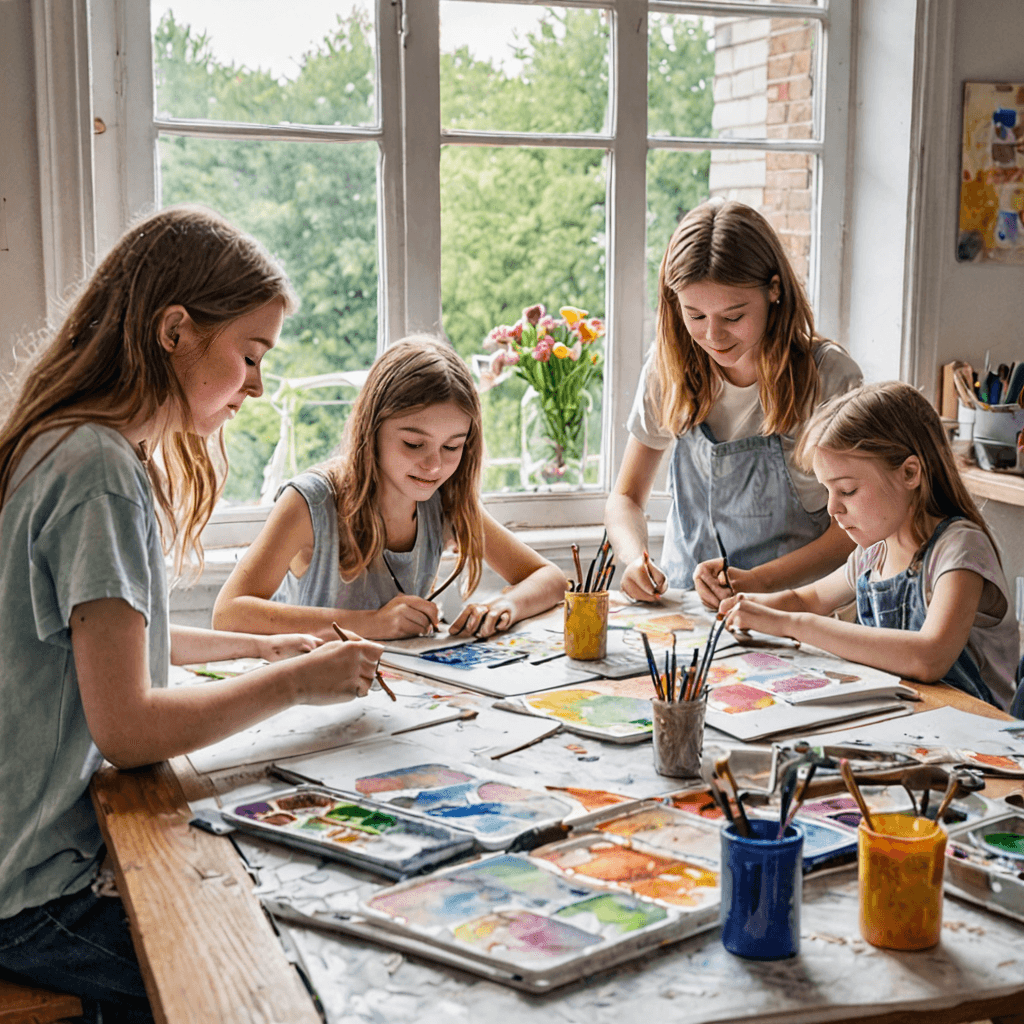
Group classes serve this age especially well. Tweens are social, and working alongside peers who are all figuring it out together normalizes the struggle. Seeing another student solve a problem, or having your own work appreciated by classmates, builds confidence in a way solo practice can’t. Our group art classes are built around that shared creative energy.
What a Quality Tween Art Class Looks Like
A good class for this age balances structure with freedom. There’s genuine instruction — a skill or concept being taught and practised — but also room for personal expression and choice. Tweens bristle at pure copy-work, and they lose interest in total free-for-all. The sweet spot is guided creativity: here’s the technique, now use it on something you care about.
Range matters too. Tweens benefit from working across media — drawing, painting, and mixed materials — rather than drilling one skill endlessly. Variety keeps engagement high and reveals where a particular child’s interests and strengths lie, which is useful information as they grow toward more focused work.
And crucially, the tone should stay encouraging rather than critical. This is a fragile age for artistic confidence. The best instruction meets a frustrated tween where they are, shows them a concrete way forward, and celebrates progress. Skill and enjoyment aren’t in tension at this stage — the right class builds both at once.
Bridging Toward Portfolio and Advanced Work
Here’s what parents thinking a few years ahead should understand: the foundations built at ages nine to twelve are exactly what serious portfolio work later depends on. A teen preparing an art school or arts-high-school portfolio draws directly on observational skill, understanding of form, and range of media — all of which are far easier to build early than to cram in senior year.
That doesn’t mean tween classes should feel like portfolio bootcamp. They shouldn’t. But quality instruction at this age naturally lays the groundwork, so that a tween who later develops a serious interest steps into more advanced work with real fundamentals already in place rather than starting from scratch under deadline pressure.
For families whose tween shows strong interest and ambition, that pathway can eventually lead toward portfolio preparation in Etobicoke as they approach the teen years — but there’s no rush. The foundation years are their own reward, and the bridge builds itself when the skills are solid.
Curious whether our tween classes fit your child? You can book a trial class to see the setting firsthand, or request more information about schedules and what’s covered.
Frequently Asked Questions
What age group are these art classes designed for?
Our group art classes serve children, with an approach that adapts to developmental stage. For tweens roughly nine to twelve, the focus shifts toward building real technique — observation, drawing, colour, composition — while keeping the atmosphere creative and social rather than pressured.
My tween says they “can’t draw.” Are classes still worth it?
Especially then. The “I can’t draw” feeling usually appears around this age precisely because a child’s ambition has outgrown their untrained skill. The right instruction closes that gap with concrete technique, and most tweens rediscover their confidence once they’re given actual tools rather than left to struggle alone.
Are the classes group or private?
For children, including tweens, our art classes are group-based — and that’s intentional at this age, since the shared creative energy and peer support build confidence. Private art lessons are available for those who want fully individualized instruction, but most tweens thrive in the group setting.
Will these classes prepare my child for an art school portfolio?
Not directly, and not yet — that’s the point. What they build are the foundations (observation, form, media range) that serious portfolio work later depends on. A tween with solid fundamentals steps into portfolio prep years later far more prepared than one starting from scratch under deadline pressure.
How much do the classes cost?
Our monthly art program starts at $155 with all materials included, and a trial class is $35 so families can try the fit before enrolling. That covers the group art classes for children and tweens.
Ready to give your tween real art foundations? Explore our art classes in Etobicoke and our group art classes, or book a trial at our Etobicoke studio near Cloverdale Mall.