
Group vs Private Music Lessons: Which Builds Adult Skill
Table of Contents
Adults deciding to finally learn an instrument usually hit the same fork early: join a group class somewhere or book private lessons? Both formats have real advantages, and the honest answer depends on what you’re actually after — but for building genuine playing skill, the two aren’t equal. We’ll say up front that at Muzart Music and Art School our music instruction is private only, so we come at this with a clear view — but group classes deserve a fair hearing, so here’s how the trade-off actually plays out.
What Group Lessons Do Well
Group music classes — the kind offered at some community programs and larger schools, though not at Muzart — have a genuine appeal, and it’s worth being fair about it. They’re often more affordable per session. They’re social, which some adults find motivating — showing up alongside other beginners can take the intimidation out of starting. And a group can create a light, low-pressure atmosphere where nobody feels singled out.
For certain goals, that’s enough. An adult who mainly wants a fun weekly activity, a bit of musical exposure, and some social contact may find a group setting perfectly suited to them. There’s nothing wrong with that goal.
The limitation shows up when the goal shifts from “enjoy an activity” to “actually learn to play.” In a group, the pace is set by the group. The instructor can’t stop and fix your specific hand position or the timing error you keep repeating without holding everyone else up. Feedback is general because it has to be. And the material moves at a compromise speed — too slow for the quick learners, too fast for those who need more repetition.
What Private Lessons Do Differently
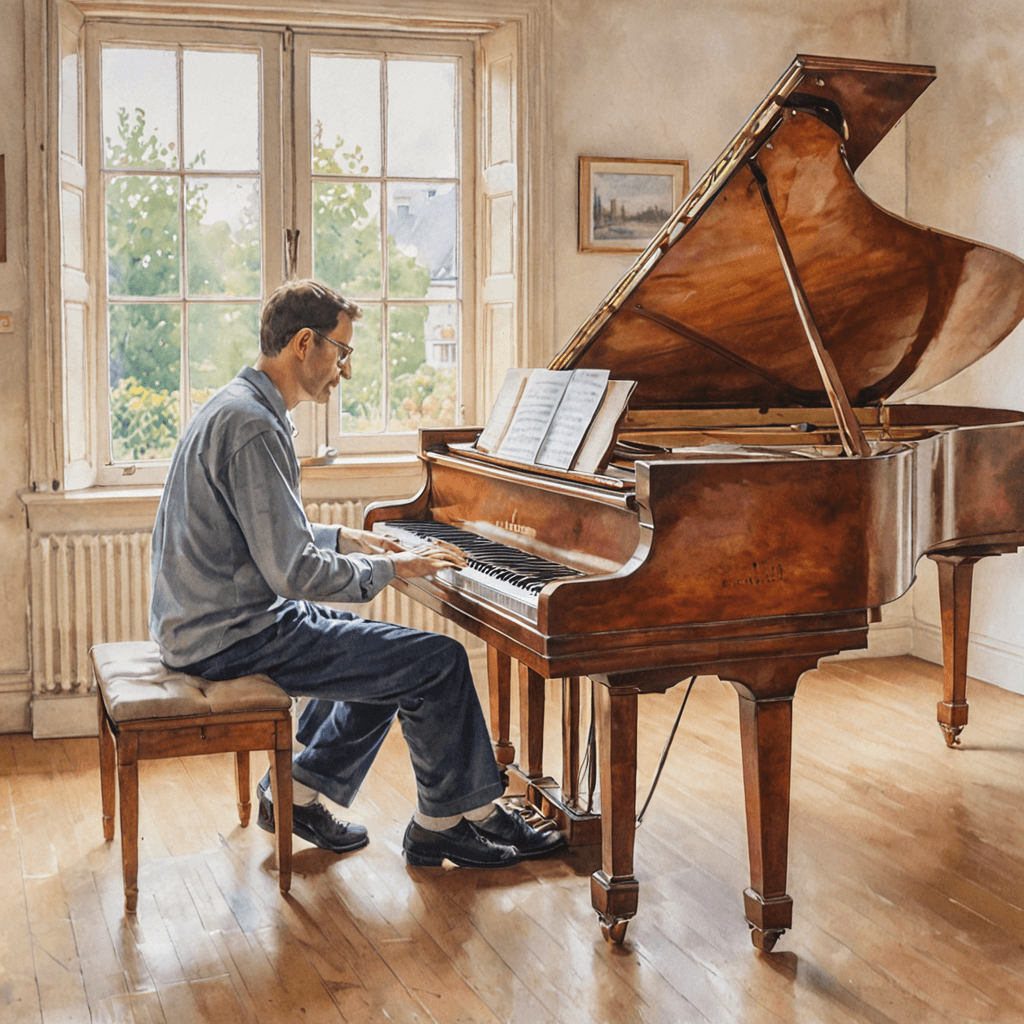
Private lessons flip that equation. The entire session is built around one student — their goals, their pace, their specific weaknesses. When an adult repeats a mistake, the teacher catches it in real time and corrects it before it hardens into a habit. When something clicks and the student wants to push ahead, nothing holds them back.
This matters enormously for adults, who tend to learn differently than children. Adults ask “why,” want to understand the logic behind what they’re doing, and often arrive with specific music they want to play. A private teacher can build a lesson entirely around that motivation — teaching the song you love while sneaking in the fundamentals you need. A group class can’t personalize like that.
At Muzart Music and Art School, all of our music instruction — piano, guitar, drums, and voice — is private and one-on-one, delivered from our Etobicoke studio near Cloverdale Mall. That’s a deliberate choice: we’ve found that for adults serious about building real skill rather than just sampling music, individual attention is what actually moves the needle. Our monthly music program is $155 with all materials included, and a trial lesson is $35 so you can test the fit before committing.
If piano is where you’re headed, our piano lessons in Etobicoke are structured entirely around the individual adult learner, and our guitar lessons in Etobicoke follow the same one-on-one model.
The Consistency Factor Adults Underestimate
Here’s a pattern we see clearly: the adults who stick with music long-term aren’t necessarily the most talented — they’re the ones who treat the weekly lesson as non-negotiable. A fixed slot in the calendar that doesn’t move for work, errands, or a busy week is one of the strongest predictors of whether an adult is still playing a year later.
Private lessons support that consistency in a way groups often don’t. You have a standing appointment with a specific teacher who notices when you’re absent and picks up exactly where you left off. There’s an accountability built into that one-on-one relationship. In a large group, it’s much easier to quietly drift away — nobody’s session changes if you don’t show up.
The second half of that pattern is about practice expectations, and it trips up nearly every adult beginner. Many assume that if they can’t practise for an hour, there’s no point — so they aim for an hour, fail to find it in a full week, and conclude they’ve failed. In our experience teaching adult beginners, the opposite mindset works far better: short, frequent practice beats long, rare sessions. Especially at the start, there isn’t an hour’s worth of meaningful practice to do anyway. Ten focused minutes most days builds skill and habit; the imagined hour just builds guilt. A private teacher can set those expectations realistically from lesson one — something a group format, moving at its own pace, rarely does.
Choosing Based on Your Real Goal
The decision comes down to an honest question: do you want a musical activity, or do you want to learn to play? If it’s the former, a group class may be a fine, affordable, social fit. If it’s the latter — if you want to actually build skill on an instrument, at your own pace, around your own goals — private instruction gets adults there more reliably.
Many adults also worry that private lessons will feel exposing or intense. In practice, most find the opposite: without a group to keep up with or perform in front of, there’s less pressure, not more. It’s just you and a teacher working on your music.
Not sure which fits your situation? You can book a trial lesson to experience the one-on-one format firsthand, or request more information to talk through your goals before deciding.
Frequently Asked Questions
Are group music lessons cheaper than private lessons?
Usually, yes — group classes spread the instructor’s time across several students, so the per-session cost tends to be lower. The trade-off is personalized attention: in a private lesson, the entire session and pace are built around you, which is why adults focused on real skill-building often find the individual format worth it.
Does Muzart offer group music classes?
No. All of our music lessons — piano, guitar, drums, and voice — are private and one-on-one. We do offer group art classes for children, but our music instruction is deliberately individual, because that’s what best serves learners building genuine playing skill. A trial music lesson is $35.
I can only practise a little each week. Is it even worth starting?
Yes — and it’s worth reframing the expectation. Short, frequent practice (even ten focused minutes most days) builds skill more effectively than an occasional long session. Especially early on, there isn’t an hour of meaningful practice to do daily. Aiming for realistic, small sessions is what keeps adults playing long-term.
Will private lessons feel intimidating for a nervous adult beginner?
Most adults report the opposite. Without a group to keep pace with, private lessons remove the pressure of performing in front of peers. It’s a low-key, one-on-one setting where the teacher adapts entirely to your comfort level, and a low-cost trial lesson lets you test that before committing.
Which instrument is easiest for an adult to start with?
There’s no universal answer — the best instrument is usually the one tied to music you personally love, since that motivation sustains practice. Piano offers a clear visual layout of music theory, while guitar gets many adults playing recognizable songs relatively quickly. A trial lesson is a good way to test the feel of an instrument before committing.
Thinking about learning an instrument as an adult? Explore our full range of private music lessons, or start with piano lessons in Etobicoke. When you’re ready, book a trial at our Etobicoke studio.